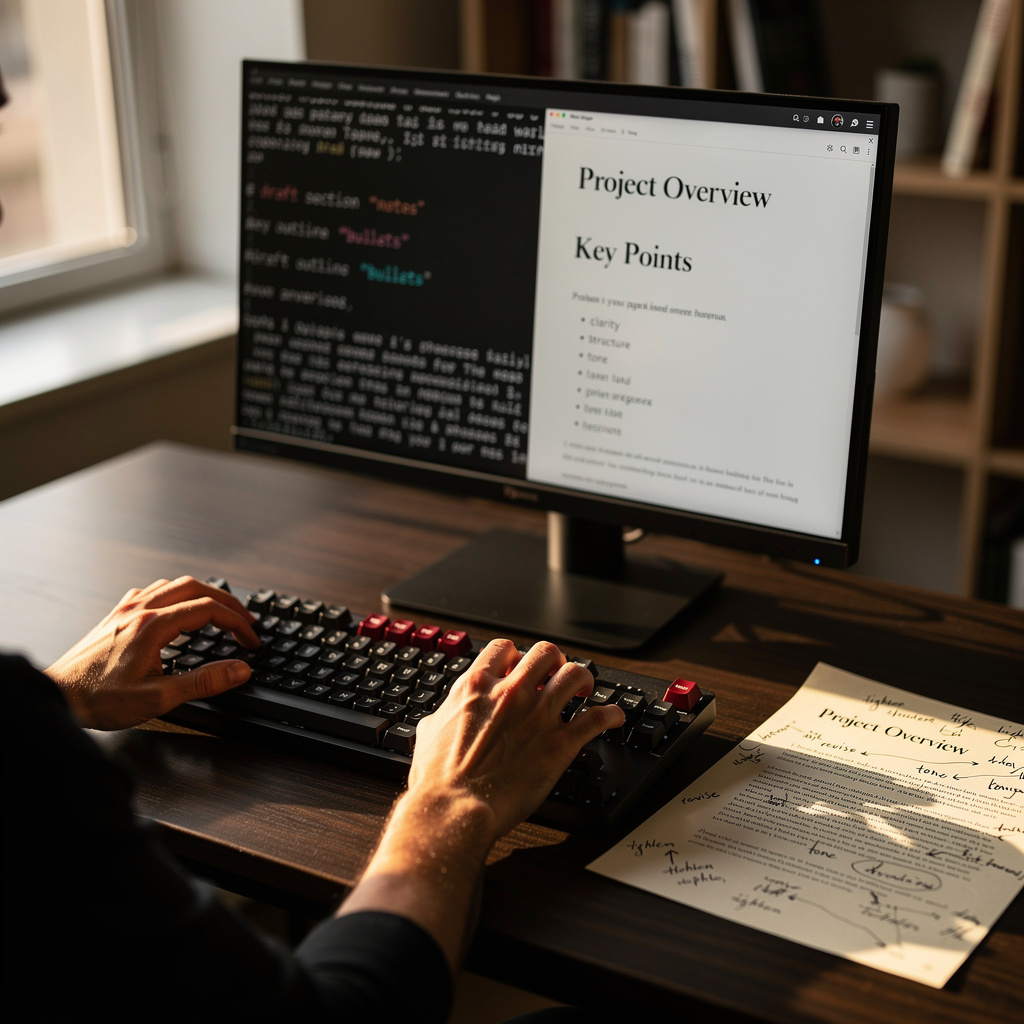
What is Meeting Notes and Minutes Writing?
Meeting Notes and Minutes Writing Training
The Meeting Notes and Minutes Writing certificate program teaches professionals how to capture, structure, and distribute accurate records of meetings, from informal note-taking to legally sound formal minutes. It covers the full documentation cycle: understanding the purpose of different record types, preparing agendas and templates before a meeting, listening actively while writing selectively, and shaping raw notes into clear summaries, decisions, and action items. This program is designed for administrative professionals, executive assistants, project coordinators, board secretaries, team leads, and anyone who is regularly asked to document discussions and commitments. The main practical outcome is the ability to produce meeting records that people actually read, trust, and act on, without spending hours reconstructing what happened.
The program progresses in a beginner-friendly sequence, starting with the foundations of why meeting records exist and moving through preparation, live note-taking, structuring, formal minutes, and advanced scenarios such as sensitive, dispute, and governance meetings. Theory is kept tight and immediately applied: learners work with agendas, templates, and real meeting scenarios rather than memorizing abstract rules. Across the lessons, five core skill areas are built: preparation and role clarity, active listening and selective capture, structural organization by headings, chronology or topic grouping, precise written summarization of decisions and actions, and quality control plus distribution and follow-up. This program is worth choosing now because remote, hybrid, and multilingual meetings have multiplied the volume of discussions while raising the cost of getting the record wrong, and accurate documentation has become a visible professional differentiator.
What is Meeting Notes and Minutes Writing?
Meeting notes and minutes writing is the discipline of creating a reliable written record of what took place in a meeting, what was decided, and what must happen next. It spans two related but distinct outputs: notes, which are working records often kept for personal or team reference, and minutes, which are the formal, approved account of a meeting's proceedings. Core concepts include the distinction between verbatim transcription and selective summarization, the separation of discussion from decision, the identification of action items with owners and deadlines, and the structural choices of chronological versus topic-based organization. It also involves governance concepts such as quorum, attendance, motions, resolutions, and the legal weight that formal minutes can carry in corporate, nonprofit, and public-sector settings.
The subject matters today because decisions increasingly happen in meetings that leave no physical trace, and organizations depend on written records to maintain accountability across time zones, staff turnover, and audits. In business, minutes protect agreements and clarify ownership of tasks; in governance and academia, they serve as the official memory of boards, committees, and faculty bodies, sometimes functioning as legal evidence. Recent shifts toward remote and hybrid work, multilingual teams, and always-on collaboration tools have changed how records are captured, shared, and stored, while raising expectations that documentation be fast, searchable, and unambiguous. Poorly written records create disputes, duplicated work, and lost institutional knowledge, which is why the skill is treated as a professional competency rather than a clerical afterthought.
Mastering this subject builds a skill stack that combines disciplined listening, analytical summarization, structural writing, and procedural accuracy, along with the judgment to know what to record and what to leave out. It also develops familiarity with templates, documentation tools, retention practices, and follow-up routines that turn a static document into a working instrument for accountability. These capabilities serve executive assistants, project managers, board secretaries, compliance and governance officers, researchers, and anyone who chairs or facilitates meetings, and they translate directly into personal credibility. In professional contexts where reputations are built on reliability, the person who produces a clean, accurate, and timely record becomes the person others trust to run the room.
What Will This Course Bring You?
- Differentiate formal minutes, informal notes, and action logs by analyzing their purposes, audiences, and legal weight in organizational meeting contexts.
- Design pre-meeting agendas, role assignments, and reusable templates that align with meeting objectives and anticipated documentation needs.
- Apply active listening and selective note-taking techniques to capture key arguments, decisions, and unresolved issues during live discussions.
- Structure meeting notes using headings, chronological markers, and topic groupings so readers can quickly locate decisions and supporting details.
- Write concise summaries, explicit decisions, and actionable items that assign owners, deadlines, and success criteria for follow-through.
- Evaluate formal minutes for legal language, required format elements, and accurate attendance, roles, motions, and votes before approval.
- Implement editing checklists and digital templates to quality-control, store, and distribute meeting records for efficient follow-up.
- Adapt note-taking and minutes formats for remote, hybrid, multilingual, sensitive, dispute, and governance meetings while preserving accuracy and confidentiality.
Curriculum
12 Units1. Foundations: Purpose and Types of Meeting Records
1 hour
2. Pre-Meeting Preparation: Agendas, Roles, and Templates
1 hour
3. Active Listening and Selective Note-Taking During Meetings
1 hour
4. Structuring Meeting Notes: Headings, Chronology, and Topic Grouping
1 hour
5. Writing Clear Summaries, Decisions, and Action Items
1 hour
6. Formal Minutes: Format, Language, and Legal Considerations
1 hour
7. Capturing Roles, Attendance, and Motions Accurately
1 hour
8. Editing and Quality Control for Meeting Records
1 hour
9. Tools and Templates for Efficient Meeting Documentation
1 hour
10. Taking Notes in Remote, Hybrid, and Multilingual Meetings
1 hour
11. Distributing, Storing, and Following Up on Minutes
1 hour
12. Advanced Scenarios: Sensitive, Dispute, and Governance Meetings
1 hour
Exam – Meeting Notes and Minutes Writing
20 Questions • 70% Pass • 30 min
Unlock All Units for Free
Create an account, enroll in the course, and start with the first unit right away.
Exam – Meeting Notes and Minutes Writing
20 Questions • Pass: 70% • 30 min
Course Duration
720
Total Minutes
12
Unit
1
Final Exam
~60
Min / Unit
Meeting Notes and Minutes Writing Certificate Program
Document Your Skill
Those who pass the 20-question, 30-minute exam with 70% receive the Meeting Notes and Minutes Writing Certificate.
Stand Out on Your CV
By adding your certificate to your CV, gain a professional reference in job applications and stand out from the crowd.
Career Advantage
Catch Wisdom certificates are recognized by HR departments and increase career opportunities.
CERTIFICATE FEE
At the end of the course, an online exam consisting of 20 questions with a 30-minute time limit is given. The exam appears automatically after you complete the topics. Anyone who scores at least 70 out of 100 on the certificate exam is awarded the Meeting Notes and Minutes Writing Document (certificate of attendance). You can add the certificate you earn to your CV for job applications in the many sectors listed above, and use it as a reference proving that you took this interactive course.
The Certificate of Achievement you receive with the Meeting Notes and Minutes Writing course program holds value that proves your personal and professional development in the business world. By adding it to your CV, it can serve as an important reference in your job applications. Moreover, compared with certificates from other private training institutions, Catch Wisdom certificates are offered to our participants at a much more affordable price.
Because HR departments recognize Catch Wisdom as a reputable institution in this field, they value these certificates and may evaluate your job applications favorably. For this reason, a Meeting Notes and Minutes Writing course certificate from Catch Wisdom can make your applications more attractive and place you in an advantageous position in the business world.
For more information, we recommend visiting the Support page.
Certificate in 7 Languages
Earning success certificates from our courses is now more meaningful and global. With certificates available in Turkish, English, German, French, Spanish, Arabic, and Russian, we fully unlock the potential of students worldwide.
Why Certificate in 7 Languages?
-
01
Global Skill Development
Receiving your certificates in 7 different languages strengthens your communication skills as you engage with more people worldwide. It lets you operate more confidently and capably on the international stage.
-
02
International Job Opportunities
Employers may see your certificates in multiple languages as a sign of your ability to seize global opportunities. You can open more doors to new jobs and projects.
-
03
Cultural Richness
The chance to earn certificates in different languages helps you build closer ties with various cultures and broadens your worldview. It enriches your global perspective and deepens cultural understanding.
-
04
Ability to Participate in International Projects
Multilingual certificates give you an edge to work more effectively on international projects. They boost your chances of leadership and participation in diverse projects in the business world.
-
05
Prove Yourself on the Global Stage
Certificates in multiple languages let you showcase your skills and knowledge worldwide. You can become an internationally recognized professional.
Language diversity opens worldwide opportunities. If you want to prove yourself in the international arena, join our online Meeting Notes and Minutes Writing course program and begin this journey with us.
Frequently Asked Questions (FAQ)
Is this course paid?
How do I join the course?
Can I take the course at my own pace?
How can I get my certificate?
What are the advantages of the Certified Certificate?
Boost Your Career
Take a new career step with the Meeting Notes and Minutes Writing course. Add your certificate to your CV, stand out in job applications, and open the door to new opportunities in the industry.
StartStudent Reviews
No reviews yet
Enroll in this course and be the first to leave a review about your experience with Meeting Notes and Minutes Writing.
Start