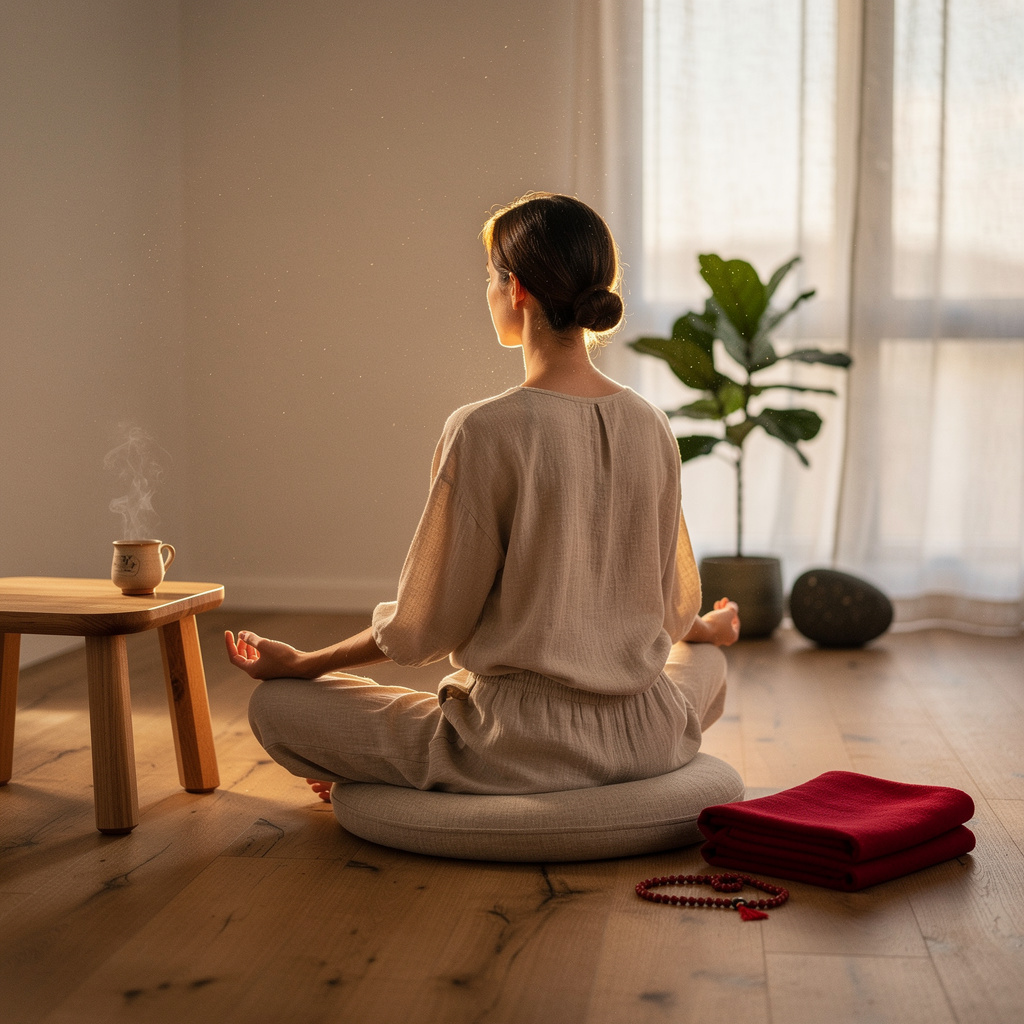
What is Mindfulness for Beginners?
Mindfulness for Beginners Certificate Program
The Mindfulness for Beginners certificate program introduces participants to the core principles and practical techniques of secular mindfulness, from defining attention and awareness to observing thoughts and meeting emotions with balance. It is designed for newcomers, busy professionals, students, caregivers, and anyone seeking a structured, evidence-informed entry point into mindfulness without prior meditation experience. Across the lessons, learners practice breath awareness, the body scan, informal mindfulness in daily routines, walking meditation, and mindful listening, so the main practical outcome is a reliable set of tools for reducing reactivity and cultivating present-moment stability in ordinary life.
The program is structured as a beginner-friendly progression that moves from foundational definitions and posture setup to breath and body-based anchors, then to working with thoughts, emotions, and obstacles before integrating practice into habits and relationships. Each lesson balances concise theory with guided experiential practice, and the curriculum builds four core skill areas: stabilizing attention, befriending inner experience, embedding mindfulness in everyday routines, and applying mindful awareness in communication and long-term practice. Someone would choose this program now because it offers a clear, sustainable path through the most common myths and obstacles, turning scattered interest in mindfulness into a daily habit with self-compassion and realistic next steps.
What is Mindfulness for Beginners?
Mindfulness is the deliberate cultivation of attention and awareness in the present moment, typically with an attitude of curiosity, openness, and non-judgment. Its scope includes both formal practices—such as breath awareness, body scanning, and walking meditation—and informal practices that bring mindful attention to everyday activities like eating, listening, and moving. Core concepts include attention regulation, interoceptive awareness, observing thoughts as mental events rather than facts, emotional balance, and self-compassion. Mindfulness is often distinguished from relaxation or positive thinking; it is a trainable capacity for meeting experience as it is, including discomfort, without automatic reactivity.
Mindfulness matters today because attention is increasingly fragmented by digital notifications, multitasking, and chronic stress, while rates of burnout and anxiety remain high in workplaces, schools, and healthcare settings. Secular mindfulness has moved from contemplative traditions into evidence-based programs used in clinical psychology, education, leadership development, and workplace wellbeing. Recent shifts emphasize trauma-sensitive approaches, brief daily practices, and integrating mindfulness with emotional regulation and compassionate communication rather than treating it as a standalone relaxation technique. In a culture of speed and performance, mindfulness offers a practical counterweight: a way to recover focus, respond rather than react, and sustain caring attention in relationships and demanding roles.
Mastering mindfulness builds a transferable skill stack: attentional control, somatic and interoceptive literacy, cognitive defusion, emotional regulation, habit formation, and interpersonal presence. These capacities benefit professional contexts such as healthcare, education, coaching, human resources, and leadership, where sustained attention and calm communication are essential. Personally, the same skills support parenting, caregiving, creative work, and recovery from stress, because mindfulness strengthens the ability to pause, notice, and choose a response. The subject therefore bridges contemplative practice and everyday performance, offering a grounded way to cultivate resilience, empathy, and clarity across settings.
What Will This Course Bring You?
- Explain the core components of mindfulness—attention, awareness, and common myths—so you can distinguish mindful practice from relaxation or mind-emptying misconceptions.
- Design a sustainable meditation space and posture routine that supports regular practice without straining your body or creating unnecessary setup friction.
- Apply breath awareness as a first anchor by guiding attention to natural breathing and returning to it when the mind wanders during short practice sessions.
- Conduct a guided body scan to identify and describe physical sensations, using curiosity rather than judgment to reconnect with bodily experience.
- Observe thoughts as mental events without getting hooked, and practice labeling or noting them before returning attention to the present moment.
- Apply balance and curiosity to difficult emotions by using a structured pause to notice, name, and allow emotional experience without suppression or reactivity.
- Implement informal mindfulness and brief walking meditation in daily routines by integrating attention checks into eating, commuting, household tasks, and short movement breaks.
- Build a daily habit and self-compassion plan, evaluate obstacles, and choose next steps for sustaining practice and mindful listening in relationships.
Curriculum
12 Units1. Defining Mindfulness: Attention, Awareness, and Myths
1 hour
2. Setting Up a Sustainable Practice Space and Posture
1 hour
3. Breath Awareness as the First Anchor
1 hour
4. The Body Scan: Reconnecting with Physical Sensation
1 hour
5. Observing Thoughts Without Getting Hooked
1 hour
6. Meeting Emotions with Balance and Curiosity
1 hour
7. Informal Mindfulness in Everyday Routines
1 hour
8. Walking Meditation and Gentle Mindful Movement
1 hour
9. Turning Practice into a Daily Habit
1 hour
10. Working with Obstacles and Cultivating Self-Compassion
1 hour
11. Mindful Listening and Responding in Relationships
1 hour
12. Sustaining Progress and Choosing Next Steps
1 hour
Exam – Mindfulness for Beginners
20 Questions • 70% Pass • 30 min
Unlock All Units for Free
Create an account, enroll in the course, and start with the first unit right away.
Exam – Mindfulness for Beginners
20 Questions • Pass: 70% • 30 min
Course Duration
720
Total Minutes
12
Unit
1
Final Exam
~60
Min / Unit
Mindfulness for Beginners Certificate Program
Document Your Skill
Those who pass the 20-question, 30-minute exam with 70% receive the Mindfulness for Beginners Certificate.
Stand Out on Your CV
By adding your certificate to your CV, gain a professional reference in job applications and stand out from the crowd.
Career Advantage
With the verification code, employers can check your certificate instantly — a concrete way to show your growth.
CERTIFICATE FEE
At the end of the course, an online exam consisting of 20 questions with a 30-minute time limit is given. The exam appears automatically after you complete the topics. Anyone who scores at least 70 out of 100 on the certificate exam is awarded the Mindfulness for Beginners Document (certificate of attendance). You can add the certificate you earn to your CV for job applications in the many sectors listed above, and use it as a reference proving that you took this interactive course.
The Certificate of Achievement you receive with the Mindfulness for Beginners course program holds value that proves your personal and professional development in the business world. By adding it to your CV, it can serve as an important reference in your job applications. Moreover, compared with certificates from other private training institutions, Catch Wisdom certificates are offered to our participants at a much more affordable price.
The Mindfulness for Beginners course certificate is a document that proves, with a unique verification code, that you completed the course. Employers can instantly check its authenticity with this code, which helps you show your development concretely in your job applications.
For more information, we recommend visiting the Support page.
Certificate in 7 Languages
Earning success certificates from our courses is now more meaningful and global. With certificates available in Turkish, English, German, French, Spanish, Arabic, and Russian, we fully unlock the potential of students worldwide.
Why Certificate in 7 Languages?
-
01
Global Skill Development
Receiving your certificates in 7 different languages strengthens your communication skills as you engage with more people worldwide. It lets you operate more confidently and capably on the international stage.
-
02
International Job Opportunities
Employers may see your certificates in multiple languages as a sign of your ability to seize global opportunities. You can open more doors to new jobs and projects.
-
03
Cultural Richness
The chance to earn certificates in different languages helps you build closer ties with various cultures and broadens your worldview. It enriches your global perspective and deepens cultural understanding.
-
04
Ability to Participate in International Projects
Multilingual certificates give you an edge to work more effectively on international projects. They boost your chances of leadership and participation in diverse projects in the business world.
-
05
Prove Yourself on the Global Stage
Certificates in multiple languages give you the opportunity to present your skills and knowledge worldwide.
Language diversity opens worldwide opportunities. If you want to prove yourself in the international arena, join our online Mindfulness for Beginners course program and begin this journey with us.
Frequently Asked Questions (FAQ)
Is this course paid?
How do I join the course?
Can I take the course at my own pace?
How can I get my certificate?
What are the advantages of the certificate?
Boost Your Career
Take a new career step with the Mindfulness for Beginners course. Add your certificate to your CV, stand out in job applications, and open the door to new opportunities in the industry.
StartStudent Reviews
No reviews yet
Enroll in this course and be the first to leave a review about your experience with Mindfulness for Beginners.
Start