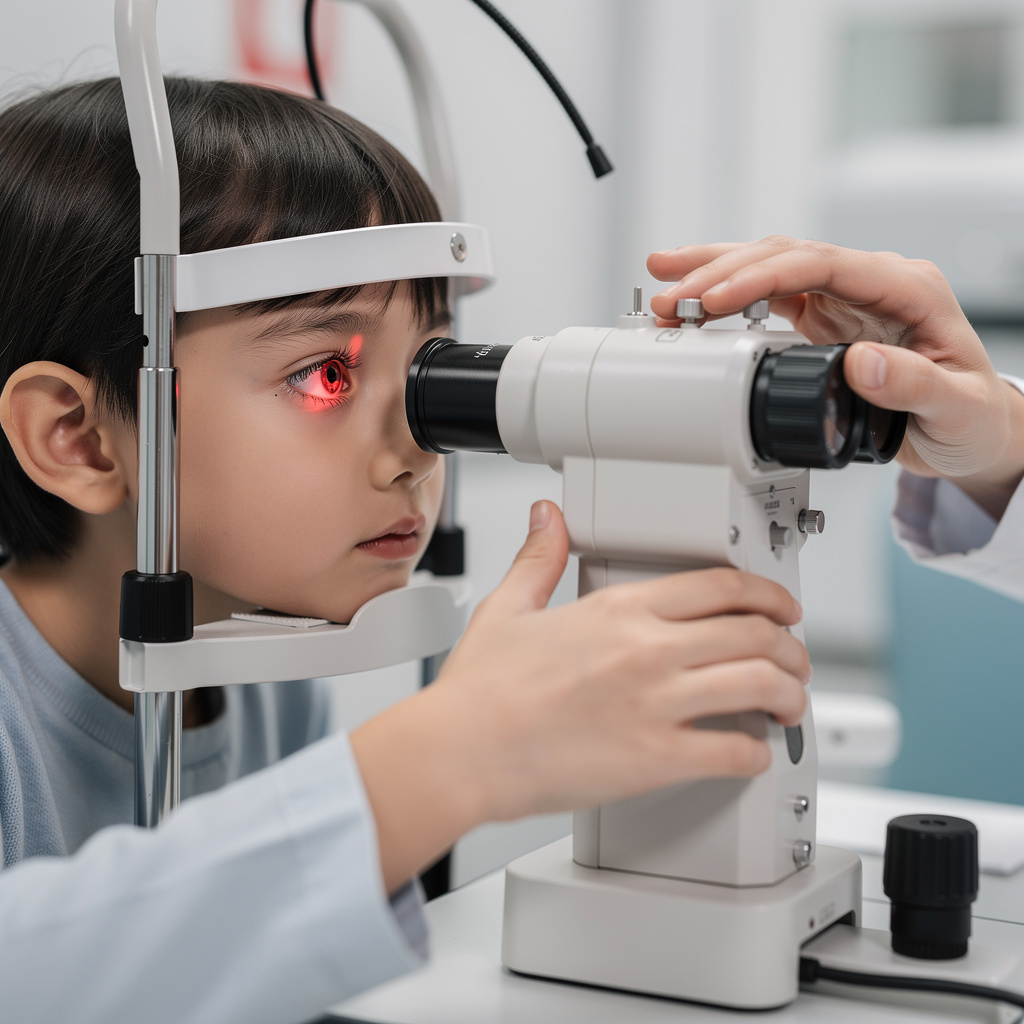
What is Myopia Control in Children?
Myopia Control in Children Training
The Myopia Control in Children certificate program equips eye care professionals, pediatric optometrists, and ophthalmologists with a comprehensive, evidence-based framework to diagnose, manage, and slow the progression of childhood myopia. Through twelve focused lessons spanning epidemiology, ocular anatomy, risk prediction, and both optical and pharmacological interventions, participants gain practical skills to implement individualized treatment plans, monitor outcomes, and counsel families effectively. By the end of the program, learners will be able to confidently establish a dedicated myopia control service within their clinical practice, translating cutting-edge research into measurable patient benefits.
Structured for both beginners and experienced clinicians, the program progresses from foundational science—such as emmetropization and public health impact—to advanced topics like combination therapies and emerging approaches. Each module balances theoretical depth with real-world case applications, building four core skill areas: comprehensive pediatric assessment, evidence-based intervention selection, longitudinal outcome management, and patient/parent education for adherence. With childhood myopia prevalence rising globally, this training addresses an urgent clinical need, offering a timely opportunity to differentiate your practice while improving long-term visual health outcomes for children.
What is Myopia Control in Children?
Myopia control in children refers to a proactive, evidence-based clinical approach aimed at slowing the excessive axial elongation of the eye that drives progressive nearsightedness in pediatric populations. Unlike standard refractive correction, which merely compensates for blurred distance vision, myopia control targets the underlying biological mechanisms—such as peripheral hyperopic defocus and scleral remodeling—through interventions like orthokeratology, multifocal soft contact lenses, atropine therapy, and specialized spectacle designs. The field integrates ocular anatomy, visual perception, and developmental biology to identify children at high risk of rapid progression and to tailor interventions that reduce the eventual magnitude of myopia and its associated sight-threatening complications.
Today, myopia control has become a global public health priority, as the World Health Organization projects that nearly half of the world’s population will be myopic by 2050, with early-onset childhood myopia linked to higher risks of retinal detachment, glaucoma, and myopic maculopathy later in life. In clinical practice, this subject is now central to pediatric eye care, with professional guidelines and reimbursement models increasingly recognizing myopia as a treatable disease rather than a simple optical inconvenience. Recent shifts include the adoption of standardized progression risk calculators, the integration of digital monitoring tools, and a growing body of randomized trials supporting combination therapies—making this a rapidly evolving, high-demand specialty within optometry and ophthalmology.
Mastering the subject of myopia control builds a sophisticated skill stack that includes biometric interpretation, critical appraisal of clinical evidence, patient-specific risk stratification, and longitudinal data analysis—competencies that are directly transferable to broader pediatric eye care and chronic disease management. For clinicians, this expertise enhances diagnostic precision and therapeutic confidence, while for researchers and public health professionals, it provides a framework to design and evaluate population-level interventions. Beyond the clinic, parents and educators benefit from understanding the behavioral and environmental factors that modulate myopia progression, making this knowledge valuable across educational, community health, and family counseling contexts.
What Will This Course Bring You?
- Analyze epidemiological data to quantify the public health burden of childhood myopia and identify high-risk populations.
- Explain the process of emmetropization and ocular anatomy changes that contribute to myopia development in children.
- Apply risk factor assessment tools to predict rapid progression of myopia in pediatric patients.
- Perform a comprehensive myopia assessment including cycloplegic refraction, axial length measurement, and anterior segment evaluation.
- Evaluate the efficacy and safety of optical interventions such as orthokeratology, multifocal soft contact lenses, and peripheral defocus spectacles for myopia control.
- Design a pharmacological treatment plan using low-dose atropine based on patient-specific factors and evidence-based protocols.
- Implement environmental and behavioral modifications, including increased outdoor time and reduced near work, to complement clinical myopia control strategies.
- Develop a patient and parent education program that addresses adherence, expectations, and lifestyle changes for successful myopia management.
Curriculum
12 Units1. Epidemiology and Public Health Impact of Childhood Myopia
30 min
2. Ocular Anatomy and Emmetropization
30 min
3. Risk Factors and Prediction of Rapid Progression
30 min
4. Comprehensive Myopia Assessment in Children
30 min
5. Optical Interventions for Myopia Control
30 min
6. Pharmacological Interventions for Myopia Control
30 min
7. Environmental and Behavioral Modifications
30 min
8. Selecting the Right Treatment Strategy
30 min
9. Monitoring and Managing Treatment Outcomes
30 min
10. Combination Therapies and Emerging Approaches
30 min
11. Patient and Parent Education and Adherence
30 min
12. Implementing a Myopia Control Service in Clinical Practice
30 min
Exam – Myopia Control in Children
20 Questions • 70% Pass • 30 min
Unlock All Units for Free
Create an account, enroll in the course, and start with the first unit right away.
Exam – Myopia Control in Children
20 Questions • Pass: 70% • 30 min
Course Duration
360
Total Minutes
12
Unit
1
Final Exam
~30
Min / Unit
Myopia Control in Children Certificate Program
Document Your Skill
Those who pass the 20-question, 30-minute exam with 70% receive the Myopia Control in Children Certificate.
Stand Out on Your CV
By adding your certificate to your CV, gain a professional reference in job applications and stand out from the crowd.
Career Advantage
Catch Wisdom certificates are recognized by HR departments and increase career opportunities.
CERTIFICATE FEE
At the end of the course, an online exam consisting of 20 questions with a 30-minute time limit is given. The exam appears automatically after you complete the topics. Anyone who scores at least 70 out of 100 on the certificate exam is awarded the Myopia Control in Children Document (certificate of attendance). You can add the certificate you earn to your CV for job applications in the many sectors listed above, and use it as a reference proving that you took this interactive course.
The Certificate of Achievement you receive with the Myopia Control in Children course program holds value that proves your personal and professional development in the business world. By adding it to your CV, it can serve as an important reference in your job applications. Moreover, compared with certificates from other private training institutions, Catch Wisdom certificates are offered to our participants at a much more affordable price.
Because HR departments recognize Catch Wisdom as a reputable institution in this field, they value these certificates and may evaluate your job applications favorably. For this reason, a Myopia Control in Children course certificate from Catch Wisdom can make your applications more attractive and place you in an advantageous position in the business world.
For more information, we recommend visiting the Support page.
Certificate in 7 Languages
Earning success certificates from our courses is now more meaningful and global. With certificates available in Turkish, English, German, French, Spanish, Arabic, and Russian, we fully unlock the potential of students worldwide.
Why Certificate in 7 Languages?
-
01
Global Skill Development
Receiving your certificates in 7 different languages strengthens your communication skills as you engage with more people worldwide. It lets you operate more confidently and capably on the international stage.
-
02
International Job Opportunities
Employers may see your certificates in multiple languages as a sign of your ability to seize global opportunities. You can open more doors to new jobs and projects.
-
03
Cultural Richness
The chance to earn certificates in different languages helps you build closer ties with various cultures and broadens your worldview. It enriches your global perspective and deepens cultural understanding.
-
04
Ability to Participate in International Projects
Multilingual certificates give you an edge to work more effectively on international projects. They boost your chances of leadership and participation in diverse projects in the business world.
-
05
Prove Yourself on the Global Stage
Certificates in multiple languages let you showcase your skills and knowledge worldwide. You can become an internationally recognized professional.
Language diversity opens worldwide opportunities. If you want to prove yourself in the international arena, join our online Myopia Control in Children course program and begin this journey with us.
Frequently Asked Questions (FAQ)
Is this course paid?
How do I join the course?
Can I take the course at my own pace?
How can I get my certificate?
What are the advantages of the Certified Certificate?
Boost Your Career
Take a new career step with the Myopia Control in Children course. Add your certificate to your CV, stand out in job applications, and open the door to new opportunities in the industry.
StartStudent Reviews
No reviews yet
Enroll in this course and be the first to leave a review about your experience with Myopia Control in Children.
Start