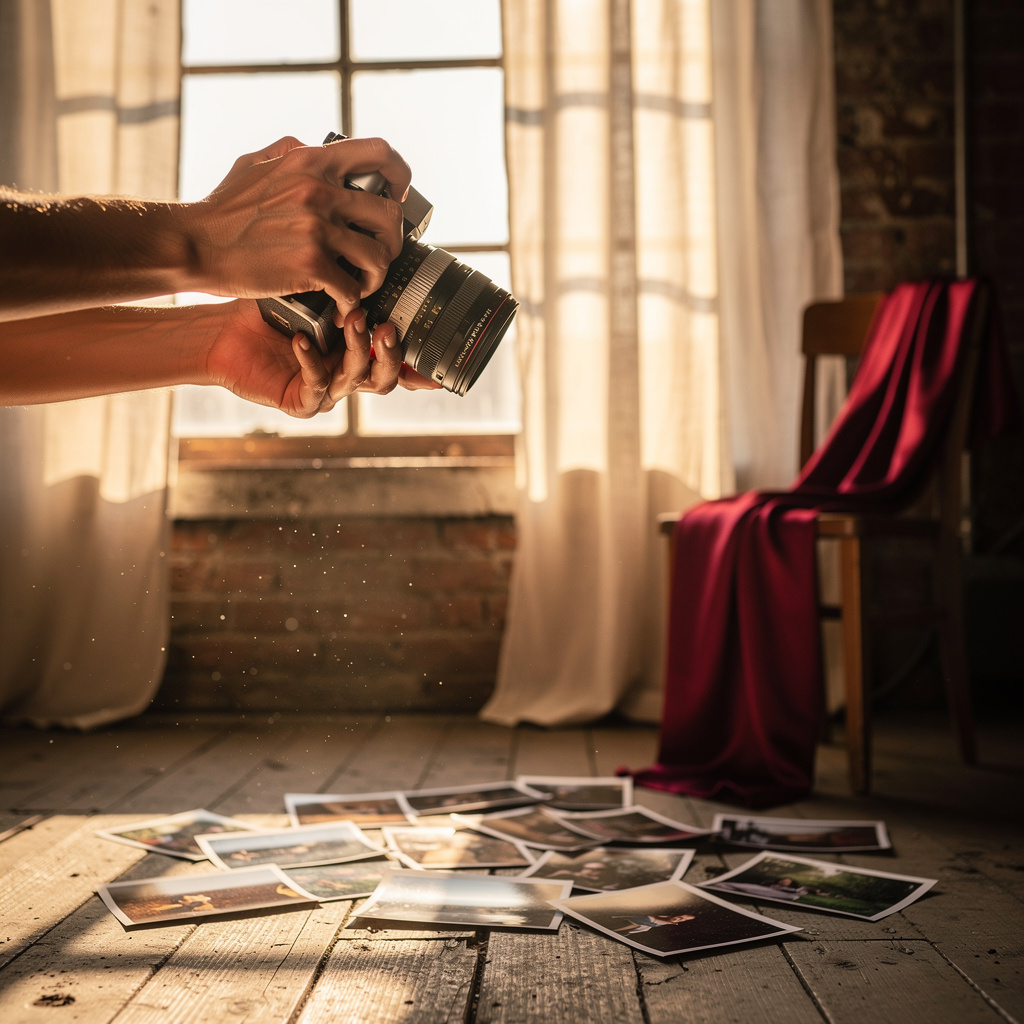
What is Natural Light Photography?
Natural Light Photography Training
Natural Light Photography certificate program teaches photographers how to harness sunlight, window light, and ambient illumination without relying on strobes or artificial sources. The curriculum covers light quality assessment, sun path tracking, exposure for high dynamic range scenes, and the use of modifiers like reflectors and diffusers. It is designed for beginners who know basic camera controls as well as intermediate shooters wanting to refine their natural light craft. The main practical outcome is the ability to confidently shoot portraits, landscapes, architecture, and macro subjects in any daylight condition, from harsh noon sun to soft twilight.
The program progresses from foundational observation and prediction skills to advanced genre-specific applications, ensuring no prior studio lighting experience is required. Theory is balanced with hands-on practice: you analyze real weather patterns, meter complex scenes, and shape light with simple tools. Five core skill areas are built sequentially: reading and forecasting light, mastering exposure and dynamic range, controlling direction and modifiers, managing color temperature and white balance, and applying these to portraits, landscapes, urban scenes, macro work, and window-lit interiors. Editing and workflow lessons tie the capture process to final output. This program is chosen now because natural light is free, universally available, and increasingly prized for its authenticity in a market saturated with artificial looks, while modern cameras demand skillful exposure decisions to exploit their full dynamic range.
What is Natural Light Photography?
Natural light photography is the discipline of capturing images using only available light from the sun, sky, moon, or windows, without adding artificial sources. Its scope spans understanding how light interacts with subjects across time of day, weather, and surroundings, and it applies to every genre from portraiture to architecture. Core concepts include light quality (hard versus soft), direction (front, side, back, and top), color temperature (warm to cool), intensity, and dynamic range. Practitioners learn to observe and predict these variables rather than control them with gear.
This subject matters today because audiences and clients increasingly value authentic, unplugged aesthetics over heavily lit productions, and natural light delivers that emotional resonance with minimal equipment. It is used daily in documentary, travel, wedding, editorial, real estate, and product photography, as well as in academic research on visual perception and environmental storytelling. Recent shifts include smartphone computational photography and mirrorless sensors with expanded dynamic range, which make natural light more accessible but also raise the bar for skillful exposure and color management. Sustainability and a low gear footprint further drive interest among creators who want to work lightly and responsibly.
Mastering this subject builds a portable skill stack: acute observation, weather and sun path prediction, precise exposure decision-making, light shaping with reflectors or diffusers, color grading, and an efficient editing workflow. These skills benefit freelance photographers, journalists, architects, content creators, and anyone who needs reliable results in uncontrolled environments. Personal contexts such as travel, family documentation, and artistic expression also gain from the ability to read and use light without setup time. The subject ultimately teaches a form of visual literacy that remains valuable regardless of future camera technology.
What Will This Course Bring You?
- Analyze natural light quality by observing hardness, direction, and color shifts across a full day to select optimal moments for photographing varied subjects.
- Predict sun path and weather conditions using planning tools and sky observations to schedule outdoor shoots with desired light angles and cloud cover.
- Configure camera exposure settings for daylight scenes by balancing aperture, shutter speed, and ISO to achieve intended brightness and motion rendering.
- Apply dynamic range control techniques, including graduated filters and exposure bracketing, to retain highlight and shadow detail in high-contrast natural light.
- Design portrait lighting outdoors by positioning subjects relative to sun direction and using reflectors, diffusers, or shade to shape flattering facial light.
- Evaluate color temperature and white balance settings under mixed daylight conditions to produce accurate skin tones and mood-appropriate color in outdoor images.
- Implement window light and interior natural light strategies by assessing room orientation, bounce surfaces, and time of day to create dimensional indoor photographs.
- Build an editing workflow that adjusts white balance, contrast, and local exposure to preserve the authentic character of natural light photographs.
Curriculum
12 Units1. Light Quality and Observation
1 hour
2. Sun Path and Weather Prediction
1 hour
3. Exposure Settings for Daylight
1 hour
4. Dynamic Range and Light Control
1 hour
5. Direction and Modifiers
1 hour
6. Color Temperature and White Balance
1 hour
7. Portrait Lighting Outdoors
1 hour
8. Landscape Lighting
1 hour
9. Urban and Architectural Lighting
1 hour
10. Macro and Close-Up Lighting
1 hour
11. Window Light and Interiors
1 hour
12. Editing and Workflow
1 hour
Exam – Natural Light Photography
20 Questions • 70% Pass • 30 min
Unlock All Units for Free
Create an account, enroll in the course, and start with the first unit right away.
Exam – Natural Light Photography
20 Questions • Pass: 70% • 30 min
Course Duration
720
Total Minutes
12
Unit
1
Final Exam
~60
Min / Unit
Natural Light Photography Certificate Program
Document Your Skill
Those who pass the 20-question, 30-minute exam with 70% receive the Natural Light Photography Certificate.
Stand Out on Your CV
By adding your certificate to your CV, gain a professional reference in job applications and stand out from the crowd.
Career Advantage
With the verification code, employers can check your certificate instantly — a concrete way to show your growth.
CERTIFICATE FEE
At the end of the course, an online exam consisting of 20 questions with a 30-minute time limit is given. The exam appears automatically after you complete the topics. Anyone who scores at least 70 out of 100 on the certificate exam is awarded the Natural Light Photography Document (certificate of attendance). You can add the certificate you earn to your CV for job applications in the many sectors listed above, and use it as a reference proving that you took this interactive course.
The Certificate of Achievement you receive with the Natural Light Photography course program holds value that proves your personal and professional development in the business world. By adding it to your CV, it can serve as an important reference in your job applications. Moreover, compared with certificates from other private training institutions, Catch Wisdom certificates are offered to our participants at a much more affordable price.
The Natural Light Photography course certificate is a document that proves, with a unique verification code, that you completed the course. Employers can instantly check its authenticity with this code, which helps you show your development concretely in your job applications.
For more information, we recommend visiting the Support page.
Certificate in 7 Languages
Earning success certificates from our courses is now more meaningful and global. With certificates available in Turkish, English, German, French, Spanish, Arabic, and Russian, we fully unlock the potential of students worldwide.
Why Certificate in 7 Languages?
-
01
Global Skill Development
Receiving your certificates in 7 different languages strengthens your communication skills as you engage with more people worldwide. It lets you operate more confidently and capably on the international stage.
-
02
International Job Opportunities
Employers may see your certificates in multiple languages as a sign of your ability to seize global opportunities. You can open more doors to new jobs and projects.
-
03
Cultural Richness
The chance to earn certificates in different languages helps you build closer ties with various cultures and broadens your worldview. It enriches your global perspective and deepens cultural understanding.
-
04
Ability to Participate in International Projects
Multilingual certificates give you an edge to work more effectively on international projects. They boost your chances of leadership and participation in diverse projects in the business world.
-
05
Prove Yourself on the Global Stage
Certificates in multiple languages give you the opportunity to present your skills and knowledge worldwide.
Language diversity opens worldwide opportunities. If you want to prove yourself in the international arena, join our online Natural Light Photography course program and begin this journey with us.
Frequently Asked Questions (FAQ)
Is this course paid?
How do I join the course?
Can I take the course at my own pace?
How can I get my certificate?
What are the advantages of the certificate?
Boost Your Career
Take a new career step with the Natural Light Photography course. Add your certificate to your CV, stand out in job applications, and open the door to new opportunities in the industry.
StartStudent Reviews
No reviews yet
Enroll in this course and be the first to leave a review about your experience with Natural Light Photography.
Start