What is Natural Soap Making?
Natural Soap Making Training
The Natural Soap Making certificate program is designed to take you from a complete beginner to a confident soap artisan. This course teaches the fundamental chemistry of saponification, the safe handling of lye, and the properties of various oils, butters, and natural additives. You will master three core methods—cold process, hot process, and melt and pour—and learn to design your own recipes with precision. By the end, you will be able to produce beautiful, skin-nourishing soap bars that are safe, effective, and fully customizable for personal use or gifting.
The program is structured as a step-by-step journey, starting with soap chemistry and safety, then progressing through equipment setup, each soap-making method, recipe design, and advanced techniques like swirling, layering, and embedding. You will also learn curing, cutting, finishing, and troubleshooting to ensure professional-quality results every time. This balanced blend of theory and hands-on practice builds four core skill areas: chemical understanding, formulation design, technical execution, and quality control. With the rising demand for natural, chemical-free skincare, now is the perfect time to master this timeless craft and even turn it into a rewarding small business.
What is Natural Soap Making?
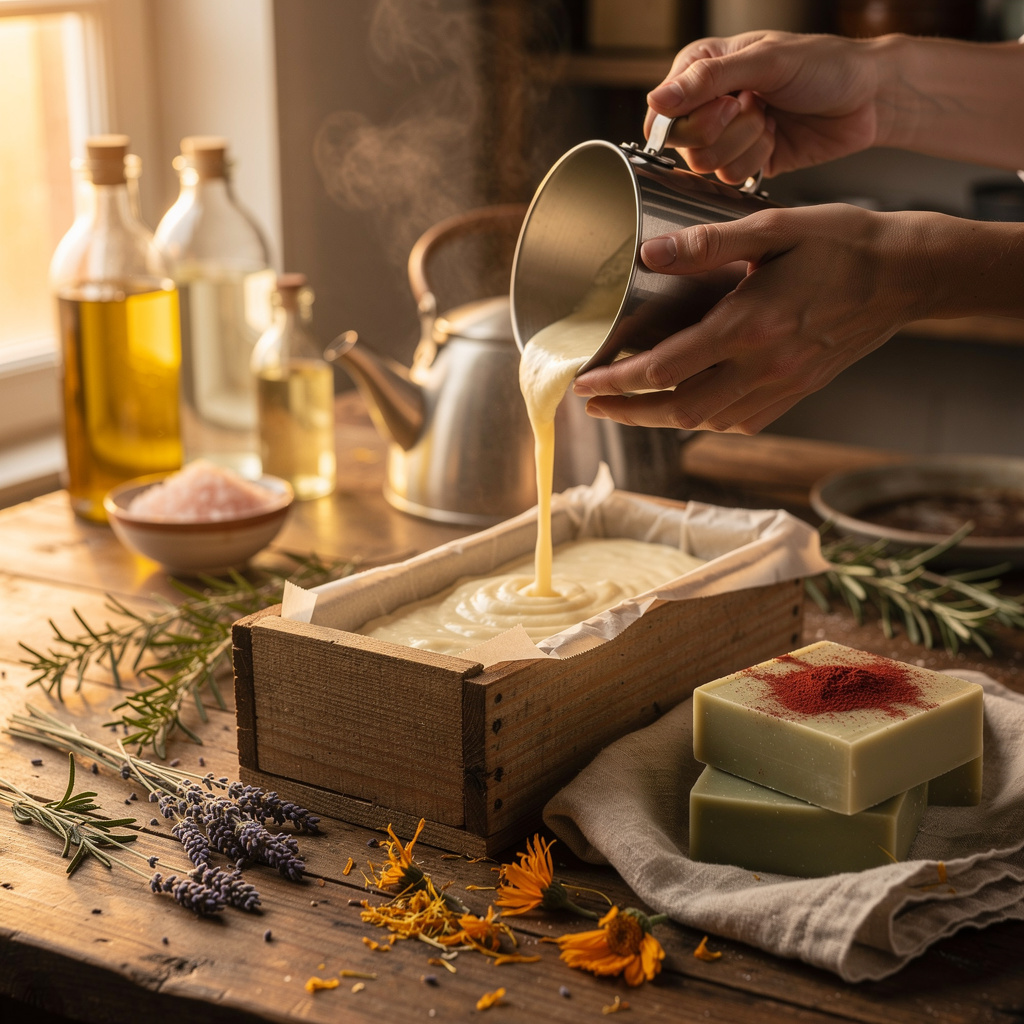
Natural soap making is the art and science of transforming natural fats, oils, and an alkali—typically sodium hydroxide (lye)—into soap through a chemical reaction called saponification. The scope of this craft encompasses understanding the properties of different oils and butters, calculating precise lye concentrations, and controlling temperature and mixing to achieve desired textures and qualities. Core concepts include the balance of saturated and unsaturated fatty acids, superfatting, and the role of additives such as clays, botanicals, and essential oils. It is both a practical skill and a creative outlet, blending chemistry with artistry.
Today, natural soap making has gained significant momentum as consumers increasingly seek transparent, eco-friendly, and skin-safe alternatives to commercial detergents. Artisanal soap makers are thriving in local markets, online stores, and even upscale boutiques, while the clean beauty movement drives demand for handcrafted products with minimal ingredients. In academia, the chemistry of saponification is studied in organic chemistry and cosmetic science programs, and the craft is often used to teach principles of chemical reactions and formulation. The recent shift toward sustainability and self-sufficiency has also made soap making a popular hobby among homesteaders and DIY enthusiasts.
Mastering natural soap making builds a versatile skill stack that includes chemical literacy, precise measurement and formulation, creative design, and rigorous safety practices. These skills are directly applicable to professional contexts such as cosmetic formulation, product development, and small business management, as well as personal contexts like creating custom skincare for family and friends. The knowledge gained also fosters a deeper appreciation for ingredient sourcing and environmental impact, empowering learners to make informed choices. Whether you aim to launch a brand or simply craft your own healthy soap, this subject provides a solid foundation for lifelong learning and creative expression.
Common Questions About Natural Soap Making
Does the natural soap making certificate help with a job application?
Can a complete beginner start this soap making course with no experience?
What is the difference between cold process and hot process soap making?
How do I calculate lye amount for different oils in soap making?
What are the most common soap making mistakes for beginners?
- Inaccurate weighing: Guessing oil or lye amounts instead of using a digital scale ruins the batch.
- Ignoring temperature control: Mixing oils and lye at wildly different temperatures can cause seizing or separation.
- Wrong container materials: Aluminum or certain plastics react with lye — one wrong container can ruin everything.
- Over-blending to thick trace: Pulsing too long makes the batter unmanageable for designs.
- Cutting too early: Cutting before the soap hardens leads to crumbly bars.
- Skipping the cure: Using soap before the water evaporates results in a soft, harsh bar.
How does the curing process affect soap quality?
Is it true that natural soap making is dangerous because of lye?
What Will This Course Bring You?
- Analyze the saponification reaction to determine safe handling of lye and proper soap curing conditions.
- Evaluate the properties of various oils, butters, and lye concentrations to select appropriate ingredients for a soap recipe.
- Implement a safe and organized workspace with essential equipment for efficient soap making.
- Apply the cold process method to create a soap batch with precise lye and oil measurements.
- Implement the hot process method to accelerate saponification and produce a rustic soap texture.
- Utilize melt and pour bases to create custom soaps with embedded designs and colorants.
- Design a balanced soap recipe by calculating lye concentration and superfatting percentage.
- Execute swirling, layering, and embedding techniques to create visually complex soap designs.
Curriculum
12 Units1. Soap Chemistry and Safety
1 hour
2. Oils, Butters, and Lye
1 hour
3. Equipment and Workspace Setup
1 hour
4. Cold Process Soap Making
1 hour
5. Hot Process Soap Making
1 hour
6. Melt and Pour Soap Making
1 hour
7. Designing Soap Recipes
1 hour
8. Natural Additives and Colorants
1 hour
9. Scenting Soap with Essential Oils
1 hour
10. Advanced Techniques: Swirling, Layering, and Embedding
1 hour
11. Curing, Cutting, and Finishing
1 hour
12. Troubleshooting and Quality Control
1 hour
Exam – Natural Soap Making
20 Questions • 70% Pass • 30 min
Unlock All Units for Free
Create an account, enroll in the course, and start with the first unit right away.
Exam – Natural Soap Making
20 Questions • Pass: 70% • 30 min
Course Duration
720
Total Minutes
12
Unit
1
Final Exam
~60
Min / Unit
Natural Soap Making Certificate Program
Document Your Skill
Those who pass the 20-question, 30-minute exam with 70% receive the Natural Soap Making Certificate.
Stand Out on Your CV
By adding your certificate to your CV, gain a professional reference in job applications and stand out from the crowd.
Career Advantage
Catch Wisdom certificates are recognized by HR departments and increase career opportunities.
CERTIFICATE FEE
At the end of the course, an online exam consisting of 20 questions with a 30-minute time limit is given. The exam appears automatically after you complete the topics. Anyone who scores at least 70 out of 100 on the certificate exam is awarded the Natural Soap Making Document (certificate of attendance). You can add the certificate you earn to your CV for job applications in the many sectors listed above, and use it as a reference proving that you took this interactive course.
The Certificate of Achievement you receive with the Natural Soap Making course program holds value that proves your personal and professional development in the business world. By adding it to your CV, it can serve as an important reference in your job applications. Moreover, compared with certificates from other private training institutions, Catch Wisdom certificates are offered to our participants at a much more affordable price.
Because HR departments recognize Catch Wisdom as a reputable institution in this field, they value these certificates and may evaluate your job applications favorably. For this reason, a Natural Soap Making course certificate from Catch Wisdom can make your applications more attractive and place you in an advantageous position in the business world.
For more information, we recommend visiting the Support page.
Certificate in 7 Languages
Earning success certificates from our courses is now more meaningful and global. With certificates available in Turkish, English, German, French, Spanish, Arabic, and Russian, we fully unlock the potential of students worldwide.
Why Certificate in 7 Languages?
-
01
Global Skill Development
Receiving your certificates in 7 different languages strengthens your communication skills as you engage with more people worldwide. It lets you operate more confidently and capably on the international stage.
-
02
International Job Opportunities
Employers may see your certificates in multiple languages as a sign of your ability to seize global opportunities. You can open more doors to new jobs and projects.
-
03
Cultural Richness
The chance to earn certificates in different languages helps you build closer ties with various cultures and broadens your worldview. It enriches your global perspective and deepens cultural understanding.
-
04
Ability to Participate in International Projects
Multilingual certificates give you an edge to work more effectively on international projects. They boost your chances of leadership and participation in diverse projects in the business world.
-
05
Prove Yourself on the Global Stage
Certificates in multiple languages let you showcase your skills and knowledge worldwide. You can become an internationally recognized professional.
Language diversity opens worldwide opportunities. If you want to prove yourself in the international arena, join our online Natural Soap Making course program and begin this journey with us.
Frequently Asked Questions (FAQ)
Is this course paid?
How do I join the course?
Can I take the course at my own pace?
How can I get my certificate?
What are the advantages of the Certified Certificate?
Boost Your Career
Take a new career step with the Natural Soap Making course. Add your certificate to your CV, stand out in job applications, and open the door to new opportunities in the industry.
StartStudent Reviews
No reviews yet
Enroll in this course and be the first to leave a review about your experience with Natural Soap Making.
Start