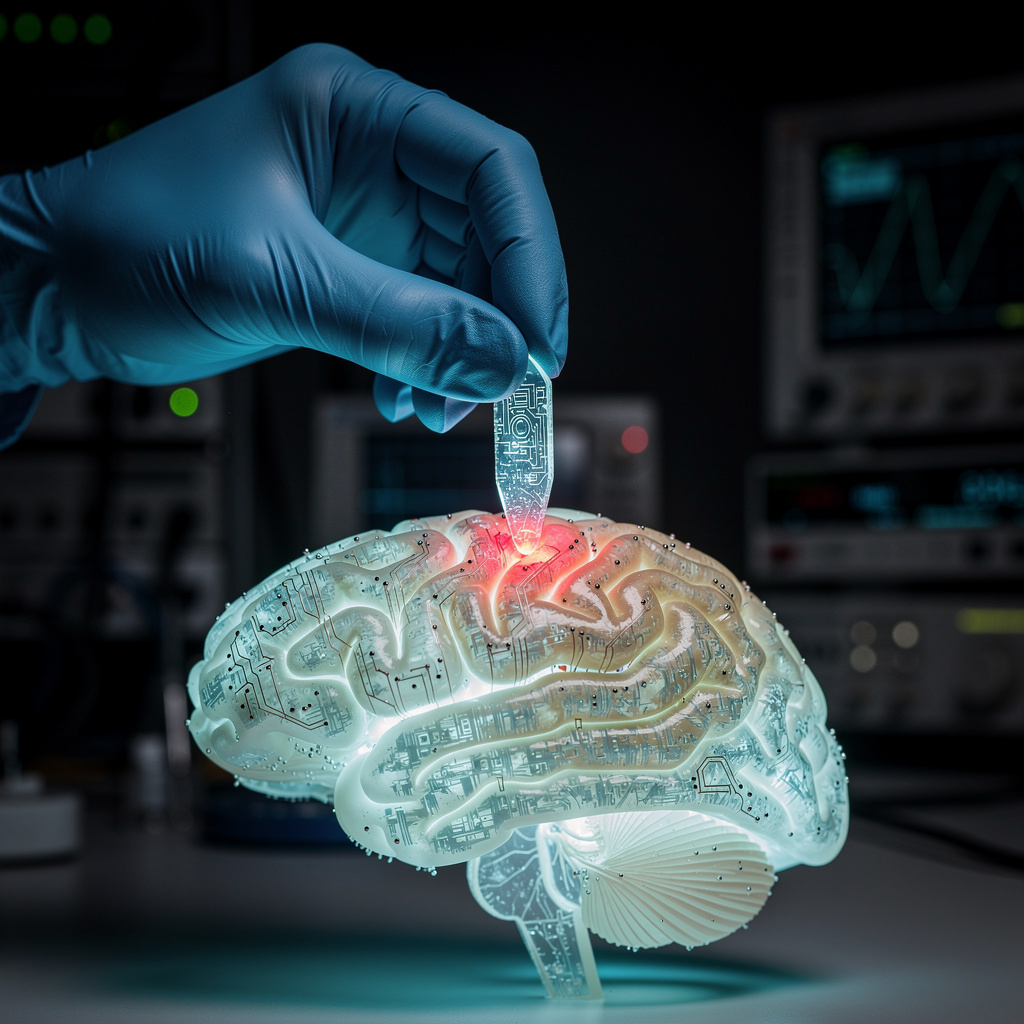
What is Neural Data Privacy?
Neural Data Privacy Training
The Neural Data Privacy certificate program offers a comprehensive deep dive into the technical, legal, and ethical dimensions of protecting brain-derived data. Designed for data scientists, privacy engineers, healthcare technologists, and policy professionals, this course equips participants with the tools to safeguard neural information across the entire data lifecycle. By the end of the program, learners will be able to assess privacy risks in neural data pipelines and implement robust mitigation strategies using state-of-the-art techniques.
The program follows a beginner-friendly progression that moves from foundational concepts of neural data acquisition to advanced topics like differential privacy, secure computation, and federated learning. Each module balances theoretical grounding with hands-on practice, building core competencies in privacy risk assessment, anonymization, encryption, and governance. With neural data regulation evolving rapidly and brain-computer interfaces entering the mainstream, this training is essential for professionals who want to stay ahead of the curve and lead responsible innovation in this emerging field.
What is Neural Data Privacy?
Neural data privacy is a specialized discipline focused on protecting the sensitive information derived from the human nervous system, particularly brain activity captured through electroencephalography (EEG), functional magnetic resonance imaging (fMRI), and brain-computer interfaces (BCIs). It encompasses the study of how neural signals are acquired, processed, stored, and shared, along with the vulnerabilities that arise at each stage. Core concepts include inference attacks, where adversaries extract private thoughts or medical conditions from seemingly innocuous neural patterns, and the development of technical safeguards such as differential privacy, secure multi-party computation, and anonymization techniques.
This field has gained urgent relevance as neural data becomes increasingly commercialized and integrated into consumer products, healthcare diagnostics, and neurotechnology research. Companies are deploying BCIs for everything from assistive communication to gaming, while researchers are leveraging large-scale neural datasets to understand cognition and treat neurological disorders. Recent regulatory shifts, including the expansion of privacy laws to explicitly cover neural information in some jurisdictions, have made neural data privacy a critical compliance concern for organizations operating at the intersection of technology and neuroscience.
Mastering neural data privacy builds a unique interdisciplinary skill stack that combines elements of machine learning, cryptography, data governance, and bioethics. Professionals who develop expertise in this area are well-positioned for roles in neurotech companies, healthcare institutions, regulatory bodies, and academic research labs. Beyond career advancement, this knowledge empowers individuals to make informed decisions about their own neural data and to advocate for responsible practices in an era where the boundary between mind and machine continues to blur.
Common Questions About Neural Data Privacy
Does a Neural Data Privacy certificate help in AI job applications?
Can beginners without a neuroscience background take this neural data course?
Why does k-anonymity alone fail to protect neural data?
- High dimensionality: Neural data has thousands of features, making it easy to isolate a single record even when grouped with others.
- Auxiliary information: External data like demographics or health records can be linked to narrow down the identity.
- Inference attacks: Even if the data is anonymized, an attacker can use model outputs or statistical patterns to re-identify individuals.
How does differential privacy add noise to EEG datasets?
What is the main error in federated averaging for brain signals?
How does membership inference attack leak neural data from models?
Is anonymized neural data truly unidentifiable in practice?
What Will This Course Bring You?
- Analyze various types of neural data and acquisition methods to identify potential privacy vulnerabilities.
- Evaluate inference attack techniques that can reconstruct sensitive information from neural recordings.
- Apply legal and regulatory frameworks like GDPR and HIPAA to neural data privacy compliance.
- Design anonymization and de-identification strategies for neural datasets to mitigate re-identification risks.
- Implement differential privacy mechanisms to add calibrated noise to neural data queries.
- Evaluate real-time privacy risks in brain-computer interface applications and design mitigation strategies.
- Analyze ethical and social implications of neural data collection and use in diverse contexts.
- Develop comprehensive policy recommendations and governance frameworks for responsible neural data stewardship.
Curriculum
12 Units1. Neural Data: Types and Acquisition
1 hour
2. Privacy Risks and Inference Attacks
1 hour
3. Legal and Regulatory Frameworks
1 hour
4. Anonymization and De-identification Techniques
1 hour
5. Differential Privacy for Neural Data
1 hour
6. Secure Computation and Encryption
1 hour
7. Federated Learning and Decentralized Processing
1 hour
8. Adversarial Attacks and Model Privacy Leakage
1 hour
9. Brain-Computer Interfaces and Real-Time Privacy
1 hour
10. Ethical and Social Implications
1 hour
11. Policy, Standards, and Governance
1 hour
12. Emerging Challenges and Future Directions
1 hour
Exam – Neural Data Privacy
20 Questions • 70% Pass • 30 min
Unlock All Units for Free
Create an account, enroll in the course, and start with the first unit right away.
Exam – Neural Data Privacy
20 Questions • Pass: 70% • 30 min
Course Duration
720
Total Minutes
12
Unit
1
Final Exam
~60
Min / Unit
Neural Data Privacy Certificate Program
Document Your Skill
Those who pass the 20-question, 30-minute exam with 70% receive the Neural Data Privacy Certificate.
Stand Out on Your CV
By adding your certificate to your CV, gain a professional reference in job applications and stand out from the crowd.
Career Advantage
Catch Wisdom certificates are recognized by HR departments and increase career opportunities.
CERTIFICATE FEE
At the end of the course, an online exam consisting of 20 questions with a 30-minute time limit is given. The exam appears automatically after you complete the topics. Anyone who scores at least 70 out of 100 on the certificate exam is awarded the Neural Data Privacy Document (certificate of attendance). You can add the certificate you earn to your CV for job applications in the many sectors listed above, and use it as a reference proving that you took this interactive course.
The Certificate of Achievement you receive with the Neural Data Privacy course program holds value that proves your personal and professional development in the business world. By adding it to your CV, it can serve as an important reference in your job applications. Moreover, compared with certificates from other private training institutions, Catch Wisdom certificates are offered to our participants at a much more affordable price.
Because HR departments recognize Catch Wisdom as a reputable institution in this field, they value these certificates and may evaluate your job applications favorably. For this reason, a Neural Data Privacy course certificate from Catch Wisdom can make your applications more attractive and place you in an advantageous position in the business world.
For more information, we recommend visiting the Support page.
Certificate in 7 Languages
Earning success certificates from our courses is now more meaningful and global. With certificates available in Turkish, English, German, French, Spanish, Arabic, and Russian, we fully unlock the potential of students worldwide.
Why Certificate in 7 Languages?
-
01
Global Skill Development
Receiving your certificates in 7 different languages strengthens your communication skills as you engage with more people worldwide. It lets you operate more confidently and capably on the international stage.
-
02
International Job Opportunities
Employers may see your certificates in multiple languages as a sign of your ability to seize global opportunities. You can open more doors to new jobs and projects.
-
03
Cultural Richness
The chance to earn certificates in different languages helps you build closer ties with various cultures and broadens your worldview. It enriches your global perspective and deepens cultural understanding.
-
04
Ability to Participate in International Projects
Multilingual certificates give you an edge to work more effectively on international projects. They boost your chances of leadership and participation in diverse projects in the business world.
-
05
Prove Yourself on the Global Stage
Certificates in multiple languages let you showcase your skills and knowledge worldwide. You can become an internationally recognized professional.
Language diversity opens worldwide opportunities. If you want to prove yourself in the international arena, join our online Neural Data Privacy course program and begin this journey with us.
Frequently Asked Questions (FAQ)
Is this course paid?
How do I join the course?
Can I take the course at my own pace?
How can I get my certificate?
What are the advantages of the Certified Certificate?
Boost Your Career
Take a new career step with the Neural Data Privacy course. Add your certificate to your CV, stand out in job applications, and open the door to new opportunities in the industry.
StartStudent Reviews
No reviews yet
Enroll in this course and be the first to leave a review about your experience with Neural Data Privacy.
Start