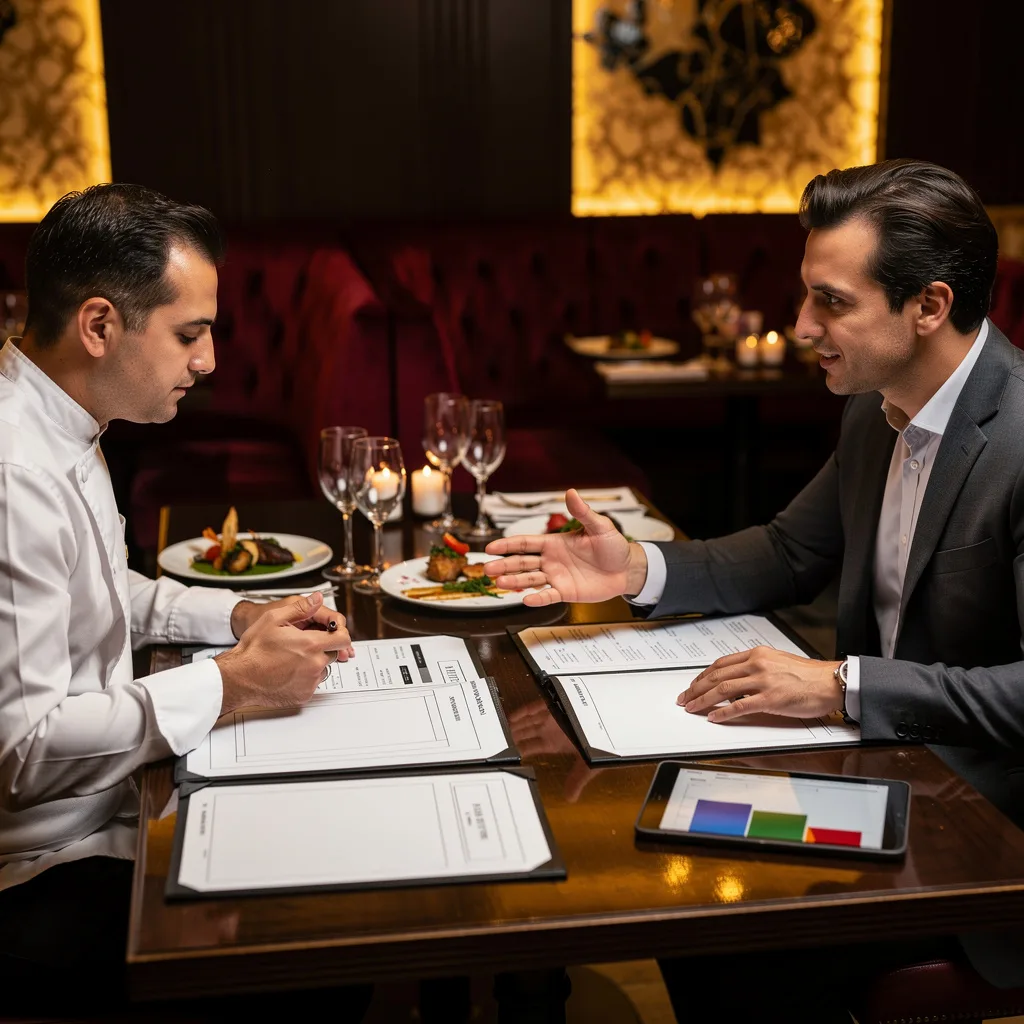
What is Opening a Restaurant?
Opening a Restaurant Training
The Opening a Restaurant certificate program delivers a complete, hands-on roadmap for aspiring restaurateurs, from initial concept development to post-launch growth. This course is designed for first-time owners, hospitality professionals seeking formal training, and career changers who want to launch a profitable food business. By the end, you will have a fully fleshed-out restaurant plan, including a validated concept, financial projections, and an operational playbook ready for execution.
The program is structured as a beginner-friendly progression that moves from strategic planning to practical implementation, balancing theory with real-world case studies and actionable templates. It builds core skills across four key areas: business planning and finance, operations and supply chain, team leadership and service standards, and marketing and brand development. With the restaurant industry evolving rapidly due to changing consumer habits and rising costs, this training gives you the current, data-driven tools to de-risk your launch and stand out in a competitive market.
What is Opening a Restaurant?
Opening a restaurant is the multidisciplinary process of transforming a culinary idea into a sustainable business entity. It encompasses everything from defining a unique concept and analyzing market demand to securing funding, navigating legal requirements, selecting a location, designing the kitchen, and building a team. Core concepts include feasibility analysis, menu engineering, cost control, operational workflow design, and customer experience management—all of which must be aligned to create a viable and profitable establishment.
Today, the restaurant industry is more dynamic than ever, with technology-driven ordering, delivery models, and shifting consumer preferences toward sustainability and experiential dining. The rise of ghost kitchens and hybrid formats means that traditional brick-and-mortar openings are no longer the only path, yet the fundamentals of sound planning and execution remain critical. Real-world applications range from independent bistros to franchise operations, and academic programs increasingly treat restaurant management as a specialized field requiring both creative and analytical skills.
Mastering the subject of opening a restaurant builds a robust skill stack that includes financial literacy, strategic negotiation, operational leadership, and crisis management. These competencies are directly transferable to any hospitality venture, and they also benefit professionals in real estate, food supply, and small business consulting. Whether you aim to own a single eatery or scale a multi-unit brand, the knowledge gained here empowers you to make informed decisions, mitigate risks, and create a memorable dining experience that sustains long-term success.
Common Questions About Opening a Restaurant
How does a restaurant management certificate boost my investor pitch?
Does the certificate cover the entire pre-opening checklist?
How does food cost percentage determine my menu prices?
What are the three-tier compliance rules for restaurant permits?
- Federal tier: your EIN (Employer Identification Number) and federal food safety regulations.
- State tier: health department permits, food handler certifications, and alcohol licensing where applicable.
- Local tier: zoning approvals, business licenses, and fire safety inspections.
What are the most common mistakes in restaurant lease negotiation?
How do demographics validate my restaurant trade area?
Is a great chef the only thing needed to open a successful restaurant?
- Validated concept backed by market research
- Sound financial projections and startup cost planning
- Legal compliance with permits and insurance
- Profitable menu pricing and kitchen design
- Trained staff and operational systems
What Will This Course Bring You?
- Analyze local market demographics and competition to define a viable restaurant concept.
- Develop a comprehensive business plan including financial projections and break-even analysis.
- Evaluate legal structures and obtain necessary permits and insurance for restaurant operations.
- Apply negotiation strategies to secure a favorable lease for an optimal restaurant location.
- Design a menu with pricing strategy that maximizes profitability while meeting target customer expectations.
- Plan kitchen layout and select equipment to ensure efficient workflow and safety compliance.
- Implement a staffing plan including recruitment, training, and scheduling to build a high-performing team.
- Create a pre-opening marketing campaign to generate buzz and attract initial customers.
Curriculum
12 Units1. Restaurant Concept and Market Research
1 hour
2. Business Planning and Financial Feasibility
1 hour
3. Legal Structure, Permits, and Insurance
1 hour
4. Location Selection and Lease Negotiation
1 hour
5. Menu Development and Pricing Strategy
1 hour
6. Kitchen Design and Equipment Planning
1 hour
7. Staffing, Hiring, and Training
1 hour
8. Branding, Marketing, and Pre-Opening Promotion
1 hour
9. Operational Systems and Service Standards
1 hour
10. Supply Chain Management and Inventory Control
1 hour
11. Pre-Opening Testing and Soft Launch
1 hour
12. Post-Opening Management and Growth
1 hour
Exam – Opening a Restaurant
20 Questions • 70% Pass • 30 min
Unlock All Units for Free
Create an account, enroll in the course, and start with the first unit right away.
Exam – Opening a Restaurant
20 Questions • Pass: 70% • 30 min
Course Duration
720
Total Minutes
12
Unit
1
Final Exam
~60
Min / Unit
Opening a Restaurant Certificate Program
Document Your Skill
Those who pass the 20-question, 30-minute exam with 70% receive the Opening a Restaurant Certificate.
Stand Out on Your CV
By adding your certificate to your CV, gain a professional reference in job applications and stand out from the crowd.
Career Advantage
Catch Wisdom certificates are recognized by HR departments and increase career opportunities.
CERTIFICATE FEE
At the end of the course, an online exam consisting of 20 questions with a 30-minute time limit is given. The exam appears automatically after you complete the topics. Anyone who scores at least 70 out of 100 on the certificate exam is awarded the Opening a Restaurant Document (certificate of attendance). You can add the certificate you earn to your CV for job applications in the many sectors listed above, and use it as a reference proving that you took this interactive course.
The Certificate of Achievement you receive with the Opening a Restaurant course program holds value that proves your personal and professional development in the business world. By adding it to your CV, it can serve as an important reference in your job applications. Moreover, compared with certificates from other private training institutions, Catch Wisdom certificates are offered to our participants at a much more affordable price.
Because HR departments recognize Catch Wisdom as a reputable institution in this field, they value these certificates and may evaluate your job applications favorably. For this reason, a Opening a Restaurant course certificate from Catch Wisdom can make your applications more attractive and place you in an advantageous position in the business world.
For more information, we recommend visiting the Support page.
Certificate in 7 Languages
Earning success certificates from our courses is now more meaningful and global. With certificates available in Turkish, English, German, French, Spanish, Arabic, and Russian, we fully unlock the potential of students worldwide.
Why Certificate in 7 Languages?
-
01
Global Skill Development
Receiving your certificates in 7 different languages strengthens your communication skills as you engage with more people worldwide. It lets you operate more confidently and capably on the international stage.
-
02
International Job Opportunities
Employers may see your certificates in multiple languages as a sign of your ability to seize global opportunities. You can open more doors to new jobs and projects.
-
03
Cultural Richness
The chance to earn certificates in different languages helps you build closer ties with various cultures and broadens your worldview. It enriches your global perspective and deepens cultural understanding.
-
04
Ability to Participate in International Projects
Multilingual certificates give you an edge to work more effectively on international projects. They boost your chances of leadership and participation in diverse projects in the business world.
-
05
Prove Yourself on the Global Stage
Certificates in multiple languages let you showcase your skills and knowledge worldwide. You can become an internationally recognized professional.
Language diversity opens worldwide opportunities. If you want to prove yourself in the international arena, join our online Opening a Restaurant course program and begin this journey with us.
Frequently Asked Questions (FAQ)
Is this course paid?
How do I join the course?
Can I take the course at my own pace?
How can I get my certificate?
What are the advantages of the Certified Certificate?
Boost Your Career
Take a new career step with the Opening a Restaurant course. Add your certificate to your CV, stand out in job applications, and open the door to new opportunities in the industry.
StartStudent Reviews
No reviews yet
Enroll in this course and be the first to leave a review about your experience with Opening a Restaurant.
Start