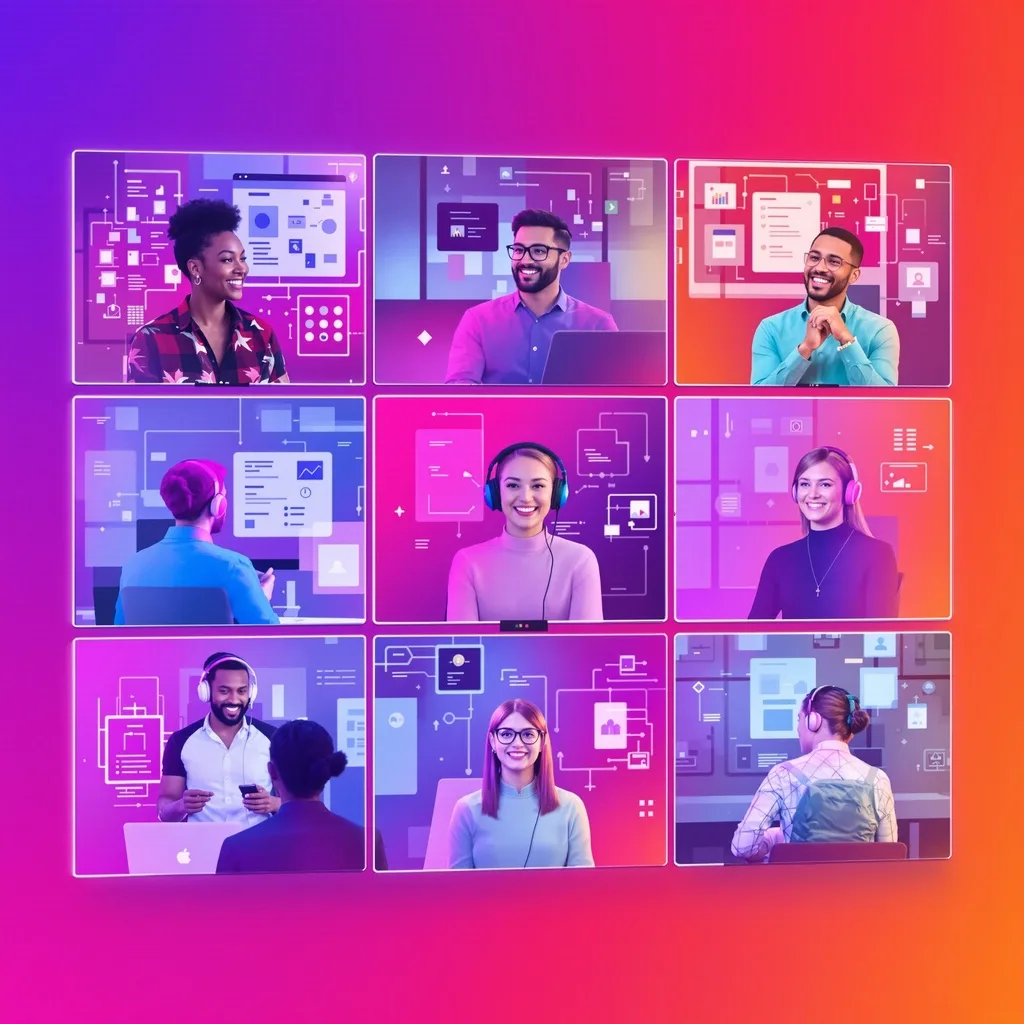
What is Outcome-Based Business Models?
Outcome-Based Business Models Training
The Outcome-Based Business Models certificate program provides a comprehensive framework for designing, implementing, and scaling business models that charge for results rather than products or services. This course is ideal for product managers, business strategists, entrepreneurs, and anyone involved in digital transformation who wants to move from selling outputs to delivering measurable customer value. By the end of the program, participants will be able to construct a viable outcome-based model, including defining quantifiable outcomes, structuring risk-sharing contracts, and building the data infrastructure needed to track success.
The program is structured to be beginner-friendly, starting with foundational concepts and progressively building toward advanced topics such as financial modeling, revenue recognition, and organizational transformation. It balances theoretical frameworks with practical case studies from industries like manufacturing, healthcare, and SaaS, covering all 12 lessons from defining customer outcomes to future trends and ethics. Participants develop four core skill areas: outcome quantification, pricing and contracting, data-driven measurement, and change management. This program is especially relevant now as businesses face increasing pressure to demonstrate tangible value and shift from subscription to performance-based models in a data-rich, AI-enabled environment.
What is Outcome-Based Business Models?
Outcome-Based Business Models represent a paradigm shift from selling products or services to charging for the specific, measurable results those offerings deliver to the customer. Core concepts include defining and quantifying customer outcomes, aligning incentives through risk-sharing contracts, and building data infrastructure to verify performance. This model moves beyond traditional subscription or transactional pricing by tying revenue directly to the value created, such as paying for reduced energy consumption rather than for the equipment itself.
Today, outcome-based models are gaining traction across industries like industrial equipment (pay-per-use), healthcare (pay-for-performance), and software (outcome-based SaaS). Recent shifts include the rise of IoT sensors and AI analytics that make real-time outcome tracking feasible, as well as increased customer demand for accountability and risk transfer. Companies like Rolls-Royce with "Power by the Hour" and Philips with "Light as a Service" exemplify how this approach drives innovation and long-term partnerships.
Mastering outcome-based business models builds a skill stack that combines strategic thinking, financial modeling, data analytics, and contract law. Professionals in product management, sales, finance, and operations benefit from understanding how to design and operationalize these models. For organizations, this knowledge enables them to differentiate in competitive markets, align with customer success, and create recurring, predictable revenue streams while managing risk effectively.
Common Questions About Outcome-Based Business Models
Can this course help me design outcome-based pricing strategies?
Is this training relevant for someone with no sales experience?
How do you define and quantify customer outcomes effectively?
- Outcome Definition Challenge: Shift focus from inputs and outputs to the actual value delivered.
- Five Value Levers for Tangible Outcomes: Use this framework to identify measurable dimensions such as efficiency, revenue, or risk reduction.
- Collaborative Definition: Engage stakeholders early to align on what 'success' means.
- Backward Design Flow: Start with the desired outcome and work backward to determine the data needed.
What are the key risk allocation strategies in outcome contracts?
What is the role of IoT in measuring customer outcomes?
What are leading and lagging KPIs in outcome measurement?
Is outcome-based pricing just a rebranding of subscription models?
What Will This Course Bring You?
- Analyze the foundational principles of outcome-based business models and their value proposition.
- Design a framework to define and quantify specific customer outcomes for a given industry.
- Apply risk-adjusted pricing strategies to align revenue with delivered customer outcomes.
- Evaluate contract structures and risk allocation mechanisms in outcome-based agreements.
- Build a data infrastructure and measurement system to track outcome performance in real time.
- Implement customer success processes that foster long-term relationships in outcome-based models.
- Construct financial models to recognize revenue and assess profitability under outcome-based contracts.
- Develop an organizational transformation plan to shift from product-centric to outcome-centric operations.
Curriculum
12 Units1. Foundations of Outcome-Based Business Models
1 hour
2. Defining and Quantifying Customer Outcomes
1 hour
3. Pricing Strategies for Outcome-Based Models
1 hour
4. Contracting and Risk Allocation
1 hour
5. Data Infrastructure and Measurement Systems
1 hour
6. Customer Success and Relationship Dynamics
1 hour
7. Financial Modeling and Revenue Recognition
1 hour
8. Organizational Transformation for Outcome-Based Models
1 hour
9. Technology Enablers: IoT, AI, and Analytics
1 hour
10. Scaling and Operationalizing Outcome-Based Models
1 hour
11. Industry Case Studies and Best Practices
1 hour
12. Future Trends and Ethical Considerations
1 hour
Exam – Outcome-Based Business Models
20 Questions • 70% Pass • 30 min
Unlock All Units for Free
Create an account, enroll in the course, and start with the first unit right away.
Exam – Outcome-Based Business Models
20 Questions • Pass: 70% • 30 min
Course Duration
720
Total Minutes
12
Unit
1
Final Exam
~60
Min / Unit
Outcome-Based Business Models Certificate Program
Document Your Skill
Those who pass the 20-question, 30-minute exam with 70% receive the Outcome-Based Business Models Certificate.
Stand Out on Your CV
By adding your certificate to your CV, gain a professional reference in job applications and stand out from the crowd.
Career Advantage
With the verification code, employers can check your certificate instantly — a concrete way to show your growth.
CERTIFICATE FEE
At the end of the course, an online exam consisting of 20 questions with a 30-minute time limit is given. The exam appears automatically after you complete the topics. Anyone who scores at least 70 out of 100 on the certificate exam is awarded the Outcome-Based Business Models Document (certificate of attendance). You can add the certificate you earn to your CV for job applications in the many sectors listed above, and use it as a reference proving that you took this interactive course.
The Certificate of Achievement you receive with the Outcome-Based Business Models course program holds value that proves your personal and professional development in the business world. By adding it to your CV, it can serve as an important reference in your job applications. Moreover, compared with certificates from other private training institutions, Catch Wisdom certificates are offered to our participants at a much more affordable price.
The Outcome-Based Business Models course certificate is a document that proves, with a unique verification code, that you completed the course. Employers can instantly check its authenticity with this code, which helps you show your development concretely in your job applications.
For more information, we recommend visiting the Support page.
Certificate in 7 Languages
Earning success certificates from our courses is now more meaningful and global. With certificates available in Turkish, English, German, French, Spanish, Arabic, and Russian, we fully unlock the potential of students worldwide.
Why Certificate in 7 Languages?
-
01
Global Skill Development
Receiving your certificates in 7 different languages strengthens your communication skills as you engage with more people worldwide. It lets you operate more confidently and capably on the international stage.
-
02
International Job Opportunities
Employers may see your certificates in multiple languages as a sign of your ability to seize global opportunities. You can open more doors to new jobs and projects.
-
03
Cultural Richness
The chance to earn certificates in different languages helps you build closer ties with various cultures and broadens your worldview. It enriches your global perspective and deepens cultural understanding.
-
04
Ability to Participate in International Projects
Multilingual certificates give you an edge to work more effectively on international projects. They boost your chances of leadership and participation in diverse projects in the business world.
-
05
Prove Yourself on the Global Stage
Certificates in multiple languages give you the opportunity to present your skills and knowledge worldwide.
Language diversity opens worldwide opportunities. If you want to prove yourself in the international arena, join our online Outcome-Based Business Models course program and begin this journey with us.
Frequently Asked Questions (FAQ)
Is this course paid?
How do I join the course?
Can I take the course at my own pace?
How can I get my certificate?
What are the advantages of the certificate?
Boost Your Career
Take a new career step with the Outcome-Based Business Models course. Add your certificate to your CV, stand out in job applications, and open the door to new opportunities in the industry.
StartStudent Reviews
No reviews yet
Enroll in this course and be the first to leave a review about your experience with Outcome-Based Business Models.
Start