What is Perfume Making?
Perfume Making Training
The Perfume Making certificate program offers a comprehensive, hands-on journey into the art and science of fragrance creation, from understanding perfume structure and fragrance families to mastering complex compositions and natural perfumery. Designed for absolute beginners and hobbyists alike, this course transforms curiosity into practical skill, culminating in the creation of your own signature scent. By the end, you will confidently blend oils, absolutes, and solvents, evaluate your creations, and bottle a personalized perfume that reflects your unique olfactory style.
The program is structured as a progressive, beginner-friendly path that balances theoretical foundations with intensive practical application. You will build four core skill areas: olfactory literacy (through scent library training and note recognition), formulation mathematics (dilution and ratios), creative composition (from simple three-note formulas to layered accords), and professional finishing (evaluation, refining, bottling, and storage). With the fragrance industry experiencing a renaissance in both natural and synthetic perfumery, this training equips you with the precise techniques and safety protocols needed to participate meaningfully in a craft that is both timeless and rapidly evolving.
What is Perfume Making?
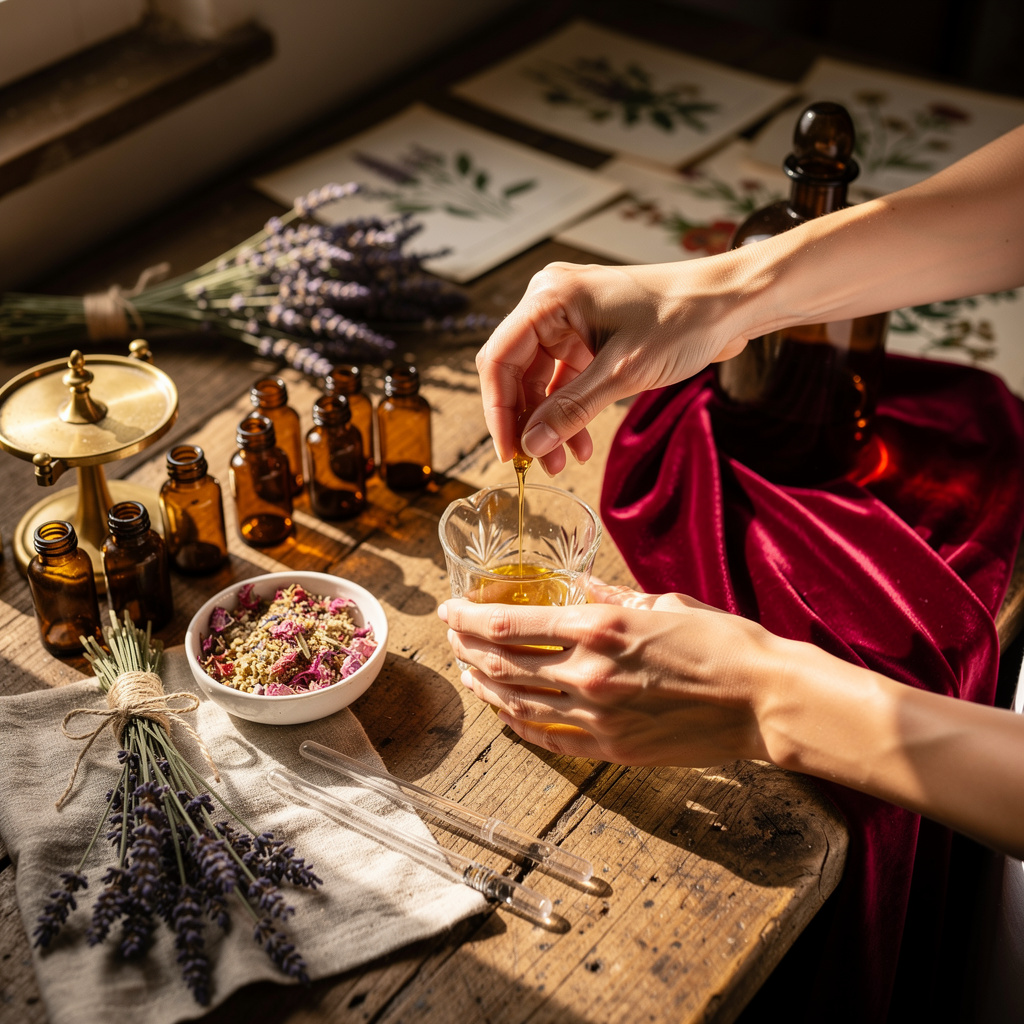
Perfume making is the disciplined craft of blending aromatic materials—essential oils, absolutes, synthetic aroma chemicals, and solvents—to create a coherent, wearable scent. Its core concepts include the olfactory pyramid (top, heart, and base notes), accords (harmonious combinations of notes), and the structural balance between volatility and persistence. The practice draws on chemistry, sensory psychology, and artistic intuition, covering everything from raw ingredient sourcing to the final dilution that makes a fragrance safe and pleasant on skin.
Today, perfume making matters more than ever as consumers demand transparency, sustainability, and personalization in fragrance. The industry spans luxury houses, indie artisanal studios, and functional applications in cosmetics, home care, and even wellness. Recent shifts toward clean beauty and natural perfumery have expanded the field, while synthetic aroma chemicals remain essential for replicating rare scents and achieving longevity. Perfume making is now a vibrant intersection of tradition and innovation, with a growing community of creators using online platforms to share formulations and techniques.
Mastering perfume making builds a unique skill stack that combines precise measurement, sensory discrimination, and creative problem-solving. You develop a trained nose, an understanding of material interactions, and the ability to translate abstract ideas into tangible olfactory experiences. This expertise serves personal enrichment—crafting bespoke gifts or a signature scent—as well as professional pathways in fragrance development, product formulation, or olfactory consulting. The subject rewards patience and curiosity, offering endless depth for those who wish to explore the invisible yet powerful language of smell.
Common Questions About Perfume Making
Can a complete beginner start the perfume making course without prior chemistry knowledge?
How does the perfume making certificate help my CV for fragrance industry jobs?
Why does the olfactory pyramid matter when blending top notes?
- Top notes create the fleeting first impression — they evaporate within minutes.
- Heart notes form the character of the fragrance over the next few hours.
- Base notes anchor the composition and linger on the skin longest.
What is the difference between essential oils and absolutes in perfume making?
How do you build a signature accord from simple notes?
Why is a digital scale preferred over drops for reproducible perfume formulas?
Is it a myth that natural perfumery is always safer than synthetic aroma chemicals?
What Will This Course Bring You?
- Analyze the structure of perfumes and classify fragrance families to identify distinct scent profiles.
- Apply proper safety protocols and use essential tools when handling perfume ingredients.
- Build a personal scent library through olfactory training to distinguish individual notes.
- Calculate correct dilution ratios and formulation percentages to create accurate perfume blends.
- Design a simple three-note perfume formula that demonstrates scent balance and harmony.
- Evaluate and refine perfume compositions by adjusting accords and layering for complexity.
- Compare synthetic aroma chemicals and natural ingredients to select appropriate materials for modern or natural perfumery.
- Implement bottling and storage techniques to preserve fragrance integrity and create a signature scent.
Curriculum
12 Units1. Perfume Structure and Fragrance Families
1 hour
2. Perfume Ingredients: Oils, Absolutes, and Solvents
1 hour
3. Notes, Accords, and Scent Building Blocks
1 hour
4. Tools, Equipment, and Safety
1 hour
5. Building Your Scent Library: Olfactory Training
1 hour
6. Formulation Math: Dilution and Ratios
1 hour
7. Your First Perfume: A Simple Three-Note Formula
1 hour
8. Complex Compositions: Layering and Balance
1 hour
9. Synthetic Aroma Chemicals in Modern Perfumery
1 hour
10. Natural Perfumery: Pure Ingredients Only
1 hour
11. Evaluating and Refining Your Creations
1 hour
12. Bottling, Storage, and Creating Your Signature Scent
1 hour
Exam – Perfume Making
20 Questions • 70% Pass • 30 min
Unlock All Units for Free
Create an account, enroll in the course, and start with the first unit right away.
Exam – Perfume Making
20 Questions • Pass: 70% • 30 min
Course Duration
720
Total Minutes
12
Unit
1
Final Exam
~60
Min / Unit
Perfume Making Certificate Program
Document Your Skill
Those who pass the 20-question, 30-minute exam with 70% receive the Perfume Making Certificate.
Stand Out on Your CV
By adding your certificate to your CV, gain a professional reference in job applications and stand out from the crowd.
Career Advantage
Catch Wisdom certificates are recognized by HR departments and increase career opportunities.
CERTIFICATE FEE
At the end of the course, an online exam consisting of 20 questions with a 30-minute time limit is given. The exam appears automatically after you complete the topics. Anyone who scores at least 70 out of 100 on the certificate exam is awarded the Perfume Making Document (certificate of attendance). You can add the certificate you earn to your CV for job applications in the many sectors listed above, and use it as a reference proving that you took this interactive course.
The Certificate of Achievement you receive with the Perfume Making course program holds value that proves your personal and professional development in the business world. By adding it to your CV, it can serve as an important reference in your job applications. Moreover, compared with certificates from other private training institutions, Catch Wisdom certificates are offered to our participants at a much more affordable price.
Because HR departments recognize Catch Wisdom as a reputable institution in this field, they value these certificates and may evaluate your job applications favorably. For this reason, a Perfume Making course certificate from Catch Wisdom can make your applications more attractive and place you in an advantageous position in the business world.
For more information, we recommend visiting the Support page.
Certificate in 7 Languages
Earning success certificates from our courses is now more meaningful and global. With certificates available in Turkish, English, German, French, Spanish, Arabic, and Russian, we fully unlock the potential of students worldwide.
Why Certificate in 7 Languages?
-
01
Global Skill Development
Receiving your certificates in 7 different languages strengthens your communication skills as you engage with more people worldwide. It lets you operate more confidently and capably on the international stage.
-
02
International Job Opportunities
Employers may see your certificates in multiple languages as a sign of your ability to seize global opportunities. You can open more doors to new jobs and projects.
-
03
Cultural Richness
The chance to earn certificates in different languages helps you build closer ties with various cultures and broadens your worldview. It enriches your global perspective and deepens cultural understanding.
-
04
Ability to Participate in International Projects
Multilingual certificates give you an edge to work more effectively on international projects. They boost your chances of leadership and participation in diverse projects in the business world.
-
05
Prove Yourself on the Global Stage
Certificates in multiple languages let you showcase your skills and knowledge worldwide. You can become an internationally recognized professional.
Language diversity opens worldwide opportunities. If you want to prove yourself in the international arena, join our online Perfume Making course program and begin this journey with us.
Frequently Asked Questions (FAQ)
Is this course paid?
How do I join the course?
Can I take the course at my own pace?
How can I get my certificate?
What are the advantages of the Certified Certificate?
Boost Your Career
Take a new career step with the Perfume Making course. Add your certificate to your CV, stand out in job applications, and open the door to new opportunities in the industry.
StartStudent Reviews
No reviews yet
Enroll in this course and be the first to leave a review about your experience with Perfume Making.
Start