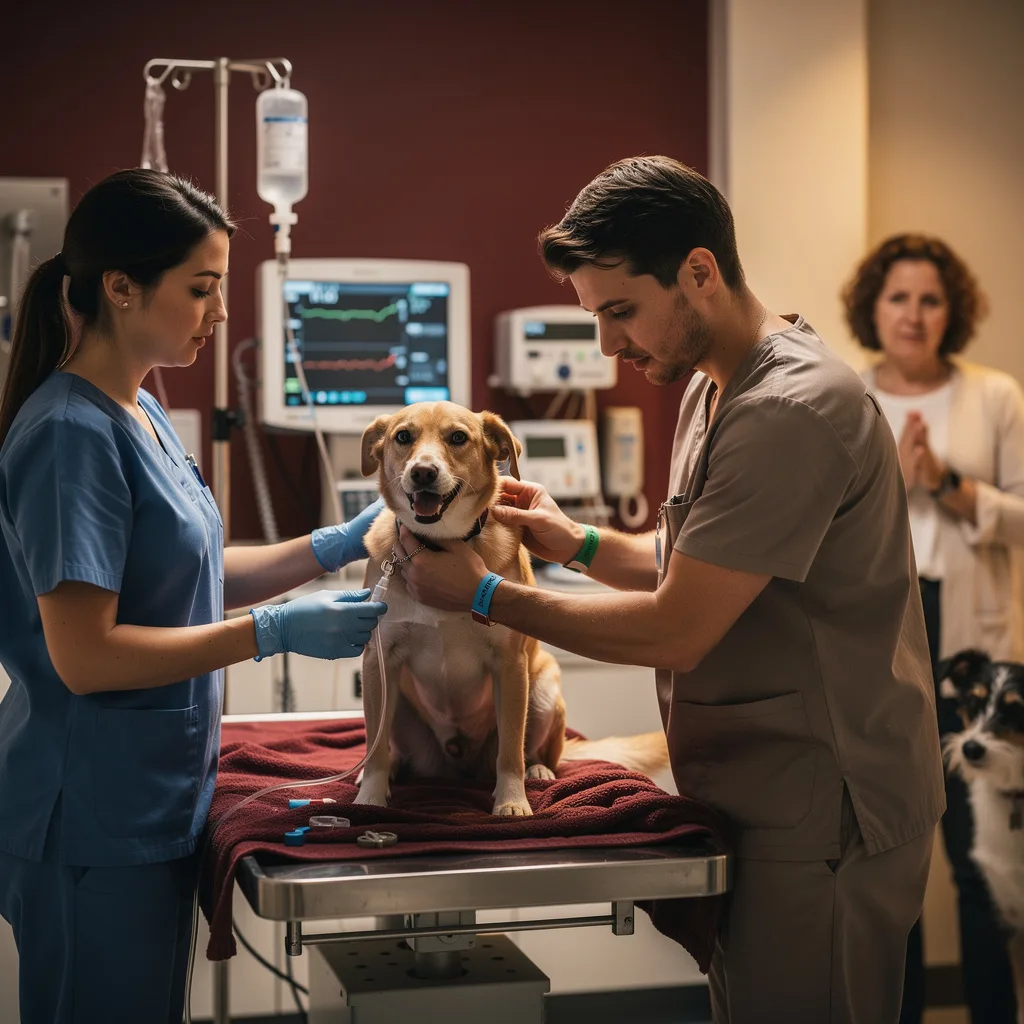
What is Pet Emergency Triage?
Pet Emergency Triage Training
The Pet Emergency Triage certificate program equips veterinary professionals, animal care staff, and dedicated pet owners with the critical skills to rapidly assess and stabilize animals in crisis. This course is designed for anyone who may be first on the scene of a pet emergency—from veterinary technicians and assistants to shelter workers and pet parents—and its primary practical outcome is the ability to confidently perform a structured triage assessment, recognize life-threatening conditions, and initiate appropriate emergency interventions before advanced care arrives.
The program follows a beginner-friendly progression that starts with recognizing what constitutes a true emergency and then systematically builds competence through lessons on vital signs, shock recognition, respiratory and cardiac emergencies, CPR, trauma management, poisoning, environmental crises, and transport stabilization. Each module balances theoretical knowledge with hands-on practice, and the curriculum covers four core skill areas: assessment (triage process, vital sign evaluation), intervention (CPR, wound care, toxin management), communication (team coordination, legal considerations), and stabilization (transport, environmental emergencies). Choosing this program now ensures you are prepared for the rising number of pet emergencies seen in clinics, shelters, and homes, while also meeting continuing education requirements in veterinary medicine.
What is Pet Emergency Triage?
Pet emergency triage is the systematic process of rapidly evaluating an injured or ill animal to determine the severity of its condition and prioritize treatment based on medical urgency. Core concepts include the primary survey (ABCDE approach: airway, breathing, circulation, disability, exposure), assessment of vital signs such as heart rate, respiratory rate, mucous membrane color, capillary refill time, and temperature, and recognition of shock states—hypovolemic, distributive, cardiogenic, or obstructive. Triage also involves categorizing patients into immediate, urgent, or stable groups to allocate limited resources effectively in high-pressure situations.
Today, pet emergency triage is more critical than ever due to the increasing number of companion animals, the rise of emergency veterinary services, and the growing expectation for rapid, life-saving care in clinics and shelters. Recent shifts include the integration of tele-triage for remote guidance, standardized triage algorithms adapted from human medicine, and a greater emphasis on recognizing subtle signs of distress in species that mask pain. This subject is applied daily in veterinary emergency rooms, mobile response units, disaster relief operations, and even in home settings where owners must decide when to seek immediate help.
Mastering pet emergency triage builds a skill stack that includes clinical observation, decision-making under pressure, technical proficiency in CPR and wound management, and clear communication with both veterinary teams and pet owners. These competencies are invaluable for veterinary technicians, emergency veterinarians, shelter managers, animal control officers, and pet first-aid instructors. Beyond professional roles, the knowledge empowers any responsible pet guardian to act swiftly and correctly during a crisis, potentially saving a beloved animal’s life before professional help is reached.
Common Questions About Pet Emergency Triage
Can a beginner without vet experience take Pet Emergency Triage?
Is the Pet Emergency Triage course suitable for pet owners?
How do you perform the ABCDE primary survey on a cat?
- Airway – check for obstruction
- Breathing – look for chest movement and respiratory rate
- Circulation – assess pulse, mucous membrane color, and capillary refill time
- Disability – evaluate mental status and pupil response
- Exposure – quickly examine for wounds, bleeding, or environmental clues
What are normal heart rate ranges for dogs?
How to recognize decompensatory shock in pets?
How to assign a triage category using the 90-second rule?
- Immediate – life-threatening, needs treatment within minutes
- Urgent – serious but stable for a short wait
- Non-urgent – minor injuries, can wait
Is it true that cats are just small dogs in emergencies?
What Will This Course Bring You?
- Apply the triage assessment process to prioritize care for a pet with multiple injuries.
- Evaluate abnormal vital signs to identify early signs of shock in a canine patient.
- Implement CPR and basic life support techniques on a feline patient in cardiac arrest.
- Analyze respiratory emergencies to differentiate between upper airway obstruction and pulmonary edema.
- Design a stabilization and transport plan for a pet with suspected spinal trauma.
- Assess poisoning cases by identifying common toxins and calculating appropriate antidote dosages.
- Communicate effectively with pet owners about emergency procedures and legal consent requirements.
Curriculum
12 Units1. Recognizing a Pet Emergency
1 hour
2. The Triage Assessment Process
1 hour
3. Vital Signs and Normal Parameters
1 hour
4. Recognizing Abnormal Vital Signs and Shock
1 hour
5. Respiratory Emergencies
1 hour
6. Cardiac Emergencies
1 hour
7. CPR and Basic Life Support
1 hour
8. Trauma and Wound Management
1 hour
9. Poisoning and Toxicological Emergencies
1 hour
10. Environmental Emergencies
1 hour
11. Stabilization and Transport
1 hour
12. Communication and Legal Considerations
1 hour
Exam – Pet Emergency Triage
20 Questions • 70% Pass • 30 min
Unlock All Units for Free
Create an account, enroll in the course, and start with the first unit right away.
Exam – Pet Emergency Triage
20 Questions • Pass: 70% • 30 min
Course Duration
720
Total Minutes
12
Unit
1
Final Exam
~60
Min / Unit
Pet Emergency Triage Certificate Program
Document Your Skill
Those who pass the 20-question, 30-minute exam with 70% receive the Pet Emergency Triage Certificate.
Stand Out on Your CV
By adding your certificate to your CV, gain a professional reference in job applications and stand out from the crowd.
Career Advantage
With the verification code, employers can check your certificate instantly — a concrete way to show your growth.
CERTIFICATE FEE
At the end of the course, an online exam consisting of 20 questions with a 30-minute time limit is given. The exam appears automatically after you complete the topics. Anyone who scores at least 70 out of 100 on the certificate exam is awarded the Pet Emergency Triage Document (certificate of attendance). You can add the certificate you earn to your CV for job applications in the many sectors listed above, and use it as a reference proving that you took this interactive course.
The Certificate of Achievement you receive with the Pet Emergency Triage course program holds value that proves your personal and professional development in the business world. By adding it to your CV, it can serve as an important reference in your job applications. Moreover, compared with certificates from other private training institutions, Catch Wisdom certificates are offered to our participants at a much more affordable price.
The Pet Emergency Triage course certificate is a document that proves, with a unique verification code, that you completed the course. Employers can instantly check its authenticity with this code, which helps you show your development concretely in your job applications.
For more information, we recommend visiting the Support page.
Certificate in 7 Languages
Earning success certificates from our courses is now more meaningful and global. With certificates available in Turkish, English, German, French, Spanish, Arabic, and Russian, we fully unlock the potential of students worldwide.
Why Certificate in 7 Languages?
-
01
Global Skill Development
Receiving your certificates in 7 different languages strengthens your communication skills as you engage with more people worldwide. It lets you operate more confidently and capably on the international stage.
-
02
International Job Opportunities
Employers may see your certificates in multiple languages as a sign of your ability to seize global opportunities. You can open more doors to new jobs and projects.
-
03
Cultural Richness
The chance to earn certificates in different languages helps you build closer ties with various cultures and broadens your worldview. It enriches your global perspective and deepens cultural understanding.
-
04
Ability to Participate in International Projects
Multilingual certificates give you an edge to work more effectively on international projects. They boost your chances of leadership and participation in diverse projects in the business world.
-
05
Prove Yourself on the Global Stage
Certificates in multiple languages give you the opportunity to present your skills and knowledge worldwide.
Language diversity opens worldwide opportunities. If you want to prove yourself in the international arena, join our online Pet Emergency Triage course program and begin this journey with us.
Frequently Asked Questions (FAQ)
Is this course paid?
How do I join the course?
Can I take the course at my own pace?
How can I get my certificate?
What are the advantages of the certificate?
Boost Your Career
Take a new career step with the Pet Emergency Triage course. Add your certificate to your CV, stand out in job applications, and open the door to new opportunities in the industry.
StartStudent Reviews
No reviews yet
Enroll in this course and be the first to leave a review about your experience with Pet Emergency Triage.
Start