What is Photo Archiving and Organization?
Photo Archiving and Organization Certificate Program
The Photo Archiving and Organization certificate program is designed for individuals and professionals who need to bring order, safety, and long-term accessibility to growing collections of digital and physical photographs. It covers the full lifecycle of photo management, from inventorying sources and devices, understanding file formats and metadata, to building scalable folder structures, culling and deduplication workflows, and implementing robust backup strategies like 3-2-1. The course is ideal for family archivists, photographers, librarians, digital asset managers, and anyone responsible for preserving personal or organizational visual memory. By the end, participants will have a practical, repeatable system for organizing, tagging, backing up, and maintaining their photo archives so that images remain findable, secure, and intact for decades.
The program progresses in a beginner-friendly sequence, starting with why photo archives matter and how to inventory a collection, then moving into technical fundamentals such as file formats, metadata, and image quality. It balances theory with hands-on practice: learners apply folder naming conventions, import and culling routines, and catalog software tools directly to their own photo libraries. The curriculum builds five core skill areas: collection assessment and inventory; structural organization (folders, naming, metadata); workflow automation (import, cull, dedupe, tag); backup, cloud sync, and preservation (including scanning and legacy formats); and long-term integrity, privacy, and sustainable maintenance. This program is especially relevant now as personal photo libraries explode in size, cloud services shift their terms, and families seek to digitize and preserve irreplaceable memories before physical media degrade.
What is Photo Archiving and Organization?
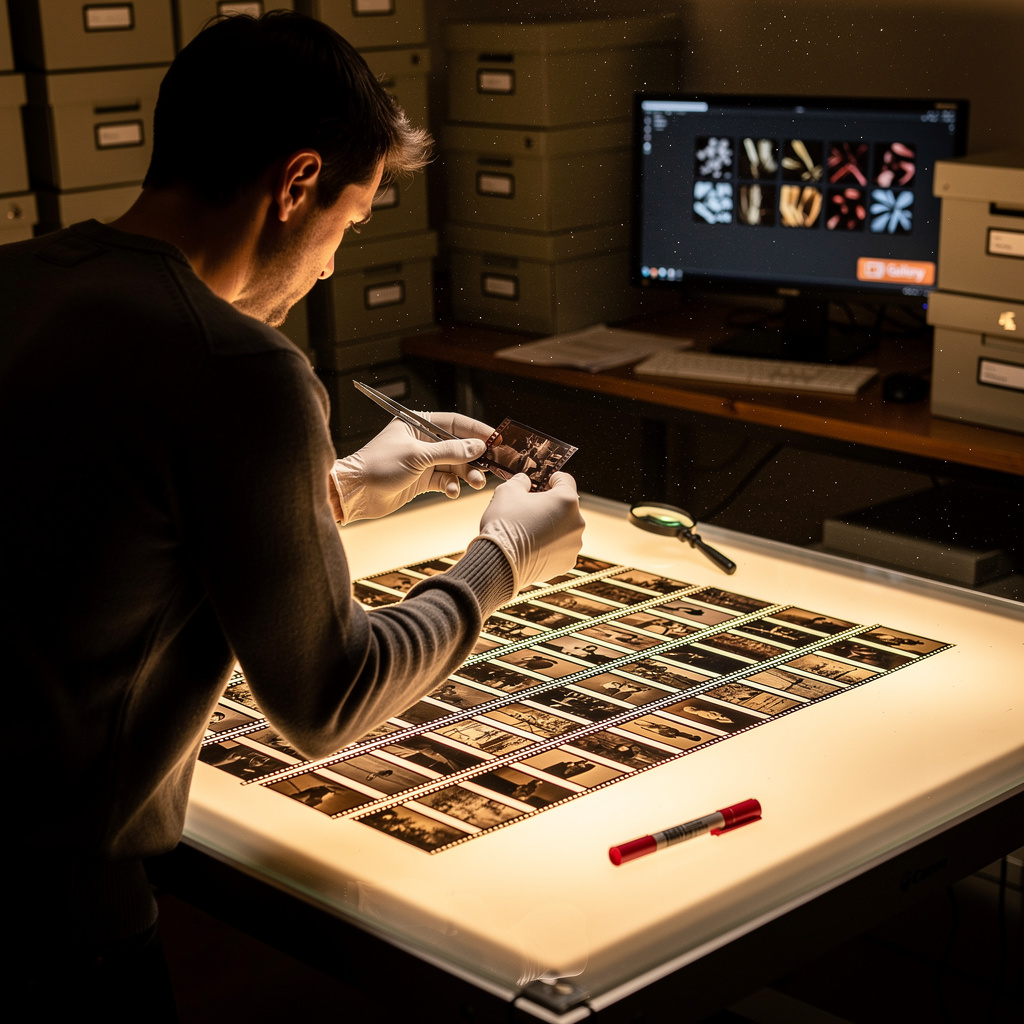
Photo archiving and organization is the discipline of systematically managing photographic collections to ensure their long-term preservation, retrievability, and usability. Its scope spans both digital and physical media, covering the assessment of sources such as cameras, phones, memory cards, and scanned prints; the understanding of file formats, compression, and metadata standards; and the design of folder hierarchies and naming conventions that scale across thousands of images. Core concepts include metadata tagging (keywords, ratings, faces, locations), catalog software and digital asset management (DAM) tools, deduplication, and verification of file integrity. It also addresses backup strategies like the 3-2-1 rule, cloud synchronization, and the special challenges of preserving family archives, including restoration and legacy formats.
This subject matters today because the volume of digital photos has grown exponentially, while the fragility of storage media, changing cloud policies, and the risk of silent data corruption threaten irreplaceable memories. In real life, it is used by families digitizing old albums, professional photographers managing client shoots, museums and archives preserving historical collections, and businesses maintaining brand asset libraries. Recent shifts include the rise of AI-powered tagging and face recognition, the move toward cloud-native DAM platforms, and growing awareness of privacy and data ownership. Academia also engages with photo archiving through digital humanities, information science, and preservation studies, where metadata standards and long-term access are active research areas.
Mastering photo archiving and organization builds a skill stack that combines information architecture, metadata literacy, workflow design, backup engineering, and digital preservation ethics. These skills are valuable in personal contexts, such as securing a family's visual history, and in professional settings like photography, librarianship, digital asset management, and archival work. The ability to design scalable, verifiable, and maintainable systems for visual media is increasingly sought after as organizations recognize that their photo collections are strategic assets. Whether for a solo archivist or a team managing millions of assets, this subject provides the frameworks to keep images safe, searchable, and meaningful over time.
What Will This Course Bring You?
- Analyze personal photo archiving goals, risks, and workflows to design a preservation plan that prevents irreversible loss of irreplaceable images.
- Inventory photo collections across phones, cameras, computers, cloud accounts, and physical media by documenting sources, file formats, and storage locations.
- Evaluate file formats, metadata, and image quality while planning scanning, restoration, and legacy format preservation for family photo archives.
- Design scalable folder structures and naming conventions that enable consistent sorting, retrieval, and migration across large, growing photo archives.
- Implement import, culling, and deduplication workflows to reduce redundant images and organize new photos efficiently without deleting valuable originals.
- Apply metadata and tagging practices using keywords, ratings, faces, and locations to make personal photo collections searchable, sortable, and meaningful.
- Compare catalog software and cloud photo services to select tools that support syncing, tagging, and retrieval across multiple devices and platforms.
- Build a 3-2-1 backup and migration verification routine that protects photo archives, maintains file integrity, and respects privacy during sharing.
Curriculum
12 Units1. Why Photo Archives Matter: Goals, Risks, and Workflows
1 hour
2. Inventorying Your Photo Collection: Sources, Devices, and Formats
1 hour
3. File Formats, Metadata, and Image Quality Fundamentals
1 hour
4. Folder Structures and Naming Conventions That Scale
1 hour
5. Importing, Culling, and Deduplication Workflows
1 hour
6. Metadata and Tagging: Keywords, Ratings, Faces, and Locations
1 hour
7. Catalog Software and Digital Asset Management Tools
1 hour
8. Backup Strategy: 3-2-1, Cloud, Local, and Offsite
1 hour
9. Cloud Photo Services and Sync Across Devices
1 hour
10. Preserving Family Archives: Scanning, Restoration, and Legacy Formats
1 hour
11. Migration, Verification, and Long-Term File Integrity
1 hour
12. Privacy, Sharing, and Sustainable Maintenance Routines
1 hour
Exam – Photo Archiving and Organization
20 Questions • 70% Pass • 30 min
Unlock All Units for Free
Create an account, enroll in the course, and start with the first unit right away.
Exam – Photo Archiving and Organization
20 Questions • Pass: 70% • 30 min
Course Duration
720
Total Minutes
12
Unit
1
Final Exam
~60
Min / Unit
Photo Archiving and Organization Certificate Program
Document Your Skill
Those who pass the 20-question, 30-minute exam with 70% receive the Photo Archiving and Organization Certificate.
Stand Out on Your CV
By adding your certificate to your CV, gain a professional reference in job applications and stand out from the crowd.
Career Advantage
Catch Wisdom certificates are recognized by HR departments and increase career opportunities.
CERTIFICATE FEE
At the end of the course, an online exam consisting of 20 questions with a 30-minute time limit is given. The exam appears automatically after you complete the topics. Anyone who scores at least 70 out of 100 on the certificate exam is awarded the Photo Archiving and Organization Document (certificate of attendance). You can add the certificate you earn to your CV for job applications in the many sectors listed above, and use it as a reference proving that you took this interactive course.
The Certificate of Achievement you receive with the Photo Archiving and Organization course program holds value that proves your personal and professional development in the business world. By adding it to your CV, it can serve as an important reference in your job applications. Moreover, compared with certificates from other private training institutions, Catch Wisdom certificates are offered to our participants at a much more affordable price.
Because HR departments recognize Catch Wisdom as a reputable institution in this field, they value these certificates and may evaluate your job applications favorably. For this reason, a Photo Archiving and Organization course certificate from Catch Wisdom can make your applications more attractive and place you in an advantageous position in the business world.
For more information, we recommend visiting the Support page.
Certificate in 7 Languages
Earning success certificates from our courses is now more meaningful and global. With certificates available in Turkish, English, German, French, Spanish, Arabic, and Russian, we fully unlock the potential of students worldwide.
Why Certificate in 7 Languages?
-
01
Global Skill Development
Receiving your certificates in 7 different languages strengthens your communication skills as you engage with more people worldwide. It lets you operate more confidently and capably on the international stage.
-
02
International Job Opportunities
Employers may see your certificates in multiple languages as a sign of your ability to seize global opportunities. You can open more doors to new jobs and projects.
-
03
Cultural Richness
The chance to earn certificates in different languages helps you build closer ties with various cultures and broadens your worldview. It enriches your global perspective and deepens cultural understanding.
-
04
Ability to Participate in International Projects
Multilingual certificates give you an edge to work more effectively on international projects. They boost your chances of leadership and participation in diverse projects in the business world.
-
05
Prove Yourself on the Global Stage
Certificates in multiple languages let you showcase your skills and knowledge worldwide. You can become an internationally recognized professional.
Language diversity opens worldwide opportunities. If you want to prove yourself in the international arena, join our online Photo Archiving and Organization course program and begin this journey with us.
Frequently Asked Questions (FAQ)
Is this course paid?
How do I join the course?
Can I take the course at my own pace?
How can I get my certificate?
What are the advantages of the Certified Certificate?
Boost Your Career
Take a new career step with the Photo Archiving and Organization course. Add your certificate to your CV, stand out in job applications, and open the door to new opportunities in the industry.
StartStudent Reviews
No reviews yet
Enroll in this course and be the first to leave a review about your experience with Photo Archiving and Organization.
Start