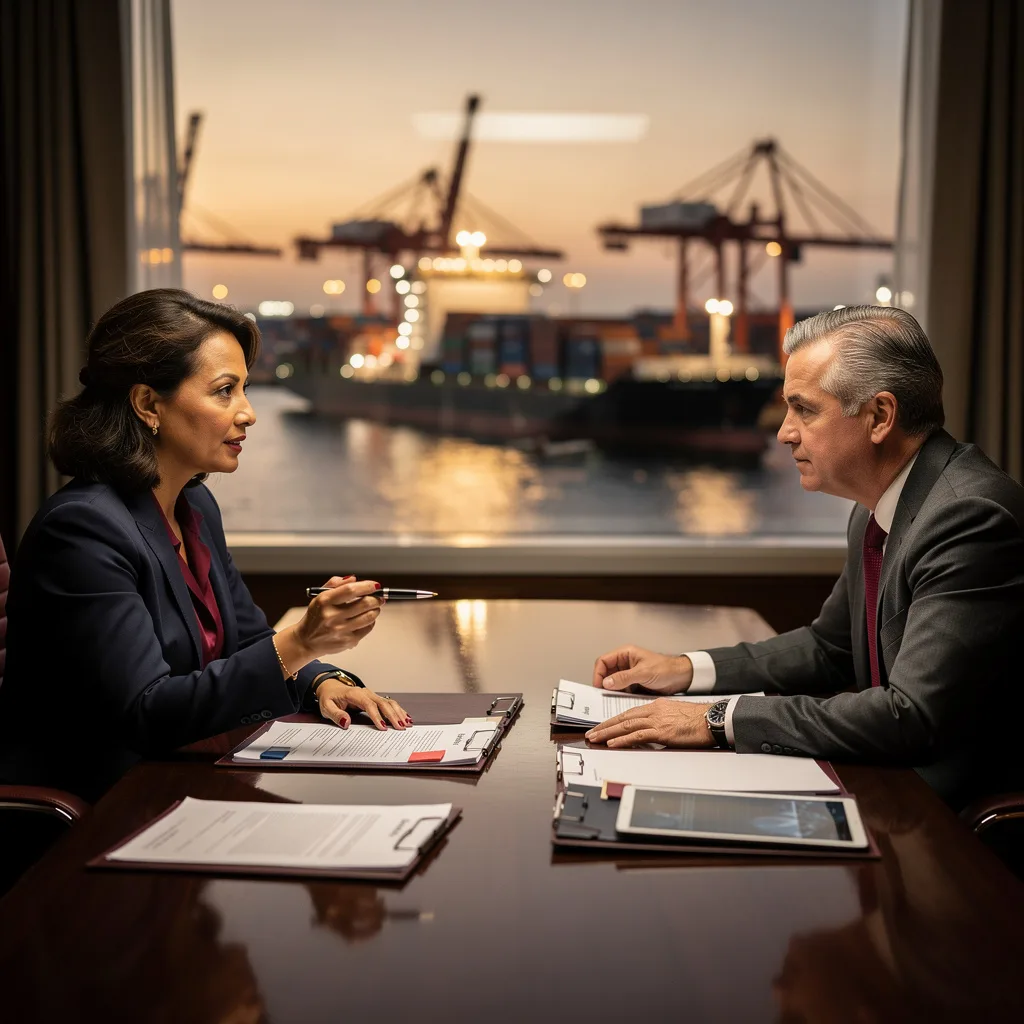
What is Pleasure Craft Maritime Regulations?
Pleasure Craft Maritime Regulations Training
The Pleasure Craft Maritime Regulations certificate program provides a comprehensive understanding of the legal, safety, and operational rules governing recreational vessels. This course is designed for boat owners, operators, marina staff, and anyone seeking to navigate the complex regulatory environment of pleasure craft. The main practical outcome is the ability to confidently apply regulations to daily boating activities, ensuring compliance and reducing risk.
The program is structured as a beginner-friendly progression, starting with the scope and purpose of regulations before moving into jurisdictional frameworks and vessel classification. It balances theoretical knowledge with practical applications across five core skill areas: legal compliance, safety equipment management, navigation rules, environmental stewardship, and emergency response. With increasing enforcement and evolving environmental standards, this training is essential now to avoid penalties and operate responsibly on the water.
What is Pleasure Craft Maritime Regulations?
Pleasure Craft Maritime Regulations encompass the body of laws, rules, and standards that govern the operation, safety, and environmental impact of recreational boats and yachts. Core concepts include vessel classification and documentation, mandatory safety equipment, navigation rules (such as COLREGS), operator licensing, and pollution prevention measures. These regulations apply to both inland and coastal waters, often varying by jurisdiction, and are enforced by national authorities like the U.S. Coast Guard or Transport Canada.
Today, these regulations are more relevant than ever due to increased boating traffic, heightened environmental awareness, and stricter enforcement of emissions and waste discharge rules. They are used by recreational boaters, charter companies, marine insurers, and government agencies to ensure safe and lawful operation. Recent shifts include the adoption of electronic navigation aids, updated licensing requirements, and new standards for vessel maintenance and inspection.
Mastering this subject builds a practical skill stack in legal interpretation, risk assessment, safety protocol execution, and environmental stewardship. It benefits anyone who owns or operates a pleasure craft, as well as professionals in marine tourism, insurance, and regulatory compliance. The knowledge gained directly supports safer voyages, reduced liability, and a deeper understanding of the responsibilities that come with recreational boating.
Common Questions About Pleasure Craft Maritime Regulations
Can this course help me understand if I need a boating license?
Is this course suitable for a beginner with no boating experience?
What are the CE design categories A to D for pleasure craft?
- Category A – Ocean: for extended voyages in severe conditions.
- Category B – Offshore: for coastal waters with moderate conditions.
- Category C – Inshore: for sheltered coastal waters and inland waters.
- Category D – Sheltered waters: for small lakes, rivers, and canals.
What are the fire extinguisher requirements by vessel length?
What is the difference between state and federal jurisdiction on waters?
How do I properly report a boating accident?
- Vessel identification (name, registration number)
- Location and time of the accident
- Description of what happened
- Injuries or fatalities involved
- Damage to property
Is it true that small boats don't need any safety equipment?
What Will This Course Bring You?
- Analyze the scope and purpose of pleasure craft regulations to distinguish between federal and provincial jurisdictions.
- Classify a pleasure craft based on its documentation requirements and apply the appropriate registration process.
- Evaluate a vessel's safety equipment inventory to ensure compliance with Transport Canada's required equipment list.
- Apply navigation rules and aids to avoid collisions in inland and coastal waters.
- Determine the operator licensing and education requirements for operating a pleasure craft in Canadian waters.
- Implement environmental regulations to prevent pollution from pleasure craft, including waste disposal and fuel management.
- Develop a vessel maintenance and inspection schedule that meets regulatory standards for safety and seaworthiness.
- Create an emergency response plan that includes accident reporting procedures as per maritime regulations.
Curriculum
12 Units1. Scope and Purpose of Pleasure Craft Regulations
1 hour
2. Legal Framework and Jurisdictions
1 hour
3. Vessel Classification and Documentation
1 hour
4. Required Safety Equipment
1 hour
5. Navigation Rules and Aids
1 hour
6. Operator Licensing and Education Requirements
1 hour
7. Environmental Regulations for Pleasure Craft
1 hour
8. Vessel Maintenance and Inspection Requirements
1 hour
9. Liability and Insurance Considerations
1 hour
10. Emergency Procedures and Accident Reporting
1 hour
11. Special Regulations for Specific Waters
1 hour
12. Compliance, Enforcement, and Best Practices
1 hour
Exam – Pleasure Craft Maritime Regulations
20 Questions • 70% Pass • 30 min
Unlock All Units for Free
Create an account, enroll in the course, and start with the first unit right away.
Exam – Pleasure Craft Maritime Regulations
20 Questions • Pass: 70% • 30 min
Course Duration
720
Total Minutes
12
Unit
1
Final Exam
~60
Min / Unit
Pleasure Craft Maritime Regulations Certificate Program
Document Your Skill
Those who pass the 20-question, 30-minute exam with 70% receive the Pleasure Craft Maritime Regulations Certificate.
Stand Out on Your CV
By adding your certificate to your CV, gain a professional reference in job applications and stand out from the crowd.
Career Advantage
With the verification code, employers can check your certificate instantly — a concrete way to show your growth.
CERTIFICATE FEE
At the end of the course, an online exam consisting of 20 questions with a 30-minute time limit is given. The exam appears automatically after you complete the topics. Anyone who scores at least 70 out of 100 on the certificate exam is awarded the Pleasure Craft Maritime Regulations Document (certificate of attendance). You can add the certificate you earn to your CV for job applications in the many sectors listed above, and use it as a reference proving that you took this interactive course.
The Certificate of Achievement you receive with the Pleasure Craft Maritime Regulations course program holds value that proves your personal and professional development in the business world. By adding it to your CV, it can serve as an important reference in your job applications. Moreover, compared with certificates from other private training institutions, Catch Wisdom certificates are offered to our participants at a much more affordable price.
The Pleasure Craft Maritime Regulations course certificate is a document that proves, with a unique verification code, that you completed the course. Employers can instantly check its authenticity with this code, which helps you show your development concretely in your job applications.
For more information, we recommend visiting the Support page.
Certificate in 7 Languages
Earning success certificates from our courses is now more meaningful and global. With certificates available in Turkish, English, German, French, Spanish, Arabic, and Russian, we fully unlock the potential of students worldwide.
Why Certificate in 7 Languages?
-
01
Global Skill Development
Receiving your certificates in 7 different languages strengthens your communication skills as you engage with more people worldwide. It lets you operate more confidently and capably on the international stage.
-
02
International Job Opportunities
Employers may see your certificates in multiple languages as a sign of your ability to seize global opportunities. You can open more doors to new jobs and projects.
-
03
Cultural Richness
The chance to earn certificates in different languages helps you build closer ties with various cultures and broadens your worldview. It enriches your global perspective and deepens cultural understanding.
-
04
Ability to Participate in International Projects
Multilingual certificates give you an edge to work more effectively on international projects. They boost your chances of leadership and participation in diverse projects in the business world.
-
05
Prove Yourself on the Global Stage
Certificates in multiple languages give you the opportunity to present your skills and knowledge worldwide.
Language diversity opens worldwide opportunities. If you want to prove yourself in the international arena, join our online Pleasure Craft Maritime Regulations course program and begin this journey with us.
Frequently Asked Questions (FAQ)
Is this course paid?
How do I join the course?
Can I take the course at my own pace?
How can I get my certificate?
What are the advantages of the certificate?
Boost Your Career
Take a new career step with the Pleasure Craft Maritime Regulations course. Add your certificate to your CV, stand out in job applications, and open the door to new opportunities in the industry.
StartStudent Reviews
No reviews yet
Enroll in this course and be the first to leave a review about your experience with Pleasure Craft Maritime Regulations.
Start