What is Polymer Clay Jewelry Design?
Polymer Clay Jewelry Design Training
The Polymer Clay Jewelry Design certificate program is a comprehensive hands-on journey that transforms raw polymer clay into finished, wearable art. Designed for absolute beginners and intermediate crafters alike, this course covers everything from selecting the right tools and setting up an efficient workspace to mastering conditioning, color mixing, shaping, texturing, and proper baking techniques. By the end, you will have produced a complete collection of beads, pendants, and assembled jewelry pieces, while also gaining the confidence to troubleshoot common issues like cracking, under-curing, or uneven surfaces.
The program is structured as a progressive, beginner-friendly curriculum that balances theory with intensive practice across five core skill areas: material preparation, forming and texturing, curing and finishing, advanced decorative methods (including caning and surface techniques), and jewelry assembly with findings. Each lesson builds on the previous one, starting with foundational setup and moving through pattern making, mixed media embellishments, and design planning. With the current surge in handmade and artisanal jewelry demand, this course offers a timely opportunity to develop a marketable craft, whether for personal expression, gifting, or launching a small business—all while learning from a structured, project-based approach that ensures tangible results.
What is Polymer Clay Jewelry Design?
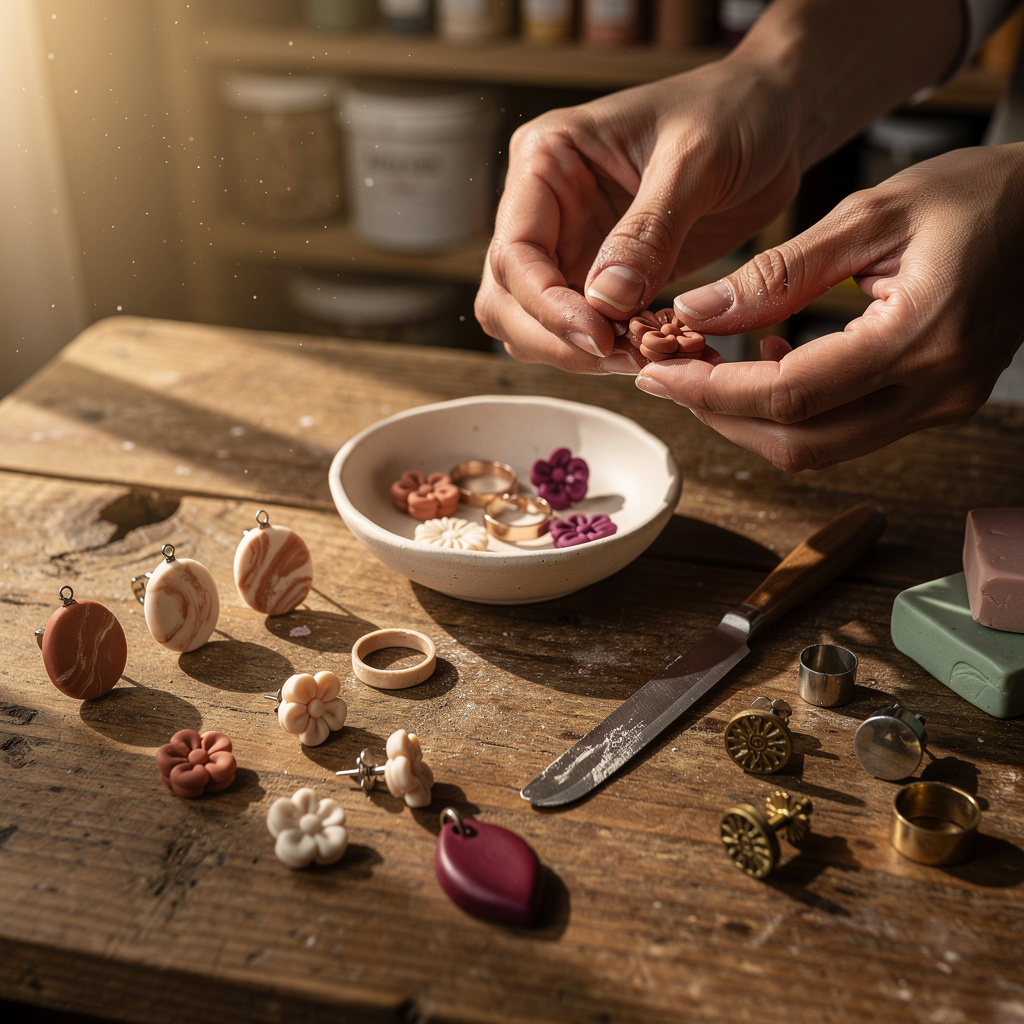
Polymer clay jewelry design is a specialized craft that involves shaping a pliable, PVC-based modeling compound into durable, decorative accessories such as earrings, necklaces, bracelets, and brooches. The medium is unique because it remains workable at room temperature, allowing for intricate detailing, layering, and texturing, and then hardens permanently when baked in a standard oven. Core concepts include conditioning (warming and softening the clay for even consistency), color blending and mokume gane, caning (creating patterned logs that are sliced for repeated motifs), and surface treatments like stamping, sanding, and sealing. The scope extends beyond simple beads to complex sculptural forms, faux stone effects, and mixed media integration with metals, resins, and fibers.
Today, polymer clay jewelry design has gained significant relevance as a sustainable and accessible art form, especially within the maker movement and the growing market for personalized, small-batch accessories. It is used by independent jewelry designers, hobbyists, and even in educational settings to teach color theory, pattern design, and fine motor skills. Recent shifts toward eco-conscious crafting have also highlighted polymer clay as a low-waste alternative to traditional metalworking, while social media platforms have fueled a resurgence of interest in handcrafted jewelry, making this skill both culturally and commercially valuable. The technique is also employed in prototyping for fashion accessories and in therapeutic art programs due to its forgiving and meditative nature.
Mastering polymer clay jewelry design builds a versatile skill stack that includes material science (understanding curing temperatures and clay hardness), precision hand-eye coordination, color and composition principles, and problem-solving for structural integrity. These competencies translate directly into professional contexts such as product design, artisan entrepreneurship, or teaching, as well as personal enrichment through creative expression. The ability to conceptualize a design, execute it with technical control, and finish it to a professional standard empowers learners to create unique, durable pieces that rival commercial offerings. Whether you aim to sell your work, craft bespoke gifts, or simply explore a rewarding artistic discipline, this subject provides a solid foundation for continuous creative growth.
Common Questions About Polymer Clay Jewelry Design
Does this polymer clay jewelry design course suit complete beginners?
What will the certificate from this jewelry design course add to my CV?
Why is conditioning the most important step in polymer clay jewelry?
- Plasticity: Well-conditioned clay is easy to shape without tearing.
- Uniformity: Even color and texture prevent weak spots.
- Bubble removal: Air pockets expand in the oven and ruin the surface.
What is the thickness rule for baking polymer clay pendants?
How do you create patterns with caning in polymer clay jewelry?
- Core: The center of the cane, often a contrasting color.
- Pattern layers: Colored sheets or rods arranged around the core.
- Outer wrap: A protective layer that holds everything together.
What is the best way to sand and seal baked polymer clay beads?
Is it true that any oven works for baking polymer clay?
What Will This Course Bring You?
- Evaluate polymer clay types and select appropriate materials and tools for specific jewelry projects.
- Apply conditioning techniques to achieve optimal softness and mix custom colors using color theory.
- Construct intricate shapes and textures using cutting, shaping, and texturing tools for unique components.
- Determine correct baking time and temperature for various clay brands and thicknesses to ensure curing.
- Implement sanding, buffing, and sealing processes to achieve a professional, durable finish on jewelry.
- Design beads and pendants using caning and pattern-making methods to create consistent, decorative elements.
- Integrate mixed media and advanced surface techniques to enhance the visual appeal of jewelry pieces.
- Plan and execute a complete jewelry project, applying design principles and troubleshooting common issues.
Curriculum
12 Units1. Materials, Tools, and Workspace Setup
1 hour
2. Conditioning and Color Mixing
1 hour
3. Shaping, Cutting, and Texturing
1 hour
4. Baking and Curing
1 hour
5. Sanding, Buffing, and Sealing
1 hour
6. Creating Beads and Pendants
1 hour
7. Caning and Pattern Making
1 hour
8. Advanced Surface Techniques
1 hour
9. Mixed Media and Embellishments
1 hour
10. Jewelry Assembly and Findings
1 hour
11. Design Principles and Project Planning
1 hour
12. Final Project and Troubleshooting
1 hour
Exam – Polymer Clay Jewelry Design
20 Questions • 70% Pass • 30 min
Unlock All Units for Free
Create an account, enroll in the course, and start with the first unit right away.
Exam – Polymer Clay Jewelry Design
20 Questions • Pass: 70% • 30 min
Course Duration
720
Total Minutes
12
Unit
1
Final Exam
~60
Min / Unit
Polymer Clay Jewelry Design Certificate Program
Document Your Skill
Those who pass the 20-question, 30-minute exam with 70% receive the Polymer Clay Jewelry Design Certificate.
Stand Out on Your CV
By adding your certificate to your CV, gain a professional reference in job applications and stand out from the crowd.
Career Advantage
Catch Wisdom certificates are recognized by HR departments and increase career opportunities.
CERTIFICATE FEE
At the end of the course, an online exam consisting of 20 questions with a 30-minute time limit is given. The exam appears automatically after you complete the topics. Anyone who scores at least 70 out of 100 on the certificate exam is awarded the Polymer Clay Jewelry Design Document (certificate of attendance). You can add the certificate you earn to your CV for job applications in the many sectors listed above, and use it as a reference proving that you took this interactive course.
The Certificate of Achievement you receive with the Polymer Clay Jewelry Design course program holds value that proves your personal and professional development in the business world. By adding it to your CV, it can serve as an important reference in your job applications. Moreover, compared with certificates from other private training institutions, Catch Wisdom certificates are offered to our participants at a much more affordable price.
Because HR departments recognize Catch Wisdom as a reputable institution in this field, they value these certificates and may evaluate your job applications favorably. For this reason, a Polymer Clay Jewelry Design course certificate from Catch Wisdom can make your applications more attractive and place you in an advantageous position in the business world.
For more information, we recommend visiting the Support page.
Certificate in 7 Languages
Earning success certificates from our courses is now more meaningful and global. With certificates available in Turkish, English, German, French, Spanish, Arabic, and Russian, we fully unlock the potential of students worldwide.
Why Certificate in 7 Languages?
-
01
Global Skill Development
Receiving your certificates in 7 different languages strengthens your communication skills as you engage with more people worldwide. It lets you operate more confidently and capably on the international stage.
-
02
International Job Opportunities
Employers may see your certificates in multiple languages as a sign of your ability to seize global opportunities. You can open more doors to new jobs and projects.
-
03
Cultural Richness
The chance to earn certificates in different languages helps you build closer ties with various cultures and broadens your worldview. It enriches your global perspective and deepens cultural understanding.
-
04
Ability to Participate in International Projects
Multilingual certificates give you an edge to work more effectively on international projects. They boost your chances of leadership and participation in diverse projects in the business world.
-
05
Prove Yourself on the Global Stage
Certificates in multiple languages let you showcase your skills and knowledge worldwide. You can become an internationally recognized professional.
Language diversity opens worldwide opportunities. If you want to prove yourself in the international arena, join our online Polymer Clay Jewelry Design course program and begin this journey with us.
Frequently Asked Questions (FAQ)
Is this course paid?
How do I join the course?
Can I take the course at my own pace?
How can I get my certificate?
What are the advantages of the Certified Certificate?
Boost Your Career
Take a new career step with the Polymer Clay Jewelry Design course. Add your certificate to your CV, stand out in job applications, and open the door to new opportunities in the industry.
StartStudent Reviews
No reviews yet
Enroll in this course and be the first to leave a review about your experience with Polymer Clay Jewelry Design.
Start