What is Prioritization in Time Management?
Prioritization in Time Management Certificate Program
The Prioritization in Time Management certificate program teaches a comprehensive framework for deciding what to work on and when, drawing from proven methods like the Eisenhower Matrix, Pareto Principle, and ABCDE Method. This course is designed for professionals, managers, freelancers, and students who feel overwhelmed by competing demands and want to regain control of their schedule. The main practical outcome is a personalized prioritization system that you can apply immediately to reduce stress, increase productivity, and focus on what truly drives results.
The program is structured as a beginner-friendly progression, starting with foundational concepts like urgency vs. importance and the 80/20 rule, then moving into actionable techniques such as time blocking, task batching, and the Ivy Lee Method. It balances theory with hands-on practice across four core skill areas: strategic thinking, daily planning, team coordination, and digital tool mastery. By the end, you will have built your own prioritization workflow, making this the ideal time to invest in a skill that directly combats decision fatigue and information overload.
What is Prioritization in Time Management?
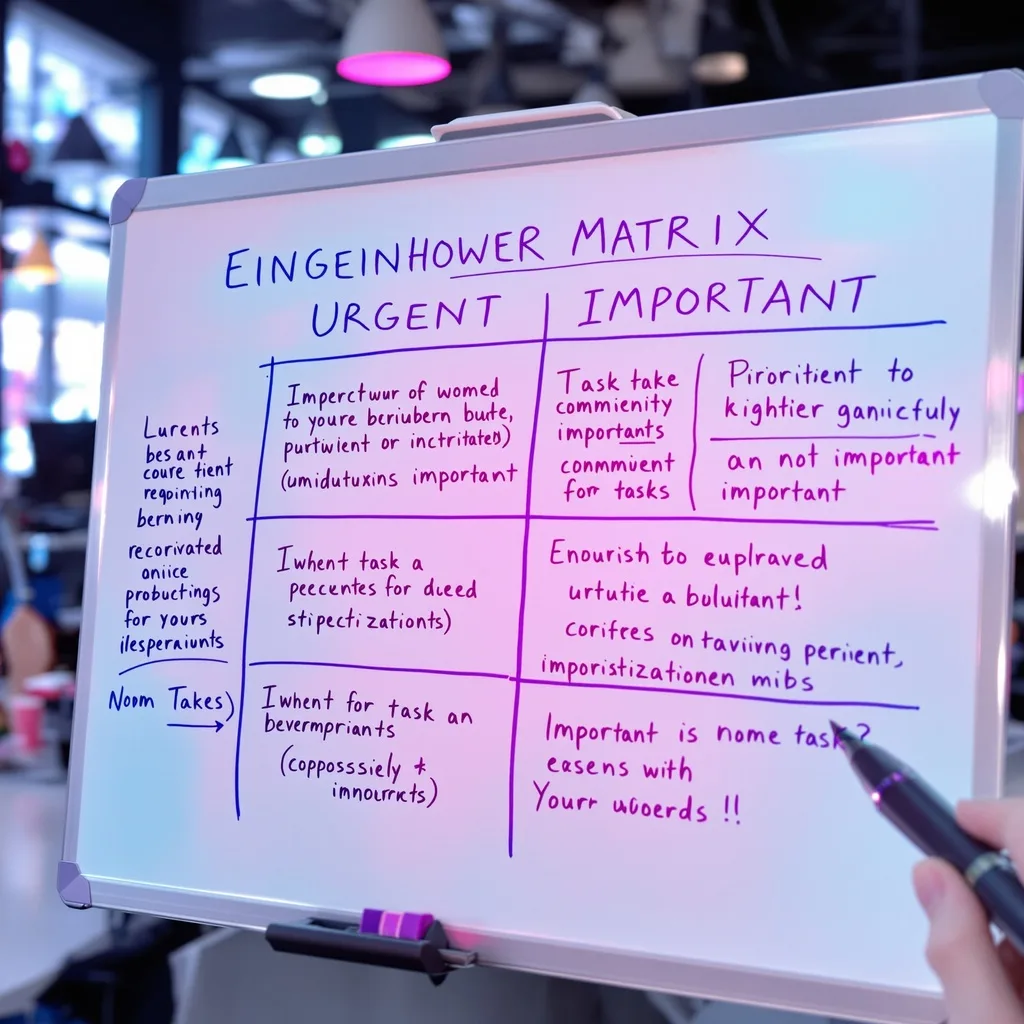
Prioritization in time management is the systematic process of ranking tasks and activities based on their relative importance and urgency to achieve specific goals. It goes beyond simple to-do lists by incorporating frameworks like the Eisenhower Matrix (urgent vs. important), the Pareto Principle (80/20 rule), and the ABCDE method to classify and sequence work. Core concepts include distinguishing between what is truly critical versus merely busy work, aligning daily actions with long-term objectives, and learning to say no to low-value tasks.
In today's fast-paced, distraction-rich environment, effective prioritization has become a critical skill for professionals across all industries. It is used in project management to allocate resources, in leadership to focus teams on strategic initiatives, and in personal productivity to combat burnout. Recent shifts toward remote and hybrid work have made self-directed prioritization even more essential, as individuals must now manage their own time without external structure. The subject is also central to agile methodologies, OKR frameworks, and personal development systems like GTD.
Mastering prioritization builds a skill stack that includes analytical thinking (evaluating trade-offs), decision-making (overcoming analysis paralysis), self-discipline (resisting urgency traps), and strategic alignment (connecting daily tasks to bigger goals). These competencies are valuable across professional contexts—from executive leadership to entry-level roles—and in personal contexts such as managing household responsibilities, studying, or pursuing side projects. Ultimately, prioritization empowers you to work smarter, not harder, by ensuring your energy is invested where it yields the highest return.
Common Questions About Prioritization in Time Management
Is this prioritization course suitable for complete beginners?
Can I apply prioritization techniques immediately at work?
How does the Eisenhower Matrix separate urgent from important?
- Quadrant 1 (Do First): Urgent and important tasks that require immediate action.
- Quadrant 2 (Schedule): Important but not urgent tasks that need planning.
- Quadrant 3 (Delegate): Urgent but not important tasks that can be delegated.
- Quadrant 4 (Eliminate): Neither urgent nor important tasks that should be eliminated.
What is the 80/20 rule and how does it apply to tasks?
How can SMART goals improve my priority setting?
What are the five categories in the ABCDE method?
- A – Must Do: Tasks with serious consequences if not completed.
- B – Should Do: Tasks with mild consequences if not done.
- C – Nice to Do: Tasks with no real consequences if skipped.
- D – Delegate: Tasks that can be assigned to someone else.
- E – Eliminate: Tasks that are unnecessary and can be removed.
Is multitasking actually effective for handling multiple priorities?
What Will This Course Bring You?
- Analyze the impact of prioritization on productivity and decision-making in real-world scenarios.
- Apply the Eisenhower Matrix to categorize tasks by urgency and importance for effective scheduling.
- Implement the Pareto Principle to identify the 20% of tasks that yield 80% of results.
- Design SMART goals that align with long-term objectives and break them into actionable steps.
- Evaluate the ABCDE method to rank tasks by priority and eliminate low-value activities.
- Build a daily prioritization system using the Ivy Lee Method to focus on top priorities.
- Assess personal procrastination triggers and apply strategies to overcome them in task execution.
- Develop a team prioritization framework that aligns group efforts with shared goals and deadlines.
Curriculum
12 Units1. Why Prioritization Matters
1 h
2. The Eisenhower Matrix: Urgent vs. Important
1 h
3. The Pareto Principle: Focus on the Vital Few
1 h
4. Setting Priorities with SMART Goals
1 h
5. The ABCDE Method for Task Ranking
1 h
6. Time Blocking and Task Batching
1 h
7. The Ivy Lee Method: Daily Top Priorities
1 h
8. Overcoming Procrastination and Decision Fatigue
1 h
9. Prioritization in a Team Context
1 h
10. Digital Tools and Systems for Prioritization
1 h
11. Reviewing and Adjusting Priorities
1 h
12. Building Your Personal Prioritization System
1 h
Exam – Prioritization in Time Management
20 Questions • 70% Pass • 30 min
Unlock All Units for Free
Create an account, enroll in the course, and start with the first unit right away.
Exam – Prioritization in Time Management
20 Questions • Pass: 70% • 30 min
Course Duration
720
Total Minutes
12
Unit
1
Final Exam
~60
Min / Unit
Prioritization in Time Management Certificate Program
Document Your Skill
Those who pass the 20-question, 30-minute exam with 70% receive the Prioritization in Time Management Certificate.
Stand Out on Your CV
By adding your certificate to your CV, gain a professional reference in job applications and stand out from the crowd.
Career Advantage
Catch Wisdom certificates are recognized by HR departments and increase career opportunities.
CERTIFICATE FEE
At the end of the course, an online exam consisting of 20 questions with a 30-minute time limit is given. The exam appears automatically after you complete the topics. Anyone who scores at least 70 out of 100 on the certificate exam is awarded the Prioritization in Time Management Document (certificate of attendance). You can add the certificate you earn to your CV for job applications in the many sectors listed above, and use it as a reference proving that you took this interactive course.
The Certificate of Achievement you receive with the Prioritization in Time Management course program holds value that proves your personal and professional development in the business world. By adding it to your CV, it can serve as an important reference in your job applications. Moreover, compared with certificates from other private training institutions, Catch Wisdom certificates are offered to our participants at a much more affordable price.
Because HR departments recognize Catch Wisdom as a reputable institution in this field, they value these certificates and may evaluate your job applications favorably. For this reason, a Prioritization in Time Management course certificate from Catch Wisdom can make your applications more attractive and place you in an advantageous position in the business world.
For more information, we recommend visiting the Support page.
Certificate in 7 Languages
Earning success certificates from our courses is now more meaningful and global. With certificates available in Turkish, English, German, French, Spanish, Arabic, and Russian, we fully unlock the potential of students worldwide.
Why Certificate in 7 Languages?
-
01
Global Skill Development
Receiving your certificates in 7 different languages strengthens your communication skills as you engage with more people worldwide. It lets you operate more confidently and capably on the international stage.
-
02
International Job Opportunities
Employers may see your certificates in multiple languages as a sign of your ability to seize global opportunities. You can open more doors to new jobs and projects.
-
03
Cultural Richness
The chance to earn certificates in different languages helps you build closer ties with various cultures and broadens your worldview. It enriches your global perspective and deepens cultural understanding.
-
04
Ability to Participate in International Projects
Multilingual certificates give you an edge to work more effectively on international projects. They boost your chances of leadership and participation in diverse projects in the business world.
-
05
Prove Yourself on the Global Stage
Certificates in multiple languages let you showcase your skills and knowledge worldwide. You can become an internationally recognized professional.
Language diversity opens worldwide opportunities. If you want to prove yourself in the international arena, join our online Prioritization in Time Management course program and begin this journey with us.
Frequently Asked Questions (FAQ)
Is this course paid?
How do I join the course?
Can I take the course at my own pace?
How can I get my certificate?
What are the advantages of the Certified Certificate?
Boost Your Career
Take a new career step with the Prioritization in Time Management course. Add your certificate to your CV, stand out in job applications, and open the door to new opportunities in the industry.
StartStudent Reviews
No reviews yet
Enroll in this course and be the first to leave a review about your experience with Prioritization in Time Management.
Start