What is Rainwater Harvesting?
Rainwater Harvesting Training
The Rainwater Harvesting certificate program equips participants with the technical knowledge to plan, design, and manage rainwater collection systems from roof to point of use. It is intended for homeowners, landscapers, plumbers, engineers, sustainability coordinators, and community project leads who want to reduce reliance on municipal or well water. The main practical outcome is the ability to assess a site, size storage and conveyance, and produce a workable harvesting design that meets basic water quality and safety needs. Learners also gain troubleshooting skills for common failures in first flush diverters, gutters, tanks, and pumps.
The program follows a beginner-friendly progression from fundamentals and system components through site assessment, design principles, roof catchment and conveyance, first flush diversion, filtration, storage tanks, water quality and treatment, pumping and distribution, construction, maintenance, and advanced case studies. Theory is balanced with practical decision-making: participants work through catchment potential calculations, component selection, and troubleshooting scenarios rather than only memorizing definitions. The curriculum builds five core skill areas: site evaluation and yield estimation, hydraulic and storage design, water quality protection, installation and construction oversight, and long-term maintenance planning. Choosing this program now makes sense as water scarcity, stormwater regulations, and resilience planning push households and organizations toward decentralized water supplies.
What is Rainwater Harvesting?
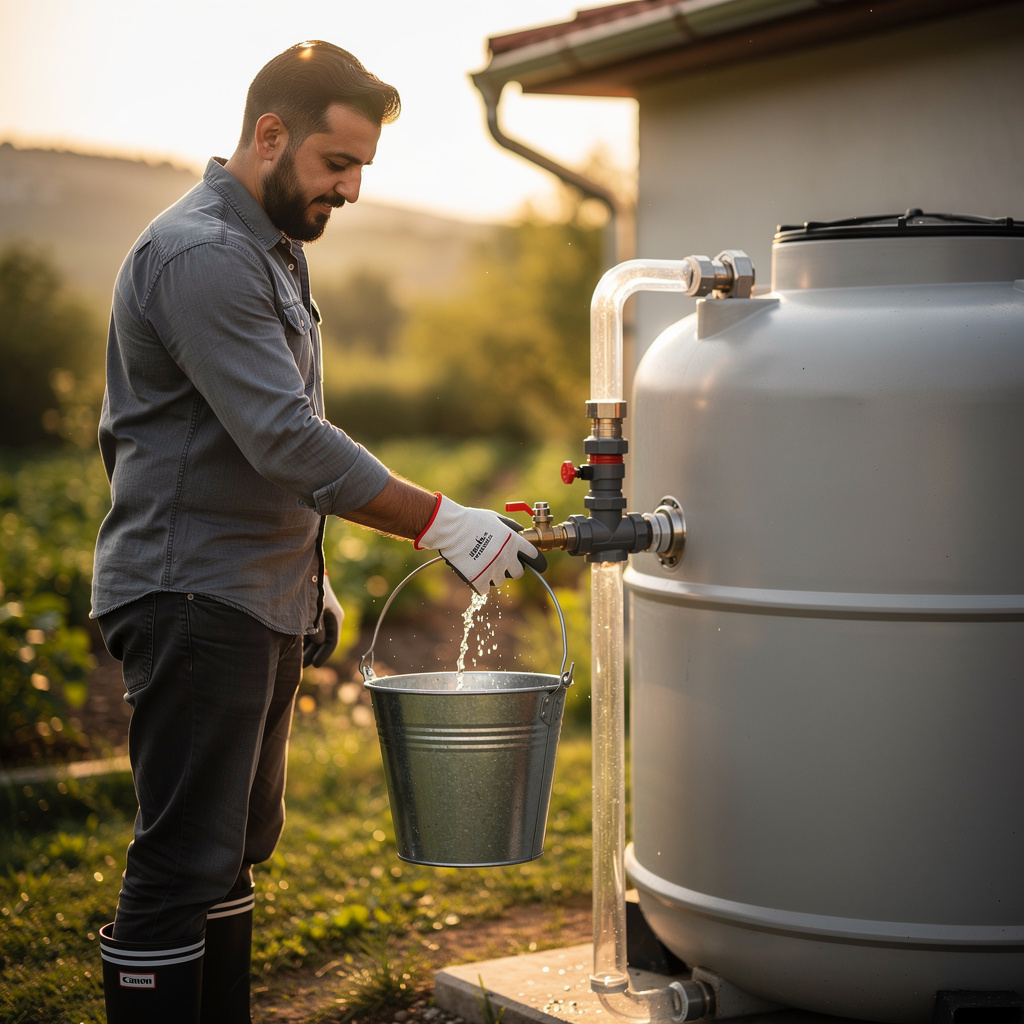
Rainwater harvesting is the practice of collecting and storing precipitation from surfaces such as roofs, courtyards, and land catchments for later use or managed infiltration. Its scope ranges from simple rain barrels for garden irrigation to engineered systems that supply potable or non-potable water for buildings and communities. Core concepts include catchment area and runoff coefficient, conveyance and pre-filtration, first flush diversion, storage sizing, treatment trains, and demand matching. The field also addresses overflow, mosquito control, freeze protection, and integration with existing water infrastructure.
Rainwater harvesting matters today because climate variability, aging water infrastructure, and rising demand are straining conventional supplies in both urban and rural settings. It is used in residential construction, commercial green buildings, schools, agriculture, and emergency response, while academic research focuses on system optimization, water quality risk, and life-cycle costs. Recent shifts include smarter tank monitoring, modular treatment components, policies that credit on-site retention for stormwater management, and greater attention to first flush and pathogen control. The practice also intersects with green infrastructure and net-zero water goals, making it relevant to planners and policymakers as well as installers.
Mastering rainwater harvesting builds a skill stack that combines hydrology basics, component selection, hydraulic sizing, water quality protection, construction coordination, and maintenance diagnostics. These skills are valuable in plumbing and landscaping trades, civil and environmental engineering, facilities management, sustainability consulting, and community development work. Homeowners and farm managers benefit by gaining confidence to evaluate contractors, size systems realistically, and maintain equipment over time. The subject also supports broader competencies in water budgeting, risk assessment, and resilience planning that transfer across many water-related projects.
What Will This Course Bring You?
- Analyze fundamental principles and benefits of rainwater harvesting to evaluate suitability for specific household, community, or institutional contexts.
- Conduct site assessment and calculate catchment potential using roof area, rainfall data, and demand estimates.
- Design rainwater harvesting systems by selecting components and sizing conveyance, first-flush diversion, filtration, and storage based on calculated demand.
- Evaluate roof catchment and conveyance layouts to specify gutters, downpipes, and fittings that maximize collection efficiency and avoid losses.
- Implement first-flush diversion and filtration strategies to protect stored rainwater from debris, sediments, and initial roof contaminants.
- Select and size storage tanks or cisterns using demand patterns, available space, and structural considerations to ensure reliable supply.
- Assess water quality parameters and apply appropriate treatment and pumping/distribution methods for intended non-potable or potable uses.
- Construct, install, and maintain rainwater harvesting systems, troubleshoot common failures, and evaluate case studies to adapt designs to advanced applications.
Curriculum
12 Units1. Fundamentals of Rainwater Harvesting
1 hour
2. Rainwater Harvesting System Components
1 hour
3. Site Assessment and Catchment Potential
1 hour
4. Design Principles for Rainwater Harvesting Systems
1 hour
5. Roof Catchment and Conveyance Systems
1 hour
6. First Flush Diversion and Filtration
1 hour
7. Storage Tanks and Cisterns
1 hour
8. Water Quality and Treatment
1 hour
9. Pumping and Distribution Systems
1 hour
10. Construction and Installation
1 hour
11. Maintenance and Troubleshooting
1 hour
12. Case Studies and Advanced Applications
1 hour
Exam – Rainwater Harvesting
20 Questions • 70% Pass • 30 min
Unlock All Units for Free
Create an account, enroll in the course, and start with the first unit right away.
Exam – Rainwater Harvesting
20 Questions • Pass: 70% • 30 min
Course Duration
720
Total Minutes
12
Unit
1
Final Exam
~60
Min / Unit
Rainwater Harvesting Certificate Program
Document Your Skill
Those who pass the 20-question, 30-minute exam with 70% receive the Rainwater Harvesting Certificate.
Stand Out on Your CV
By adding your certificate to your CV, gain a professional reference in job applications and stand out from the crowd.
Career Advantage
With the verification code, employers can check your certificate instantly — a concrete way to show your growth.
CERTIFICATE FEE
At the end of the course, an online exam consisting of 20 questions with a 30-minute time limit is given. The exam appears automatically after you complete the topics. Anyone who scores at least 70 out of 100 on the certificate exam is awarded the Rainwater Harvesting Document (certificate of attendance). You can add the certificate you earn to your CV for job applications in the many sectors listed above, and use it as a reference proving that you took this interactive course.
The Certificate of Achievement you receive with the Rainwater Harvesting course program holds value that proves your personal and professional development in the business world. By adding it to your CV, it can serve as an important reference in your job applications. Moreover, compared with certificates from other private training institutions, Catch Wisdom certificates are offered to our participants at a much more affordable price.
The Rainwater Harvesting course certificate is a document that proves, with a unique verification code, that you completed the course. Employers can instantly check its authenticity with this code, which helps you show your development concretely in your job applications.
For more information, we recommend visiting the Support page.
Certificate in 7 Languages
Earning success certificates from our courses is now more meaningful and global. With certificates available in Turkish, English, German, French, Spanish, Arabic, and Russian, we fully unlock the potential of students worldwide.
Why Certificate in 7 Languages?
-
01
Global Skill Development
Receiving your certificates in 7 different languages strengthens your communication skills as you engage with more people worldwide. It lets you operate more confidently and capably on the international stage.
-
02
International Job Opportunities
Employers may see your certificates in multiple languages as a sign of your ability to seize global opportunities. You can open more doors to new jobs and projects.
-
03
Cultural Richness
The chance to earn certificates in different languages helps you build closer ties with various cultures and broadens your worldview. It enriches your global perspective and deepens cultural understanding.
-
04
Ability to Participate in International Projects
Multilingual certificates give you an edge to work more effectively on international projects. They boost your chances of leadership and participation in diverse projects in the business world.
-
05
Prove Yourself on the Global Stage
Certificates in multiple languages give you the opportunity to present your skills and knowledge worldwide.
Language diversity opens worldwide opportunities. If you want to prove yourself in the international arena, join our online Rainwater Harvesting course program and begin this journey with us.
Frequently Asked Questions (FAQ)
Is this course paid?
How do I join the course?
Can I take the course at my own pace?
How can I get my certificate?
What are the advantages of the certificate?
Boost Your Career
Take a new career step with the Rainwater Harvesting course. Add your certificate to your CV, stand out in job applications, and open the door to new opportunities in the industry.
StartStudent Reviews
No reviews yet
Enroll in this course and be the first to leave a review about your experience with Rainwater Harvesting.
Start