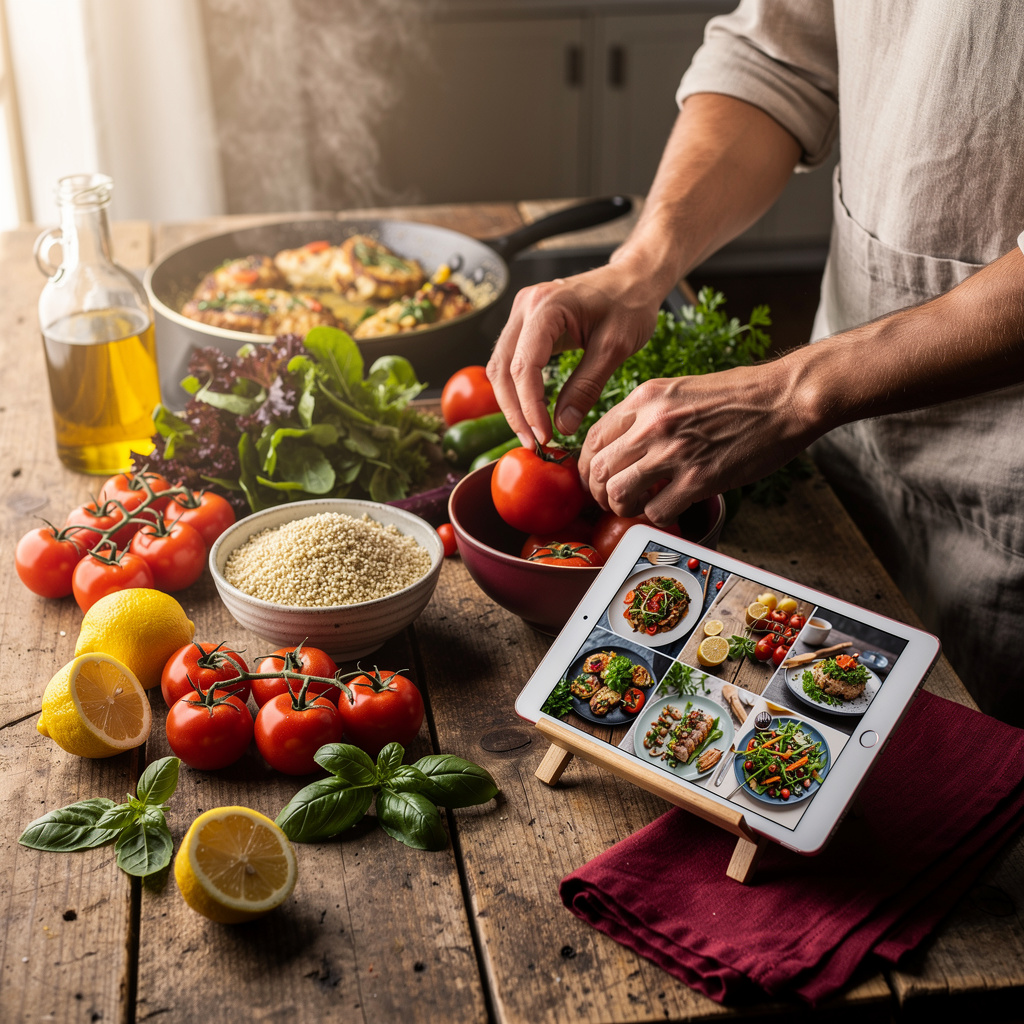
What is Ramadan Meal Planning for Families?
Ramadan Meal Planning for Families Training Program
Ramadan Meal Planning for Families certificate program equips parents, caregivers, and community meal organizers to plan fasting-day food with confidence. It teaches how fasting rhythms shape family meal schedules, how to set nutrition priorities for suhoor and iftar, and how to build balanced plate templates that work for different ages and appetites. The course also covers weekly menu rotation, smart shopping and pantry budgeting, batch cooking workflows, hydration planning, cultural dish adaptations, hospitality food safety, and the transition into Eid. The main practical outcome is a workable family meal system that reduces daily decision fatigue while supporting nourishment, budget control, and shared Ramadan routines.
The program is structured as a beginner-friendly progression, starting with fasting rhythms and nutrition foundations before moving into plate templates, weekly menus, and prep workflows. It balances explanatory lessons with practical planning tasks, so learners connect nutrition theory to real household constraints such as time, budget, picky eaters, health needs, and community hospitality. Across the course, five core skill areas are built: schedule-aware meal planning, nutrition-balanced suhoor and iftar design, budget and pantry management, batch cooking and prep organization, and inclusive hospitality with food safety. Someone would choose this program now because Ramadan meal planning sits at the intersection of health, budget pressure, family logistics, and cultural tradition, and families need repeatable systems rather than last-minute improvisation.
What is Ramadan Meal Planning for Families?
Ramadan meal planning for families is the practice of organizing food, hydration, shopping, and cooking around the altered eating rhythms of Ramadan while meeting the needs of a whole household. Its scope includes suhoor and iftar timing, nutrient balance, portion and plate composition, weekly menu rotation, pantry and budget planning, batch cooking, beverage planning, cultural dish adaptation, age-specific feeding, common health considerations, community hospitality, food safety, and the shift back to regular meals around Eid. Core concepts include fasting rhythms, nutrient density, hydration timing, meal templates, rotation planning, prep workflows, food safety, and sustainable household habits. It is not just a recipe collection; it is an operational and nutritional framework for feeding families well during a demanding period.
This subject matters today because Ramadan fasting often coincides with busy work and school schedules, food price pressure, multigenerational households, and growing awareness of nutrition and health needs. Families are also navigating diverse appetites, cultural expectations, community iftars, and the risk of food waste when large meals are prepared without a plan. Recent shifts toward batch cooking, budget-conscious shopping, hydration planning, and inclusive menus reflect how household food management has become more strategic and health-aware. In real life, the subject is used in family homes, community centers, mosques, food-service settings, and wellness education, where reliable meal planning supports both tradition and practical wellbeing.
The skill stack built by mastering this subject combines nutrition literacy, household operations, budget forecasting, batch prep, inclusive meal design, hospitality food safety, and sustainable habit planning. It strengthens the ability to translate fasting schedules into realistic menus, adapt cultural favorites without losing meaning, and feed different ages and appetites without cooking separate meals for everyone. These skills benefit personal caregiving contexts, community meal organizing, food service and hospitality roles, and wellness or family-life education. The broader value is a repeatable planning capability that supports nourishment, budget control, cultural continuity, and calmer household routines during Ramadan and beyond.
What Will This Course Bring You?
- Design a family Ramadan meal schedule that aligns suhoor, iftar, and evening snacks with each member’s fasting rhythm and daily commitments.
- Apply fasting-family nutrition priorities to build balanced suhoor and iftar plates using protein, fiber, produce, and hydration components.
- Create a rotating weekly Ramadan menu that balances family favorites, cultural dishes, nutritional variety, and realistic cooking effort across seven days.
- Build a smart shopping and pantry plan that estimates quantities, reduces waste, and keeps Ramadan meal costs within a stated family budget.
- Implement batch-cooking and prep workflows that prepare staple components safely in advance and streamline daily iftar assembly for busy families.
- Evaluate hydration and beverage choices for fasting family members, then plan water, electrolyte, and culturally appropriate drink options across suhoor and iftar.
- Adapt family favorite dishes for different ages, appetites, and common health needs by adjusting portions, texture, spice, sodium, and nutrient density.
- Plan safe hospitality and community meal practices, including food safety checks, allergen awareness, and sustainable Eid transition habits for families.
Curriculum
12 Units1. Fasting Rhythms and Family Meal Schedules
1 hour
2. Nutrition Priorities for Fasting Families
1 hour
3. Balanced Suhoor and Iftar Plate Templates
1 hour
4. Weekly Menu Planning and Rotation
1 hour
5. Smart Shopping, Pantry, and Budget Planning
1 hour
6. Batch Cooking and Prep Workflows
1 hour
7. Hydration and Beverage Planning
1 hour
8. Family Favorites and Cultural Dish Adaptations
1 hour
9. Feeding Different Ages and Appetites
1 hour
10. Supporting Common Health Needs at the Table
1 hour
11. Hospitality, Community Meals, and Food Safety
1 hour
12. Eid Transition and Sustainable Meal Habits
1 hour
Exam – Ramadan Meal Planning for Families
20 Questions • 70% Pass • 30 min
Unlock All Units for Free
Create an account, enroll in the course, and start with the first unit right away.
Exam – Ramadan Meal Planning for Families
20 Questions • Pass: 70% • 30 min
Course Duration
720
Total Minutes
12
Unit
1
Final Exam
~60
Min / Unit
Ramadan Meal Planning for Families Certificate Program
Document Your Skill
Those who pass the 20-question, 30-minute exam with 70% receive the Ramadan Meal Planning for Families Certificate.
Stand Out on Your CV
By adding your certificate to your CV, gain a professional reference in job applications and stand out from the crowd.
Career Advantage
With the verification code, employers can check your certificate instantly — a concrete way to show your growth.
CERTIFICATE FEE
At the end of the course, an online exam consisting of 20 questions with a 30-minute time limit is given. The exam appears automatically after you complete the topics. Anyone who scores at least 70 out of 100 on the certificate exam is awarded the Ramadan Meal Planning for Families Document (certificate of attendance). You can add the certificate you earn to your CV for job applications in the many sectors listed above, and use it as a reference proving that you took this interactive course.
The Certificate of Achievement you receive with the Ramadan Meal Planning for Families course program holds value that proves your personal and professional development in the business world. By adding it to your CV, it can serve as an important reference in your job applications. Moreover, compared with certificates from other private training institutions, Catch Wisdom certificates are offered to our participants at a much more affordable price.
The Ramadan Meal Planning for Families course certificate is a document that proves, with a unique verification code, that you completed the course. Employers can instantly check its authenticity with this code, which helps you show your development concretely in your job applications.
For more information, we recommend visiting the Support page.
Certificate in 7 Languages
Earning success certificates from our courses is now more meaningful and global. With certificates available in Turkish, English, German, French, Spanish, Arabic, and Russian, we fully unlock the potential of students worldwide.
Why Certificate in 7 Languages?
-
01
Global Skill Development
Receiving your certificates in 7 different languages strengthens your communication skills as you engage with more people worldwide. It lets you operate more confidently and capably on the international stage.
-
02
International Job Opportunities
Employers may see your certificates in multiple languages as a sign of your ability to seize global opportunities. You can open more doors to new jobs and projects.
-
03
Cultural Richness
The chance to earn certificates in different languages helps you build closer ties with various cultures and broadens your worldview. It enriches your global perspective and deepens cultural understanding.
-
04
Ability to Participate in International Projects
Multilingual certificates give you an edge to work more effectively on international projects. They boost your chances of leadership and participation in diverse projects in the business world.
-
05
Prove Yourself on the Global Stage
Certificates in multiple languages give you the opportunity to present your skills and knowledge worldwide.
Language diversity opens worldwide opportunities. If you want to prove yourself in the international arena, join our online Ramadan Meal Planning for Families course program and begin this journey with us.
Frequently Asked Questions (FAQ)
Is this course paid?
How do I join the course?
Can I take the course at my own pace?
How can I get my certificate?
What are the advantages of the certificate?
Boost Your Career
Take a new career step with the Ramadan Meal Planning for Families course. Add your certificate to your CV, stand out in job applications, and open the door to new opportunities in the industry.
StartStudent Reviews
No reviews yet
Enroll in this course and be the first to leave a review about your experience with Ramadan Meal Planning for Families.
Start