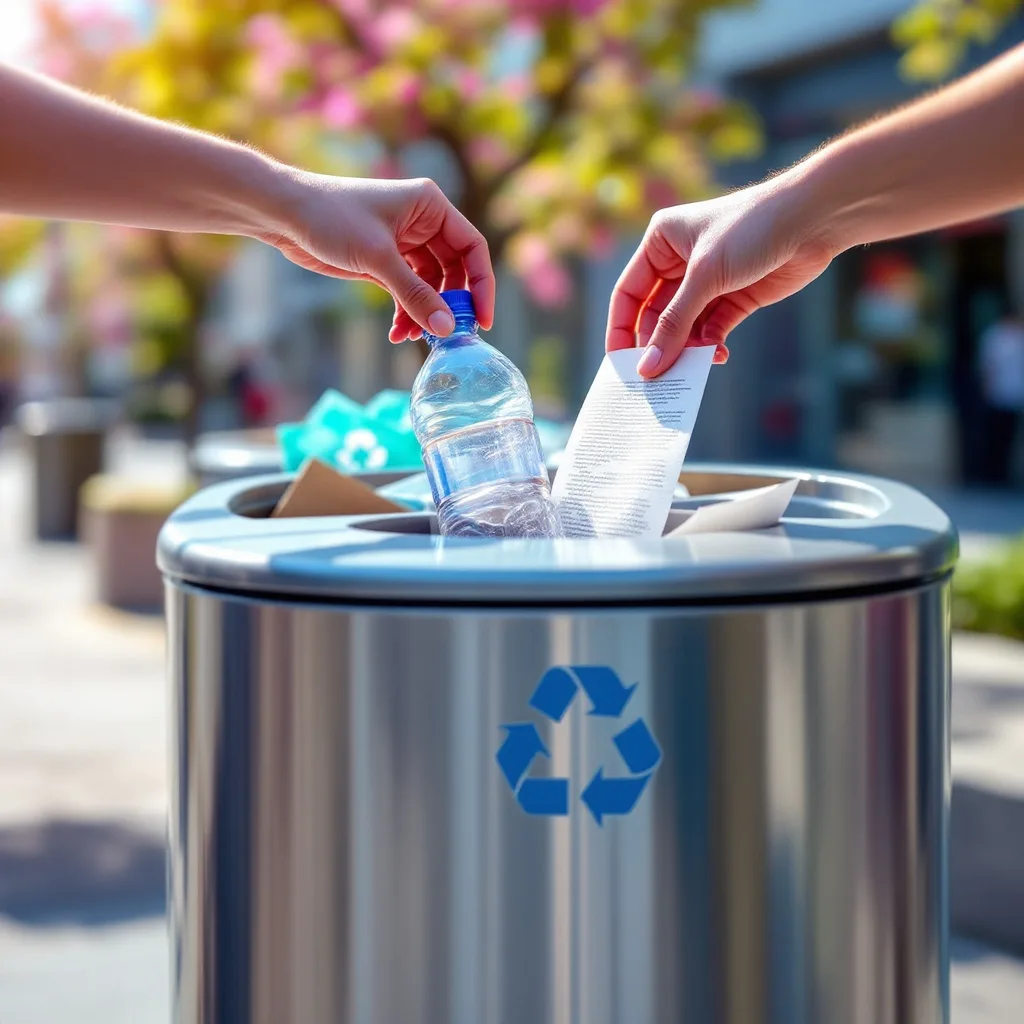
What is Recycling?
Recycling Training and Education Program
The Recycling certificate program in English is a comprehensive educational course designed to equip participants with in-depth knowledge of waste management and sustainable recycling practices. This program teaches individuals how to properly identify, sort, and process different types of recyclable materials while understanding the environmental and economic impact of recycling initiatives.
Whether you are an environmental professional, a community organizer, a student pursuing sustainability studies, or a concerned citizen wanting to make a difference, this course provides the foundational and advanced knowledge needed to contribute effectively to recycling efforts in your community or workplace.
What is Recycling?
Recycling is the systematic process of collecting, sorting, processing, and converting waste materials into new products and materials, preventing the disposal of usable resources and reducing the environmental burden of waste. It encompasses a wide range of materials including plastics, paper, cardboard, glass, metals, electronic components, and organic matter, each requiring specific handling and processing techniques.
In today's world, recycling has become critically important as global waste production continues to rise and natural resources face increasing pressure. The practice reduces landfill usage, conserves raw materials, saves energy, and significantly lowers greenhouse gas emissions associated with manufacturing processes. Understanding recycling is no longer optional—it is an essential skill for individuals and organizations committed to environmental stewardship.
Key concepts in recycling include the waste hierarchy (reduce, reuse, recycle), material identification and sorting protocols, contamination prevention, circular economy principles, and the role of community engagement in successful recycling programs. Modern recycling also extends beyond traditional materials to include electronic waste management and organic waste composting, reflecting the evolving nature of waste streams in contemporary society.
Common Questions About Recycling
Does the Recycling certificate improve my resume?
Can I start the Recycling course with no prior knowledge?
What are the seven resin codes for plastic recycling?
- 1 – PETE (Polyethylene Terephthalate): commonly used for beverage bottles.
- 2 – HDPE (High-Density Polyethylene): used for milk jugs and detergent bottles.
- 3 – PVC (Polyvinyl Chloride): used for pipes and packaging.
- 4 – LDPE (Low-Density Polyethylene): used for plastic bags and wraps.
- 5 – PP (Polypropylene): used for yogurt containers and bottle caps.
- 6 – PS (Polystyrene): used for foam cups and takeout containers.
- 7 – Other: includes mixed plastics and bioplastics.
How does chemical recycling differ from mechanical recycling?
What are the four grades of paper in recycling?
- Old Corrugated Containers (OCC): cardboard boxes.
- Mixed Paper: magazines, junk mail, office paper.
- High-Grade Deinked Paper: sorted white office paper.
- Pulp Substitutes: clean paper trimmings from mills.
Why is glass considered infinitely recyclable?
Is all plastic actually recyclable?
What Will This Course Bring You?
- You will learn to identify and classify different recyclable materials, understanding the symbols, resin codes, and labeling systems used to categorize plastics, metals, and other waste streams.
- You will master the specific processing requirements for plastic recycling, including how to distinguish between thermoplastics and thermosets and which plastic types are most commonly accepted in municipal programs.
- You will gain expertise in paper and cardboard recycling protocols, learning how to assess paper quality, prevent contamination from food or liquids, and understand the fiber degradation limits in paper recycling cycles.
- You will develop skills in glass recycling operations, including color separation techniques, contamination identification, and understanding how glass can be recycled indefinitely without quality loss.
- You will learn metal recycling fundamentals, distinguishing between ferrous and non-ferrous metals, and understanding the significant energy savings achieved through aluminum and steel recycling.
- You will acquire knowledge of electronic waste (e-waste) handling, including identification of hazardous components, data destruction requirements, and proper channels for responsible electronics disposal and recovery.
- You will master organic waste recycling and composting techniques, learning to balance carbon-to-nitrogen ratios, manage decomposition processes, and produce usable compost from household and garden waste.
- You will understand the role of social entrepreneurship in recycling initiatives, learning how to design community-based recycling programs, engage stakeholders, and create sustainable business models around waste reduction.
Curriculum
12 Units1. Basics of Recycling
1 hour
2. Plastic Recycling
1 hour
3. Paper and Cardboard Recycling
1 hour
4. Glass Recycling
1 hour
5. Metal Recycling
1 hour
6. Electronic Waste Recycling
1 hour
7. Organic Waste Recycling and Composting
1 hour
8. Social Entrepreneurship and Role of Society in Recycling
1 hour
9. Recycling Policy and Legislation
1 hour
10. Global Perspectives on Recycling
1 hour
11. Individual and Community Action
1 hour
12. Innovations and the Future of Recycling
1 hour
Exam - Recycling
20 Questions • 70% Pass • 30 min
Unlock All Units for Free
Create an account, enroll in the course, and start with the first unit right away.
Exam - Recycling
20 Questions • Pass: 70% • 30 min
Course Duration
720
Total Minutes
12
Unit
1
Final Exam
~60
Min / Unit
Recycling Certificate Program
Document Your Skill
Those who pass the 20-question, 30-minute exam with 70% receive the Recycling Certificate.
Stand Out on Your CV
By adding your certificate to your CV, gain a professional reference in job applications and stand out from the crowd.
Career Advantage
With the verification code, employers can check your certificate instantly — a concrete way to show your growth.
CERTIFICATE FEE
At the end of the course, an online exam consisting of 20 questions with a 30-minute time limit is given. The exam appears automatically after you complete the topics. Anyone who scores at least 70 out of 100 on the certificate exam is awarded the Recycling Document (certificate of attendance). You can add the certificate you earn to your CV for job applications in the many sectors listed above, and use it as a reference proving that you took this interactive course.
The Certificate of Achievement you receive with the Recycling course program holds value that proves your personal and professional development in the business world. By adding it to your CV, it can serve as an important reference in your job applications. Moreover, compared with certificates from other private training institutions, Catch Wisdom certificates are offered to our participants at a much more affordable price.
The Recycling course certificate is a document that proves, with a unique verification code, that you completed the course. Employers can instantly check its authenticity with this code, which helps you show your development concretely in your job applications.
For more information, we recommend visiting the Support page.
Certificate in 7 Languages
Earning success certificates from our courses is now more meaningful and global. With certificates available in Turkish, English, German, French, Spanish, Arabic, and Russian, we fully unlock the potential of students worldwide.
Why Certificate in 7 Languages?
-
01
Global Skill Development
Receiving your certificates in 7 different languages strengthens your communication skills as you engage with more people worldwide. It lets you operate more confidently and capably on the international stage.
-
02
International Job Opportunities
Employers may see your certificates in multiple languages as a sign of your ability to seize global opportunities. You can open more doors to new jobs and projects.
-
03
Cultural Richness
The chance to earn certificates in different languages helps you build closer ties with various cultures and broadens your worldview. It enriches your global perspective and deepens cultural understanding.
-
04
Ability to Participate in International Projects
Multilingual certificates give you an edge to work more effectively on international projects. They boost your chances of leadership and participation in diverse projects in the business world.
-
05
Prove Yourself on the Global Stage
Certificates in multiple languages give you the opportunity to present your skills and knowledge worldwide.
Language diversity opens worldwide opportunities. If you want to prove yourself in the international arena, join our online Recycling course program and begin this journey with us.
Frequently Asked Questions (FAQ)
Is this course paid?
How do I join the course?
Can I take the course at my own pace?
How can I get my certificate?
What are the advantages of the certificate?
Boost Your Career
Take a new career step with the Recycling course. Add your certificate to your CV, stand out in job applications, and open the door to new opportunities in the industry.
StartStudent Reviews
No reviews yet
Enroll in this course and be the first to leave a review about your experience with Recycling.
Start