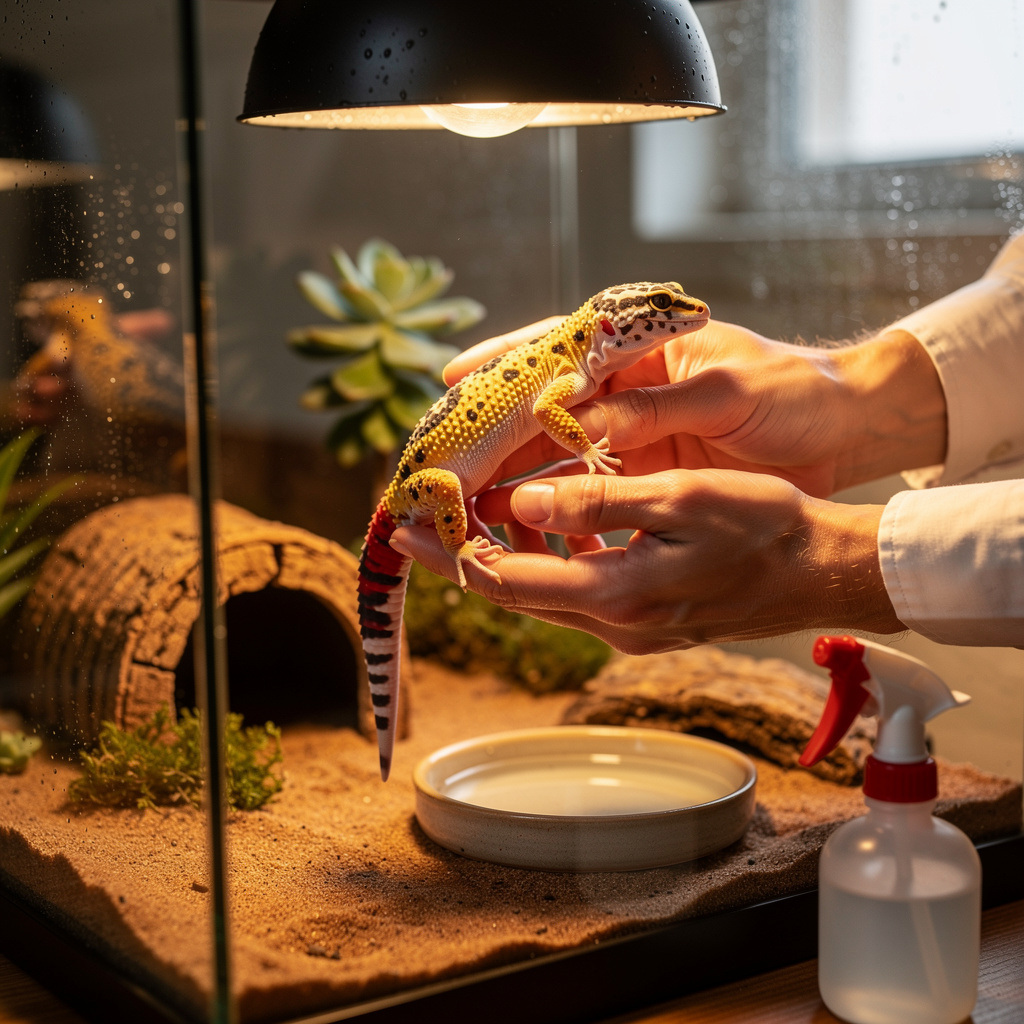
What is Reptile Care?
Reptile Care Training
Reptile Care certificate program delivers a structured education in the principles and practical skills needed to keep reptiles healthy and thriving in captivity. The course covers foundational husbandry, species selection and preparation, enclosure design and spatial needs, heating and lighting with thermal gradients, humidity and shedding support, substrate and hygiene, nutrition and feeding, handling and enrichment for behavioral welfare, health monitoring and preventative care, common health issues and emergency response, reproduction and neonatal care, and brumation and seasonal cycling for long-term management. It is designed for aspiring reptile keepers, veterinary technicians, pet store staff, sanctuary volunteers, and hobbyists who want to move beyond guesswork. The main practical outcome is the ability to build and maintain species-appropriate husbandry plans, recognize early signs of illness, and respond effectively to common health and welfare challenges.
The program progresses in a beginner-friendly sequence, starting with foundations and moving through preparation, environmental design, and daily care before addressing advanced topics such as reproduction, neonatal support, and seasonal cycling. Theory is balanced with practical application so learners can connect principles like thermal gradients and humidity ranges to real enclosure decisions and feeding routines. Across the lessons, the course builds five core skill areas: enclosure and environmental management; nutrition and feeding practices; health monitoring and preventative care; handling, enrichment, and behavioral welfare; and seasonal, reproductive, and long-term care. Learners choose this program now because reptile keeping demands evidence-based husbandry, rising welfare standards, and practical emergency readiness that general pet care resources rarely provide.
What is Reptile Care?
Reptile care is the multidisciplinary practice of maintaining captive reptiles in conditions that meet their physiological, behavioral, and welfare needs. It covers species-specific husbandry, thermal biology and ectothermy, lighting including UVB provision, humidity and hydration, substrate selection and hygiene, nutrition and feeding schedules, environmental enrichment, health monitoring, reproduction, brumation, and seasonal cycling. Its core concepts revolve around replicating appropriate environmental gradients and seasonal cues while preventing disease and stress. The scope ranges from individual pet keeping to zoological collections, rescue and rehabilitation settings, and conservation breeding programs.
Reptile care matters today because reptile ownership and public interest in exotic species continue to grow, while advances in welfare science and veterinary medicine raise expectations for evidence-based husbandry. In real life and industry, it underpins pet retail and care services, zoo and sanctuary operations, veterinary clinics that treat exotic patients, wildlife rehabilitation, and conservation breeding initiatives. Recent shifts include greater recognition of UVB and thermal gradient requirements, humane handling standards, preventive health monitoring, and environmental enrichment as essential rather than optional. Academic and professional communities increasingly emphasize species-specific research and documented husbandry protocols over anecdotal practice.
Mastering reptile care builds a skill stack that includes environmental design and monitoring, nutritional planning, health assessment and record-keeping, behavioral observation, emergency response, and ethical decision-making around reproduction and long-term management. These skills benefit veterinary technicians, pet care staff, zookeepers, wildlife rehabilitators, conservation breeders, animal welfare inspectors, and educators who need to evaluate or improve captive reptile conditions. In personal contexts, the same knowledge supports responsible pet ownership, rescue volunteering, and informed breeding practices. The subject ultimately bridges scientific principles and daily animal management, preparing learners to make defensible husbandry choices across a wide range of species and settings.
What Will This Course Bring You?
- Evaluate a prospective reptile species against husbandry foundations, personal capacity, and long-term care requirements before acquisition.
- Design species-appropriate enclosures with correct dimensions, microhabitats, security, and cleaning access for the chosen reptile.
- Implement heating and lighting systems that create measured thermal gradients and suitable photoperiods for the target species.
- Apply humidity, water, and shedding support practices that meet species requirements and reduce dehydration and retained-shed risks.
- Establish substrate, hygiene, and feeding routines that control waste and deliver species-appropriate nutrition, prey sizing, and supplementation.
- Implement handling, enrichment, and behavioral welfare strategies that reduce stress and encourage safe, natural species behaviors.
- Evaluate health monitoring and emergency response procedures to recognize common reptile problems, document changes, and seek timely veterinary care.
- Design seasonal cycling and brumation plans plus reproduction and neonatal care protocols that support long-term reptile welfare.
Curriculum
12 Units1. Reptile Care Foundations
1 hour
2. Choosing and Preparing for a Reptile
1 hour
3. Enclosure Design and Spatial Needs
1 hour
4. Heating, Lighting, and Thermal Gradients
1 hour
5. Humidity, Water, and Shedding Support
1 hour
6. Substrate and Hygiene Practices
1 hour
7. Nutrition and Feeding Practices
1 hour
8. Handling, Enrichment, and Behavioral Welfare
1 hour
9. Health Monitoring and Preventative Care
1 hour
10. Common Health Issues and Emergency Response
1 hour
11. Reproduction and Neonatal Care
1 hour
12. Brumation, Seasonal Cycling, and Long-Term Care
1 hour
Exam – Reptile Care
20 Questions • 70% Pass • 30 min
Unlock All Units for Free
Create an account, enroll in the course, and start with the first unit right away.
Exam – Reptile Care
20 Questions • Pass: 70% • 30 min
Course Duration
720
Total Minutes
12
Unit
1
Final Exam
~60
Min / Unit
Reptile Care Certificate Program
Document Your Skill
Those who pass the 20-question, 30-minute exam with 70% receive the Reptile Care Certificate.
Stand Out on Your CV
By adding your certificate to your CV, gain a professional reference in job applications and stand out from the crowd.
Career Advantage
With the verification code, employers can check your certificate instantly — a concrete way to show your growth.
CERTIFICATE FEE
At the end of the course, an online exam consisting of 20 questions with a 30-minute time limit is given. The exam appears automatically after you complete the topics. Anyone who scores at least 70 out of 100 on the certificate exam is awarded the Reptile Care Document (certificate of attendance). You can add the certificate you earn to your CV for job applications in the many sectors listed above, and use it as a reference proving that you took this interactive course.
The Certificate of Achievement you receive with the Reptile Care course program holds value that proves your personal and professional development in the business world. By adding it to your CV, it can serve as an important reference in your job applications. Moreover, compared with certificates from other private training institutions, Catch Wisdom certificates are offered to our participants at a much more affordable price.
The Reptile Care course certificate is a document that proves, with a unique verification code, that you completed the course. Employers can instantly check its authenticity with this code, which helps you show your development concretely in your job applications.
For more information, we recommend visiting the Support page.
Certificate in 7 Languages
Earning success certificates from our courses is now more meaningful and global. With certificates available in Turkish, English, German, French, Spanish, Arabic, and Russian, we fully unlock the potential of students worldwide.
Why Certificate in 7 Languages?
-
01
Global Skill Development
Receiving your certificates in 7 different languages strengthens your communication skills as you engage with more people worldwide. It lets you operate more confidently and capably on the international stage.
-
02
International Job Opportunities
Employers may see your certificates in multiple languages as a sign of your ability to seize global opportunities. You can open more doors to new jobs and projects.
-
03
Cultural Richness
The chance to earn certificates in different languages helps you build closer ties with various cultures and broadens your worldview. It enriches your global perspective and deepens cultural understanding.
-
04
Ability to Participate in International Projects
Multilingual certificates give you an edge to work more effectively on international projects. They boost your chances of leadership and participation in diverse projects in the business world.
-
05
Prove Yourself on the Global Stage
Certificates in multiple languages give you the opportunity to present your skills and knowledge worldwide.
Language diversity opens worldwide opportunities. If you want to prove yourself in the international arena, join our online Reptile Care course program and begin this journey with us.
Frequently Asked Questions (FAQ)
Is this course paid?
How do I join the course?
Can I take the course at my own pace?
How can I get my certificate?
What are the advantages of the certificate?
Boost Your Career
Take a new career step with the Reptile Care course. Add your certificate to your CV, stand out in job applications, and open the door to new opportunities in the industry.
StartStudent Reviews
No reviews yet
Enroll in this course and be the first to leave a review about your experience with Reptile Care.
Start