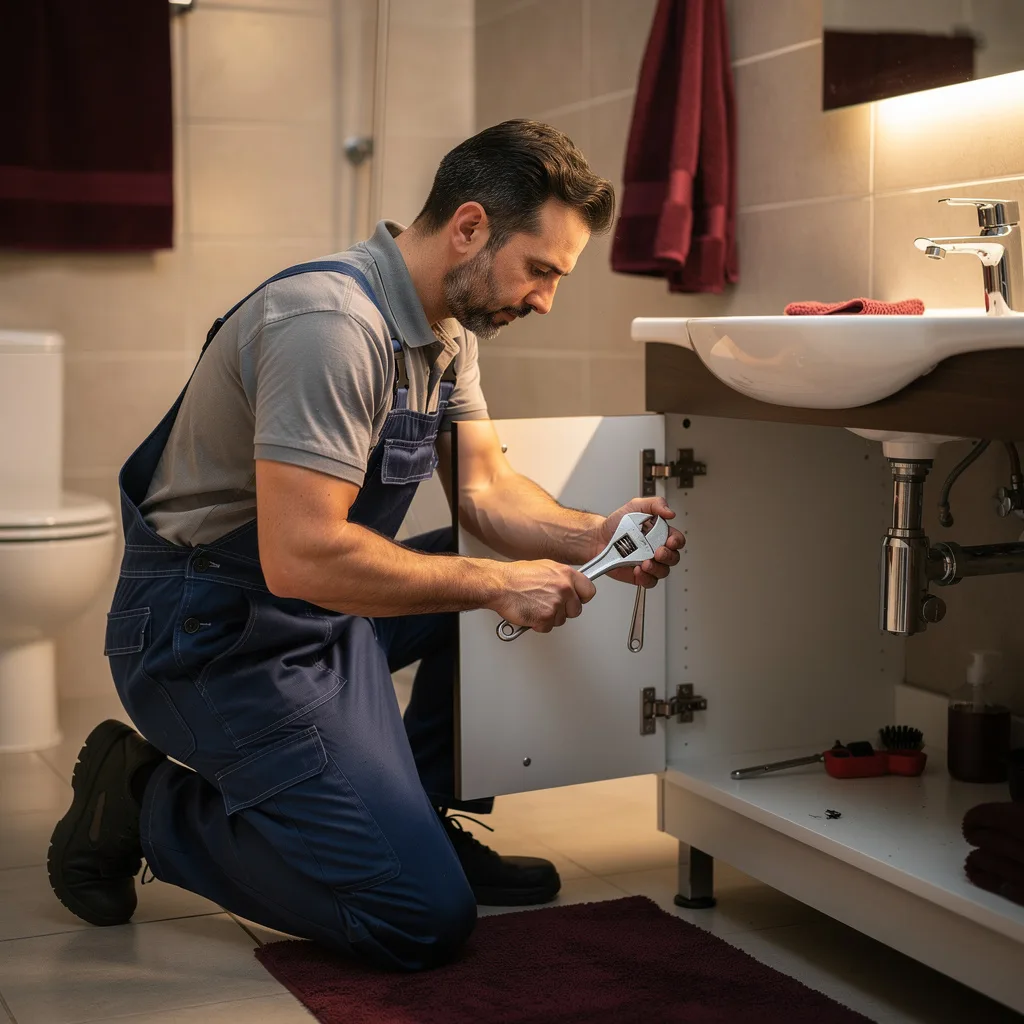
What is Residential Plumbing Repair?
Residential Plumbing Repair Training
The Residential Plumbing Repair certificate program equips learners with the hands-on skills needed to diagnose, maintain, and fix common plumbing systems in homes. Designed for DIY homeowners, aspiring technicians, and career changers, this course teaches practical repair techniques for faucets, toilets, sinks, showers, water heaters, garbage disposals, sump pumps, and more. By the end, you will be able to confidently tackle most residential plumbing issues without relying on a professional, saving time and money while ensuring safe, code-compliant work.
The program follows a beginner-friendly progression, starting with essential tools and safety protocols before moving into water supply, drainage, and vent system fundamentals. It then builds four core skill areas: fixture repair (faucets, toilets, sinks, showers), appliance maintenance (water heaters, garbage disposals, sump pumps), pipe repair and soldering, and preventive troubleshooting. Each lesson balances clear theory with step-by-step practice, so you learn why systems work and how to fix them. With plumbing emergencies and renovation projects on the rise, this training gives you the confidence to act fast and correctly—whether for your own home or as a stepping stone to a trade career.
What is Residential Plumbing Repair?
Residential plumbing repair is the practice of diagnosing, maintaining, and restoring the water supply, drainage, and vent systems within a home. It covers everything from fixing a dripping faucet and unclogging a sink to replacing a toilet, repairing a shower valve, and servicing a water heater. Core concepts include understanding water pressure, pipe materials (copper, PVC, PEX), trap and vent function, shut-off valves, and basic soldering. The field also involves safety protocols to prevent water damage, contamination, and injury.
Today, residential plumbing repair is more relevant than ever as aging housing stock, increased DIY culture, and rising service costs push homeowners to learn basic repairs. Climate-related flooding and basement water issues have also made sump pump and sewage ejector knowledge critical. In the industry, plumbers rely on these same skills daily, while home inspectors, property managers, and real estate professionals benefit from understanding plumbing fundamentals. Recent shifts toward water conservation and smart home technology have added new layers to traditional repair work.
Mastering residential plumbing repair builds a versatile skill stack that includes mechanical aptitude, problem-solving, system diagnostics, and hands-on tool use. These competencies are directly applicable to personal home maintenance, rental property management, and entry-level trade positions. For the DIY enthusiast, it means fewer emergency calls and greater independence. For those considering a career, it provides a solid foundation for apprenticeship or further certification in the plumbing trade.
Common Questions About Residential Plumbing Repair
Will this plumbing certificate help me get a job as a handyman?
How long does it take to complete the plumbing repair course?
Why is the P-trap important in a sink drain system?
- Gas seal: The water in the trap blocks foul odors and harmful gases from entering your living space.
- Debris collection: The curve catches hair, soap scum, and food particles, making it the most common clog location.
- Easy access: The trap is designed to be disassembled for cleaning without cutting pipes.
How do you test and replace a water heater T&P valve?
What is the correct slope for a drainage pipe?
How does capillary action work in soldering copper pipe?
Is it true that you can use any adjustable wrench on plumbing pipes?
What Will This Course Bring You?
- Apply proper safety protocols and select appropriate tools for common residential plumbing repairs.
- Analyze residential water supply systems to identify shutoff valves and pressure regulation components.
- Evaluate drainage and vent systems to diagnose blockages and ensure proper venting.
- Implement step-by-step procedures to disassemble, repair, or replace various common faucet types.
- Diagnose and repair common toilet issues including running water, clogs, and flapper valve failures.
- Perform maintenance and repair tasks on electric and gas water heaters, including thermostat and element replacement.
- Apply soldering techniques and use pipe repair fittings to fix leaks in copper and PVC pipes.
- Develop a preventive maintenance schedule for residential plumbing systems to minimize emergency repairs.
Curriculum
12 Units1. Plumbing Tools and Safety
1 hour
2. Water Supply System Basics
1 hour
3. Drainage and Vent System Basics
1 hour
4. Faucet Repair and Replacement
1 hour
5. Toilet Repair and Replacement
1 hour
6. Sink and Drain Repair
1 hour
7. Shower and Tub Repair
1 hour
8. Water Heater Maintenance and Repair
1 hour
9. Garbage Disposal Repair
1 hour
10. Sump Pump and Sewage Ejector Repair
1 hour
11. Pipe Repair and Soldering
1 hour
12. Preventive Maintenance and Troubleshooting
1 hour
Exam – Residential Plumbing Repair
20 Questions • 70% Pass • 30 min
Unlock All Units for Free
Create an account, enroll in the course, and start with the first unit right away.
Exam – Residential Plumbing Repair
20 Questions • Pass: 70% • 30 min
Course Duration
720
Total Minutes
12
Unit
1
Final Exam
~60
Min / Unit
Residential Plumbing Repair Certificate Program
Document Your Skill
Those who pass the 20-question, 30-minute exam with 70% receive the Residential Plumbing Repair Certificate.
Stand Out on Your CV
By adding your certificate to your CV, gain a professional reference in job applications and stand out from the crowd.
Career Advantage
With the verification code, employers can check your certificate instantly — a concrete way to show your growth.
CERTIFICATE FEE
At the end of the course, an online exam consisting of 20 questions with a 30-minute time limit is given. The exam appears automatically after you complete the topics. Anyone who scores at least 70 out of 100 on the certificate exam is awarded the Residential Plumbing Repair Document (certificate of attendance). You can add the certificate you earn to your CV for job applications in the many sectors listed above, and use it as a reference proving that you took this interactive course.
The Certificate of Achievement you receive with the Residential Plumbing Repair course program holds value that proves your personal and professional development in the business world. By adding it to your CV, it can serve as an important reference in your job applications. Moreover, compared with certificates from other private training institutions, Catch Wisdom certificates are offered to our participants at a much more affordable price.
The Residential Plumbing Repair course certificate is a document that proves, with a unique verification code, that you completed the course. Employers can instantly check its authenticity with this code, which helps you show your development concretely in your job applications.
For more information, we recommend visiting the Support page.
Certificate in 7 Languages
Earning success certificates from our courses is now more meaningful and global. With certificates available in Turkish, English, German, French, Spanish, Arabic, and Russian, we fully unlock the potential of students worldwide.
Why Certificate in 7 Languages?
-
01
Global Skill Development
Receiving your certificates in 7 different languages strengthens your communication skills as you engage with more people worldwide. It lets you operate more confidently and capably on the international stage.
-
02
International Job Opportunities
Employers may see your certificates in multiple languages as a sign of your ability to seize global opportunities. You can open more doors to new jobs and projects.
-
03
Cultural Richness
The chance to earn certificates in different languages helps you build closer ties with various cultures and broadens your worldview. It enriches your global perspective and deepens cultural understanding.
-
04
Ability to Participate in International Projects
Multilingual certificates give you an edge to work more effectively on international projects. They boost your chances of leadership and participation in diverse projects in the business world.
-
05
Prove Yourself on the Global Stage
Certificates in multiple languages give you the opportunity to present your skills and knowledge worldwide.
Language diversity opens worldwide opportunities. If you want to prove yourself in the international arena, join our online Residential Plumbing Repair course program and begin this journey with us.
Frequently Asked Questions (FAQ)
Is this course paid?
How do I join the course?
Can I take the course at my own pace?
How can I get my certificate?
What are the advantages of the certificate?
Boost Your Career
Take a new career step with the Residential Plumbing Repair course. Add your certificate to your CV, stand out in job applications, and open the door to new opportunities in the industry.
StartStudent Reviews
No reviews yet
Enroll in this course and be the first to leave a review about your experience with Residential Plumbing Repair.
Start