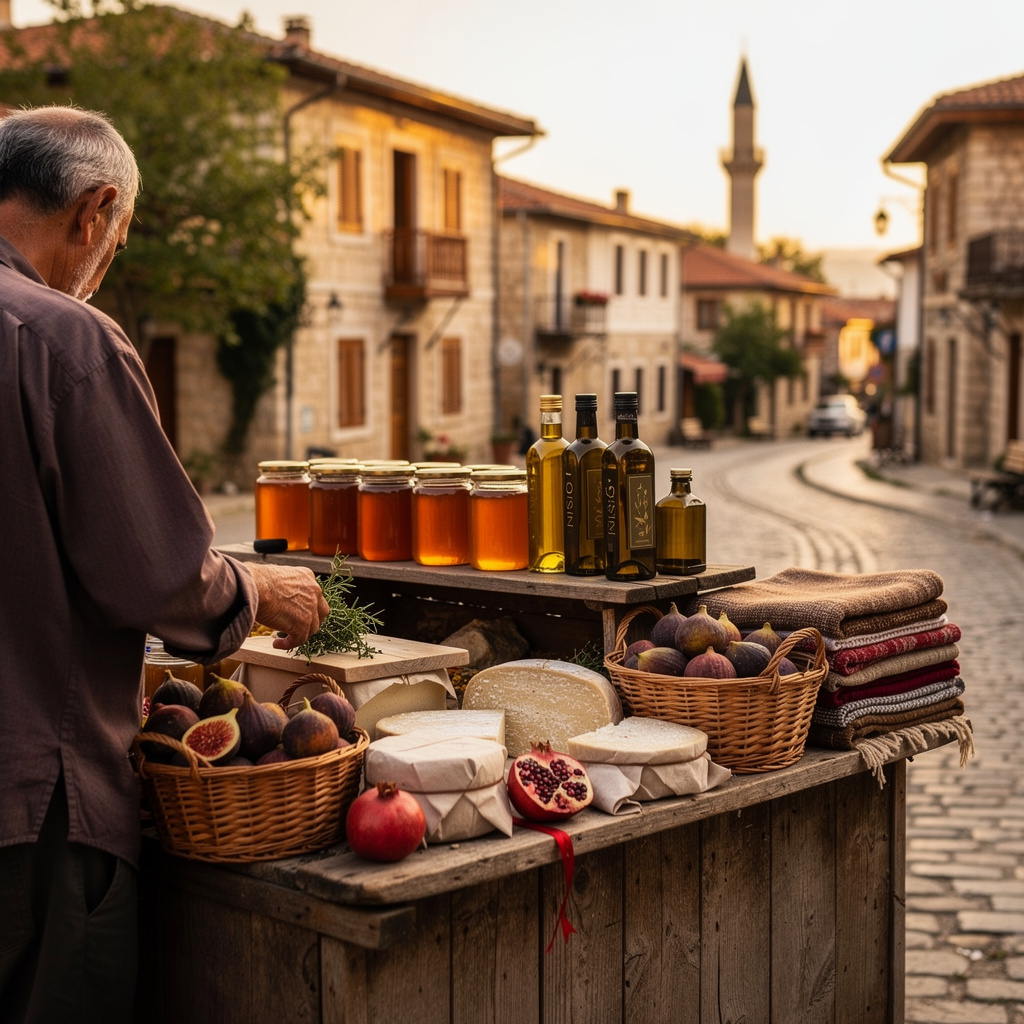
What is Rural and Small-Town Marketing?
Rural and Small-Town Marketing Training
The Rural and Small-Town Marketing certificate program is designed to equip marketers, business owners, and community leaders with the specialized skills needed to thrive in low-density markets. This course teaches you how to navigate the unique landscape of rural and small-town audiences, from understanding their trust-driven consumer behavior to applying market research methods that work with sparse populations. You will learn to build a brand rooted in local identity, leverage both digital tools under limited connectivity and traditional media like local newspapers and radio, and engage communities through relationship marketing. The main practical outcome is a complete, integrated marketing plan tailored to a rural or small-town context, ready to implement with a realistic budget.
The program is structured as a beginner-friendly progression, starting with foundational concepts like the rural market landscape and consumer psychology, then moving through hands-on modules on branding, digital and traditional channels, and community engagement. It balances theoretical frameworks with practical case studies and exercises, building four core skill areas: market research, multi-channel communication, community relationship management, and performance measurement. You will also master cost-effective budgeting and content storytelling, culminating in the creation of an integrated marketing plan. Choosing this program now is timely because rural markets are increasingly recognized as vital economic engines, yet they remain underserved by conventional marketing education—this course positions you as a specialist in a niche with growing demand.
What is Rural and Small-Town Marketing?
Rural and small-town marketing is the practice of promoting products, services, and brands within communities characterized by low population density, geographic dispersion, and strong interpersonal networks. It encompasses strategies for reaching audiences who may have limited access to high-speed internet, rely on local media, and place high value on personal relationships and trust. Core concepts include community-centric branding, word-of-mouth amplification, local identity, and adapting national marketing tactics to fit the scale and culture of small places. Unlike urban marketing, it prioritizes depth of connection over breadth of reach, often blending traditional and digital methods to overcome infrastructure constraints.
This subject matters today because of the resurgence of local economies, remote work migration, and the "shop local" movement, which have brought renewed attention to rural areas. Businesses, tourism boards, agricultural cooperatives, and local governments use these principles to attract visitors, retain residents, and support economic resilience. Recent shifts include the expansion of broadband access, which enables new digital touchpoints, and the rise of hyper-local social media groups that serve as modern town squares. However, many organizations still apply urban-centric models that fail in rural contexts, leading to wasted budgets and missed opportunities—making this specialized knowledge increasingly valuable across industries and public sectors.
Mastering rural and small-town marketing builds a skill stack that includes qualitative research methods, relationship management, creative problem-solving, and data-driven decision-making in low-data environments. Professionals in marketing, business development, public administration, and entrepreneurship benefit directly, as do community advocates seeking to foster economic vitality. The subject also empowers learners to think strategically about resource constraints, turning limitations into opportunities for authentic engagement. Whether you are launching a local business, advising a rural nonprofit, or developing regional tourism, this knowledge equips you to craft campaigns that resonate deeply and deliver measurable results in communities often overlooked by mainstream marketing.
Common Questions About Rural and Small-Town Marketing
What career paths does the rural marketing certificate open up?
Is this rural marketing course suitable for someone with no prior experience?
How do you build consumer trust in small communities using word-of-mouth marketing?
What are the common mistakes in market research for low-density populations?
How does rapid rural appraisal differ from standard urban research methods?
What is the best way to approach localized SEO for a rural business?
- Mobile speed: Keep pages lightweight, as connections can be slow.
- Local content: Write about community events and local news.
- Reviews: Encourage local customers to leave Google reviews.
Is it a myth that digital marketing doesn't work in areas with limited connectivity?
What Will This Course Bring You?
- Analyze the unique characteristics of rural and small-town markets to identify opportunities and constraints.
- Apply trust-building strategies to influence consumer behavior in small communities.
- Design market research methods suitable for low-density populations to gather actionable insights.
- Develop a brand identity that reflects local culture and values for a rural business.
- Implement digital marketing tactics that work with limited internet connectivity.
- Evaluate the effectiveness of traditional media and local advertising for reaching rural audiences.
- Create a community engagement plan to foster relationships and loyalty among local customers.
- Construct an integrated marketing plan that aligns budgeting, distribution, and measurement for a rural market.
Curriculum
12 Units1. The Rural and Small-Town Market Landscape
1 hour
2. Consumer Behavior and Trust in Small Communities
1 hour
3. Market Research Methods for Low-Density Populations
1 hour
4. Branding and Local Identity
1 hour
5. Digital Marketing with Limited Connectivity
1 hour
6. Traditional Media and Local Advertising
1 hour
7. Community Engagement and Relationship Marketing
1 hour
8. Distribution and Sales Channels
1 hour
9. Content Marketing and Storytelling
1 hour
10. Measuring Marketing Performance
1 hour
11. Budgeting and Cost-Effective Marketing
1 hour
12. Creating an Integrated Marketing Plan
1 hour
Exam – Rural and Small-Town Marketing
20 Questions • 70% Pass • 30 min
Unlock All Units for Free
Create an account, enroll in the course, and start with the first unit right away.
Exam – Rural and Small-Town Marketing
20 Questions • Pass: 70% • 30 min
Course Duration
720
Total Minutes
12
Unit
1
Final Exam
~60
Min / Unit
Rural and Small-Town Marketing Certificate Program
Document Your Skill
Those who pass the 20-question, 30-minute exam with 70% receive the Rural and Small-Town Marketing Certificate.
Stand Out on Your CV
By adding your certificate to your CV, gain a professional reference in job applications and stand out from the crowd.
Career Advantage
Catch Wisdom certificates are recognized by HR departments and increase career opportunities.
CERTIFICATE FEE
At the end of the course, an online exam consisting of 20 questions with a 30-minute time limit is given. The exam appears automatically after you complete the topics. Anyone who scores at least 70 out of 100 on the certificate exam is awarded the Rural and Small-Town Marketing Document (certificate of attendance). You can add the certificate you earn to your CV for job applications in the many sectors listed above, and use it as a reference proving that you took this interactive course.
The Certificate of Achievement you receive with the Rural and Small-Town Marketing course program holds value that proves your personal and professional development in the business world. By adding it to your CV, it can serve as an important reference in your job applications. Moreover, compared with certificates from other private training institutions, Catch Wisdom certificates are offered to our participants at a much more affordable price.
Because HR departments recognize Catch Wisdom as a reputable institution in this field, they value these certificates and may evaluate your job applications favorably. For this reason, a Rural and Small-Town Marketing course certificate from Catch Wisdom can make your applications more attractive and place you in an advantageous position in the business world.
For more information, we recommend visiting the Support page.
Certificate in 7 Languages
Earning success certificates from our courses is now more meaningful and global. With certificates available in Turkish, English, German, French, Spanish, Arabic, and Russian, we fully unlock the potential of students worldwide.
Why Certificate in 7 Languages?
-
01
Global Skill Development
Receiving your certificates in 7 different languages strengthens your communication skills as you engage with more people worldwide. It lets you operate more confidently and capably on the international stage.
-
02
International Job Opportunities
Employers may see your certificates in multiple languages as a sign of your ability to seize global opportunities. You can open more doors to new jobs and projects.
-
03
Cultural Richness
The chance to earn certificates in different languages helps you build closer ties with various cultures and broadens your worldview. It enriches your global perspective and deepens cultural understanding.
-
04
Ability to Participate in International Projects
Multilingual certificates give you an edge to work more effectively on international projects. They boost your chances of leadership and participation in diverse projects in the business world.
-
05
Prove Yourself on the Global Stage
Certificates in multiple languages let you showcase your skills and knowledge worldwide. You can become an internationally recognized professional.
Language diversity opens worldwide opportunities. If you want to prove yourself in the international arena, join our online Rural and Small-Town Marketing course program and begin this journey with us.
Frequently Asked Questions (FAQ)
Is this course paid?
How do I join the course?
Can I take the course at my own pace?
How can I get my certificate?
What are the advantages of the Certified Certificate?
Boost Your Career
Take a new career step with the Rural and Small-Town Marketing course. Add your certificate to your CV, stand out in job applications, and open the door to new opportunities in the industry.
StartStudent Reviews
No reviews yet
Enroll in this course and be the first to leave a review about your experience with Rural and Small-Town Marketing.
Start