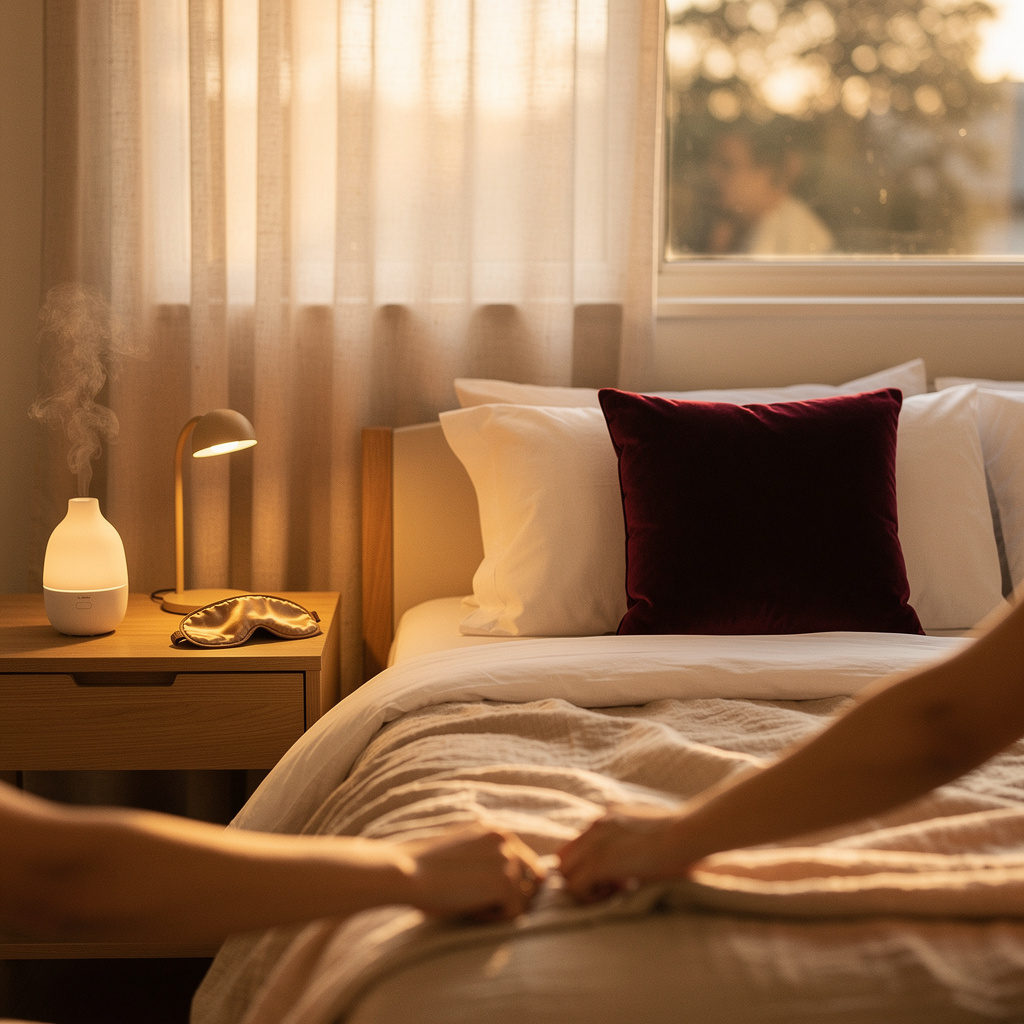
What is Sleep Environment Design?
Sleep Environment Design Training
The Sleep Environment Design certificate program teaches you how to transform any bedroom into a scientifically optimized space for deep, restorative sleep. This course is designed for health-conscious individuals, interior designers, wellness coaches, and anyone struggling with poor sleep quality who wants a practical, room-by-room solution. By the end, you will be able to assess your current sleep space, identify disruptive factors, and implement targeted changes—from lighting and sound to bedding and air quality—that measurably improve your sleep.
The program follows a beginner-friendly progression, starting with why environment matters and moving through each sensory and physical element: light, noise, temperature, mattress, linens, air, clutter, and electronics. Each lesson balances evidence-based theory with actionable checklists and real-room case studies, building five core skill areas: environmental auditing, sensory design, material selection, spatial organization, and maintenance planning. With rising awareness of sleep’s role in health and productivity, now is the ideal time to master this niche—whether for personal well-being or to offer environment design as a professional service.
What is Sleep Environment Design?
Sleep Environment Design is the systematic practice of shaping a bedroom’s physical and sensory conditions to promote rapid sleep onset, deep sleep maintenance, and natural awakening. Its core concepts include circadian lighting (mimicking natural daylight cycles), acoustic zoning (controlling noise sources and reflections), thermal comfort (optimizing temperature and humidity), and ergonomic support (mattress, pillow, and bedding selection). The field also integrates air quality management, scent psychology, and minimalism to reduce cognitive load and stress before bedtime.
Today, Sleep Environment Design matters more than ever because modern homes are filled with blue-light screens, variable indoor climates, and constant noise—all of which fragment sleep. Research in chronobiology, environmental psychology, and sleep medicine has validated that small adjustments to a room can yield large improvements in sleep latency and efficiency. Industries such as hospitality (hotel sleep programs), corporate wellness (nap pods), and healthcare (hospital room design) actively apply these principles to enhance guest satisfaction, employee performance, and patient recovery.
Mastering this subject builds a unique skill stack that blends scientific literacy with hands-on design: you learn to measure light levels, interpret sleep hygiene research, select materials for thermal regulation, and create calming spatial layouts. This knowledge benefits personal life by turning your own bedroom into a sanctuary, and professionally opens doors to roles in interior design consulting, wellness coaching, product development for sleep accessories, or even writing and content creation focused on sleep optimization.
Common Questions About Sleep Environment Design
How does a Sleep Environment Design certificate boost my career?
Is this course suitable for someone with no design background?
How does light color temperature affect melatonin production?
- Cool light (5000K+): High blue content, suppresses melatonin.
- Warm light (2700K): Low blue content, sleep-friendly.
- Color temperature and wall reflectance: Light bounces off walls, amplifying exposure—a hidden multiplier covered in the curriculum.
What is the ideal sleep temperature and humidity range?
How does noise fragmentation impact the HPA axis?
What is the best mattress firmness for side sleepers?
Is clutter just a visual issue or does it affect sleep quality?
What Will This Course Bring You?
- Analyze your current sleep environment to identify factors that disrupt rest quality.
- Design a lighting plan that minimizes blue light exposure before your bedtime.
- Apply soundproofing techniques to reduce disruptive noise levels in your sleeping area.
- Evaluate optimal temperature and humidity levels for your bedroom and adjust accordingly.
- Implement an air quality strategy using plants or purifiers to improve sleep.
- Declutter your bedroom to create a calming, organized, and relaxing sleep sanctuary.
- Evaluate the impact of electronic devices on your sleep and implement a digital curfew.
- Implement a routine to maintain and adapt your sleep environment seasonally for optimal rest.
Curriculum
12 Units1. Why Your Sleep Environment Matters
1 hour
2. Assessing Your Current Sleep Space
1 hour
3. Light and Darkness
1 hour
4. Sound and Noise Control
1 hour
5. Temperature and Humidity
1 hour
6. Your Mattress and Pillows
1 hour
7. Bedding and Linens
1 hour
8. Air Quality and Scents
1 hour
9. Decluttering and Organization
1 hour
10. Technology and Electronics
1 hour
11. Personalizing Your Sanctuary
1 hour
12. Maintaining and Adapting Your Environment
1 hour
Exam – Sleep Environment Design
20 Questions • 70% Pass • 30 min
Unlock All Units for Free
Create an account, enroll in the course, and start with the first unit right away.
Exam – Sleep Environment Design
20 Questions • Pass: 70% • 30 min
Course Duration
720
Total Minutes
12
Unit
1
Final Exam
~60
Min / Unit
Sleep Environment Design Certificate Program
Document Your Skill
Those who pass the 20-question, 30-minute exam with 70% receive the Sleep Environment Design Certificate.
Stand Out on Your CV
By adding your certificate to your CV, gain a professional reference in job applications and stand out from the crowd.
Career Advantage
Catch Wisdom certificates are recognized by HR departments and increase career opportunities.
CERTIFICATE FEE
At the end of the course, an online exam consisting of 20 questions with a 30-minute time limit is given. The exam appears automatically after you complete the topics. Anyone who scores at least 70 out of 100 on the certificate exam is awarded the Sleep Environment Design Document (certificate of attendance). You can add the certificate you earn to your CV for job applications in the many sectors listed above, and use it as a reference proving that you took this interactive course.
The Certificate of Achievement you receive with the Sleep Environment Design course program holds value that proves your personal and professional development in the business world. By adding it to your CV, it can serve as an important reference in your job applications. Moreover, compared with certificates from other private training institutions, Catch Wisdom certificates are offered to our participants at a much more affordable price.
Because HR departments recognize Catch Wisdom as a reputable institution in this field, they value these certificates and may evaluate your job applications favorably. For this reason, a Sleep Environment Design course certificate from Catch Wisdom can make your applications more attractive and place you in an advantageous position in the business world.
For more information, we recommend visiting the Support page.
Certificate in 7 Languages
Earning success certificates from our courses is now more meaningful and global. With certificates available in Turkish, English, German, French, Spanish, Arabic, and Russian, we fully unlock the potential of students worldwide.
Why Certificate in 7 Languages?
-
01
Global Skill Development
Receiving your certificates in 7 different languages strengthens your communication skills as you engage with more people worldwide. It lets you operate more confidently and capably on the international stage.
-
02
International Job Opportunities
Employers may see your certificates in multiple languages as a sign of your ability to seize global opportunities. You can open more doors to new jobs and projects.
-
03
Cultural Richness
The chance to earn certificates in different languages helps you build closer ties with various cultures and broadens your worldview. It enriches your global perspective and deepens cultural understanding.
-
04
Ability to Participate in International Projects
Multilingual certificates give you an edge to work more effectively on international projects. They boost your chances of leadership and participation in diverse projects in the business world.
-
05
Prove Yourself on the Global Stage
Certificates in multiple languages let you showcase your skills and knowledge worldwide. You can become an internationally recognized professional.
Language diversity opens worldwide opportunities. If you want to prove yourself in the international arena, join our online Sleep Environment Design course program and begin this journey with us.
Frequently Asked Questions (FAQ)
Is this course paid?
How do I join the course?
Can I take the course at my own pace?
How can I get my certificate?
What are the advantages of the Certified Certificate?
Boost Your Career
Take a new career step with the Sleep Environment Design course. Add your certificate to your CV, stand out in job applications, and open the door to new opportunities in the industry.
StartStudent Reviews
No reviews yet
Enroll in this course and be the first to leave a review about your experience with Sleep Environment Design.
Start