What is Small-Scale Juice and Dairy Processing?
Small-Scale Juice and Dairy Processing Certificate Program
The Small-Scale Juice and Dairy Processing certificate program teaches the practical and technical foundations needed to turn raw fruit and milk into safe, market-ready juice and dairy products at small commercial scale. It is designed for aspiring food entrepreneurs, farm-based producers, home processors scaling up, and staff in small dairies or juice operations who need hands-on knowledge of food safety, raw material selection, equipment, and processing methods. Learners work through juice processing fundamentals, preservation and packaging, dairy processing, pasteurization, fermented products, and cheese making, alongside quality control and waste management. The main practical outcome is the confidence to plan, set up, and run a small-scale juice or dairy processing operation that meets hygiene, quality, and sustainability expectations.
The program is structured as a beginner-friendly progression, starting with the foundations of small-scale food processing and food safety before moving into raw materials, essential equipment, and utilities. Theory is balanced with practical application so learners can connect hygiene principles, heat treatment parameters, fermentation controls, and packaging choices to real production decisions. Across the lessons, the program builds four core skill areas: safe process design, raw material and equipment management, juice and dairy production techniques, and quality, waste, and business essentials. Choosing this program now makes sense because small-scale food producers face rising demand for locally made juices and dairy products, tighter food safety expectations, and a need to reduce waste while staying profitable.
What is Small-Scale Juice and Dairy Processing?
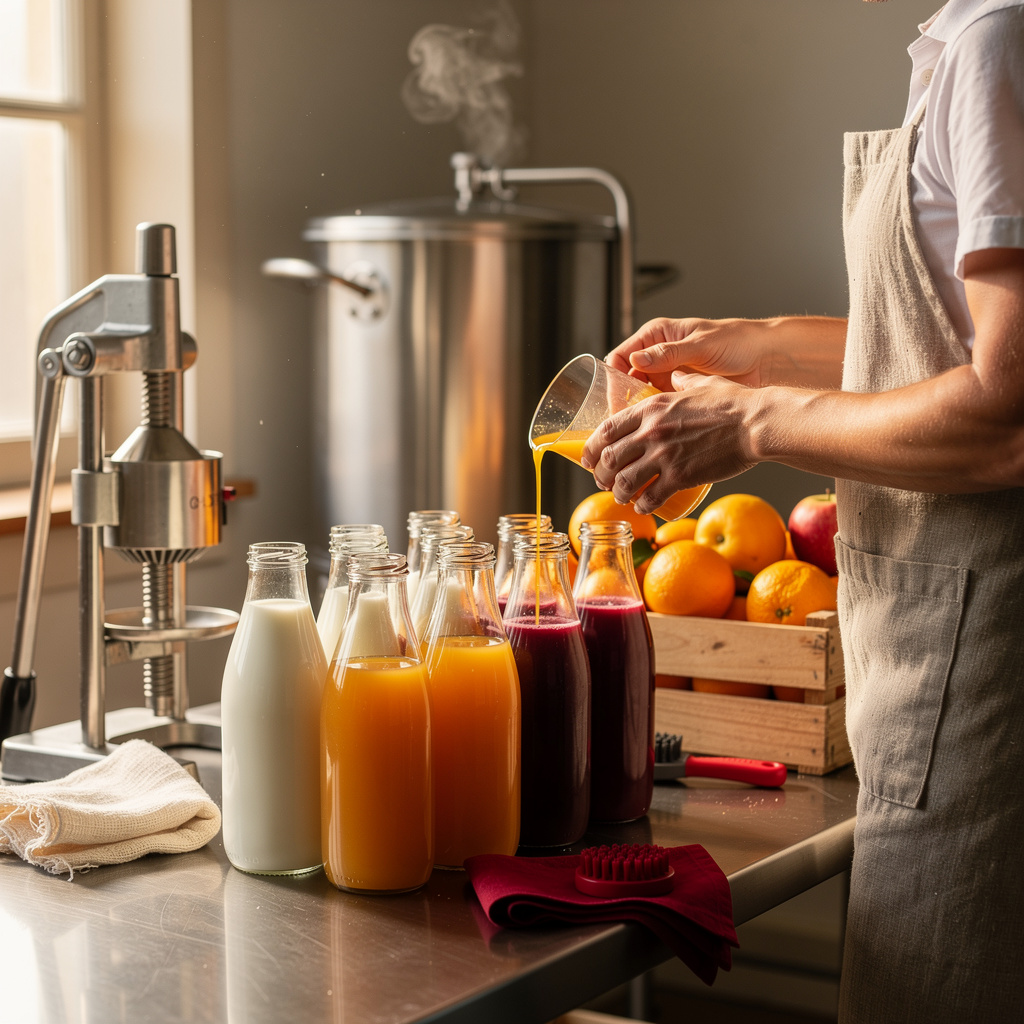
Small-scale juice and dairy processing refers to the controlled transformation of fruits and milk into juices, fermented drinks, cheeses, yogurts, and related products in volumes suited to local markets, farm enterprises, or artisan businesses. Its scope spans raw material selection, hygienic handling, equipment sizing, thermal processing, fermentation, packaging, and quality assurance, all adapted to limited throughput and modest capital investment. Core concepts include microbial safety, enzyme control, pH and acidity management, pasteurization and heat treatment curves, starter culture activity, and shelf-life stability. The field also addresses waste streams, water and energy use, and the economic viability of small production runs, making it a practical blend of food science and operations management.
Small-scale juice and dairy processing matters today because consumer interest in local, traceable, and minimally processed foods has grown, while large processors cannot always serve regional or specialty markets efficiently. In real life, it appears in farmstead dairies, fruit cooperatives, artisan cheese rooms, juice bars, and community food enterprises that need reliable safety and quality systems without industrial-scale infrastructure. Recent shifts include greater attention to cold-chain management, clean-label preservation, small-batch pasteurization controls, and waste valorization, as well as tighter regulatory scrutiny of hygiene practices. Academic and extension programs increasingly study small-scale processing because it supports rural livelihoods, short food supply chains, and food system resilience.
Mastering this subject builds a skill stack that combines food microbiology and hygiene, thermal and fermentation process control, equipment selection and maintenance, packaging and shelf-life assessment, and basic quality management. These capabilities are valuable in small dairy plants, juice businesses, cooperative processing units, on-farm value addition, and food safety consulting, as well as in personal projects that require safe preservation of perishable raw materials. The knowledge also supports entrepreneurial contexts where operators must make defensible decisions about batch size, cleaning routines, supplier quality, and waste handling. Because juice and dairy processing involve high-risk raw materials, the subject equips people to reason about risk controls and product stability rather than merely follow recipes.
What Will This Course Bring You?
- Analyze the stages of small-scale juice and dairy production to identify critical control points and resource constraints in a startup operation.
- Design a sanitation and hygiene plan for a small juice or dairy facility that addresses worker practices, equipment cleaning, and microbial contamination risks.
- Evaluate raw material quality indicators for fruits and milk, including ripeness, acidity, somatic cell count, and microbial load, before processing.
- Select and size essential equipment and utilities, such as pasteurizers, presses, chillers, and water systems, for a defined small-scale production capacity.
- Apply juice extraction, clarification, and preservation methods to produce a shelf-stable juice while maintaining sensory quality and complying with packaging requirements.
- Implement pasteurization and heat treatment protocols for milk that balance pathogen reduction with product flavor, nutrient retention, and small-scale equipment limitations.
- Produce a fermented dairy product and a simple cheese batch by controlling starter cultures, coagulation, pH, and ripening conditions at small scale.
- Develop a quality control, waste management, and basic business plan that monitors product safety, reduces processing waste, and estimates costs for a small juice or dairy enterprise.
Curriculum
12 Units1. Foundations of Small-Scale Food Processing
1 hour
2. Food Safety and Hygiene for Small-Scale Processing
1 hour
3. Raw Materials for Juices and Dairy
1 hour
4. Essential Equipment and Utilities for Small-Scale Processing
1 hour
5. Juice Processing Fundamentals
1 hour
6. Preservation and Packaging of Juices
1 hour
7. Dairy Processing Fundamentals
1 hour
8. Pasteurization and Heat Treatment of Milk
1 hour
9. Fermented Dairy Products
1 hour
10. Cheese Making at Small Scale
1 hour
11. Quality Control and Assurance in Juice and Dairy Processing
1 hour
12. Waste Management, Sustainability, and Business Essentials
1 hour
Exam – Small-Scale Juice and Dairy Processing
20 Questions • 70% Pass • 30 min
Unlock All Units for Free
Create an account, enroll in the course, and start with the first unit right away.
Exam – Small-Scale Juice and Dairy Processing
20 Questions • Pass: 70% • 30 min
Course Duration
720
Total Minutes
12
Unit
1
Final Exam
~60
Min / Unit
Small-Scale Juice and Dairy Processing Certificate Program
Document Your Skill
Those who pass the 20-question, 30-minute exam with 70% receive the Small-Scale Juice and Dairy Processing Certificate.
Stand Out on Your CV
By adding your certificate to your CV, gain a professional reference in job applications and stand out from the crowd.
Career Advantage
With the verification code, employers can check your certificate instantly — a concrete way to show your growth.
CERTIFICATE FEE
At the end of the course, an online exam consisting of 20 questions with a 30-minute time limit is given. The exam appears automatically after you complete the topics. Anyone who scores at least 70 out of 100 on the certificate exam is awarded the Small-Scale Juice and Dairy Processing Document (certificate of attendance). You can add the certificate you earn to your CV for job applications in the many sectors listed above, and use it as a reference proving that you took this interactive course.
The Certificate of Achievement you receive with the Small-Scale Juice and Dairy Processing course program holds value that proves your personal and professional development in the business world. By adding it to your CV, it can serve as an important reference in your job applications. Moreover, compared with certificates from other private training institutions, Catch Wisdom certificates are offered to our participants at a much more affordable price.
The Small-Scale Juice and Dairy Processing course certificate is a document that proves, with a unique verification code, that you completed the course. Employers can instantly check its authenticity with this code, which helps you show your development concretely in your job applications.
For more information, we recommend visiting the Support page.
Certificate in 7 Languages
Earning success certificates from our courses is now more meaningful and global. With certificates available in Turkish, English, German, French, Spanish, Arabic, and Russian, we fully unlock the potential of students worldwide.
Why Certificate in 7 Languages?
-
01
Global Skill Development
Receiving your certificates in 7 different languages strengthens your communication skills as you engage with more people worldwide. It lets you operate more confidently and capably on the international stage.
-
02
International Job Opportunities
Employers may see your certificates in multiple languages as a sign of your ability to seize global opportunities. You can open more doors to new jobs and projects.
-
03
Cultural Richness
The chance to earn certificates in different languages helps you build closer ties with various cultures and broadens your worldview. It enriches your global perspective and deepens cultural understanding.
-
04
Ability to Participate in International Projects
Multilingual certificates give you an edge to work more effectively on international projects. They boost your chances of leadership and participation in diverse projects in the business world.
-
05
Prove Yourself on the Global Stage
Certificates in multiple languages give you the opportunity to present your skills and knowledge worldwide.
Language diversity opens worldwide opportunities. If you want to prove yourself in the international arena, join our online Small-Scale Juice and Dairy Processing course program and begin this journey with us.
Frequently Asked Questions (FAQ)
Is this course paid?
How do I join the course?
Can I take the course at my own pace?
How can I get my certificate?
What are the advantages of the certificate?
Boost Your Career
Take a new career step with the Small-Scale Juice and Dairy Processing course. Add your certificate to your CV, stand out in job applications, and open the door to new opportunities in the industry.
StartStudent Reviews
No reviews yet
Enroll in this course and be the first to leave a review about your experience with Small-Scale Juice and Dairy Processing.
Start