What is Social Movements and Collective Action?
Social Movements and Collective Action Certificate Program
The Social Movements and Collective Action certificate program examines how people organize, mobilize, and sustain collective challenges to institutions, policies, and cultural norms. It combines foundational definitions and classical and contemporary theories with practical attention to mobilizing structures, recruitment, framing, identity, emotion, tactical repertoires, political opportunities, diffusion, repression, and movement outcomes. The program is designed for students, researchers, nonprofit and community organizers, policy analysts, journalists, and communication professionals who need a rigorous yet applied understanding of protest and social change. Its main practical outcome is the ability to analyze movement dynamics and make better strategic, ethical, and evidence-based decisions in organizing, advocacy, research, and public communication.
The curriculum progresses from beginner-friendly foundations to advanced analysis, moving from definitions and theories into organizations and networks, micromobilization, framing, culture, tactics, political context, diffusion, decline, outcomes, and digital and global transformations. Theory is balanced with practice through case-based reasoning, strategic diagnosis, and comparative analysis of mobilization dilemmas rather than abstract memorization. Learners build five core skill areas: conceptual literacy in movement theory; evidence and case analysis; framing and narrative strategy; organizational and network mobilization; and contextual assessment of opportunity, repression, and tactical innovation. This program is timely because digital media, globalization, protest cycles, policing controversies, and rapid policy conflicts make collective action analysis essential for advocates, institutions, and researchers alike.
What is Social Movements and Collective Action?
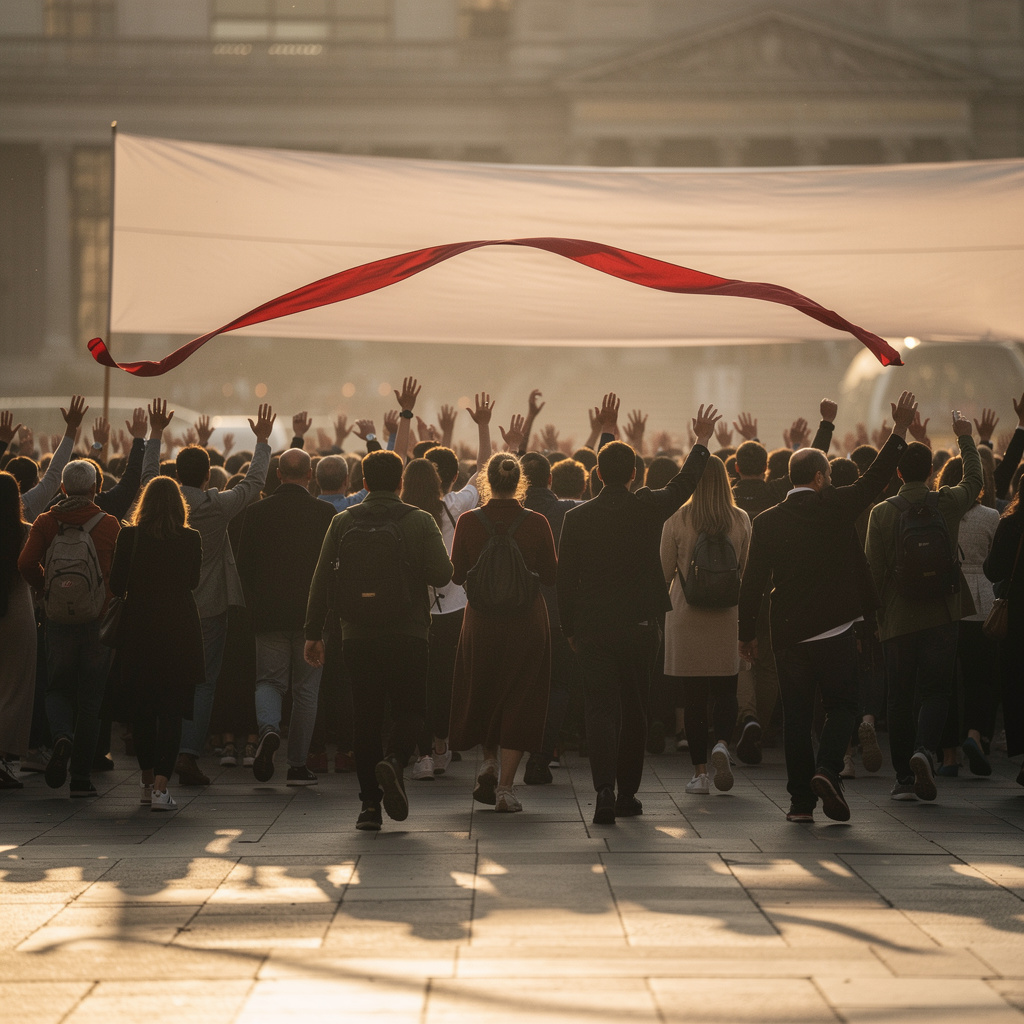
Social movements and collective action refer to sustained, coordinated efforts by individuals and groups to challenge, defend, or transform institutions, policies, cultural meanings, and distributions of power. The subject spans the micro level of recruitment, participation, identity, and emotion; the meso level of organizations, networks, coalitions, and grassroots forms; and the macro level of political opportunity, protest cycles, repression, and social change. Its core concepts include mobilization, contentious repertoires, collective action frames, collective identity, tactical innovation, diffusion, and movement outcomes. Rather than treating protest as isolated events, the field examines how movements emerge, persist, adapt, decline, and leave consequences that may be intended or unforeseen.
This subject matters today because collective action is central to debates over climate policy, racial and gender justice, labor conditions, migration, public health, digital governance, and democratization. In real life, it informs organizing, advocacy, journalism, public policy, corporate risk and stakeholder analysis, and community development; in academia, it connects sociology, political science, communication, history, and area studies. Recent shifts toward platform-mediated mobilization, decentralized networks, transnational spillover, and sophisticated policing make older assumptions about movements and protest cycles insufficient. Understanding these dynamics helps institutions and citizens interpret contention, anticipate escalation or decline, and assess claims about success and legitimacy more carefully.
Mastering this subject builds an analytical skill stack that combines theoretical literacy, comparative case reasoning, network and organizational analysis, framing and narrative diagnosis, tactical and ethical judgment, and outcome assessment. These capabilities are valuable in nonprofit and community organizing, policy and legislative work, journalism and communication strategy, research and teaching, conflict mediation, and corporate or institutional stakeholder analysis. They also support civic judgment by helping people distinguish spontaneous unrest from sustained mobilization, evaluate evidence about repression and success, and recognize how identity, emotion, and media shape participation. The field’s bridge from concept to practice is therefore not a single method but a disciplined way of reading contentious politics across contexts and scales.
What Will This Course Bring You?
- Analyze foundational definitions of social movements and collective action to distinguish them from related phenomena such as riots, NGOs, and advocacy campaigns.
- Compare classical and contemporary social movement theories to explain how theorists account for grievance, resource mobilization, political process, and contentious politics.
- Evaluate how mobilizing structures—formal organizations, informal networks, and grassroots groups—shape recruitment and micromobilization in specific movement cases.
- Apply framing and identity/emotion concepts to design a recruitment message that aligns with a movement’s collective action frame and participant culture.
- Assess how repertoires of contention and tactical innovation interact with political opportunity structures and protest cycles across historical and contemporary campaigns.
- Trace diffusion and spillover processes through movement networks to explain how tactics, frames, and participation spread across groups and borders.
- Evaluate repression, policing, and decline dynamics to recommend strategies movements might use to sustain mobilization under changing constraints.
- Design an assessment framework for movement outcomes that weighs policy concessions, cultural change, participant empowerment, and digital/global impacts.
Curriculum
12 Units1. Foundations: Defining Social Movements and Collective Action
1 hour
2. Classical and Contemporary Theories of Social Movements
1 hour
3. Mobilizing Structures: Organizations, Networks, and Grassroots Forms
1 hour
4. Recruitment, Participation, and Micromobilization
1 hour
5. Framing Processes and Collective Action Frames
1 hour
6. Identity, Culture, and Emotion in Collective Action
1 hour
7. Repertoires of Contention and Tactical Innovation
1 hour
8. Political Opportunity Structures and Cycles of Protest
1 hour
9. Networks, Diffusion, and Spillover
1 hour
10. Repression, Policing, and Movement Decline
1 hour
11. Outcomes, Consequences, and Assessing Movement Success
1 hour
12. Digital Media, Globalization, and the Future of Collective Action
1 hour
Exam – Social Movements and Collective Action
20 Questions • 70% Pass • 30 min
Unlock All Units for Free
Create an account, enroll in the course, and start with the first unit right away.
Exam – Social Movements and Collective Action
20 Questions • Pass: 70% • 30 min
Course Duration
720
Total Minutes
12
Unit
1
Final Exam
~60
Min / Unit
Social Movements and Collective Action Certificate Program
Document Your Skill
Those who pass the 20-question, 30-minute exam with 70% receive the Social Movements and Collective Action Certificate.
Stand Out on Your CV
By adding your certificate to your CV, gain a professional reference in job applications and stand out from the crowd.
Career Advantage
With the verification code, employers can check your certificate instantly — a concrete way to show your growth.
CERTIFICATE FEE
At the end of the course, an online exam consisting of 20 questions with a 30-minute time limit is given. The exam appears automatically after you complete the topics. Anyone who scores at least 70 out of 100 on the certificate exam is awarded the Social Movements and Collective Action Document (certificate of attendance). You can add the certificate you earn to your CV for job applications in the many sectors listed above, and use it as a reference proving that you took this interactive course.
The Certificate of Achievement you receive with the Social Movements and Collective Action course program holds value that proves your personal and professional development in the business world. By adding it to your CV, it can serve as an important reference in your job applications. Moreover, compared with certificates from other private training institutions, Catch Wisdom certificates are offered to our participants at a much more affordable price.
The Social Movements and Collective Action course certificate is a document that proves, with a unique verification code, that you completed the course. Employers can instantly check its authenticity with this code, which helps you show your development concretely in your job applications.
For more information, we recommend visiting the Support page.
Certificate in 7 Languages
Earning success certificates from our courses is now more meaningful and global. With certificates available in Turkish, English, German, French, Spanish, Arabic, and Russian, we fully unlock the potential of students worldwide.
Why Certificate in 7 Languages?
-
01
Global Skill Development
Receiving your certificates in 7 different languages strengthens your communication skills as you engage with more people worldwide. It lets you operate more confidently and capably on the international stage.
-
02
International Job Opportunities
Employers may see your certificates in multiple languages as a sign of your ability to seize global opportunities. You can open more doors to new jobs and projects.
-
03
Cultural Richness
The chance to earn certificates in different languages helps you build closer ties with various cultures and broadens your worldview. It enriches your global perspective and deepens cultural understanding.
-
04
Ability to Participate in International Projects
Multilingual certificates give you an edge to work more effectively on international projects. They boost your chances of leadership and participation in diverse projects in the business world.
-
05
Prove Yourself on the Global Stage
Certificates in multiple languages give you the opportunity to present your skills and knowledge worldwide.
Language diversity opens worldwide opportunities. If you want to prove yourself in the international arena, join our online Social Movements and Collective Action course program and begin this journey with us.
Frequently Asked Questions (FAQ)
Is this course paid?
How do I join the course?
Can I take the course at my own pace?
How can I get my certificate?
What are the advantages of the certificate?
Boost Your Career
Take a new career step with the Social Movements and Collective Action course. Add your certificate to your CV, stand out in job applications, and open the door to new opportunities in the industry.
StartStudent Reviews
No reviews yet
Enroll in this course and be the first to leave a review about your experience with Social Movements and Collective Action.
Start