What is Solid-State Battery Chemistry?
Solid-State Battery Chemistry Training Program
Solid-State Battery Chemistry certificate program offers a deep, systematic dive into the science and engineering behind next-generation energy storage. Designed for materials scientists, electrochemists, battery engineers, and graduate students, this program bridges fundamental solid-state ionics with practical cell design challenges. By the end, participants will be able to critically evaluate electrolyte materials, design interface strategies, and assess manufacturing feasibility for solid-state batteries.
The curriculum progresses from foundational concepts—such as why solid electrolytes outperform liquid systems—through advanced topics like sulfide versus oxide conductivity, lithium metal anode stability, and mechanical stress management. Each lesson builds on the previous, blending theoretical frameworks with real-world case studies from the latest research. The program emphasizes four core skill areas: ionic transport mechanisms, interfacial engineering, electrochemical stability assessment, and scalable synthesis routes. With the rapid shift toward electric vehicles and grid storage, mastering these skills now positions you at the forefront of battery innovation.
What is Solid-State Battery Chemistry?
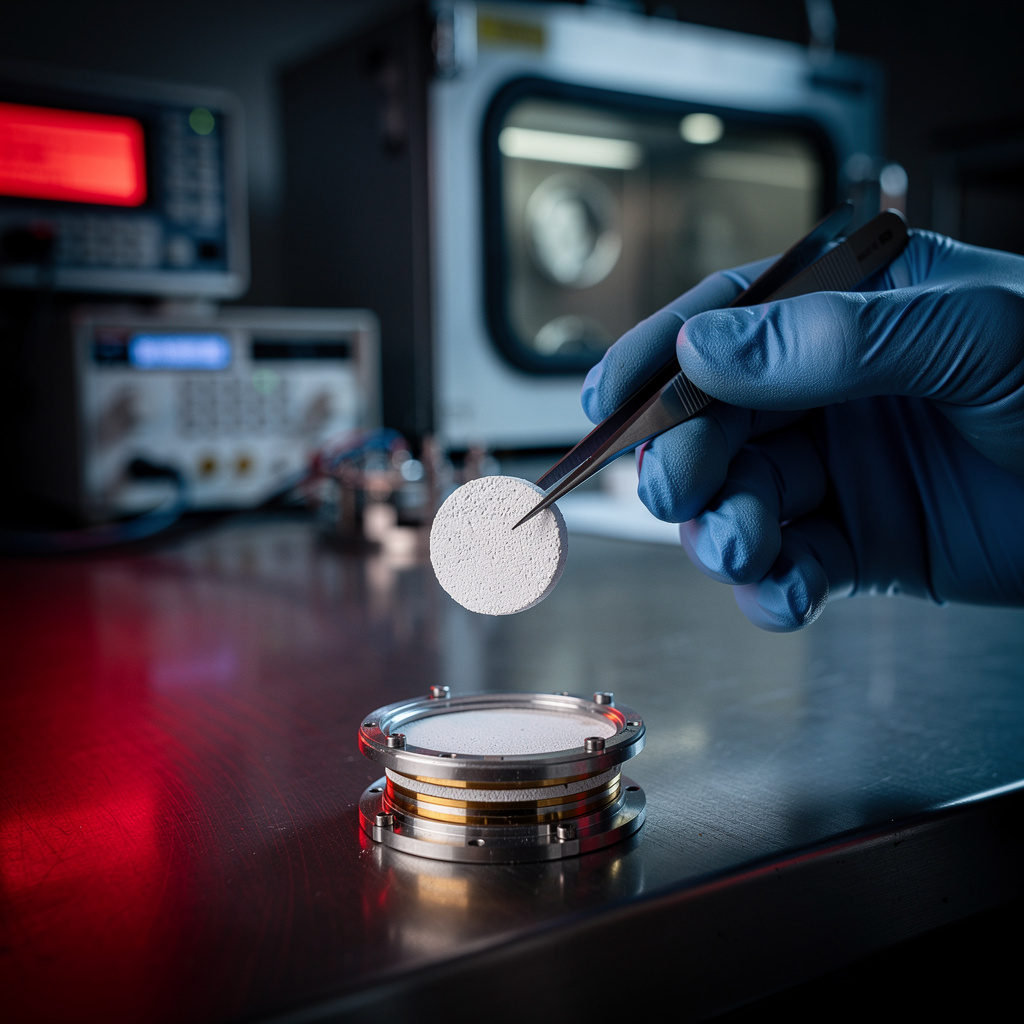
Solid-state battery chemistry is the study of electrochemical energy storage systems that replace flammable liquid electrolytes with solid ion-conducting materials. Its core concepts include ionic conduction in crystalline and amorphous solids, the thermodynamics and kinetics of electrode–electrolyte interfaces, and the mechanical and chemical stability of materials under cycling. This field spans from atomic-scale defect chemistry to macroscopic cell engineering, encompassing oxides, sulfides, halides, polymers, and composites as electrolyte candidates.
Today, solid-state batteries are a critical focus for automotive and electronics industries because they promise higher energy density, faster charging, and improved safety compared to lithium-ion batteries. Companies like Toyota, QuantumScape, and Solid Power are scaling up pilot lines, while academic labs push the boundaries of superionic conductors and lithium metal anodes. Recent breakthroughs in sulfide electrolytes and thin-film deposition have accelerated practical prototypes, yet challenges like dendrite growth and interfacial resistance remain active research frontiers.
Mastering this subject builds a robust skill stack in solid-state ionics, advanced characterization (e.g., impedance spectroscopy, NMR, and electron microscopy), and failure analysis. Professionals in battery R&D, materials consulting, or energy policy gain the ability to interpret performance data, predict degradation mechanisms, and guide material selection. For researchers, it opens pathways to design novel electrolytes and interface coatings, while for engineers, it provides the knowledge to optimize cell assembly and testing protocols—skills increasingly demanded across academia and industry.
Common Questions About Solid-State Battery Chemistry
Does the solid-state battery chemistry certificate help my battery engineering resume?
Is this solid-state battery course suitable for someone with no chemistry background?
Why do sulfide solid electrolytes conduct better than oxides in solid-state batteries?
How do space-charge layers raise resistance at solid-state battery interfaces?
What causes dendrites to grow in lithium metal anodes for solid-state batteries?
How does electrochemical impedance spectroscopy dissect solid-state battery resistance?
Is it true that solid-state batteries never catch fire due to solid electrolytes?
What Will This Course Bring You?
- Analyze the fundamental advantages and challenges of solid-state batteries compared to conventional lithium-ion batteries.
- Apply the principles of ionic conduction in solids to evaluate the conductivity of different solid electrolyte materials.
- Compare and contrast oxide and sulfide solid electrolytes based on their ionic conductivity and electrochemical stability.
- Design a composite electrolyte incorporating halide or polymer components to optimize mechanical and electrochemical properties.
- Evaluate cathode materials for solid-state batteries considering interfacial compatibility and specific capacity.
- Assess the role of lithium metal anodes and the challenges of dendrite formation in solid-state systems.
- Analyze the formation and impact of interfaces and interphases on solid-state battery performance and stability.
- Implement scalable synthesis and manufacturing processes for solid-state battery components to enable commercial viability.
Curriculum
12 Units1. Why Solid-State Batteries?
1 hour
2. Ionic Conduction in Solids
1 hour
3. Oxide and Sulfide Solid Electrolytes
1 hour
4. Halide, Polymer, and Composite Electrolytes
1 hour
5. Cathode Materials for Solid-State Batteries
1 hour
6. Anode Materials and Lithium Metal
1 hour
7. Interfaces and Interphases in Solid-State Batteries
1 hour
8. Electrochemical Stability and Voltage Windows
1 hour
9. Mechanical Behavior and Stress Management
1 hour
10. Synthesis and Manufacturing of Solid-State Batteries
1 hour
11. Characterization Techniques for Solid-State Batteries
1 hour
12. Performance, Degradation, and Future Directions
1 hour
Exam – Solid-State Battery Chemistry
20 Questions • 70% Pass • 30 min
Unlock All Units for Free
Create an account, enroll in the course, and start with the first unit right away.
Exam – Solid-State Battery Chemistry
20 Questions • Pass: 70% • 30 min
Course Duration
720
Total Minutes
12
Unit
1
Final Exam
~60
Min / Unit
Solid-State Battery Chemistry Certificate Program
Document Your Skill
Those who pass the 20-question, 30-minute exam with 70% receive the Solid-State Battery Chemistry Certificate.
Stand Out on Your CV
By adding your certificate to your CV, gain a professional reference in job applications and stand out from the crowd.
Career Advantage
Catch Wisdom certificates are recognized by HR departments and increase career opportunities.
CERTIFICATE FEE
At the end of the course, an online exam consisting of 20 questions with a 30-minute time limit is given. The exam appears automatically after you complete the topics. Anyone who scores at least 70 out of 100 on the certificate exam is awarded the Solid-State Battery Chemistry Document (certificate of attendance). You can add the certificate you earn to your CV for job applications in the many sectors listed above, and use it as a reference proving that you took this interactive course.
The Certificate of Achievement you receive with the Solid-State Battery Chemistry course program holds value that proves your personal and professional development in the business world. By adding it to your CV, it can serve as an important reference in your job applications. Moreover, compared with certificates from other private training institutions, Catch Wisdom certificates are offered to our participants at a much more affordable price.
Because HR departments recognize Catch Wisdom as a reputable institution in this field, they value these certificates and may evaluate your job applications favorably. For this reason, a Solid-State Battery Chemistry course certificate from Catch Wisdom can make your applications more attractive and place you in an advantageous position in the business world.
For more information, we recommend visiting the Support page.
Certificate in 7 Languages
Earning success certificates from our courses is now more meaningful and global. With certificates available in Turkish, English, German, French, Spanish, Arabic, and Russian, we fully unlock the potential of students worldwide.
Why Certificate in 7 Languages?
-
01
Global Skill Development
Receiving your certificates in 7 different languages strengthens your communication skills as you engage with more people worldwide. It lets you operate more confidently and capably on the international stage.
-
02
International Job Opportunities
Employers may see your certificates in multiple languages as a sign of your ability to seize global opportunities. You can open more doors to new jobs and projects.
-
03
Cultural Richness
The chance to earn certificates in different languages helps you build closer ties with various cultures and broadens your worldview. It enriches your global perspective and deepens cultural understanding.
-
04
Ability to Participate in International Projects
Multilingual certificates give you an edge to work more effectively on international projects. They boost your chances of leadership and participation in diverse projects in the business world.
-
05
Prove Yourself on the Global Stage
Certificates in multiple languages let you showcase your skills and knowledge worldwide. You can become an internationally recognized professional.
Language diversity opens worldwide opportunities. If you want to prove yourself in the international arena, join our online Solid-State Battery Chemistry course program and begin this journey with us.
Frequently Asked Questions (FAQ)
Is this course paid?
How do I join the course?
Can I take the course at my own pace?
How can I get my certificate?
What are the advantages of the Certified Certificate?
Boost Your Career
Take a new career step with the Solid-State Battery Chemistry course. Add your certificate to your CV, stand out in job applications, and open the door to new opportunities in the industry.
StartStudent Reviews
No reviews yet
Enroll in this course and be the first to leave a review about your experience with Solid-State Battery Chemistry.
Start