What is Specialty Coffee Roasting?
Specialty Coffee Roasting Training
The Specialty Coffee Roasting certificate program provides a comprehensive, hands-on curriculum covering the entire roasting workflow—from green coffee origins and processing methods to the chemical transformations of Maillard reactions, caramelization, and pyrolysis. This course is designed for aspiring roasters, café owners, and coffee professionals who want to master the art and science of roasting specialty-grade beans. The main practical outcome is the ability to independently design, execute, and evaluate roast profiles for both filter and espresso applications, ensuring consistent quality and flavor development.
The program is structured as a beginner-friendly progression that balances theoretical foundations with applied practice, building core skills in green coffee evaluation, roaster anatomy and heat transfer, sensory analysis, and data-driven quality control. You will work through lessons on roast profiling, batch size and airflow control, Agtron measurement, and troubleshooting common defects. Choosing this program now positions you at the forefront of a rapidly growing industry where demand for traceable, high-quality roasted coffee is surging, and where technical expertise directly translates to better cup quality and business profitability.
What is Specialty Coffee Roasting?
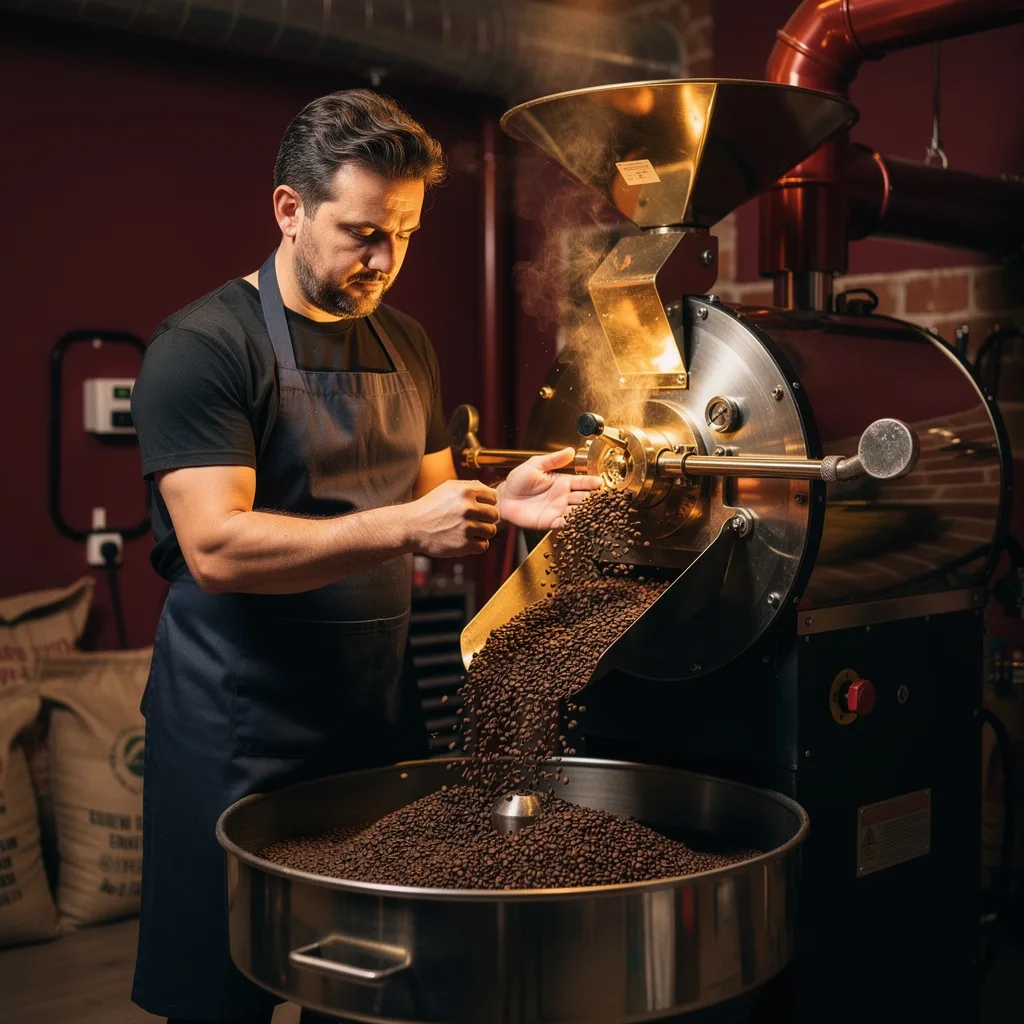
Specialty coffee roasting is the precise application of heat to green coffee beans to unlock their unique flavor potential, guided by an understanding of bean chemistry, physical properties, and sensory science. It encompasses the entire journey from selecting raw beans based on origin, variety, and processing method to controlling time and temperature curves that drive Maillard reactions, caramelization, and pyrolysis. Core concepts include roast profiling, development time ratio, heat transfer mechanisms (conduction, convection, radiation), and the use of tools like Agtron colorimeters to quantify roast degree.
Today, specialty coffee roasting matters more than ever as consumers and cafés demand transparency, origin-specific flavor notes, and consistent quality. The industry has shifted from dark, uniform roasts to lighter profiles that highlight terroir, requiring roasters to understand the delicate balance between acidity, sweetness, and body. Roasters now use data logging, software, and precise control over variables like airflow and drum speed to replicate results, making the field both a craft and a technical discipline.
Mastering specialty coffee roasting builds a skill stack that combines sensory acuity, mechanical understanding, and analytical thinking—abilities that are directly applicable in production roasting facilities, micro-roasteries, and quality control labs. Professionals who develop these skills can confidently source green beans, design profiles for specific brewing methods, troubleshoot defects, and manage cost and sustainability. Whether you aim to launch your own roasting business, advance in a specialty coffee company, or deepen your appreciation for the craft, this subject provides the foundational knowledge to produce exceptional coffee.
Common Questions About Specialty Coffee Roasting
Is Specialty Coffee Roasting suitable for complete beginners with no experience?
Can I start a coffee roasting business after this course?
How does the Maillard reaction affect coffee flavor during roasting?
What is the role of airflow in controlling roast development?
What are the key differences between drum and fluid bed roasters?
- Heat transfer: Drum roasters combine conduction and convection; fluid bed roasters use only convection.
- Roast profile: Drum roasters produce slower, more gradual development; fluid bed roasters are faster and more linear.
- Flavor impact: Drum roasts often have more body and complexity; fluid bed roasts are cleaner and brighter.
How do you design a roast profile for a specific coffee origin?
Is it true that dark roast coffee has more caffeine than light roast?
What Will This Course Bring You?
- Analyze how green coffee origin, variety, and processing method influence roast behavior and flavor potential.
- Apply the principles of Maillard reaction, caramelization, and pyrolysis to predict chemical changes during roasting.
- Evaluate heat transfer mechanisms in a drum roaster to optimize energy efficiency and bean development.
- Design a roast profile by manipulating time, temperature, and development ratio for a target flavor.
- Perform sensory evaluation using standardized cupping protocols to assess roast quality and identify defects.
- Measure roast degree using Agtron color readings and visual cues to ensure consistency across batches.
- Troubleshoot common roast defects by analyzing batch data and adjusting variables like airflow and drum speed.
- Build a cost model for a roasting operation that accounts for green coffee sourcing, yield, and sustainability.
Curriculum
12 Units1. Green Coffee: Origins, Varieties, and Processing
1 hour
2. The Chemistry of Roasting: Maillard, Caramelization, and Pyrolysis
1 hour
3. Roaster Anatomy and Heat Transfer Principles
1 hour
4. Roast Profiling: Time, Temperature, and Development
1 hour
5. Sensory Evaluation and Cupping Protocols
1 hour
6. Measuring Roast Degree: Agtron and Visual Cues
1 hour
7. Controlling Roast Variables: Batch Size, Airflow, and Drum Speed
1 hour
8. Designing a Roast Profile for a Specific Coffee
1 hour
9. Quality Control and Troubleshooting Common Roast Defects
1 hour
10. Roast Logging and Data Analysis for Consistency
1 hour
11. Blending Roasts for Espresso and Filter Coffee
1 hour
12. Roasting for Profit: Costing, Sourcing, and Sustainability
1 hour
Exam – Specialty Coffee Roasting
20 Questions • 70% Pass • 30 min
Unlock All Units for Free
Create an account, enroll in the course, and start with the first unit right away.
Exam – Specialty Coffee Roasting
20 Questions • Pass: 70% • 30 min
Course Duration
720
Total Minutes
12
Unit
1
Final Exam
~60
Min / Unit
Specialty Coffee Roasting Certificate Program
Document Your Skill
Those who pass the 20-question, 30-minute exam with 70% receive the Specialty Coffee Roasting Certificate.
Stand Out on Your CV
By adding your certificate to your CV, gain a professional reference in job applications and stand out from the crowd.
Career Advantage
With the verification code, employers can check your certificate instantly — a concrete way to show your growth.
CERTIFICATE FEE
At the end of the course, an online exam consisting of 20 questions with a 30-minute time limit is given. The exam appears automatically after you complete the topics. Anyone who scores at least 70 out of 100 on the certificate exam is awarded the Specialty Coffee Roasting Document (certificate of attendance). You can add the certificate you earn to your CV for job applications in the many sectors listed above, and use it as a reference proving that you took this interactive course.
The Certificate of Achievement you receive with the Specialty Coffee Roasting course program holds value that proves your personal and professional development in the business world. By adding it to your CV, it can serve as an important reference in your job applications. Moreover, compared with certificates from other private training institutions, Catch Wisdom certificates are offered to our participants at a much more affordable price.
The Specialty Coffee Roasting course certificate is a document that proves, with a unique verification code, that you completed the course. Employers can instantly check its authenticity with this code, which helps you show your development concretely in your job applications.
For more information, we recommend visiting the Support page.
Certificate in 7 Languages
Earning success certificates from our courses is now more meaningful and global. With certificates available in Turkish, English, German, French, Spanish, Arabic, and Russian, we fully unlock the potential of students worldwide.
Why Certificate in 7 Languages?
-
01
Global Skill Development
Receiving your certificates in 7 different languages strengthens your communication skills as you engage with more people worldwide. It lets you operate more confidently and capably on the international stage.
-
02
International Job Opportunities
Employers may see your certificates in multiple languages as a sign of your ability to seize global opportunities. You can open more doors to new jobs and projects.
-
03
Cultural Richness
The chance to earn certificates in different languages helps you build closer ties with various cultures and broadens your worldview. It enriches your global perspective and deepens cultural understanding.
-
04
Ability to Participate in International Projects
Multilingual certificates give you an edge to work more effectively on international projects. They boost your chances of leadership and participation in diverse projects in the business world.
-
05
Prove Yourself on the Global Stage
Certificates in multiple languages give you the opportunity to present your skills and knowledge worldwide.
Language diversity opens worldwide opportunities. If you want to prove yourself in the international arena, join our online Specialty Coffee Roasting course program and begin this journey with us.
Frequently Asked Questions (FAQ)
Is this course paid?
How do I join the course?
Can I take the course at my own pace?
How can I get my certificate?
What are the advantages of the certificate?
Boost Your Career
Take a new career step with the Specialty Coffee Roasting course. Add your certificate to your CV, stand out in job applications, and open the door to new opportunities in the industry.
StartStudent Reviews
No reviews yet
Enroll in this course and be the first to leave a review about your experience with Specialty Coffee Roasting.
Start