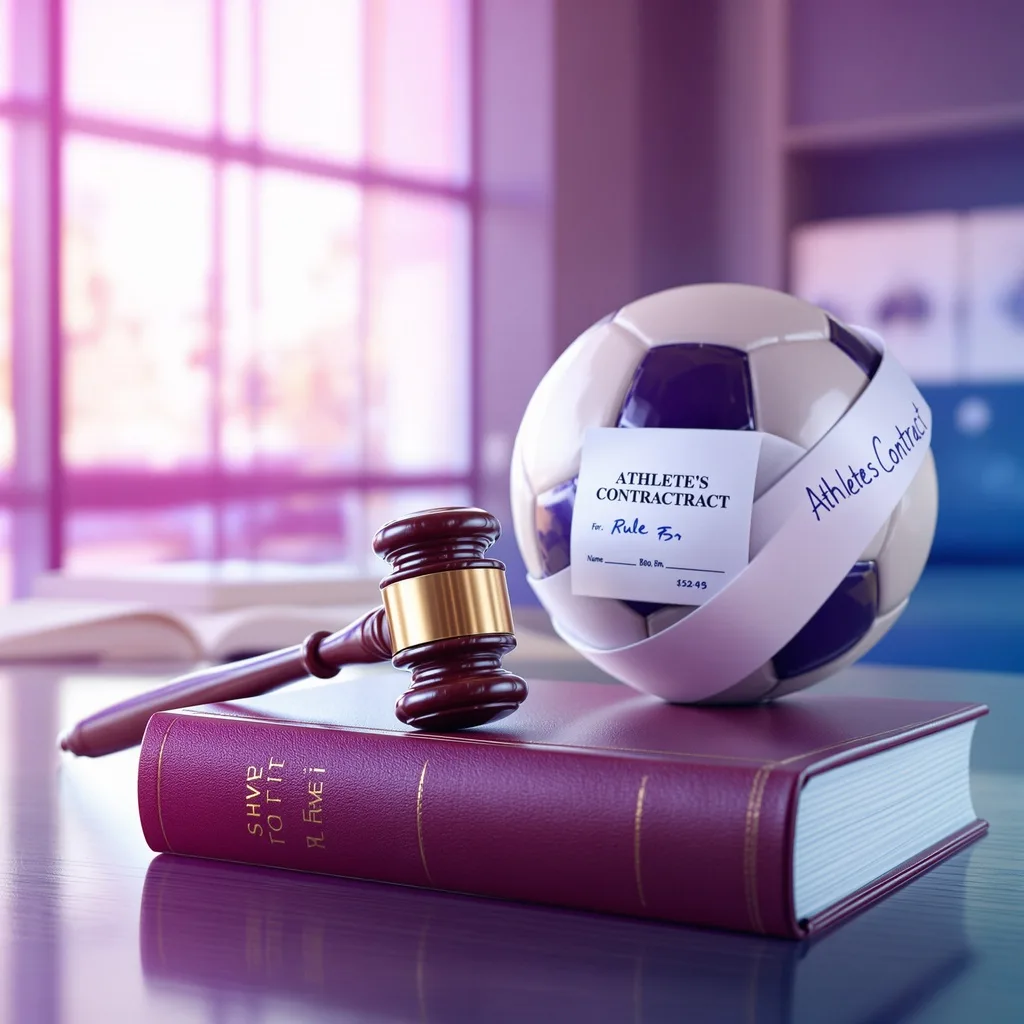
What is Sports Law?
Sports Law Certificate Program
The Sports Law certificate program provides a comprehensive exploration of the legal frameworks that govern the sports industry, from athlete contracts and antitrust regulations to doping controls and gender equity. Designed for aspiring sports lawyers, agents, administrators, and compliance officers, this course delivers practical knowledge for navigating contract negotiations, dispute resolution, and regulatory compliance. By the end of the program, participants will be equipped to analyze real-world sports law cases and advise stakeholders on legal risks and opportunities.
The curriculum progresses from foundational principles—such as sports governance and tort liability—to advanced topics like international sports law and emerging issues in data privacy and esports. Each module balances theoretical grounding with case studies drawn from professional leagues, Olympic bodies, and collegiate athletics. Core skill areas include contract drafting, regulatory analysis, dispute resolution, intellectual property management, and ethical decision-making. This program is especially timely given the rapid evolution of athlete activism, collective bargaining dynamics, and global anti-doping standards.
What is Sports Law?
Sports law is a multidisciplinary field that encompasses the legal rules, regulations, and contractual frameworks governing athletic competition, sports organizations, and the business of sports. It draws from contract law, tort law, labor law, antitrust law, intellectual property law, and international law to address issues such as player transfers, sponsorship agreements, stadium financing, and doping violations. Core concepts include the authority of governing bodies like the IOC and FIFA, the balance between league rules and antitrust principles, and the protection of athletes’ rights through collective bargaining and anti-discrimination statutes.
Today, sports law is increasingly relevant as the industry faces challenges from athlete empowerment movements, the commercialization of collegiate sports, and the global expansion of leagues and tournaments. Real-world applications include negotiating multi-million-dollar endorsement deals, litigating concussion liability cases, enforcing anti-doping sanctions, and resolving disputes through arbitration at the Court of Arbitration for Sport. Recent shifts—such as the legalization of sports betting, the rise of name-image-likeness rights for student-athletes, and the impact of COVID-19 on force majeure clauses—underscore the need for specialized legal expertise.
Mastering sports law builds a versatile skill stack that includes analytical reasoning, negotiation tactics, regulatory interpretation, and cross-cultural legal awareness. Professionals in this field can pursue careers as in-house counsel for teams or leagues, agents representing athletes, compliance officers for anti-doping agencies, or consultants advising on sports governance. Beyond the legal profession, knowledge of sports law benefits sports journalists, team executives, and policymakers who must understand the legal boundaries shaping competition, fairness, and integrity in modern athletics.
What Will This Course Bring You?
- Analyze the legal foundations of sports law, including key statutes and landmark case precedents.
- Evaluate the regulatory authority of governing bodies like FIFA and the IOC in international sports.
- Draft a standard athlete representation contract incorporating negotiation strategies and legal protections.
- Apply antitrust principles to assess league restrictions on player movement and market competition.
- Interpret collective bargaining agreements to resolve labor disputes in professional sports.
- Design an intellectual property protection strategy for sports brands, logos, and broadcasting rights.
- Assess tort liability in sports injury cases using duty of care and assumption of risk doctrines.
- Implement anti-doping compliance procedures under WADA regulations and international standards.
Curriculum
12 Units1. Foundations of Sports Law
30 min
2. Sports Governance and Regulatory Bodies
30 min
3. Athlete Contracts and Negotiations
30 min
4. Antitrust Law in Sports
30 min
5. Labor Law and Collective Bargaining
30 min
6. Intellectual Property in Sports
30 min
7. Tort Law and Liability in Sports
30 min
8. Doping and Anti-Doping Regulations
30 min
9. Dispute Resolution in Sports
30 min
10. International Sports Law
30 min
11. Gender Equity and Discrimination in Sports
30 min
12. Emerging Issues in Sports Law
30 min
Exam – Sports Law
20 Questions • 70% Pass • 30 min
Unlock All Units for Free
Create an account, enroll in the course, and start with the first unit right away.
Exam – Sports Law
20 Questions • Pass: 70% • 30 min
Course Duration
360
Total Minutes
12
Unit
1
Final Exam
~30
Min / Unit
Sports Law Certificate Program
Document Your Skill
Those who pass the 20-question, 30-minute exam with 70% receive the Sports Law Certificate.
Stand Out on Your CV
By adding your certificate to your CV, gain a professional reference in job applications and stand out from the crowd.
Career Advantage
Catch Wisdom certificates are recognized by HR departments and increase career opportunities.
CERTIFICATE FEE
At the end of the course, an online exam consisting of 20 questions with a 30-minute time limit is given. The exam appears automatically after you complete the topics. Anyone who scores at least 70 out of 100 on the certificate exam is awarded the Sports Law Document (certificate of attendance). You can add the certificate you earn to your CV for job applications in the many sectors listed above, and use it as a reference proving that you took this interactive course.
The Certificate of Achievement you receive with the Sports Law course program holds value that proves your personal and professional development in the business world. By adding it to your CV, it can serve as an important reference in your job applications. Moreover, compared with certificates from other private training institutions, Catch Wisdom certificates are offered to our participants at a much more affordable price.
Because HR departments recognize Catch Wisdom as a reputable institution in this field, they value these certificates and may evaluate your job applications favorably. For this reason, a Sports Law course certificate from Catch Wisdom can make your applications more attractive and place you in an advantageous position in the business world.
For more information, we recommend visiting the Support page.
Certificate in 7 Languages
Earning success certificates from our courses is now more meaningful and global. With certificates available in Turkish, English, German, French, Spanish, Arabic, and Russian, we fully unlock the potential of students worldwide.
Why Certificate in 7 Languages?
-
01
Global Skill Development
Receiving your certificates in 7 different languages strengthens your communication skills as you engage with more people worldwide. It lets you operate more confidently and capably on the international stage.
-
02
International Job Opportunities
Employers may see your certificates in multiple languages as a sign of your ability to seize global opportunities. You can open more doors to new jobs and projects.
-
03
Cultural Richness
The chance to earn certificates in different languages helps you build closer ties with various cultures and broadens your worldview. It enriches your global perspective and deepens cultural understanding.
-
04
Ability to Participate in International Projects
Multilingual certificates give you an edge to work more effectively on international projects. They boost your chances of leadership and participation in diverse projects in the business world.
-
05
Prove Yourself on the Global Stage
Certificates in multiple languages let you showcase your skills and knowledge worldwide. You can become an internationally recognized professional.
Language diversity opens worldwide opportunities. If you want to prove yourself in the international arena, join our online Sports Law course program and begin this journey with us.
Frequently Asked Questions (FAQ)
Is this course paid?
How do I join the course?
Can I take the course at my own pace?
How can I get my certificate?
What are the advantages of the Certified Certificate?
Boost Your Career
Take a new career step with the Sports Law course. Add your certificate to your CV, stand out in job applications, and open the door to new opportunities in the industry.
StartStudent Reviews
No reviews yet
Enroll in this course and be the first to leave a review about your experience with Sports Law.
Start