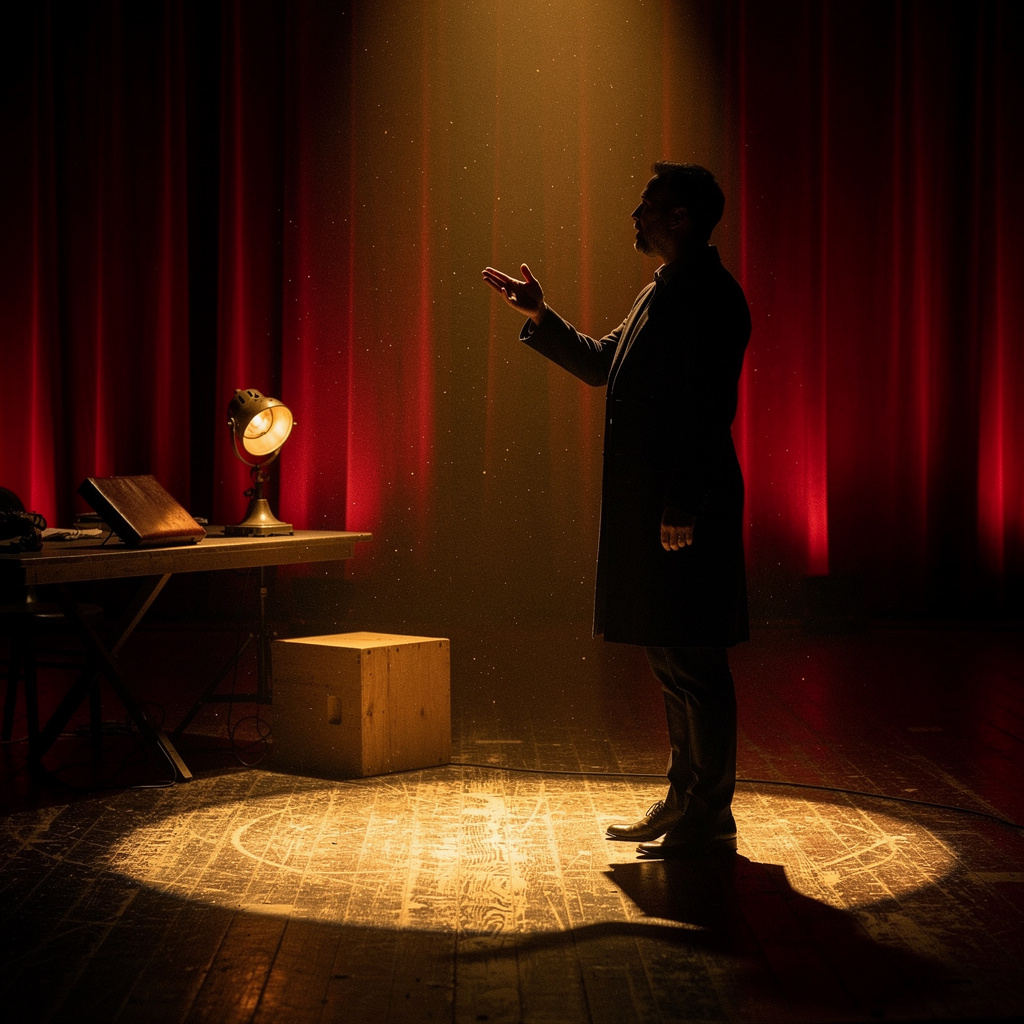
What is Storytelling for Performers?
Storytelling for Performers Certificate Program
Storytelling for Performers certificate program is a specialized training for actors, spoken-word artists, public speakers, and anyone who wants to hold a live audience through the power of narrative. The course teaches you how to find and select performance material, shape it with a dramatic arc, embody characters and points of view, and build immersive sensory worlds. It is designed for both emerging performers and experienced presenters who feel their delivery lacks emotional truth or structural clarity. The main practical outcome is a polished, rehearsed story set that you can perform with confidence, authenticity, and dynamic audience interaction.
The program progresses in a beginner-friendly sequence, starting with the foundations of storytelling for performers and moving through material selection, story structure, character and voice, sensory world-building, vocal and physical technique, staging and blocking, rehearsal and improvisation, audience engagement, emotional truth, directing your set, and finally professional performance practice and sustainability. Each lesson balances theoretical frameworks with hands-on exercises, so you are always applying concepts to your own material. The curriculum builds five core skill areas: narrative craft, embodied performance, spatial and vocal technique, live audience attunement, and sustainable professional practice. You would choose this program now because live performance is experiencing a renaissance, and audiences crave authentic, well-crafted stories more than ever in a screen-saturated world.
What is Storytelling for Performers?
Storytelling for performers is the discipline of embodying narrative in real time before a live audience, blending literary craft with theatrical presence. Its scope covers the selection and adaptation of material, the architecture of dramatic arc, the embodiment of character and point of view, and the use of sensory detail to build vivid worlds. Core concepts include emotional truth, spatial storytelling, vocal and physical technique, and the dynamic negotiation between teller and listener. Unlike written storytelling, this subject treats the performer’s body, voice, and immediate surroundings as essential narrative instruments.
This subject matters today because live storytelling counters the fragmentation and artificiality of digital media, offering irreplaceable human connection and shared presence. It is used across theatre, solo performance, corporate keynote speaking, podcasting, education, therapy, and community activism. Recent shifts include the rise of personal narrative and immersive theatre, the integration of digital live streaming, and a growing demand for authentic voices in leadership and public communication. As audiences increasingly value vulnerability and immediacy, performers who master this craft become powerful agents of empathy and change.
Mastering storytelling for performers builds a distinctive skill stack: narrative design, embodied vocal and physical expression, improvisational agility, audience attunement, and emotional regulation under pressure. These skills translate directly into professional contexts such as stage and screen acting, public speaking, teaching, facilitation, and creative leadership. On a personal level, the subject cultivates confidence, presence, and the ability to connect deeply with others through shared story. The bridge from subject to learner outcome is therefore not just performance technique but a durable capacity for authentic human engagement.
Common Questions About Storytelling for Performers
Can someone with no stage experience join this performance storytelling course?
How long does the Storytelling for Performers course take to finish?
Freytag's Pyramid vs three-act structure: which one should I use?
- Planning a set: three-act proportions help you allocate minutes and decide when the turn should arrive.
- Fixing a flat story: Freytag shows whether the falling action runs too long or the climax sits in the wrong place.
- Both at once: build with three acts, then audit the result against the five stages.
How do I build a narrative arc without making the story feel formulaic?
How does breath support change the way an audience hears my story?
What are the nine zones of the stage and how do they shape blocking?
Isn't storytelling just reading a script aloud with good expression?
What Will This Course Bring You?
- Analyze foundational storytelling principles to select and shape personal or adapted narratives for live performance.
- Evaluate potential performance material using criteria such as dramatic potential, cultural relevance, and suitability for your voice and body.
- Design a performance story with a clear dramatic arc, including inciting incident, rising action, climax, and resolution.
- Construct distinct character voices and points of view that serve the narrative and remain consistent throughout a live storytelling set.
- Apply sensory detail and world-building techniques to create vivid, immersive settings for audiences during performance.
- Integrate vocal technique, physicality, and spatial blocking to deliver a story with clear focus and dynamic stage presence.
- Implement rehearsal, memorization, and improvisation strategies to adapt a story set during live audience interaction.
- Evaluate emotional truth and directorial feedback to refine a sustainable professional storytelling practice.
Curriculum
12 Units1. Foundations of Storytelling for Performers
1 hour
2. Finding and Selecting Performance Material
1 hour
3. Story Structure and Dramatic Arc
1 hour
4. Character, Voice, and Point of View
1 hour
5. World-Building Through Sensory Detail
1 hour
6. Vocal and Physical Technique for Storytellers
1 hour
7. Staging, Blocking, and Spatial Storytelling
1 hour
8. Rehearsal, Memorization, and Improvisation
1 hour
9. Audience Engagement and Live Interaction
1 hour
10. Emotional Truth and Authentic Presence
1 hour
11. Directing and Refining Your Story Set
1 hour
12. Professional Performance Practice and Sustainability
1 hour
Exam – Storytelling for Performers
20 Questions • 70% Pass • 30 min
Unlock All Units for Free
Create an account, enroll in the course, and start with the first unit right away.
Exam – Storytelling for Performers
20 Questions • Pass: 70% • 30 min
Course Duration
720
Total Minutes
12
Unit
1
Final Exam
~60
Min / Unit
Storytelling for Performers Certificate Program
Document Your Skill
Those who pass the 20-question, 30-minute exam with 70% receive the Storytelling for Performers Certificate.
Stand Out on Your CV
By adding your certificate to your CV, gain a professional reference in job applications and stand out from the crowd.
Career Advantage
With the verification code, employers can check your certificate instantly — a concrete way to show your growth.
CERTIFICATE FEE
At the end of the course, an online exam consisting of 20 questions with a 30-minute time limit is given. The exam appears automatically after you complete the topics. Anyone who scores at least 70 out of 100 on the certificate exam is awarded the Storytelling for Performers Document (certificate of attendance). You can add the certificate you earn to your CV for job applications in the many sectors listed above, and use it as a reference proving that you took this interactive course.
The Certificate of Achievement you receive with the Storytelling for Performers course program holds value that proves your personal and professional development in the business world. By adding it to your CV, it can serve as an important reference in your job applications. Moreover, compared with certificates from other private training institutions, Catch Wisdom certificates are offered to our participants at a much more affordable price.
The Storytelling for Performers course certificate is a document that proves, with a unique verification code, that you completed the course. Employers can instantly check its authenticity with this code, which helps you show your development concretely in your job applications.
For more information, we recommend visiting the Support page.
Certificate in 7 Languages
Earning success certificates from our courses is now more meaningful and global. With certificates available in Turkish, English, German, French, Spanish, Arabic, and Russian, we fully unlock the potential of students worldwide.
Why Certificate in 7 Languages?
-
01
Global Skill Development
Receiving your certificates in 7 different languages strengthens your communication skills as you engage with more people worldwide. It lets you operate more confidently and capably on the international stage.
-
02
International Job Opportunities
Employers may see your certificates in multiple languages as a sign of your ability to seize global opportunities. You can open more doors to new jobs and projects.
-
03
Cultural Richness
The chance to earn certificates in different languages helps you build closer ties with various cultures and broadens your worldview. It enriches your global perspective and deepens cultural understanding.
-
04
Ability to Participate in International Projects
Multilingual certificates give you an edge to work more effectively on international projects. They boost your chances of leadership and participation in diverse projects in the business world.
-
05
Prove Yourself on the Global Stage
Certificates in multiple languages give you the opportunity to present your skills and knowledge worldwide.
Language diversity opens worldwide opportunities. If you want to prove yourself in the international arena, join our online Storytelling for Performers course program and begin this journey with us.
Frequently Asked Questions (FAQ)
Is this course paid?
How do I join the course?
Can I take the course at my own pace?
How can I get my certificate?
What are the advantages of the certificate?
Boost Your Career
Take a new career step with the Storytelling for Performers course. Add your certificate to your CV, stand out in job applications, and open the door to new opportunities in the industry.
StartStudent Reviews
No reviews yet
Enroll in this course and be the first to leave a review about your experience with Storytelling for Performers.
Start