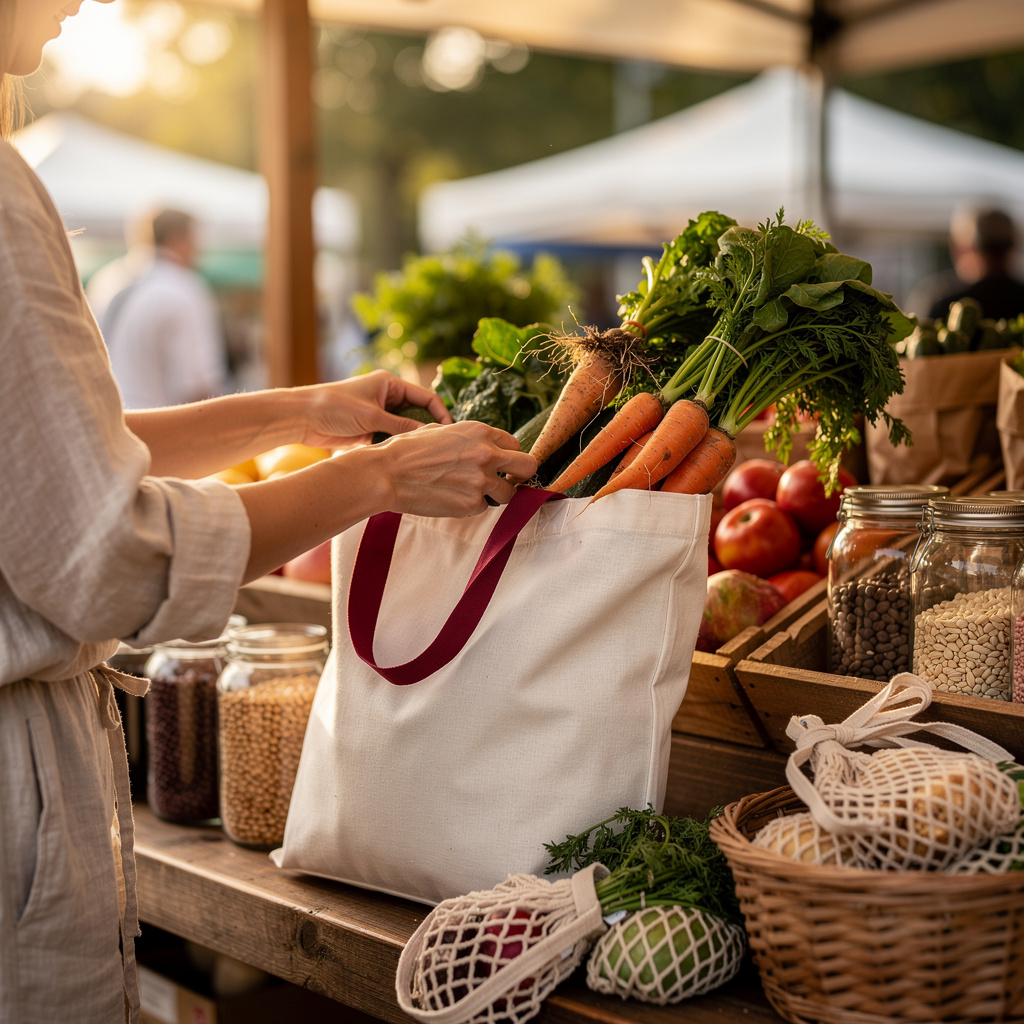
What is Sustainable Shopping Habits?
Sustainable Shopping Habits Certificate Program
The Sustainable Shopping Habits certificate program equips everyday shoppers, household decision-makers, and procurement-minded professionals with a practical framework for aligning purchases with environmental and social values. It teaches how to audit current shopping patterns, separate needs from wants, evaluate brands without falling for greenwashing, interpret sustainability certifications, and compare materials and durability through a lifecycle lens. Learners also examine ethical supply chains, local and seasonal whole foods, secondhand and repair options within the circular economy, packaging reduction, and meal planning to cut food waste. The main practical outcome is a personalized, repeatable shopping system that reduces waste, controls costs, and supports more informed choices across groceries, household goods, and everyday purchases.
The program is structured as a beginner-friendly progression: it starts with foundational concepts, moves into a personal shopping audit, then builds decision-making frameworks before advancing to brand evaluation, certification literacy, materials and lifecycle impact, and circular practices. Theory is balanced with applied exercises such as habit audits, label and certification checks, packaging reviews, and meal-planning routines, so learners practice each skill in real shopping contexts. Across the lessons, five core skill areas emerge: self-auditing and mindful decision-making, greenwashing detection and certification interpretation, materials and lifecycle reasoning, ethical supply chain awareness, and circular habit design for secondhand, repair, packaging reduction, and food waste prevention. Someone would choose this program now because greenwashing is increasingly sophisticated, certification labels are confusing, household budgets are under pressure, and shoppers want credible ways to reduce waste without sacrificing practicality.
What is Sustainable Shopping Habits?
Sustainable shopping habits are the repeated purchasing behaviors and decision routines that integrate environmental, social, and economic considerations across a product’s lifecycle. The subject covers core concepts such as needs versus wants, mindful consumption, lifecycle impact, durability, material selection, sustainability certifications, greenwashing, ethical supply chains, circular economy practices, packaging reduction, and food waste prevention. Its scope ranges from daily grocery choices and whole foods shopping to household goods, secondhand purchases, repair decisions, and the long-term maintenance of lower-waste routines. Rather than treating sustainability as a one-off ethical label, the subject frames shopping as a system of habits shaped by information literacy, personal values, budget realities, and available alternatives.
Sustainable shopping habits matter today because consumers face a crowded marketplace of sustainability claims, inconsistent certification schemes, and growing scrutiny of corporate supply chains. Recent shifts include stronger anti-greenwashing enforcement, expanded resale and repair markets, new packaging and waste regulations, and greater attention to local and seasonal food systems. In real life, the subject is used by households managing budgets and waste, by retail and procurement teams assessing product impacts, by community programs promoting circular practices, and by researchers studying consumer behavior and sustainable consumption. It also connects to industry conversations around ESG reporting, supply chain transparency, and lifecycle assessment, making it relevant across academic, policy, and commercial contexts.
Mastering this subject builds a skill stack that combines personal habit auditing, needs-and-wants analysis, certification and label literacy, lifecycle thinking, supply chain reasoning, circular practice design, and long-term behavior maintenance. These skills benefit professional contexts such as retail sustainability, procurement, corporate social responsibility, community waste-reduction programs, and consumer education, where credible evaluation of products and claims is essential. On a personal level, the same skill stack supports household budgeting, lower-waste living, values-aligned purchasing, and more resilient responses to confusing or misleading sustainability messaging. The subject ultimately bridges consumer knowledge with practical judgment, helping people navigate trade-offs between cost, durability, ethics, and environmental impact without relying on simplistic labels.
What Will This Course Bring You?
- Analyze core principles of sustainable shopping to distinguish environmental, social, and economic impacts when selecting everyday products.
- Conduct a personal shopping audit that categorizes current purchases by necessity, frequency, spending, and sustainability impact to identify priority change areas.
- Apply needs-versus-wants decision criteria to evaluate planned purchases and reduce impulsive buying before completing in-store or online transactions.
- Evaluate brand sustainability claims and certification labels using credible evidence to detect greenwashing and select products with verifiable environmental or social credentials.
- Compare materials, durability, lifecycle impact, and packaging options for common purchases to select products that reduce waste and extend usable life.
- Assess ethical supply chain and social responsibility information to identify products and brands aligned with fair labor and humane production practices.
- Design a local, seasonal, whole-food meal plan that uses inventory checks and portion planning to reduce food waste and support regional producers.
- Implement secondhand, repair, and circular-economy shopping strategies alongside a tracking routine that sustains mindful purchasing habits over time.
Curriculum
12 Units1. Foundations of Sustainable Shopping
1 hour
2. Auditing Your Current Shopping Habits
1 hour
3. Needs, Wants, and Mindful Decision-Making
1 hour
4. Evaluating Brands and Avoiding Greenwashing
1 hour
5. Understanding Sustainability Certifications
1 hour
6. Materials, Durability, and Lifecycle Impact
1 hour
7. Ethical Supply Chains and Social Responsibility
1 hour
8. Local, Seasonal, and Whole Foods Shopping
1 hour
9. Secondhand, Repair, and the Circular Economy
1 hour
10. Reducing Packaging and Single-Use Waste
1 hour
11. Meal Planning and Food Waste Reduction
1 hour
12. Sustaining Your Habits Long-Term
1 hour
Exam – Sustainable Shopping Habits
20 Questions • 70% Pass • 30 min
Unlock All Units for Free
Create an account, enroll in the course, and start with the first unit right away.
Exam – Sustainable Shopping Habits
20 Questions • Pass: 70% • 30 min
Course Duration
720
Total Minutes
12
Unit
1
Final Exam
~60
Min / Unit
Sustainable Shopping Habits Certificate Program
Document Your Skill
Those who pass the 20-question, 30-minute exam with 70% receive the Sustainable Shopping Habits Certificate.
Stand Out on Your CV
By adding your certificate to your CV, gain a professional reference in job applications and stand out from the crowd.
Career Advantage
With the verification code, employers can check your certificate instantly — a concrete way to show your growth.
CERTIFICATE FEE
At the end of the course, an online exam consisting of 20 questions with a 30-minute time limit is given. The exam appears automatically after you complete the topics. Anyone who scores at least 70 out of 100 on the certificate exam is awarded the Sustainable Shopping Habits Document (certificate of attendance). You can add the certificate you earn to your CV for job applications in the many sectors listed above, and use it as a reference proving that you took this interactive course.
The Certificate of Achievement you receive with the Sustainable Shopping Habits course program holds value that proves your personal and professional development in the business world. By adding it to your CV, it can serve as an important reference in your job applications. Moreover, compared with certificates from other private training institutions, Catch Wisdom certificates are offered to our participants at a much more affordable price.
The Sustainable Shopping Habits course certificate is a document that proves, with a unique verification code, that you completed the course. Employers can instantly check its authenticity with this code, which helps you show your development concretely in your job applications.
For more information, we recommend visiting the Support page.
Certificate in 7 Languages
Earning success certificates from our courses is now more meaningful and global. With certificates available in Turkish, English, German, French, Spanish, Arabic, and Russian, we fully unlock the potential of students worldwide.
Why Certificate in 7 Languages?
-
01
Global Skill Development
Receiving your certificates in 7 different languages strengthens your communication skills as you engage with more people worldwide. It lets you operate more confidently and capably on the international stage.
-
02
International Job Opportunities
Employers may see your certificates in multiple languages as a sign of your ability to seize global opportunities. You can open more doors to new jobs and projects.
-
03
Cultural Richness
The chance to earn certificates in different languages helps you build closer ties with various cultures and broadens your worldview. It enriches your global perspective and deepens cultural understanding.
-
04
Ability to Participate in International Projects
Multilingual certificates give you an edge to work more effectively on international projects. They boost your chances of leadership and participation in diverse projects in the business world.
-
05
Prove Yourself on the Global Stage
Certificates in multiple languages give you the opportunity to present your skills and knowledge worldwide.
Language diversity opens worldwide opportunities. If you want to prove yourself in the international arena, join our online Sustainable Shopping Habits course program and begin this journey with us.
Frequently Asked Questions (FAQ)
Is this course paid?
How do I join the course?
Can I take the course at my own pace?
How can I get my certificate?
What are the advantages of the certificate?
Boost Your Career
Take a new career step with the Sustainable Shopping Habits course. Add your certificate to your CV, stand out in job applications, and open the door to new opportunities in the industry.
StartStudent Reviews
No reviews yet
Enroll in this course and be the first to leave a review about your experience with Sustainable Shopping Habits.
Start