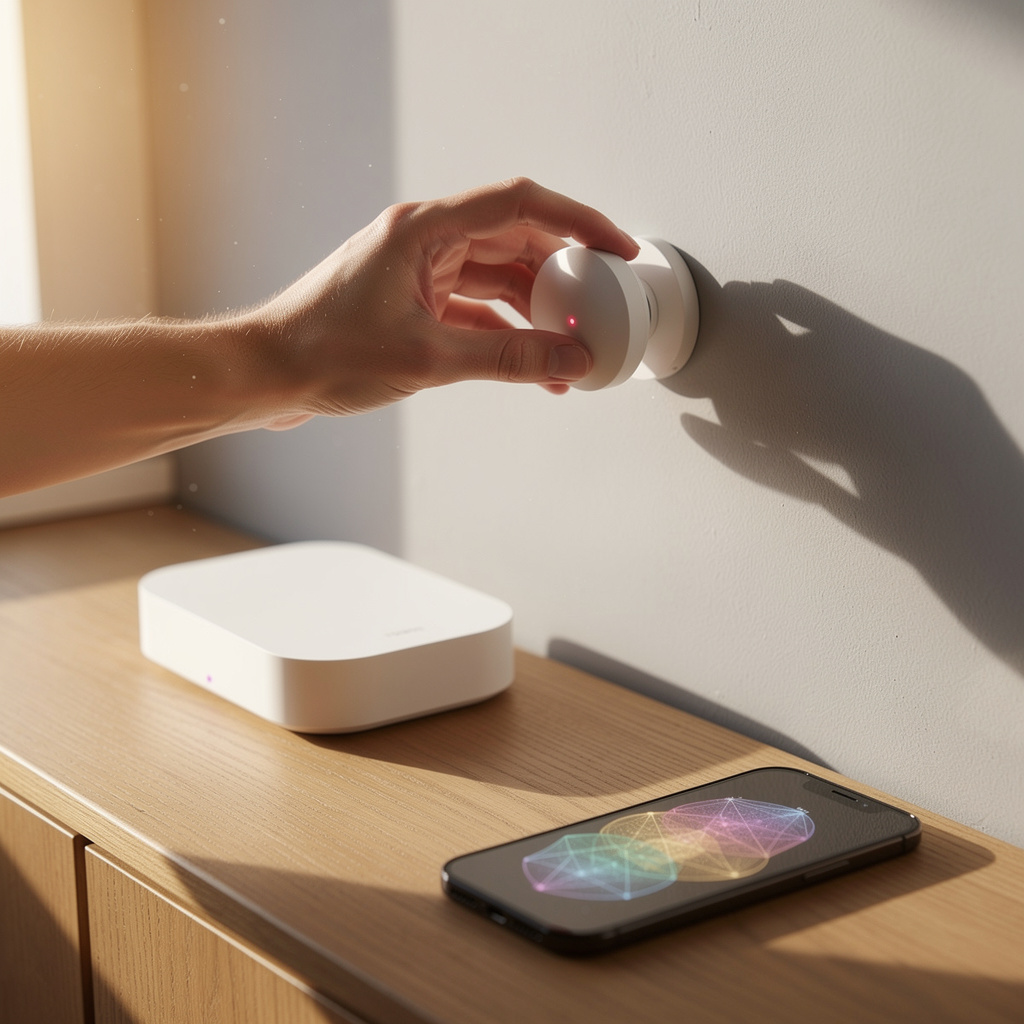
What is TinyML on Microcontrollers?
TinyML on Microcontrollers Training
The TinyML on Microcontrollers certificate program is a hands-on, project-driven course designed for embedded systems engineers, IoT developers, and machine learning practitioners who want to bring intelligence to resource-constrained devices. You will master the entire workflow—from understanding microcontroller limitations and sensor interfacing to training, optimizing, and deploying neural networks using TensorFlow Lite for Microcontrollers. By the end, you will have built two complete case studies (keyword spotting and vibration-based anomaly detection) and a final project, giving you a portfolio-ready demonstration of real-world TinyML deployment.
This program is structured as a beginner-friendly progression that balances theoretical foundations with immediate practical application. Starting with the unique constraints of microcontrollers and core ML concepts, you will move through data collection, preprocessing, and model training with TensorFlow, then dive into optimization techniques like quantization and pruning. The curriculum builds five core skill areas: embedded hardware interfacing, ML model design, model compression, deployment on microcontrollers, and power-aware real-time system optimization. With the rapid growth of edge AI and the increasing demand for on-device intelligence, this training equips you with the exact skills needed to lead in the emerging field of TinyML—right now, when the industry is shifting from cloud-centric to edge-first architectures.
What is TinyML on Microcontrollers?
TinyML is the discipline of running machine learning models on ultra-low-power, resource-constrained microcontrollers—devices with just kilobytes of RAM and flash memory, operating at milliwatt power levels. It encompasses the entire pipeline: collecting and preprocessing sensor data, designing compact neural networks, applying aggressive optimization techniques such as quantization and pruning, and deploying the resulting models via frameworks like TensorFlow Lite for Microcontrollers. The core concepts revolve around balancing model accuracy with memory, latency, and energy constraints, often requiring novel architectures and specialized toolchains that differ from traditional cloud-based ML.
Today, TinyML is transforming industries by enabling intelligent decisions at the edge, where data is generated. It powers always-on voice assistants, predictive maintenance in manufacturing through vibration analysis, smart agriculture with soil and weather monitoring, and wearable health devices that detect anomalies in real time. The recent shift toward privacy-preserving, low-latency, and offline-capable systems has accelerated adoption, as sending every sensor reading to the cloud becomes impractical or undesirable. With the proliferation of IoT devices—projected to reach tens of billions—TinyML offers a scalable, sustainable approach to embedding intelligence directly into the physical world.
Mastering TinyML on microcontrollers builds a unique skill stack that bridges embedded systems engineering, data science, and applied machine learning. You gain proficiency in C/C++ programming, hardware abstraction, sensor signal processing, model compression, and real-time operating constraints—competencies that are increasingly sought after in roles like embedded ML engineer, edge AI developer, and IoT architect. Beyond professional careers, this knowledge empowers hobbyists and researchers to create autonomous, energy-efficient smart devices, from gesture-controlled interfaces to environmental monitoring nodes. The ability to deploy AI on a battery-powered chip opens up a new realm of possibilities, making this subject both a practical career accelerator and a gateway to innovative personal projects.
Common Questions About TinyML on Microcontrollers
Will this TinyML course certificate boost my embedded systems resume?
Can a beginner without ML experience start this microcontroller course?
Why is post-training quantization crucial for a 256KB chip model?
What is the difference between training and inference in TinyML workflows?
What are common mistakes when collecting data for embedded ML?
How does pruning reduce model size without losing accuracy?
Is a powerful GPU required for running TinyML inference on microcontrollers?
What Will This Course Bring You?
- Analyze microcontroller memory, compute, and power constraints to determine feasibility of TinyML applications.
- Interface sensors with microcontrollers to capture raw data for machine learning pipelines.
- Apply embedded machine learning concepts to select appropriate algorithms for resource-limited devices.
- Implement data preprocessing techniques such as normalization and windowing for TinyML datasets.
- Train a TensorFlow model for embedded deployment, balancing model size and accuracy trade-offs.
- Evaluate quantization and pruning methods to optimize model size and inference speed without significant accuracy loss.
- Deploy a trained model to a microcontroller using TensorFlow Lite for Microcontrollers, ensuring correct inference.
- Build a keyword spotting system on a microcontroller, integrating audio capture and model inference.
Curriculum
12 Units1. TinyML and Microcontroller Constraints
1 hour
2. Microcontroller Hardware and Sensor Interfacing
1 hour
3. Machine Learning Concepts for Embedded Systems
1 hour
4. Data Collection and Preprocessing for TinyML
1 hour
5. Training Models with TensorFlow
1 hour
6. Model Optimization: Quantization and Pruning
1 hour
7. Deploying Models with TensorFlow Lite for Microcontrollers
1 hour
8. Case Study: Keyword Spotting
1 hour
9. Case Study: Vibration-Based Anomaly Detection
1 hour
10. Rapid Prototyping with Edge Impulse
1 hour
11. Power Optimization and Real-Time Constraints
1 hour
12. Final Project and Future Directions
1 hour
Exam – TinyML on Microcontrollers
20 Questions • 70% Pass • 30 min
Unlock All Units for Free
Create an account, enroll in the course, and start with the first unit right away.
Exam – TinyML on Microcontrollers
20 Questions • Pass: 70% • 30 min
Course Duration
720
Total Minutes
12
Unit
1
Final Exam
~60
Min / Unit
TinyML on Microcontrollers Certificate Program
Document Your Skill
Those who pass the 20-question, 30-minute exam with 70% receive the TinyML on Microcontrollers Certificate.
Stand Out on Your CV
By adding your certificate to your CV, gain a professional reference in job applications and stand out from the crowd.
Career Advantage
Catch Wisdom certificates are recognized by HR departments and increase career opportunities.
CERTIFICATE FEE
At the end of the course, an online exam consisting of 20 questions with a 30-minute time limit is given. The exam appears automatically after you complete the topics. Anyone who scores at least 70 out of 100 on the certificate exam is awarded the TinyML on Microcontrollers Document (certificate of attendance). You can add the certificate you earn to your CV for job applications in the many sectors listed above, and use it as a reference proving that you took this interactive course.
The Certificate of Achievement you receive with the TinyML on Microcontrollers course program holds value that proves your personal and professional development in the business world. By adding it to your CV, it can serve as an important reference in your job applications. Moreover, compared with certificates from other private training institutions, Catch Wisdom certificates are offered to our participants at a much more affordable price.
Because HR departments recognize Catch Wisdom as a reputable institution in this field, they value these certificates and may evaluate your job applications favorably. For this reason, a TinyML on Microcontrollers course certificate from Catch Wisdom can make your applications more attractive and place you in an advantageous position in the business world.
For more information, we recommend visiting the Support page.
Certificate in 7 Languages
Earning success certificates from our courses is now more meaningful and global. With certificates available in Turkish, English, German, French, Spanish, Arabic, and Russian, we fully unlock the potential of students worldwide.
Why Certificate in 7 Languages?
-
01
Global Skill Development
Receiving your certificates in 7 different languages strengthens your communication skills as you engage with more people worldwide. It lets you operate more confidently and capably on the international stage.
-
02
International Job Opportunities
Employers may see your certificates in multiple languages as a sign of your ability to seize global opportunities. You can open more doors to new jobs and projects.
-
03
Cultural Richness
The chance to earn certificates in different languages helps you build closer ties with various cultures and broadens your worldview. It enriches your global perspective and deepens cultural understanding.
-
04
Ability to Participate in International Projects
Multilingual certificates give you an edge to work more effectively on international projects. They boost your chances of leadership and participation in diverse projects in the business world.
-
05
Prove Yourself on the Global Stage
Certificates in multiple languages let you showcase your skills and knowledge worldwide. You can become an internationally recognized professional.
Language diversity opens worldwide opportunities. If you want to prove yourself in the international arena, join our online TinyML on Microcontrollers course program and begin this journey with us.
Frequently Asked Questions (FAQ)
Is this course paid?
How do I join the course?
Can I take the course at my own pace?
How can I get my certificate?
What are the advantages of the Certified Certificate?
Boost Your Career
Take a new career step with the TinyML on Microcontrollers course. Add your certificate to your CV, stand out in job applications, and open the door to new opportunities in the industry.
StartStudent Reviews
No reviews yet
Enroll in this course and be the first to leave a review about your experience with TinyML on Microcontrollers.
Start