What is Total Quality Management?
Total Quality Management Training
This Total Quality Management certificate program equips professionals with a complete framework for embedding quality into every layer of an organization. You will explore the foundational philosophies of Deming, Juran, and Crosby, then apply modern tools like the Seven Basic Quality Tools and Statistical Process Control to real-world processes. The course is designed for quality managers, team leaders, and operations specialists who want to move beyond inspection-based quality and build a proactive, customer-focused culture that drives measurable business results.
The program follows a structured progression from core principles to hands-on implementation, making it accessible whether you are new to quality systems or seeking to formalize your experience. You will balance theory with practice as you work through four essential skill areas: strategic quality planning, process analysis and control, performance measurement, and cultural transformation. With dedicated lessons on ISO 9000 standards and sustaining a quality culture, this training prepares you to lead continuous improvement initiatives that are critical for competitiveness in today’s rapidly shifting markets.
What is Total Quality Management?
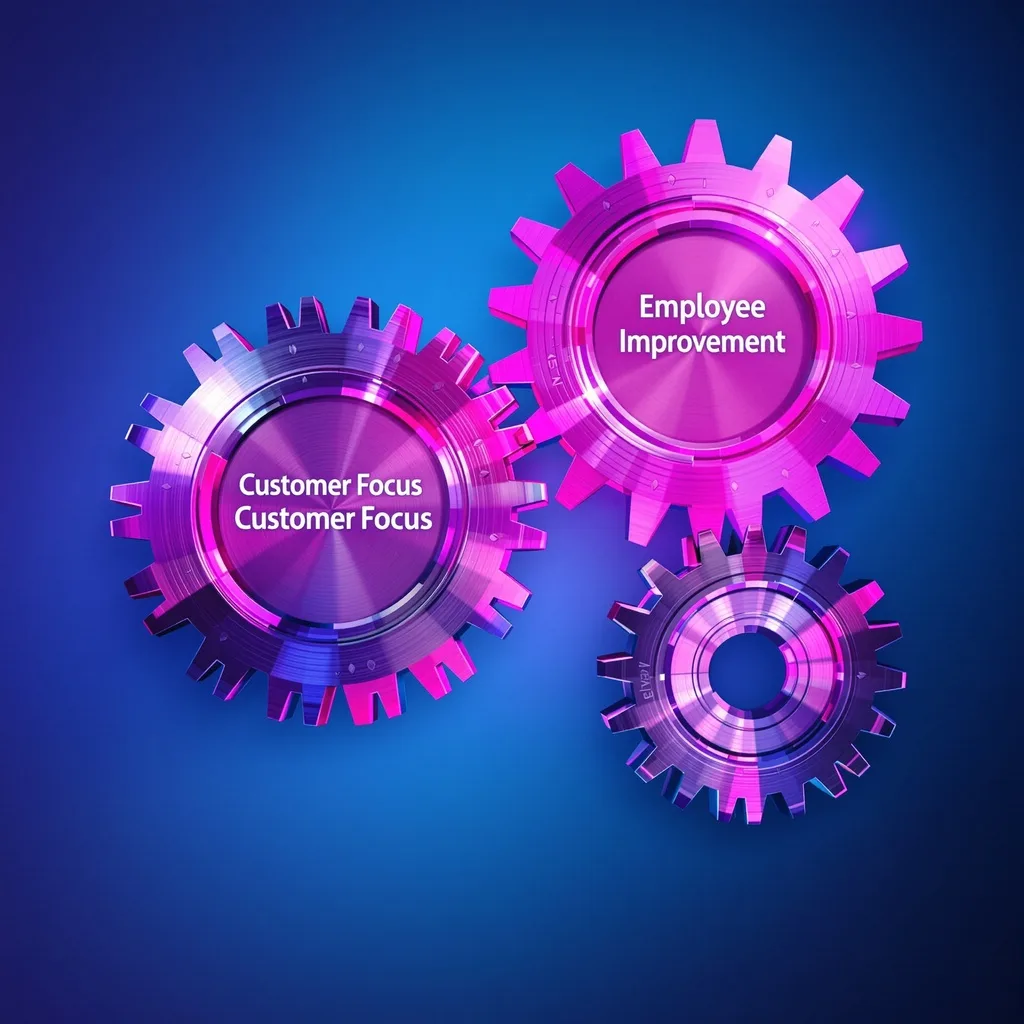
Total Quality Management is a comprehensive management philosophy that places quality at the center of every organizational activity, from strategic planning to daily operations. It moves beyond traditional quality control by involving all employees in a continuous effort to improve processes, products, and the work environment. Core concepts include customer focus, process-centered thinking, integrated systems, and data-driven decision-making. Rather than treating quality as a final inspection step, TQM embeds it into the culture, encouraging every individual to take ownership of excellence and collaborate across departments to eliminate waste and reduce variation.
In today’s hyper-competitive and customer-driven economy, TQM has become more relevant than ever. Organizations across manufacturing, healthcare, technology, and service industries rely on its principles to enhance customer satisfaction, reduce operational costs, and meet rigorous international standards such as ISO 9000. The shift toward digital transformation and agile operations has not diminished the need for TQM; instead, it has reinforced the importance of stable, capable processes and a workforce empowered to identify and solve problems at their source. Companies that embed TQM are better positioned to adapt to disruption while maintaining consistent quality.
Mastering Total Quality Management builds a powerful skill stack that combines analytical rigor with leadership and change management. You develop the ability to map and improve processes, apply statistical tools to understand variation, and design performance measurement systems that align with strategic goals. These competencies are highly valued in roles such as quality assurance, operations management, supply chain coordination, and executive leadership. Beyond professional contexts, the mindset of continuous improvement and stakeholder engagement fosters a disciplined, problem-solving approach that benefits any collaborative endeavor.
Common Questions About Total Quality Management
Is the TQM certificate valuable for career advancement?
Can someone with no quality background take this Total Quality Management course?
What is the difference between common cause and special cause variation?
How does the PDCA cycle help in continuous improvement?
- Plan: Define the problem, analyze current state, and set objectives and hypotheses for improvement.
- Do: Implement the planned change on a small scale to test its effect.
- Check: Measure the results and compare them against the objectives to see if the change worked.
- Act: If successful, standardize the change; if not, learn from the failure and start a new cycle.
Why is the Pareto chart called the 80/20 rule in quality?
How do you apply Hoshin Kanri for strategic quality planning?
- Define the vision and breakthrough objectives: Leadership sets a few strategic goals for quality improvement.
- Deploy the goals: Break down each goal into actionable targets for departments and teams, using a matrix (X-matrix) to show alignment.
- Implement with PDCA: Each team uses the PDCA cycle to achieve their targets, ensuring continuous progress.
- Review and adjust: Regular reviews (e.g., monthly) check progress and allow course corrections.
Is TQM only for manufacturing companies, not service industries?
What Will This Course Bring You?
- Analyze the foundational principles and historical evolution of Total Quality Management to differentiate it from traditional quality control.
- Compare and contrast the quality philosophies of Deming, Juran, and Crosby to evaluate their impact on modern quality management practices.
- Apply customer feedback and stakeholder analysis tools to design quality improvement initiatives that enhance satisfaction and loyalty.
- Develop a strategic quality plan that aligns leadership principles with organizational vision to drive continuous improvement.
- Map and analyze business processes using process management techniques to identify inefficiencies and implement continuous improvement.
- Utilize the seven basic quality tools, including cause-and-effect diagrams and Pareto charts, to diagnose and solve quality-related problems.
- Apply statistical process control methods to monitor process variation and determine process capability for data-driven decision-making.
- Formulate strategies to sustain a quality culture through continuous learning, employee recognition, and adaptive leadership.
Curriculum
12 Units1. Foundations of Total Quality Management
1 hour
2. Quality Philosophies and Gurus
1 hour
3. Customer Focus and Stakeholder Engagement
1 hour
4. Leadership and Strategic Quality Planning
1 hour
5. Employee Involvement and Teamwork
1 hour
6. Process Management and Continuous Improvement
1 hour
7. The Seven Basic Quality Tools
1 hour
8. Statistical Process Control and Variation
1 hour
9. Quality Standards and ISO 9000
1 hour
10. Performance Measurement and Benchmarking
1 hour
11. Implementing Total Quality Management
1 hour
12. Sustaining a Quality Culture
1 hour
Exam – Total Quality Management
20 Questions • 70% Pass • 30 min
Unlock All Units for Free
Create an account, enroll in the course, and start with the first unit right away.
Exam – Total Quality Management
20 Questions • Pass: 70% • 30 min
Course Duration
720
Total Minutes
12
Unit
1
Final Exam
~60
Min / Unit
Total Quality Management Certificate Program
Document Your Skill
Those who pass the 20-question, 30-minute exam with 70% receive the Total Quality Management Certificate.
Stand Out on Your CV
By adding your certificate to your CV, gain a professional reference in job applications and stand out from the crowd.
Career Advantage
With the verification code, employers can check your certificate instantly — a concrete way to show your growth.
CERTIFICATE FEE
At the end of the course, an online exam consisting of 20 questions with a 30-minute time limit is given. The exam appears automatically after you complete the topics. Anyone who scores at least 70 out of 100 on the certificate exam is awarded the Total Quality Management Document (certificate of attendance). You can add the certificate you earn to your CV for job applications in the many sectors listed above, and use it as a reference proving that you took this interactive course.
The Certificate of Achievement you receive with the Total Quality Management course program holds value that proves your personal and professional development in the business world. By adding it to your CV, it can serve as an important reference in your job applications. Moreover, compared with certificates from other private training institutions, Catch Wisdom certificates are offered to our participants at a much more affordable price.
The Total Quality Management course certificate is a document that proves, with a unique verification code, that you completed the course. Employers can instantly check its authenticity with this code, which helps you show your development concretely in your job applications.
For more information, we recommend visiting the Support page.
Certificate in 7 Languages
Earning success certificates from our courses is now more meaningful and global. With certificates available in Turkish, English, German, French, Spanish, Arabic, and Russian, we fully unlock the potential of students worldwide.
Why Certificate in 7 Languages?
-
01
Global Skill Development
Receiving your certificates in 7 different languages strengthens your communication skills as you engage with more people worldwide. It lets you operate more confidently and capably on the international stage.
-
02
International Job Opportunities
Employers may see your certificates in multiple languages as a sign of your ability to seize global opportunities. You can open more doors to new jobs and projects.
-
03
Cultural Richness
The chance to earn certificates in different languages helps you build closer ties with various cultures and broadens your worldview. It enriches your global perspective and deepens cultural understanding.
-
04
Ability to Participate in International Projects
Multilingual certificates give you an edge to work more effectively on international projects. They boost your chances of leadership and participation in diverse projects in the business world.
-
05
Prove Yourself on the Global Stage
Certificates in multiple languages give you the opportunity to present your skills and knowledge worldwide.
Language diversity opens worldwide opportunities. If you want to prove yourself in the international arena, join our online Total Quality Management course program and begin this journey with us.
Frequently Asked Questions (FAQ)
Is this course paid?
How do I join the course?
Can I take the course at my own pace?
How can I get my certificate?
What are the advantages of the certificate?
Boost Your Career
Take a new career step with the Total Quality Management course. Add your certificate to your CV, stand out in job applications, and open the door to new opportunities in the industry.
StartStudent Reviews
No reviews yet
Enroll in this course and be the first to leave a review about your experience with Total Quality Management.
Start