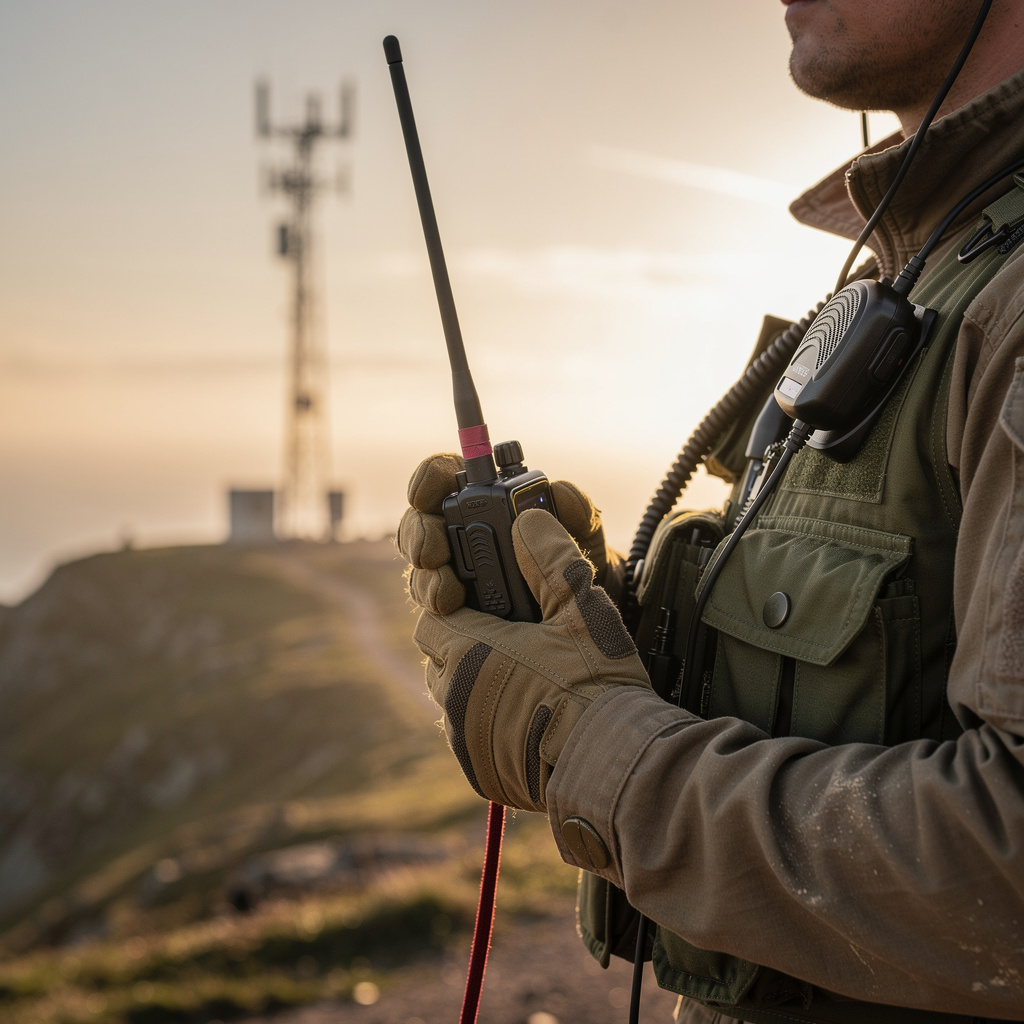
What is Two-Way Radio Communication?
Two-Way Radio Communication Training Program
The Two-Way Radio Communication certificate program teaches learners how to use push-to-talk radio systems safely, clearly, and effectively in routine, team-based, and high-pressure situations. It is designed for beginners as well as field staff, security personnel, event operators, volunteers, supervisors, and anyone who relies on radio communication where cellular coverage may be limited or congested. The curriculum covers radio fundamentals, hardware controls, frequencies and channels, licensing and regulations, operating procedures, communication etiquette, emergency and priority traffic, advanced features, radio nets, troubleshooting, maintenance, and practical use cases. The main practical outcome is the ability to operate a two-way radio confidently, follow correct procedures, and coordinate with others without wasting time on unclear or improper transmissions.
The program is structured as a beginner-friendly progression, starting with how radio communication works and how hardware controls are used before moving into frequency selection, regulatory compliance, and daily operating discipline. It balances theory with practice so learners understand not only which button or channel to use but also why specific procedures, etiquette, and priority rules matter in real communication. Across the course, learners build five core skill areas: radio and hardware literacy, frequency and regulatory awareness, procedural and etiquette control, emergency and group communication coordination, and troubleshooting and maintenance habits. This program is a strong choice now because reliable voice communication remains essential for teams that need immediate, resilient contact in workplaces, public events, outdoor operations, and emergency response contexts.
What is Two-Way Radio Communication?
Two-way radio communication is the use of radio spectrum to exchange voice or data between users who can both transmit and receive, typically through handheld, mobile, or base-station radios. Its scope includes simplex and duplex operation, channel and frequency selection, squelch and privacy codes, repeater use, antenna behavior, power settings, and the regulatory frameworks that govern licensed and license-exempt use. Core concepts include signal coverage, interference, channel loading, call signs, priority traffic, and the difference between direct radio-to-radio contact and networked communication through repeaters or trunked systems. In practice, the subject combines technical understanding of radio equipment with procedural discipline, clear speech, and coordinated channel management.
Two-way radio communication matters today because it provides immediate, group-oriented contact in environments where mobile networks may be unavailable, overloaded, or too slow for coordinated operations. It is used in public safety, construction, utilities, event management, hospitality, healthcare, logistics, security, outdoor recreation, and disaster response, where teams need dependable short-range or wide-area voice coordination. Modern radio systems increasingly include digital modes, trunking, encryption, GPS reporting, and interoperability features, while spectrum regulation and licensing rules continue to shape how organizations deploy equipment legally and efficiently. These shifts make radio literacy valuable not only for specialists but also for supervisors, volunteers, and frontline workers who must communicate under pressure.
Mastering two-way radio communication builds a practical skill stack that combines technical awareness, procedural control, clear verbal delivery, emergency prioritization, and basic equipment care. It develops the ability to choose appropriate channels and power settings, follow protocol, manage group traffic, recognize interference or coverage limits, and respond correctly when normal communication breaks down. These skills support coordination in professional contexts such as field operations, security teams, event crews, facilities management, and emergency preparedness, as well as personal contexts such as outdoor activities, volunteer groups, and community response. The subject ultimately bridges technical radio knowledge with disciplined communication behavior, making it useful wherever clear, resilient, and immediate contact is required.
What Will This Course Bring You?
- Analyze fundamental radio communication principles to explain how modulation, signal propagation, and receiver sensitivity affect transmission quality.
- Demonstrate correct operation of radio hardware controls, including channel selection, volume adjustment, and push-to-talk functions, during simulated communication scenarios.
- Apply appropriate frequency and channel selection strategies to minimize interference and maintain clear communication in varied operational environments.
- Evaluate licensing requirements and regulatory compliance obligations to ensure legal operation of two-way radios across different frequency bands.
- Implement standardized basic operating procedures, including call initiation, message relay, and clear-channel confirmation, during routine radio exchanges.
- Apply professional communication etiquette and protocol to manage turn-taking, phonetic alphabet use, and concise messaging in group radio settings.
- Execute emergency and priority communication protocols by correctly transmitting distress signals and coordinating response actions under simulated high-stress conditions.
- Troubleshoot common radio issues such as signal dropout, battery failure, and channel interference by applying systematic diagnostic procedures.
Curriculum
12 Units1. Fundamentals of Radio Communication
1 hour
2. Radio Hardware and Controls
1 hour
3. Radio Frequencies and Channels
1 hour
4. Licensing and Regulations
1 hour
5. Basic Operating Procedures
1 hour
6. Communication Etiquette and Protocol
1 hour
7. Emergency and Priority Communications
1 hour
8. Advanced Radio Features
1 hour
9. Radio Nets and Group Communication
1 hour
10. Troubleshooting Common Issues
1 hour
11. Radio Maintenance and Care
1 hour
12. Practical Applications and Use Cases
1 hour
Exam – Two-Way Radio Communication
20 Questions • 70% Pass • 30 min
Unlock All Units for Free
Create an account, enroll in the course, and start with the first unit right away.
Exam – Two-Way Radio Communication
20 Questions • Pass: 70% • 30 min
Course Duration
720
Total Minutes
12
Unit
1
Final Exam
~60
Min / Unit
Two-Way Radio Communication Certificate Program
Document Your Skill
Those who pass the 20-question, 30-minute exam with 70% receive the Two-Way Radio Communication Certificate.
Stand Out on Your CV
By adding your certificate to your CV, gain a professional reference in job applications and stand out from the crowd.
Career Advantage
With the verification code, employers can check your certificate instantly — a concrete way to show your growth.
CERTIFICATE FEE
At the end of the course, an online exam consisting of 20 questions with a 30-minute time limit is given. The exam appears automatically after you complete the topics. Anyone who scores at least 70 out of 100 on the certificate exam is awarded the Two-Way Radio Communication Document (certificate of attendance). You can add the certificate you earn to your CV for job applications in the many sectors listed above, and use it as a reference proving that you took this interactive course.
The Certificate of Achievement you receive with the Two-Way Radio Communication course program holds value that proves your personal and professional development in the business world. By adding it to your CV, it can serve as an important reference in your job applications. Moreover, compared with certificates from other private training institutions, Catch Wisdom certificates are offered to our participants at a much more affordable price.
The Two-Way Radio Communication course certificate is a document that proves, with a unique verification code, that you completed the course. Employers can instantly check its authenticity with this code, which helps you show your development concretely in your job applications.
For more information, we recommend visiting the Support page.
Certificate in 7 Languages
Earning success certificates from our courses is now more meaningful and global. With certificates available in Turkish, English, German, French, Spanish, Arabic, and Russian, we fully unlock the potential of students worldwide.
Why Certificate in 7 Languages?
-
01
Global Skill Development
Receiving your certificates in 7 different languages strengthens your communication skills as you engage with more people worldwide. It lets you operate more confidently and capably on the international stage.
-
02
International Job Opportunities
Employers may see your certificates in multiple languages as a sign of your ability to seize global opportunities. You can open more doors to new jobs and projects.
-
03
Cultural Richness
The chance to earn certificates in different languages helps you build closer ties with various cultures and broadens your worldview. It enriches your global perspective and deepens cultural understanding.
-
04
Ability to Participate in International Projects
Multilingual certificates give you an edge to work more effectively on international projects. They boost your chances of leadership and participation in diverse projects in the business world.
-
05
Prove Yourself on the Global Stage
Certificates in multiple languages give you the opportunity to present your skills and knowledge worldwide.
Language diversity opens worldwide opportunities. If you want to prove yourself in the international arena, join our online Two-Way Radio Communication course program and begin this journey with us.
Frequently Asked Questions (FAQ)
Is this course paid?
How do I join the course?
Can I take the course at my own pace?
How can I get my certificate?
What are the advantages of the certificate?
Boost Your Career
Take a new career step with the Two-Way Radio Communication course. Add your certificate to your CV, stand out in job applications, and open the door to new opportunities in the industry.
StartStudent Reviews
No reviews yet
Enroll in this course and be the first to leave a review about your experience with Two-Way Radio Communication.
Start