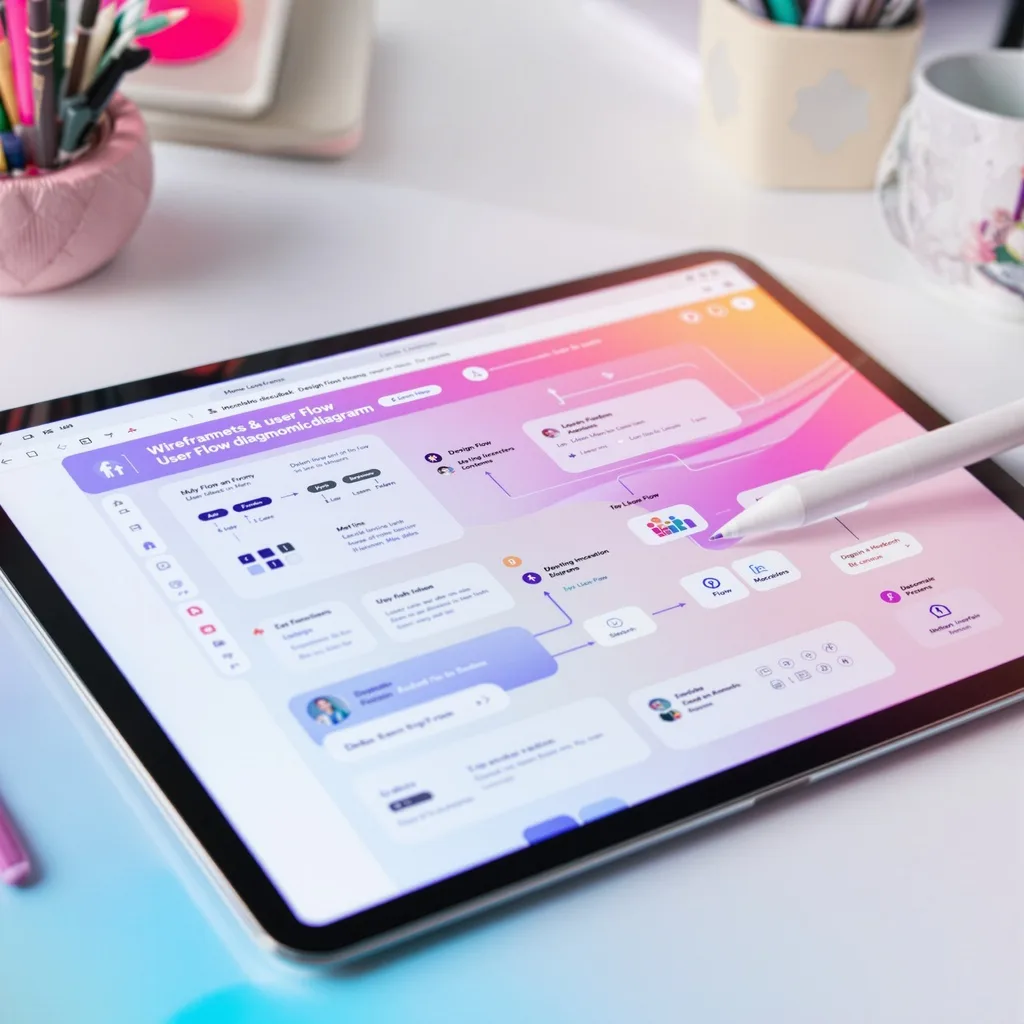
What is UI/UX Design?
UI/UX Design Training
The UI/UX Design certificate program provides a comprehensive, hands-on education in the end-to-end design process, from user research and information architecture to visual design, prototyping, and usability testing. This course is ideal for aspiring designers, career changers, and professionals in adjacent fields (such as product management or development) who want to build a portfolio-ready skill set. By the end of the program, you will have created a complete case study that demonstrates your ability to solve real-world problems through user-centered design.
The program follows a beginner-friendly progression that balances theoretical foundations with practical application across four core skill areas: research and strategy, wireframing and interaction design, visual and responsive design, and professional collaboration. You will move through lessons on user research methods, information architecture, sketching, visual design principles, prototyping, usability testing, design systems, and accessibility—all while learning how to hand off designs and build a career portfolio. This structured approach ensures you gain both the creative confidence and the technical rigor demanded by today’s competitive UX job market.
What is UI/UX Design?
UI/UX Design is the discipline of creating digital products that are both visually appealing and intuitively usable. UI (User Interface) design focuses on the look and feel—layout, colors, typography, and interactive elements—while UX (User Experience) design encompasses the entire journey a user takes, from first contact to task completion, including research, information architecture, and usability. Together, they form a holistic practice that prioritizes the needs, goals, and behaviors of real people.
In today’s digital-first world, UI/UX design is essential for any product that relies on user engagement—from mobile apps and websites to enterprise software and IoT devices. Recent shifts toward remote work, increased digital accessibility requirements, and the rise of design systems have made this field more critical than ever. Companies invest heavily in design to reduce friction, increase conversion, and build brand loyalty, making UI/UX a strategic function rather than a cosmetic afterthought.
Mastering UI/UX design builds a versatile skill stack that includes empathy-driven research, visual communication, prototyping, and iterative testing. These competencies are directly applicable to roles such as UX designer, UI designer, product designer, interaction designer, and design lead. Beyond professional contexts, the ability to think like a designer enhances problem-solving in any field—whether you are building a startup, improving internal tools, or advocating for inclusive technology.
Common Questions About UI/UX Design
Is this UI/UX design course suitable for complete beginners?
Can I get a UI/UX designer job after this course?
What is the difference between information architecture and user flows?
How do you conduct qualitative user research effectively?
What are the three fidelity levels of wireframing?
Why is visual hierarchy important in UI design?
Is UI/UX design only about making things look pretty?
What Will This Course Bring You?
- Analyze user research findings to define user personas and journey maps.
- Design information architectures and user flows that streamline task completion.
- Create low-fidelity wireframes to rapidly explore and communicate layout ideas.
- Apply visual design principles such as hierarchy, contrast, and typography to improve clarity.
- Build interactive prototypes using tools like Figma or Axure to validate interaction patterns.
- Evaluate usability through moderated testing sessions and iterate designs based on insights.
- Implement accessibility standards (e.g., WCAG) to ensure inclusive user experiences.
- Develop a design system with reusable components and documentation for team consistency.
Curriculum
12 Units1. Understanding UI and UX Design
1 hour
2. User Research Methods
1 hour
3. Information Architecture and User Flows
1 hour
4. Sketching and Wireframing
1 hour
5. Visual Design Principles
1 hour
6. Interaction Design and Prototyping
1 hour
7. Usability Testing and Iteration
1 hour
8. Design Systems and Component Libraries
1 hour
9. Responsive and Adaptive Design
1 hour
10. Accessibility in Design
1 hour
11. Design Handoff and Collaboration
1 hour
12. Portfolio and Career Development
1 hour
Exam – UI/UX Design
20 Questions • 70% Pass • 30 min
Unlock All Units for Free
Create an account, enroll in the course, and start with the first unit right away.
Exam – UI/UX Design
20 Questions • Pass: 70% • 30 min
Course Duration
720
Total Minutes
12
Unit
1
Final Exam
~60
Min / Unit
UI/UX Design Certificate Program
Document Your Skill
Those who pass the 20-question, 30-minute exam with 70% receive the UI/UX Design Certificate.
Stand Out on Your CV
By adding your certificate to your CV, gain a professional reference in job applications and stand out from the crowd.
Career Advantage
With the verification code, employers can check your certificate instantly — a concrete way to show your growth.
CERTIFICATE FEE
At the end of the course, an online exam consisting of 20 questions with a 30-minute time limit is given. The exam appears automatically after you complete the topics. Anyone who scores at least 70 out of 100 on the certificate exam is awarded the UI/UX Design Document (certificate of attendance). You can add the certificate you earn to your CV for job applications in the many sectors listed above, and use it as a reference proving that you took this interactive course.
The Certificate of Achievement you receive with the UI/UX Design course program holds value that proves your personal and professional development in the business world. By adding it to your CV, it can serve as an important reference in your job applications. Moreover, compared with certificates from other private training institutions, Catch Wisdom certificates are offered to our participants at a much more affordable price.
The UI/UX Design course certificate is a document that proves, with a unique verification code, that you completed the course. Employers can instantly check its authenticity with this code, which helps you show your development concretely in your job applications.
For more information, we recommend visiting the Support page.
Certificate in 7 Languages
Earning success certificates from our courses is now more meaningful and global. With certificates available in Turkish, English, German, French, Spanish, Arabic, and Russian, we fully unlock the potential of students worldwide.
Why Certificate in 7 Languages?
-
01
Global Skill Development
Receiving your certificates in 7 different languages strengthens your communication skills as you engage with more people worldwide. It lets you operate more confidently and capably on the international stage.
-
02
International Job Opportunities
Employers may see your certificates in multiple languages as a sign of your ability to seize global opportunities. You can open more doors to new jobs and projects.
-
03
Cultural Richness
The chance to earn certificates in different languages helps you build closer ties with various cultures and broadens your worldview. It enriches your global perspective and deepens cultural understanding.
-
04
Ability to Participate in International Projects
Multilingual certificates give you an edge to work more effectively on international projects. They boost your chances of leadership and participation in diverse projects in the business world.
-
05
Prove Yourself on the Global Stage
Certificates in multiple languages give you the opportunity to present your skills and knowledge worldwide.
Language diversity opens worldwide opportunities. If you want to prove yourself in the international arena, join our online UI/UX Design course program and begin this journey with us.
Frequently Asked Questions (FAQ)
Is this course paid?
How do I join the course?
Can I take the course at my own pace?
How can I get my certificate?
What are the advantages of the certificate?
Boost Your Career
Take a new career step with the UI/UX Design course. Add your certificate to your CV, stand out in job applications, and open the door to new opportunities in the industry.
StartStudent Reviews
No reviews yet
Enroll in this course and be the first to leave a review about your experience with UI/UX Design.
Start