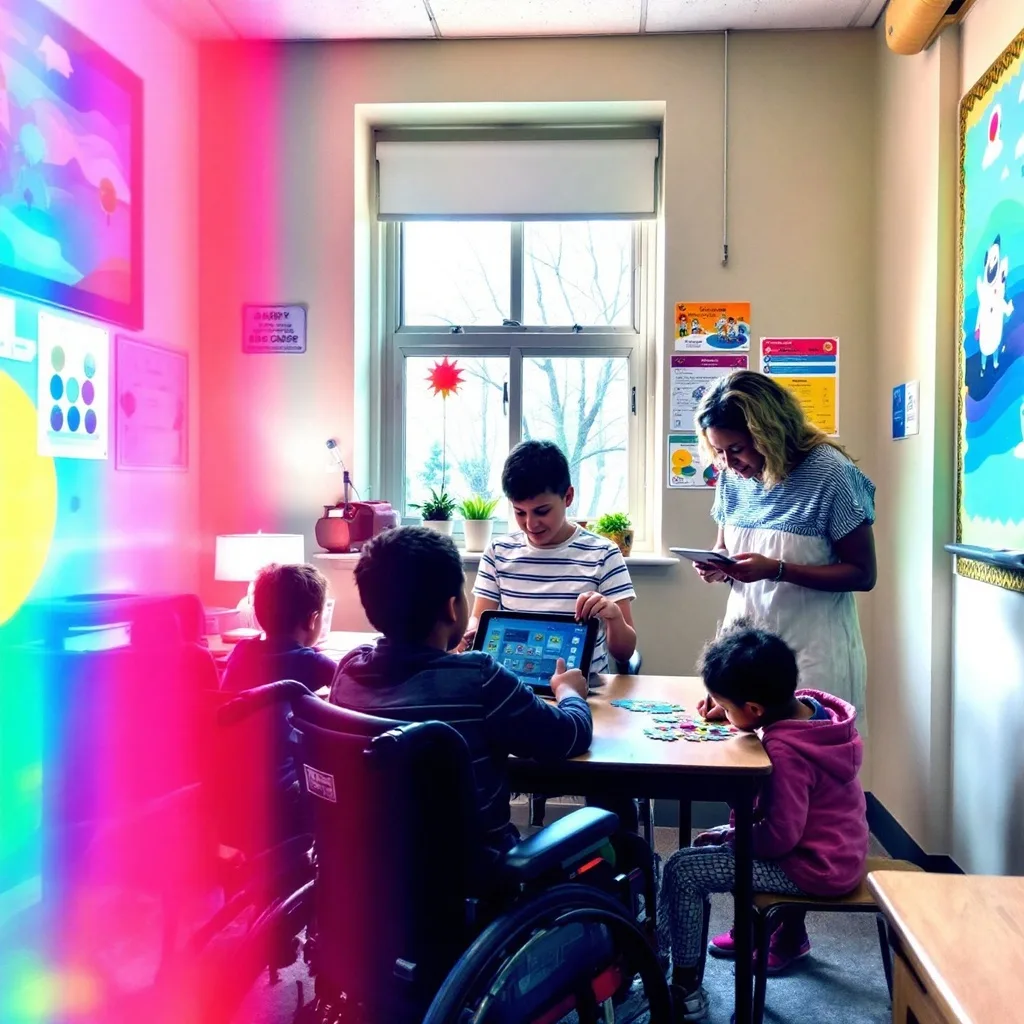
What is Understanding Learning Disabilities?
Understanding Learning Disabilities Certificate Program
The Understanding Learning Disabilities certificate program delivers a rigorous, research-grounded exploration of how specific learning disorders affect individuals across the lifespan. Designed for educators, school psychologists, parents, and allied health professionals, the course moves beyond surface-level awareness to build actionable expertise in identifying, supporting, and advocating for individuals with dyslexia, dyscalculia, dysgraphia, and other processing disorders. Participants emerge with a practical toolkit for selecting evidence-based interventions, implementing appropriate accommodations, and fostering environments where neurodiverse learners can thrive academically and socially.
Structured as a progressive journey from foundational concepts to advanced application, the program first grounds you in the neurobiological underpinnings and evolving definitions of learning disabilities before diving into disorder-specific modules on reading, math, and written expression disorders. The curriculum balances theoretical knowledge with real-world strategy, strengthening four core competency areas: diagnostic literacy, instructional design, assistive technology integration, and legal-advocacy fluency. With schools and workplaces increasingly prioritizing inclusive practices and neurodiversity-informed approaches, this program offers timely, specialized training that meets the growing demand for professionals who can bridge the gap between identification and meaningful support.
What is Understanding Learning Disabilities?
Understanding learning disabilities is a multidisciplinary field that examines the nature, identification, and support of neurologically based processing differences that affect how individuals acquire, organize, retain, and express information. It encompasses a spectrum of specific disorders—including dyslexia, dyscalculia, dysgraphia, nonverbal learning disability, and auditory processing disorder—each with distinct cognitive profiles and educational implications. The subject integrates knowledge from neuroscience, cognitive psychology, special education, and speech-language pathology to distinguish genuine learning disabilities from other factors such as inadequate instruction or environmental disadvantage, while also confronting persistent myths that continue to shape public perception and policy.
In today’s educational and workplace landscapes, this knowledge has become essential. Rising awareness of neurodiversity, coupled with legal mandates for equitable access under frameworks like the Individuals with Disabilities Education Act and Section 504, has created an urgent need for accurate, evidence-based understanding among teachers, administrators, clinicians, and employers. Misidentification and late diagnosis remain widespread, often leading to years of unnecessary academic struggle and social-emotional harm. A deep grasp of the subject empowers stakeholders to move beyond labels, recognize early warning signs, and implement universal design principles that benefit all learners, not only those with formal diagnoses.
Mastery of this subject builds a sophisticated skill stack that includes assessment literacy, differentiated instruction, assistive technology selection, and trauma-informed advocacy. Professionals who develop this expertise are better equipped to serve in roles such as special education coordinators, learning specialists, educational therapists, and policy advisors. Beyond formal positions, the knowledge transforms how parents, tutors, and community advocates support individuals with learning disabilities, replacing frustration and misunderstanding with evidence-based strategies and a clear-eyed appreciation of the unique strengths that often accompany these neurological differences.
What Will This Course Bring You?
- Distinguish between common myths and evidence-based facts about learning disabilities to promote accurate identification and support.
- Analyze the neurobiological underpinnings of learning disabilities to differentiate them from other cognitive or environmental factors.
- Differentiate the core characteristics of dyslexia, dyscalculia, and dysgraphia to inform targeted instructional strategies.
- Identify the defining features of nonverbal learning disabilities, auditory processing disorder, and language processing disorder to distinguish them from other conditions.
- Apply assessment and diagnostic criteria for learning disabilities to interpret evaluation reports and determine service eligibility.
- Design evidence-based instructional interventions and select appropriate assistive technology to support learners with learning disabilities.
- Evaluate the social, emotional, and behavioral impacts of learning disabilities to develop comprehensive support plans.
- Implement advocacy strategies informed by legal rights to support individuals with learning disabilities in educational and workplace settings.
Curriculum
12 Units1. Defining Learning Disabilities: Core Concepts and Common Myths
30 min
2. Historical Context and Evolving Definitions
30 min
3. Neurobiological Foundations of Learning Disabilities
30 min
4. Dyslexia and Reading Disorders
30 min
5. Dyscalculia and Math Disorders
30 min
6. Dysgraphia and Written Expression Disorders
30 min
7. Other Specific Learning Disabilities: Nonverbal, Auditory, and Language Processing
30 min
8. Assessment and Diagnosis of Learning Disabilities
30 min
9. Educational Interventions and Instructional Strategies
30 min
10. Assistive Technology and Accommodations
30 min
11. Legal Rights, Advocacy, and Support Systems
30 min
12. Social, Emotional, and Behavioral Impacts
30 min
Exam – Understanding Learning Disabilities
20 Questions • 70% Pass • 30 min
Unlock the first units free
Create an account, enroll in the course, and start with the first unit right away.
Exam – Understanding Learning Disabilities
20 Questions • Pass: 70% • 30 min
Course Duration
360
Total Minutes
12
Unit
1
Final Exam
~30
Min / Unit
Understanding Learning Disabilities Certificate Program
Document Your Skill
Those who pass the 20-question, 30-minute exam with 70% receive the Understanding Learning Disabilities Certificate.
Stand Out on Your CV
By adding your certificate to your CV, gain a professional reference in job applications and stand out from the crowd.
Career Advantage
Catch Wisdom certificates are recognized by HR departments and increase career opportunities.
At the end of the course, an online exam consisting of 20 questions with a 30-minute time limit is given. The exam appears automatically after you complete the topics. Anyone who scores at least 70 out of 100 on the certificate exam is awarded the Understanding Learning Disabilities Document (certificate of attendance). You can add the certificate you earn to your CV for job applications in the many sectors listed above, and use it as a reference proving that you took this interactive course.
The Certificate of Achievement you receive with the Understanding Learning Disabilities course program holds value that proves your personal and professional development in the business world. By adding it to your CV, it can serve as an important reference in your job applications. Moreover, compared with certificates from other private training institutions, Catch Wisdom certificates are offered to our participants at a much more affordable price.
Because HR departments recognize Catch Wisdom as a reputable institution in this field, they value these certificates and may evaluate your job applications favorably. For this reason, a Understanding Learning Disabilities course certificate from Catch Wisdom can make your applications more attractive and place you in an advantageous position in the business world.
For more information, we recommend visiting the Support page.
Certificate in 7 Languages
Earning success certificates from our courses is now more meaningful and global. With certificates available in Turkish, English, German, French, Spanish, Arabic, and Russian, we fully unlock the potential of students worldwide.
Why Certificate in 7 Languages?
-
01
Global Skill Development
Receiving your certificates in 7 different languages strengthens your communication skills as you engage with more people worldwide. It lets you operate more confidently and capably on the international stage.
-
02
International Job Opportunities
Employers may see your certificates in multiple languages as a sign of your ability to seize global opportunities. You can open more doors to new jobs and projects.
-
03
Cultural Richness
The chance to earn certificates in different languages helps you build closer ties with various cultures and broadens your worldview. It enriches your global perspective and deepens cultural understanding.
-
04
Ability to Participate in International Projects
Multilingual certificates give you an edge to work more effectively on international projects. They boost your chances of leadership and participation in diverse projects in the business world.
-
05
Prove Yourself on the Global Stage
Certificates in multiple languages let you showcase your skills and knowledge worldwide. You can become an internationally recognized professional.
Language diversity opens worldwide opportunities. If you want to prove yourself in the international arena, join our online Understanding Learning Disabilities course program and begin this journey with us.
Frequently Asked Questions (FAQ)
Is this course paid?
How do I join the course?
Can I take the course at my own pace?
How can I get my certificate?
What are the advantages of the Certified Certificate?
Boost Your Career
Take a new career step with the Understanding Learning Disabilities course. Add your certificate to your CV, stand out in job applications, and open the door to new opportunities in the industry.
StartStudent Reviews
No reviews yet
Enroll in this course and be the first to leave a review about your experience with Understanding Learning Disabilities.
Start