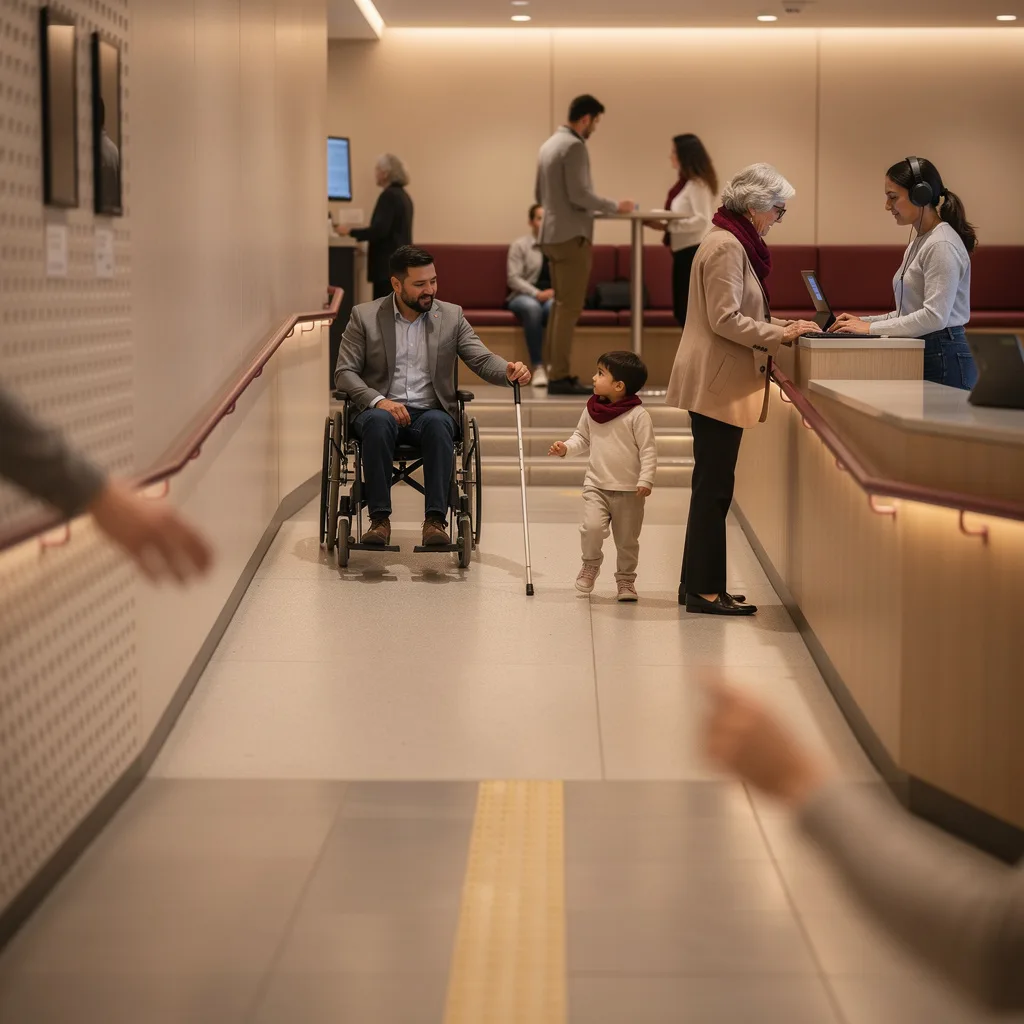
What is Universal Design for Learning?
Universal Design for Learning Training
The Universal Design for Learning certificate program provides educators, instructional designers, and administrators with a comprehensive framework for creating inclusive and flexible learning environments. This course teaches the foundational principles of UDL, including multiple means of engagement, representation, and action and expression, and guides participants in applying these concepts to real-world lesson planning and assessment. By the end of the program, learners will be equipped to design curricula that proactively address learner variability and remove barriers to success.
The program is structured as a beginner-friendly progression, starting with the neuroscience of learning and moving through each UDL principle with practical examples and technology tools. It builds core skills in learner variability analysis, flexible lesson design, accessible content creation, and inclusive assessment strategies. With the growing emphasis on equity and accessibility in education, this training offers timely expertise for anyone seeking to create truly inclusive learning experiences.
What is Universal Design for Learning?
Universal Design for Learning (UDL) is an educational framework based on research in the learning sciences that guides the design of flexible learning environments to accommodate individual learning differences. Its core concepts include three primary principles: providing multiple means of engagement to tap into learners' interests and motivation, multiple means of representation to present information in varied formats, and multiple means of action and expression to allow learners to demonstrate knowledge differently. UDL is not a one-size-fits-all solution but a proactive approach that anticipates variability from the outset.
Today, UDL is increasingly relevant as classrooms and workplaces become more diverse, and as digital learning tools expand possibilities for customization. It is applied in K-12 schools, higher education, corporate training, and online course design, often aligning with accessibility standards like WCAG. Recent shifts toward remote and hybrid learning have accelerated the adoption of UDL principles, as educators seek to engage learners with different backgrounds, abilities, and preferences.
Mastering UDL builds a skill stack that includes instructional design, empathy-driven planning, technology integration, and data-informed assessment. These skills are valuable for teachers, curriculum developers, educational technologists, and anyone involved in creating learning experiences. Beyond professional contexts, UDL principles also benefit personal learning projects, community education, and advocacy for inclusive practices.
Common Questions About Universal Design for Learning
Is Universal Design for Learning certification useful for my teaching career?
Can a beginner without teaching experience take this UDL course?
How do the three core principles of UDL support learner variability?
- Engagement taps into the 'why' of learning by offering choices and relevance to sustain motivation.
- Representation provides flexible ways to access information, such as text, audio, or visuals.
- Action and Expression allows learners to demonstrate knowledge through varied formats like writing, speaking, or creating.
What is the difference between learner variability and learning styles?
How can I design for engagement using the UDL framework?
What are the three guidelines of representation in UDL?
Is UDL just for students with disabilities or for all learners?
What Will This Course Bring You?
- Analyze the three core principles of Universal Design for Learning to identify how they address learner variability.
- Design multiple means of engagement by incorporating student choice and autonomy into lesson activities.
- Apply the principle of multiple means of representation to create accessible instructional materials.
- Build flexible assessment options that allow learners to demonstrate knowledge through varied formats.
- Evaluate technology tools for their alignment with UDL guidelines to support flexible learning.
- Implement UDL strategies across different educational contexts to foster inclusive learning environments.
- Identify common barriers to inclusive learning and propose UDL-based solutions to overcome them.
Curriculum
12 Units1. Foundations of Universal Design for Learning
1 hour
2. The Three Core Principles
1 hour
3. Understanding Learner Variability
1 hour
4. Designing for Engagement
1 hour
5. Designing for Representation
1 hour
6. Designing for Action and Expression
1 hour
7. Lesson Planning with Universal Design for Learning
1 hour
8. Technology Tools for Flexible Learning
1 hour
9. Assessing Learning with Universal Design for Learning
1 hour
10. Implementing Universal Design for Learning Across Contexts
1 hour
11. Overcoming Barriers to Inclusive Learning
1 hour
12. Leading and Sustaining Universal Design for Learning Initiatives
1 hour
Exam – Universal Design for Learning
20 Questions • 70% Pass • 30 min
Unlock All Units for Free
Create an account, enroll in the course, and start with the first unit right away.
Exam – Universal Design for Learning
20 Questions • Pass: 70% • 30 min
Course Duration
720
Total Minutes
12
Unit
1
Final Exam
~60
Min / Unit
Universal Design for Learning Certificate Program
Document Your Skill
Those who pass the 20-question, 30-minute exam with 70% receive the Universal Design for Learning Certificate.
Stand Out on Your CV
By adding your certificate to your CV, gain a professional reference in job applications and stand out from the crowd.
Career Advantage
With the verification code, employers can check your certificate instantly — a concrete way to show your growth.
CERTIFICATE FEE
At the end of the course, an online exam consisting of 20 questions with a 30-minute time limit is given. The exam appears automatically after you complete the topics. Anyone who scores at least 70 out of 100 on the certificate exam is awarded the Universal Design for Learning Document (certificate of attendance). You can add the certificate you earn to your CV for job applications in the many sectors listed above, and use it as a reference proving that you took this interactive course.
The Certificate of Achievement you receive with the Universal Design for Learning course program holds value that proves your personal and professional development in the business world. By adding it to your CV, it can serve as an important reference in your job applications. Moreover, compared with certificates from other private training institutions, Catch Wisdom certificates are offered to our participants at a much more affordable price.
The Universal Design for Learning course certificate is a document that proves, with a unique verification code, that you completed the course. Employers can instantly check its authenticity with this code, which helps you show your development concretely in your job applications.
For more information, we recommend visiting the Support page.
Certificate in 7 Languages
Earning success certificates from our courses is now more meaningful and global. With certificates available in Turkish, English, German, French, Spanish, Arabic, and Russian, we fully unlock the potential of students worldwide.
Why Certificate in 7 Languages?
-
01
Global Skill Development
Receiving your certificates in 7 different languages strengthens your communication skills as you engage with more people worldwide. It lets you operate more confidently and capably on the international stage.
-
02
International Job Opportunities
Employers may see your certificates in multiple languages as a sign of your ability to seize global opportunities. You can open more doors to new jobs and projects.
-
03
Cultural Richness
The chance to earn certificates in different languages helps you build closer ties with various cultures and broadens your worldview. It enriches your global perspective and deepens cultural understanding.
-
04
Ability to Participate in International Projects
Multilingual certificates give you an edge to work more effectively on international projects. They boost your chances of leadership and participation in diverse projects in the business world.
-
05
Prove Yourself on the Global Stage
Certificates in multiple languages give you the opportunity to present your skills and knowledge worldwide.
Language diversity opens worldwide opportunities. If you want to prove yourself in the international arena, join our online Universal Design for Learning course program and begin this journey with us.
Frequently Asked Questions (FAQ)
Is this course paid?
How do I join the course?
Can I take the course at my own pace?
How can I get my certificate?
What are the advantages of the certificate?
Boost Your Career
Take a new career step with the Universal Design for Learning course. Add your certificate to your CV, stand out in job applications, and open the door to new opportunities in the industry.
StartStudent Reviews
No reviews yet
Enroll in this course and be the first to leave a review about your experience with Universal Design for Learning.
Start