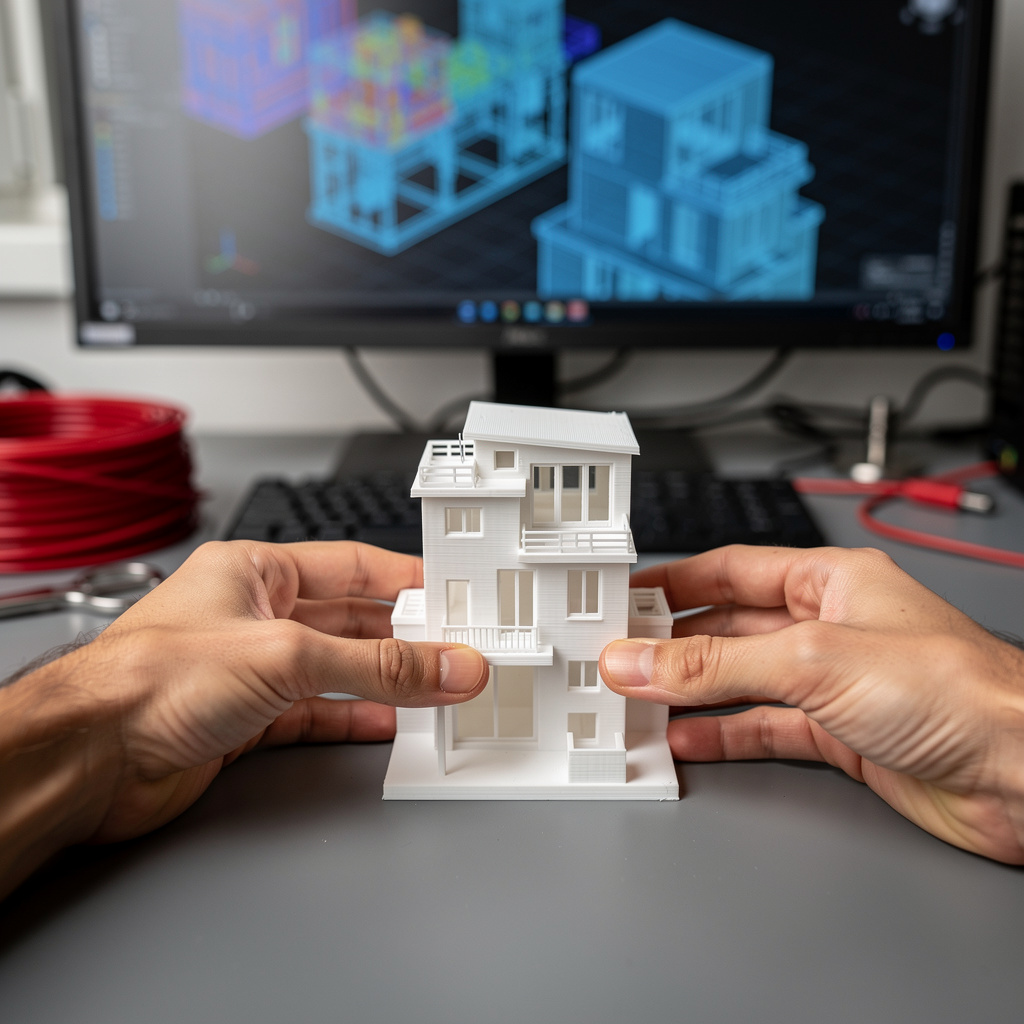
What is V-Ray Rendering?
V-Ray Rendering Training
V-Ray Rendering certificate program equips architectural visualizers, product designers, interior artists, and 3D generalists with the practical skills to produce polished, physically plausible renders using V-Ray’s production toolset. Across the course, learners work through camera setup and exposure control, lighting techniques, core and advanced materials, global illumination, geometry workflows such as proxies and fur, render elements, sampling optimization, and animation batch rendering. The program is structured for artists who already know basic 3D navigation but want a disciplined, end-to-end rendering pipeline rather than isolated tips. The main practical outcome is a complete V-Ray render pipeline applied to an integrated project, from scene preparation and shader networks through final render elements and post-processing.
The curriculum progresses from rendering fundamentals and the V-Ray interface into camera and exposure decisions, then builds lighting and shader knowledge before moving to global illumination, advanced shader networks, and V-Ray geometry tools. This beginner-friendly sequence balances theory with studio-style practice, so learners understand why sampling, light intensity, and material response interact instead of merely memorizing settings. It develops four core skill areas: camera and exposure control, lighting and global illumination, material and shader construction, and render optimization with post-processing and animation output. Learners choose this program now because production pipelines demand predictable, high-quality renders under tight deadlines, and V-Ray fluency remains a practical differentiator across archviz, product visualization, VFX, and design studios.
What is V-Ray Rendering?
V-Ray Rendering is a physically based rendering workflow centered on Chaos V-Ray, a production renderer used to convert 3D scenes into images and animations with controlled lighting, materials, cameras, and sampling. Its scope spans scene interpretation, camera exposure, light transport, shader construction, geometry handling, render passes, and output management rather than a single button-press operation. Core concepts include global illumination, ray tracing, sampling and noise, color management, physically based materials, and render elements that isolate useful image components for compositing. The subject also covers specialized geometry such as proxies, fur, and instancing, plus animation and batch rendering as part of a broader rendering pipeline.
V-Ray Rendering matters today because real-time engines and physically based renderers increasingly share the same vocabulary of exposure, light transport, shaders, and render passes, making V-Ray knowledge transferable across visualization workflows. It is used in architectural visualization, interior design, product marketing, film and episodic VFX, game cinematics, and academic research where predictable photorealistic output and reproducible render settings are required. Recent shifts toward GPU rendering, denoising, cloud rendering, and compositing-heavy post-production have made sampling strategy, render element organization, and optimization more important than ever. As studios produce more variants, animations, and interactive-adjacent deliverables, the ability to manage a reliable V-Ray pipeline has direct production value.
Mastering V-Ray Rendering builds a skill stack that connects scene analysis, camera and exposure decisions, lighting design, shader authoring, render optimization, and post-processing judgment into one coherent production mindset. That stack supports roles such as visualization artist, lighting and look-development artist, 3D generalist, rendering specialist, and technical artist, while also benefiting architects, designers, and researchers who need credible visual communication. The subject’s emphasis on render elements, sampling, and batch animation means the resulting skills apply to stills, animation, and compositing-heavy workflows rather than a narrow single-image context. In personal and professional settings alike, this knowledge improves the ability to diagnose noisy renders, balance quality and speed, and deliver consistent visual results across changing scenes and deadlines.
What Will This Course Bring You?
- Configure the V-Ray interface, frame buffer, and render settings to produce a correctly managed baseline render.
- Set up V-Ray physical cameras with exposure, white balance, and depth-of-field controls to achieve correctly exposed and intentionally focused renders.
- Design layered V-Ray lighting setups using dome lights, area lights, and sun/sky systems to balance key, fill, and ambient illumination.
- Build core and advanced V-Ray shader networks by adjusting reflection, refraction, bump, blend, and procedural map parameters for realistic surfaces.
- Evaluate V-Ray global illumination and rendering engines by comparing Brute Force, Irradiance Map, and Light Cache settings for quality and speed tradeoffs.
- Implement V-Ray proxies, fur, and instancing to populate scenes with high-detail geometry while controlling memory and render performance.
- Optimize V-Ray sampling and batch-render animation sequences by balancing quality, speed, and resource usage across frames.
- Integrate render elements and post-processing passes into a complete V-Ray project pipeline to composite, refine, and deliver final renders.
Curriculum
12 Units1. Rendering Fundamentals and V-Ray Interface
1 hour
2. V-Ray Camera Setup and Exposure Control
1 hour
3. Lighting Techniques with V-Ray
1 hour
4. Core V-Ray Materials and Shader Basics
1 hour
5. Global Illumination and Rendering Engines
1 hour
6. Advanced Materials and Shader Networks
1 hour
7. V-Ray Geometry: Proxies, Fur, and Instancing
1 hour
8. Render Elements and Post-Processing Workflow
1 hour
9. Performance Optimization and Sampling
1 hour
10. Camera Effects and Special Render Features
1 hour
11. Animation and Batch Rendering with V-Ray
1 hour
12. Integrated Project: Complete V-Ray Render Pipeline
1 hour
Exam – V-Ray Rendering
20 Questions • 70% Pass • 30 min
Unlock All Units for Free
Create an account, enroll in the course, and start with the first unit right away.
Exam – V-Ray Rendering
20 Questions • Pass: 70% • 30 min
Course Duration
720
Total Minutes
12
Unit
1
Final Exam
~60
Min / Unit
V-Ray Rendering Certificate Program
Document Your Skill
Those who pass the 20-question, 30-minute exam with 70% receive the V-Ray Rendering Certificate.
Stand Out on Your CV
By adding your certificate to your CV, gain a professional reference in job applications and stand out from the crowd.
Career Advantage
With the verification code, employers can check your certificate instantly — a concrete way to show your growth.
CERTIFICATE FEE
At the end of the course, an online exam consisting of 20 questions with a 30-minute time limit is given. The exam appears automatically after you complete the topics. Anyone who scores at least 70 out of 100 on the certificate exam is awarded the V-Ray Rendering Document (certificate of attendance). You can add the certificate you earn to your CV for job applications in the many sectors listed above, and use it as a reference proving that you took this interactive course.
The Certificate of Achievement you receive with the V-Ray Rendering course program holds value that proves your personal and professional development in the business world. By adding it to your CV, it can serve as an important reference in your job applications. Moreover, compared with certificates from other private training institutions, Catch Wisdom certificates are offered to our participants at a much more affordable price.
The V-Ray Rendering course certificate is a document that proves, with a unique verification code, that you completed the course. Employers can instantly check its authenticity with this code, which helps you show your development concretely in your job applications.
For more information, we recommend visiting the Support page.
Certificate in 7 Languages
Earning success certificates from our courses is now more meaningful and global. With certificates available in Turkish, English, German, French, Spanish, Arabic, and Russian, we fully unlock the potential of students worldwide.
Why Certificate in 7 Languages?
-
01
Global Skill Development
Receiving your certificates in 7 different languages strengthens your communication skills as you engage with more people worldwide. It lets you operate more confidently and capably on the international stage.
-
02
International Job Opportunities
Employers may see your certificates in multiple languages as a sign of your ability to seize global opportunities. You can open more doors to new jobs and projects.
-
03
Cultural Richness
The chance to earn certificates in different languages helps you build closer ties with various cultures and broadens your worldview. It enriches your global perspective and deepens cultural understanding.
-
04
Ability to Participate in International Projects
Multilingual certificates give you an edge to work more effectively on international projects. They boost your chances of leadership and participation in diverse projects in the business world.
-
05
Prove Yourself on the Global Stage
Certificates in multiple languages give you the opportunity to present your skills and knowledge worldwide.
Language diversity opens worldwide opportunities. If you want to prove yourself in the international arena, join our online V-Ray Rendering course program and begin this journey with us.
Frequently Asked Questions (FAQ)
Is this course paid?
How do I join the course?
Can I take the course at my own pace?
How can I get my certificate?
What are the advantages of the certificate?
Boost Your Career
Take a new career step with the V-Ray Rendering course. Add your certificate to your CV, stand out in job applications, and open the door to new opportunities in the industry.
StartStudent Reviews
No reviews yet
Enroll in this course and be the first to leave a review about your experience with V-Ray Rendering.
Start