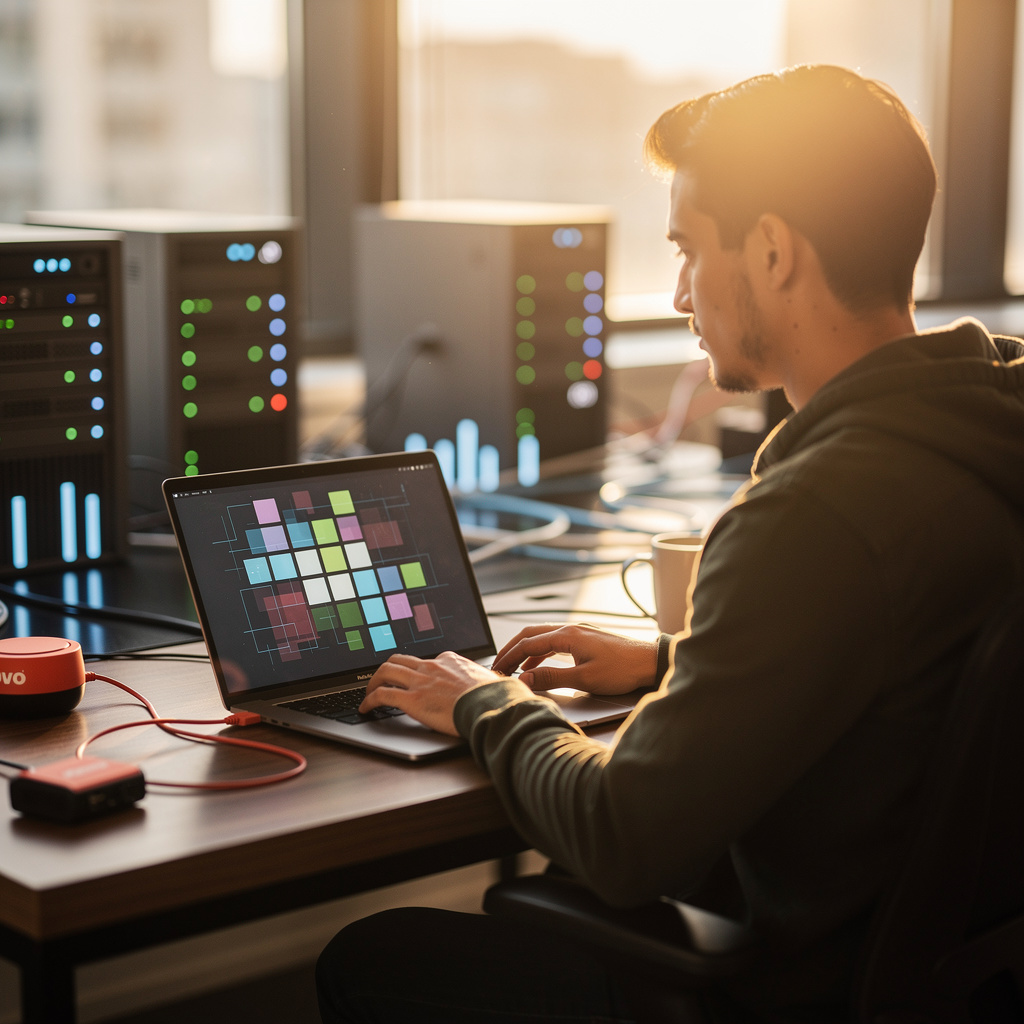
What is Vibe Coding with AI Assistants?
Vibe Coding with AI Assistants Training
Vibe Coding with AI Assistants certificate program teaches you how to build software by conversing with AI assistants, from initial setup to deployment. The curriculum covers foundations, workspace configuration, prompt engineering for code generation, and critical evaluation of AI output. You will learn iterative debugging, scaffolding projects from conversational specs, integrating APIs, building UIs, handling backend logic and databases, plus testing, securing, refactoring, and documenting evolving codebases. This program is designed for developers, technical product managers, founders, and students who want to accelerate prototyping without sacrificing code quality. The main practical outcome is the ability to ship functional, responsible AI-assisted applications using natural language as your primary development interface.
The program follows a beginner-friendly progression, starting with foundations and workspace setup before moving to prompting, evaluation, and debugging. Each lesson balances concise theory with hands-on practice, so you immediately apply concepts like conversational scaffolding, API integration, and UI generation. The four core skill areas it builds are: prompt-driven code generation, critical code evaluation and debugging, full-stack project assembly, and responsible deployment with testing and security. You would choose this program now because AI assistants are rapidly changing how software is built, and professionals who can reliably direct and verify AI-generated code gain a significant speed and quality advantage. The course also emphasizes refactoring and documentation, ensuring your evolving codebases remain maintainable as AI collaboration scales.
What is Vibe Coding with AI Assistants?
Vibe coding with AI assistants is the practice of using natural language prompts to generate, modify, and debug software through conversational AI tools. Its scope spans the entire development lifecycle: setting up an AI-friendly workspace, crafting effective prompts, evaluating and running generated code, and iteratively refining results through dialogue. Core concepts include conversational specification, where you describe desired behavior in plain language; rapid prototyping, where AI produces initial implementations; and human-in-the-loop verification, where the developer reviews, tests, and corrects AI output. This approach covers frontend interfaces, backend logic, database workflows, API integrations, and deployment, all driven by iterative conversation rather than manual typing of every line.
Vibe coding matters today because AI assistants like GitHub Copilot, ChatGPT, and Claude have shifted from simple autocomplete to generating entire functions, components, and project scaffolds. In industry, startups and enterprise teams use this approach to build MVPs, internal tools, and prototypes in hours instead of weeks, while academic researchers leverage it for rapid experimentation and data pipeline creation. Recent shifts include the rise of multi-modal assistants that understand screenshots and diagrams, and the emergence of agentic workflows where AI not only writes code but also runs tests and suggests fixes. This has changed the developer's role from writing every line to directing, reviewing, and integrating AI-generated artifacts. The result is a faster feedback loop between idea and working software, which is why vibe coding is becoming a core skill across technical and non-technical roles.
Mastering vibe coding builds a skill stack that combines prompt engineering, code literacy, systematic debugging, and architectural judgment. You develop the ability to translate vague ideas into precise conversational specifications, then critically assess AI-generated code for correctness, security, and performance. These skills benefit software engineers who want to accelerate feature delivery, product managers who need to prototype without deep coding, and founders who must validate technical ideas quickly. In personal contexts, hobbyists and students can bring apps, automations, and data projects to life without formal computer science training. The growing reliance on AI assistants in professional development makes this conversational programming fluency a durable advantage for anyone building software today.
Common Questions About Vibe Coding with AI Assistants
Does the Vibe Coding with AI Assistants certificate help my CV?
Is the Vibe Coding with AI Assistants course suitable for non-developers?
What is the autonomy spectrum in an AI-assisted coding workspace?
- Suggest-only: the assistant proposes snippets that you paste and adapt yourself — safest for unfamiliar code.
- Chat-and-apply: the assistant writes a patch into your files while you review every change before it runs.
- Agentic multi-step: the assistant plans and executes a chain of edits and commands, which only makes sense once the project is well specified and tested.
How does the four-layer prompt pattern improve AI code generation?
Why should AI-generated code be untrusted by default before you run it?
How does the four-step debugging cycle turn panic into process?
Does vibe coding mean the AI writes the whole app while you do nothing?
What Will This Course Bring You?
- Analyze the core principles of vibe coding to distinguish effective AI-assisted workflows from conventional manual programming practices.
- Configure an AI-assisted coding workspace with appropriate editor extensions, model access, version control, and safety settings for productive conversational development.
- Design precise prompts that generate runnable code snippets, explain assumptions, and request targeted revisions from AI assistants.
- Evaluate AI-generated code by inspecting logic, running tests, checking dependencies, and identifying security or performance risks before integration.
- Apply iterative debugging techniques to diagnose errors, refine prompts, and guide AI assistants toward corrected code solutions.
- Build full project scaffolds from conversational specifications, translating user stories into file structures, components, and implementation plans.
- Integrate external APIs and data sources into AI-assisted applications while handling authentication, errors, and data transformation responsibly.
- Implement testing, refactoring, documentation, and deployment practices that secure and sustain AI-assisted codebases throughout responsible delivery.
Curriculum
12 Units1. Foundations of Vibe Coding with AI Assistants
1 hour
2. Setting Up an AI-Assisted Coding Workspace
1 hour
3. Prompting AI Assistants for Code Generation
1 hour
4. Evaluating and Running AI-Generated Code
1 hour
5. Iterative Debugging with AI Assistants
1 hour
6. Scaffolding Projects from Conversational Specifications
1 hour
7. Integrating APIs and External Data
1 hour
8. Building User Interfaces Through Conversation
1 hour
9. Backend Logic and Database Workflows
1 hour
10. Testing and Securing AI-Assisted Code
1 hour
11. Refactoring and Documenting Evolving Codebases
1 hour
12. Deployment and Responsible AI-Assisted Delivery
1 hour
Exam – Vibe Coding with AI Assistants
20 Questions • 70% Pass • 30 min
Unlock All Units for Free
Create an account, enroll in the course, and start with the first unit right away.
Exam – Vibe Coding with AI Assistants
20 Questions • Pass: 70% • 30 min
Course Duration
720
Total Minutes
12
Unit
1
Final Exam
~60
Min / Unit
Vibe Coding with AI Assistants Certificate Program
Document Your Skill
Those who pass the 20-question, 30-minute exam with 70% receive the Vibe Coding with AI Assistants Certificate.
Stand Out on Your CV
By adding your certificate to your CV, gain a professional reference in job applications and stand out from the crowd.
Career Advantage
With the verification code, employers can check your certificate instantly — a concrete way to show your growth.
CERTIFICATE FEE
At the end of the course, an online exam consisting of 20 questions with a 30-minute time limit is given. The exam appears automatically after you complete the topics. Anyone who scores at least 70 out of 100 on the certificate exam is awarded the Vibe Coding with AI Assistants Document (certificate of attendance). You can add the certificate you earn to your CV for job applications in the many sectors listed above, and use it as a reference proving that you took this interactive course.
The Certificate of Achievement you receive with the Vibe Coding with AI Assistants course program holds value that proves your personal and professional development in the business world. By adding it to your CV, it can serve as an important reference in your job applications. Moreover, compared with certificates from other private training institutions, Catch Wisdom certificates are offered to our participants at a much more affordable price.
The Vibe Coding with AI Assistants course certificate is a document that proves, with a unique verification code, that you completed the course. Employers can instantly check its authenticity with this code, which helps you show your development concretely in your job applications.
For more information, we recommend visiting the Support page.
Certificate in 7 Languages
Earning success certificates from our courses is now more meaningful and global. With certificates available in Turkish, English, German, French, Spanish, Arabic, and Russian, we fully unlock the potential of students worldwide.
Why Certificate in 7 Languages?
-
01
Global Skill Development
Receiving your certificates in 7 different languages strengthens your communication skills as you engage with more people worldwide. It lets you operate more confidently and capably on the international stage.
-
02
International Job Opportunities
Employers may see your certificates in multiple languages as a sign of your ability to seize global opportunities. You can open more doors to new jobs and projects.
-
03
Cultural Richness
The chance to earn certificates in different languages helps you build closer ties with various cultures and broadens your worldview. It enriches your global perspective and deepens cultural understanding.
-
04
Ability to Participate in International Projects
Multilingual certificates give you an edge to work more effectively on international projects. They boost your chances of leadership and participation in diverse projects in the business world.
-
05
Prove Yourself on the Global Stage
Certificates in multiple languages give you the opportunity to present your skills and knowledge worldwide.
Language diversity opens worldwide opportunities. If you want to prove yourself in the international arena, join our online Vibe Coding with AI Assistants course program and begin this journey with us.
Frequently Asked Questions (FAQ)
Is this course paid?
How do I join the course?
Can I take the course at my own pace?
How can I get my certificate?
What are the advantages of the certificate?
Boost Your Career
Take a new career step with the Vibe Coding with AI Assistants course. Add your certificate to your CV, stand out in job applications, and open the door to new opportunities in the industry.
StartStudent Reviews
No reviews yet
Enroll in this course and be the first to leave a review about your experience with Vibe Coding with AI Assistants.
Start