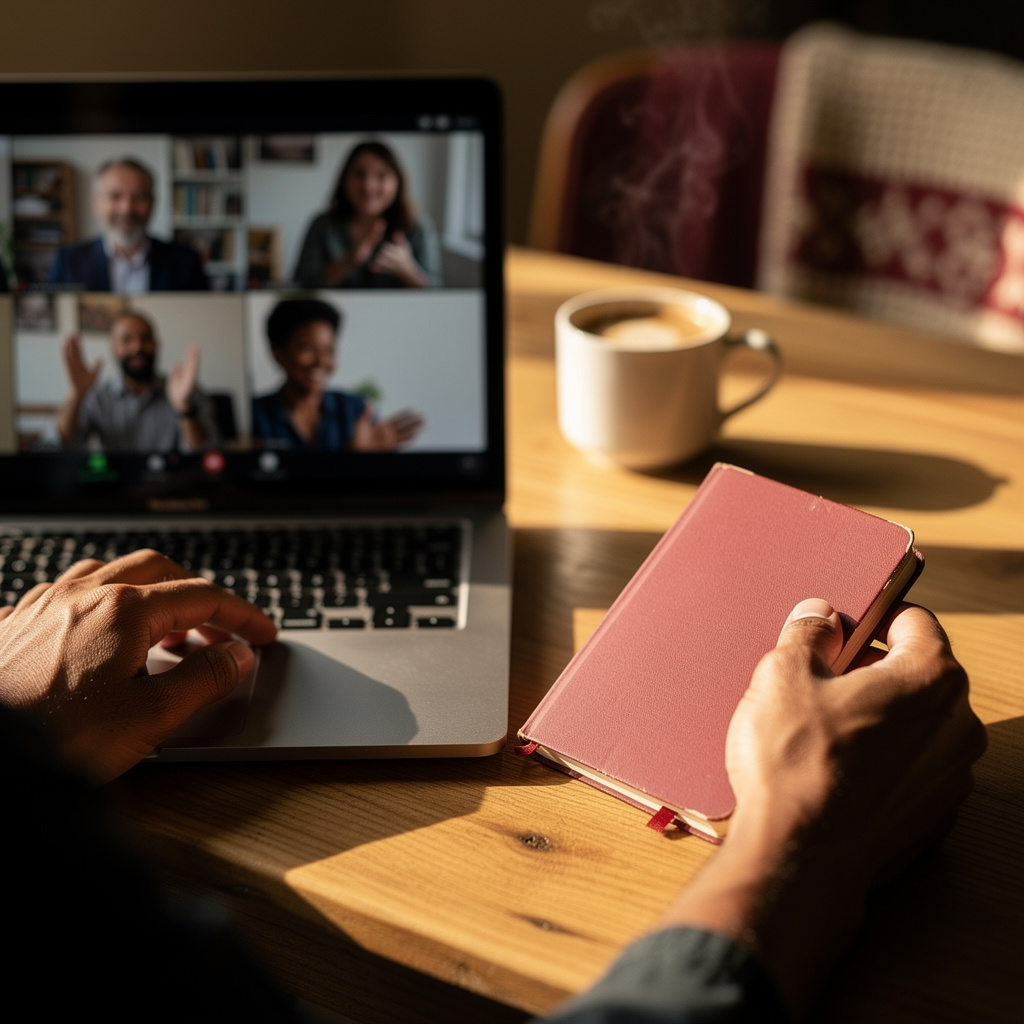
What is Video Messages Instead of Meetings?
Video Messages Instead of Meetings Training
Video Messages Instead of Meetings certificate program equips professionals to replace routine meetings with structured asynchronous video communication that preserves clarity, accountability, and momentum. It is designed for team leads, project managers, operations specialists, educators, and distributed collaborators who need to reduce calendar overload without losing decisions or alignment. Participants examine when asynchronous communication is the better choice, how to audit existing meetings, and how to turn agenda-heavy discussions into concise recordings with clear next steps. The main practical outcome is a repeatable workflow for planning, recording, publishing, and following up on video messages so teams can reclaim focus time while keeping work visible and inclusive.
The program progresses from beginner-friendly framing to applied production and team governance, balancing communication theory with hands-on practice in message design, recording, screen capture, post-production, accessibility, distribution, and feedback. Learners build four core skill areas: deciding what should become a video message, crafting scripts and visuals for the right audience, producing accessible recordings, and designing team norms that make asynchronous decisions stick. Later lessons extend these skills into viewer onboarding, decision records, workflow design, and measurement so the practice can scale beyond a single enthusiastic adopter. This program is timely because distributed and hybrid teams need fewer low-value meetings, clearer documentation, and stronger asynchronous habits, and the lesson sequence gives learners a practical path to implement those changes immediately.
What is Video Messages Instead of Meetings?
Video Messages Instead of Meetings is the practice of using recorded video as a deliberate substitute for synchronous meetings when information can be shared, discussed, or decided asynchronously. Its scope includes deciding which meetings are unnecessary, structuring a message around audience needs and desired actions, planning scripts or storyboards, capturing clear audio and screen demonstrations, and editing for brevity and comprehension. Core concepts include asynchronous communication, message clarity, audience fit, accessible delivery, feedback loops, decision records, and team norms that determine when recorded updates replace live discussion. Rather than treating video as a casual chat tool, the subject treats it as a communication system with production standards, distribution choices, and governance.
The subject matters today because hybrid and distributed work have made calendar congestion a structural problem, not a personal scheduling issue. Organizations use asynchronous video for project updates, product demos, training, stakeholder briefings, design reviews, and cross-time-zone collaboration, where live meetings create delays and exclude participants. Recent shifts toward flexible work, global teams, and documented decision-making have increased demand for communication that is watchable on demand, searchable, and easy to reference later. It also supports inclusion by giving participants time to process information and by requiring deliberate accessibility choices such as captions, clear visuals, and plain language.
Mastering this subject builds a skill stack that combines communication judgment, lightweight media production, facilitation of asynchronous feedback, and operational governance. Professionals who apply it can reduce meeting load, improve decision visibility, and create reusable knowledge assets without turning every update into a polished broadcast. The subject benefits team leads, project and program managers, operations and HR teams, educators, customer-facing specialists, and any distributed group that needs clearer handoffs and faster follow-through. In personal and professional contexts, the same capabilities support concise self-advocacy, effective remote collaboration, and a durable record of commitments that outlast a single call.
What Will This Course Bring You?
- Analyze meeting portfolios and cost drivers to decide which recurring meetings can be replaced by asynchronous video messages.
- Design audience-fit video message structures that clarify purpose, decisions needed, and required viewer actions before recording.
- Create concise scripts and storyboards that sequence key points, visuals, and on-screen demonstrations for asynchronous messages.
- Set up a recording environment and equipment configuration that produces clear audio and video without meeting-room dependencies.
- Produce screen-capture demonstrations with purposeful cursor movement, zooming, and annotation to guide viewers through software tasks.
- Apply post-production essentials such as trimming, captioning, and visual emphasis to improve clarity and viewer comprehension.
- Implement accessibility and inclusive delivery practices, including captions, transcripts, plain language, and accessible visual design, in video messages.
- Design distribution, viewer-onboarding, and asynchronous feedback/decision-record workflows, then define team norms and measurement criteria for scaling adoption.
Curriculum
12 Units1. The Case for Asynchronous Communication
1 hour
2. Meeting Audits and Replacement Decisions
1 hour
3. Message Structure and Audience Fit
1 hour
4. Scripting and Storyboarding
1 hour
5. Recording Environment and Equipment
1 hour
6. Screen Capture and Demonstrations
1 hour
7. Post-Production Essentials
1 hour
8. Accessibility and Inclusive Delivery
1 hour
9. Distribution and Viewer Onboarding
1 hour
10. Asynchronous Feedback and Decision Records
1 hour
11. Team Norms and Workflow Design
1 hour
12. Measurement, Governance, and Scaling
1 hour
Exam – Video Messages Instead of Meetings
20 Questions • 70% Pass • 30 min
Unlock All Units for Free
Create an account, enroll in the course, and start with the first unit right away.
Exam – Video Messages Instead of Meetings
20 Questions • Pass: 70% • 30 min
Course Duration
720
Total Minutes
12
Unit
1
Final Exam
~60
Min / Unit
Video Messages Instead of Meetings Certificate Program
Document Your Skill
Those who pass the 20-question, 30-minute exam with 70% receive the Video Messages Instead of Meetings Certificate.
Stand Out on Your CV
By adding your certificate to your CV, gain a professional reference in job applications and stand out from the crowd.
Career Advantage
With the verification code, employers can check your certificate instantly — a concrete way to show your growth.
CERTIFICATE FEE
At the end of the course, an online exam consisting of 20 questions with a 30-minute time limit is given. The exam appears automatically after you complete the topics. Anyone who scores at least 70 out of 100 on the certificate exam is awarded the Video Messages Instead of Meetings Document (certificate of attendance). You can add the certificate you earn to your CV for job applications in the many sectors listed above, and use it as a reference proving that you took this interactive course.
The Certificate of Achievement you receive with the Video Messages Instead of Meetings course program holds value that proves your personal and professional development in the business world. By adding it to your CV, it can serve as an important reference in your job applications. Moreover, compared with certificates from other private training institutions, Catch Wisdom certificates are offered to our participants at a much more affordable price.
The Video Messages Instead of Meetings course certificate is a document that proves, with a unique verification code, that you completed the course. Employers can instantly check its authenticity with this code, which helps you show your development concretely in your job applications.
For more information, we recommend visiting the Support page.
Certificate in 7 Languages
Earning success certificates from our courses is now more meaningful and global. With certificates available in Turkish, English, German, French, Spanish, Arabic, and Russian, we fully unlock the potential of students worldwide.
Why Certificate in 7 Languages?
-
01
Global Skill Development
Receiving your certificates in 7 different languages strengthens your communication skills as you engage with more people worldwide. It lets you operate more confidently and capably on the international stage.
-
02
International Job Opportunities
Employers may see your certificates in multiple languages as a sign of your ability to seize global opportunities. You can open more doors to new jobs and projects.
-
03
Cultural Richness
The chance to earn certificates in different languages helps you build closer ties with various cultures and broadens your worldview. It enriches your global perspective and deepens cultural understanding.
-
04
Ability to Participate in International Projects
Multilingual certificates give you an edge to work more effectively on international projects. They boost your chances of leadership and participation in diverse projects in the business world.
-
05
Prove Yourself on the Global Stage
Certificates in multiple languages give you the opportunity to present your skills and knowledge worldwide.
Language diversity opens worldwide opportunities. If you want to prove yourself in the international arena, join our online Video Messages Instead of Meetings course program and begin this journey with us.
Frequently Asked Questions (FAQ)
Is this course paid?
How do I join the course?
Can I take the course at my own pace?
How can I get my certificate?
What are the advantages of the certificate?
Boost Your Career
Take a new career step with the Video Messages Instead of Meetings course. Add your certificate to your CV, stand out in job applications, and open the door to new opportunities in the industry.
StartStudent Reviews
No reviews yet
Enroll in this course and be the first to leave a review about your experience with Video Messages Instead of Meetings.
Start