What is Wine Tasting and Appreciation?
Wine Tasting and Appreciation Training
The Wine Tasting and Appreciation certificate program teaches you to evaluate wine through a structured sensory approach, covering everything from grape varieties and winemaking to food pairing and cellar management. This course is designed for aspiring sommeliers, hospitality professionals, and curious enthusiasts who want to move beyond casual drinking to confident, informed tasting. The main practical outcome is the ability to identify wine styles, detect faults, and articulate your impressions using professional terminology.
The program follows a beginner-friendly progression that balances theoretical knowledge with hands-on tasting exercises, building core skills in sensory analysis, regional geography, label reading, and event etiquette. You will explore the five senses of tasting, master the systematic approach, and learn to pair wine with food—all while understanding how climate and production methods shape flavor. With the global wine market expanding and at-home wine culture rising, this training equips you to navigate tastings, build a personal cellar, and continue developing your palate with confidence.
What is Wine Tasting and Appreciation?
Wine tasting and appreciation is the disciplined practice of evaluating wine through sight, smell, taste, touch, and even sound, combined with knowledge of viticulture and oenology. Its core concepts include identifying primary, secondary, and tertiary aromas; understanding tannin, acidity, sweetness, and body; and recognizing how grape variety, terroir, and winemaking decisions influence the final product. This field bridges sensory science, geography, history, and culture, making it both a technical skill and an art form.
Today, wine appreciation matters more than ever as consumers seek authenticity and quality in an increasingly globalized market. It is applied in restaurants, retail, hospitality, and wine tourism, as well as in academic programs in enology and gastronomy. Recent shifts toward natural wines, sustainability, and digital tasting tools have deepened the need for informed palates and critical thinking about what is in the glass.
Mastering wine tasting and appreciation builds a skill stack that includes sensory acuity, descriptive vocabulary, cultural literacy, and analytical reasoning. These competencies benefit sommeliers, buyers, event planners, and home enthusiasts alike, enabling them to make better purchasing decisions, create memorable pairings, and engage meaningfully with producers and peers. The subject ultimately transforms a personal hobby into a structured discipline that enriches both professional practice and everyday enjoyment.
Common Questions About Wine Tasting and Appreciation
Is this wine tasting course suitable for complete beginners?
What certification do I get after completing the wine appreciation course?
How do the five senses affect wine tasting?
What are the key characteristics of red grape varieties?
Which major wine regions are covered in the course?
What is the systematic approach to wine tasting?
- Appearance: Observe color, clarity, and viscosity for diagnostic clues, not quality judgments.
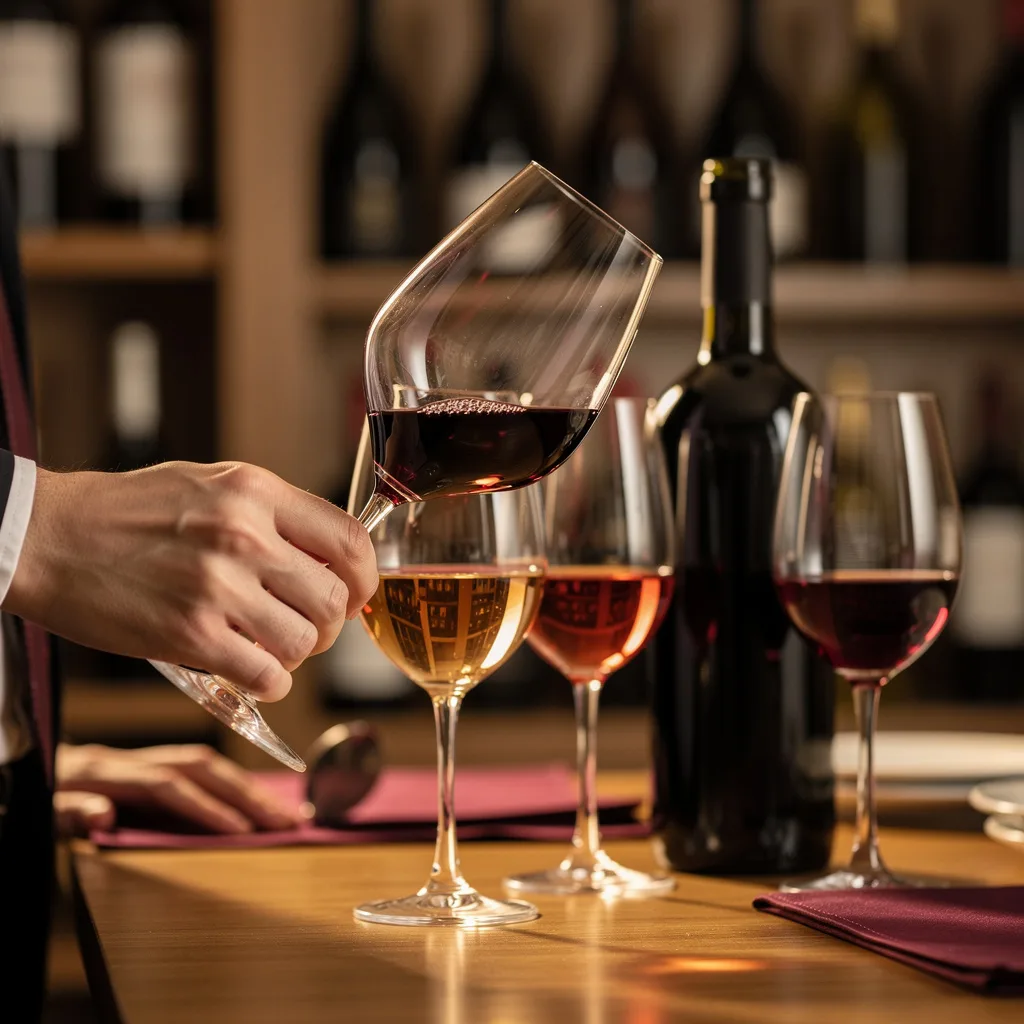
- Nose: Swirl and sniff to identify aromas, from primary fruit to secondary oak and tertiary aged notes.
- Palate: Assess sweetness, acidity, tannin, body, and finish through a sip.
- Conclusion: Synthesize all observations into a coherent judgment of style, quality, and readiness to drink.
Is expensive wine always better than cheaper wine?
What Will This Course Bring You?
- Apply the systematic approach to evaluate a wine's appearance, aroma, taste, and finish.
- Analyze the characteristics of major grape varieties and their influence on wine style.
- Identify key wine regions and their typical grape varieties and styles.
- Interpret wine labels and terminology to determine origin, grape, and quality.
- Design food and wine pairings based on complementary and contrasting flavor principles.
- Evaluate common wine faults by identifying their sensory indicators.
- Build a basic wine cellar plan considering storage conditions and aging potential.
- Develop a personal tasting journal to refine sensory skills and track preferences.
Curriculum
12 Units1. The Five Senses of Wine Tasting
1 hour
2. Grape Varieties and Their Characteristics
1 hour
3. Major Wine Regions of the World
1 hour
4. The Winemaking Process
1 hour
5. Reading Wine Labels and Understanding Terminology
1 hour
6. Tasting Technique: The Systematic Approach
1 hour
7. Food and Wine Pairing Principles
1 hour
8. Understanding Wine Styles: Sparkling, Fortified, and Dessert Wines
1 hour
9. Wine Faults and Flaws
1 hour
10. Building a Wine Cellar and Storage
1 hour
11. Wine Tasting Events and Etiquette
1 hour
12. Developing Your Palate and Continuing Education
1 hour
Exam – Wine Tasting and Appreciation
20 Questions • 70% Pass • 30 min
Unlock All Units for Free
Create an account, enroll in the course, and start with the first unit right away.
Exam – Wine Tasting and Appreciation
20 Questions • Pass: 70% • 30 min
Course Duration
720
Total Minutes
12
Unit
1
Final Exam
~60
Min / Unit
Wine Tasting and Appreciation Certificate Program
Document Your Skill
Those who pass the 20-question, 30-minute exam with 70% receive the Wine Tasting and Appreciation Certificate.
Stand Out on Your CV
By adding your certificate to your CV, gain a professional reference in job applications and stand out from the crowd.
Career Advantage
With the verification code, employers can check your certificate instantly — a concrete way to show your growth.
CERTIFICATE FEE
At the end of the course, an online exam consisting of 20 questions with a 30-minute time limit is given. The exam appears automatically after you complete the topics. Anyone who scores at least 70 out of 100 on the certificate exam is awarded the Wine Tasting and Appreciation Document (certificate of attendance). You can add the certificate you earn to your CV for job applications in the many sectors listed above, and use it as a reference proving that you took this interactive course.
The Certificate of Achievement you receive with the Wine Tasting and Appreciation course program holds value that proves your personal and professional development in the business world. By adding it to your CV, it can serve as an important reference in your job applications. Moreover, compared with certificates from other private training institutions, Catch Wisdom certificates are offered to our participants at a much more affordable price.
The Wine Tasting and Appreciation course certificate is a document that proves, with a unique verification code, that you completed the course. Employers can instantly check its authenticity with this code, which helps you show your development concretely in your job applications.
For more information, we recommend visiting the Support page.
Certificate in 7 Languages
Earning success certificates from our courses is now more meaningful and global. With certificates available in Turkish, English, German, French, Spanish, Arabic, and Russian, we fully unlock the potential of students worldwide.
Why Certificate in 7 Languages?
-
01
Global Skill Development
Receiving your certificates in 7 different languages strengthens your communication skills as you engage with more people worldwide. It lets you operate more confidently and capably on the international stage.
-
02
International Job Opportunities
Employers may see your certificates in multiple languages as a sign of your ability to seize global opportunities. You can open more doors to new jobs and projects.
-
03
Cultural Richness
The chance to earn certificates in different languages helps you build closer ties with various cultures and broadens your worldview. It enriches your global perspective and deepens cultural understanding.
-
04
Ability to Participate in International Projects
Multilingual certificates give you an edge to work more effectively on international projects. They boost your chances of leadership and participation in diverse projects in the business world.
-
05
Prove Yourself on the Global Stage
Certificates in multiple languages give you the opportunity to present your skills and knowledge worldwide.
Language diversity opens worldwide opportunities. If you want to prove yourself in the international arena, join our online Wine Tasting and Appreciation course program and begin this journey with us.
Frequently Asked Questions (FAQ)
Is this course paid?
How do I join the course?
Can I take the course at my own pace?
How can I get my certificate?
What are the advantages of the certificate?
Boost Your Career
Take a new career step with the Wine Tasting and Appreciation course. Add your certificate to your CV, stand out in job applications, and open the door to new opportunities in the industry.
StartStudent Reviews
No reviews yet
Enroll in this course and be the first to leave a review about your experience with Wine Tasting and Appreciation.
Start