What is 2D Animation Fundamentals?
2D Animation Fundamentals Certificate Program
The 2D Animation Fundamentals certificate program teaches the complete craft of bringing drawn characters and objects to life through frame-based motion. It covers the foundations of motion, the twelve principles of animation, timing and spacing, keyframes, breakdowns, and inbetweens, as well as drawing for animation with construction, volumes, and line of action. Learners also explore character posing, silhouette, expression, walk and run cycles, action and physics-based motion, acting and gesture, storyboarding, layout, staging, digital workflows, and final polish and delivery. This program is designed for aspiring animators, illustrators, motion designers, game artists, and hobbyists who want a structured path into 2D animation. The main practical outcome is the ability to plan, animate, and polish a short character-driven sequence that demonstrates professional-level timing and performance.
The program is structured as a beginner-friendly progression that moves from the physics of motion and the twelve principles into increasingly complex performance and production tasks. Each lesson balances theory with hands-on practice, so learners immediately apply concepts like easing, breakdowns, and line of action to exercises and scene work. The curriculum builds four core skill areas: drawing and construction for animation, motion and timing, character performance and staging, and digital production from workflow to final delivery. Choosing this program now makes sense because 2D animation is in high demand across streaming, games, advertising, and social media, while modern software and remote pipelines have made it more accessible than ever. It offers a focused, portfolio-ready foundation for anyone who wants to create believable animated motion rather than just static images.
What is 2D Animation Fundamentals?
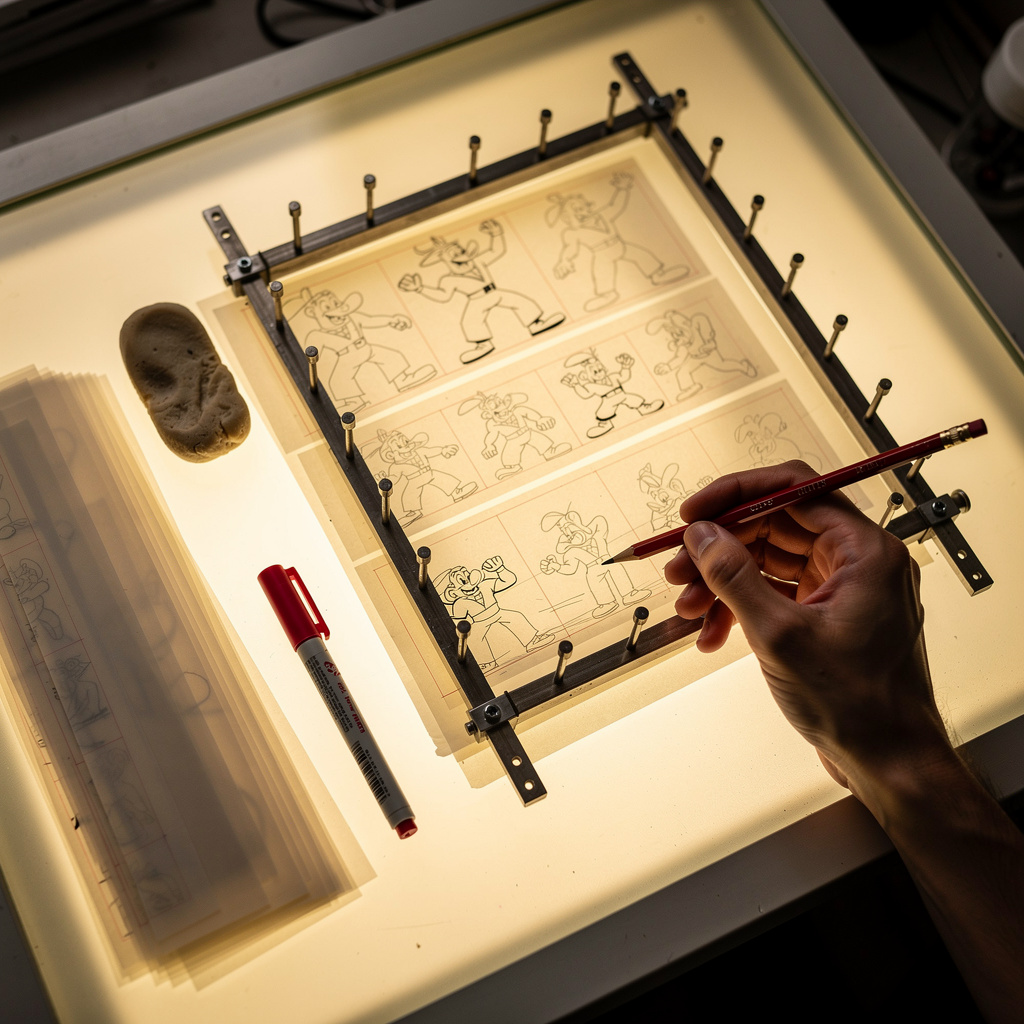
2D animation fundamentals is the study of how to create the illusion of life and movement using sequential images, whether drawn by hand or generated digitally. At its core are concepts such as frame rate, keyframes, breakdowns, inbetweens, timing, and spacing, which together determine how motion reads to an audience. The field also encompasses the twelve principles of animation—squash and stretch, anticipation, staging, and others—that give movement weight, appeal, and clarity. Its scope extends to character construction, line of action, posing, locomotion cycles, physics-based action, and performance through gesture and expression. Storyboarding, layout, and compositing are also part of the discipline because animation is ultimately a narrative and visual medium.
Today, 2D animation fundamentals matter because the demand for animated content has expanded far beyond traditional film and television. Streaming platforms, game studios, advertising agencies, and social media creators all rely on 2D animation for storytelling, branding, explainers, and entertainment. Recent shifts include the rise of accessible digital tools like Toon Boom Harmony, TVPaint, Adobe Animate, and Blender's Grease Pencil, as well as remote collaboration pipelines that allow small teams to produce high-quality work. Independent animation and user-generated content have also exploded, giving animators more ways to reach audiences directly. Understanding the fundamentals remains essential because software changes, but the principles of believable motion and appealing performance do not.
Mastering 2D animation fundamentals builds a durable skill stack that combines visual observation, drawing fluency, timing sensibility, storytelling, and technical software proficiency. These skills transfer across character animation, motion graphics, game art, explainer video production, and educational content creation. Professionals in animation studios, indie game teams, advertising, and freelance markets benefit from being able to communicate motion ideas clearly and execute them efficiently. The subject also supports personal creative expression, from short films to web comics with animated elements. Because the fundamentals are medium-agnostic, they provide a foundation that remains valuable even as tools and distribution channels evolve.
Common Questions About 2D Animation Fundamentals
Can I start this animation course with zero drawing experience?
How much weekly time does this 2D Animation Fundamentals course need?
How do timing and spacing work together in 2D animation?
Why do my keyframes need breakdowns and inbetweens?
- Keys and extremes: the poses that carry the story.
- Breakdowns: the poses that decide the route, arc, and intent of the action.
- Inbetweens: the drawings that connect breakdowns and keys at the chosen spacing.
How do I use squash and stretch without losing volume?
What makes a walk cycle loop seamlessly in animation?
Do you really need 24 drawings for every second of animation?
What Will This Course Bring You?
- Analyze frame-based motion by comparing sequential drawings to explain how frame rate and spacing create the illusion of movement.
- Apply the twelve principles of animation to design a short character action that demonstrates squash, stretch, anticipation, and follow-through.
- Design timing charts and easing curves to control acceleration, deceleration, and spacing across a multi-pose animated sequence.
- Construct key poses, breakdowns, and inbetweens that maintain volume, line of action, and consistent character construction throughout a shot.
- Create expressive character poses and gestures that use silhouette and facial expression to communicate performance and intent.
- Animate a believable walk cycle and run cycle by applying contact, down, passing, and up positions with correct weight shifts.
- Implement physics-based motion for action sequences by evaluating weight, momentum, drag, and impact to produce convincing animated movement.
- Prepare a polished 2D animation shot by applying cleanup, compositing, and final delivery practices within a digital animation workflow.
Curriculum
12 Units1. Foundations of Motion and Frame-Based Animation
1 hour
2. The 12 Principles of Animation in Practice
1 hour
3. Timing, Spacing, and Easing
1 hour
4. Keyframes, Breakdowns, and Inbetweens
1 hour
5. Drawing for Animation: Construction, Volumes, and Line of Action
1 hour
6. Character Posing, Silhouette, and Expression
1 hour
7. Walk Cycles, Run Cycles, and Locomotion
1 hour
8. Action, Weight, and Physics-Based Motion
1 hour
9. Acting, Gesture, and Performance in Animation
1 hour
10. Storyboarding, Layout, and Staging for Animation
1 hour
11. Digital Animation Workflows and Tools
1 hour
12. Polish, Cleanup, Compositing, and Final Delivery
1 hour
Exam – 2D Animation Fundamentals
20 Questions • 70% Pass • 30 min
Unlock All Units for Free
Create an account, enroll in the course, and start with the first unit right away.
Exam – 2D Animation Fundamentals
20 Questions • Pass: 70% • 30 min
Course Duration
720
Total Minutes
12
Unit
1
Final Exam
~60
Min / Unit
2D Animation Fundamentals Certificate Program
Document Your Skill
Those who pass the 20-question, 30-minute exam with 70% receive the 2D Animation Fundamentals Certificate.
Stand Out on Your CV
By adding your certificate to your CV, gain a professional reference in job applications and stand out from the crowd.
Career Advantage
With the verification code, employers can check your certificate instantly — a concrete way to show your growth.
CERTIFICATE FEE
At the end of the course, an online exam consisting of 20 questions with a 30-minute time limit is given. The exam appears automatically after you complete the topics. Anyone who scores at least 70 out of 100 on the certificate exam is awarded the 2D Animation Fundamentals Document (certificate of attendance). You can add the certificate you earn to your CV for job applications in the many sectors listed above, and use it as a reference proving that you took this interactive course.
The Certificate of Achievement you receive with the 2D Animation Fundamentals course program holds value that proves your personal and professional development in the business world. By adding it to your CV, it can serve as an important reference in your job applications. Moreover, compared with certificates from other private training institutions, Catch Wisdom certificates are offered to our participants at a much more affordable price.
The 2D Animation Fundamentals course certificate is a document that proves, with a unique verification code, that you completed the course. Employers can instantly check its authenticity with this code, which helps you show your development concretely in your job applications.
For more information, we recommend visiting the Support page.
Certificate in 7 Languages
Earning success certificates from our courses is now more meaningful and global. With certificates available in Turkish, English, German, French, Spanish, Arabic, and Russian, we fully unlock the potential of students worldwide.
Why Certificate in 7 Languages?
-
01
Global Skill Development
Receiving your certificates in 7 different languages strengthens your communication skills as you engage with more people worldwide. It lets you operate more confidently and capably on the international stage.
-
02
International Job Opportunities
Employers may see your certificates in multiple languages as a sign of your ability to seize global opportunities. You can open more doors to new jobs and projects.
-
03
Cultural Richness
The chance to earn certificates in different languages helps you build closer ties with various cultures and broadens your worldview. It enriches your global perspective and deepens cultural understanding.
-
04
Ability to Participate in International Projects
Multilingual certificates give you an edge to work more effectively on international projects. They boost your chances of leadership and participation in diverse projects in the business world.
-
05
Prove Yourself on the Global Stage
Certificates in multiple languages give you the opportunity to present your skills and knowledge worldwide.
Language diversity opens worldwide opportunities. If you want to prove yourself in the international arena, join our online 2D Animation Fundamentals course program and begin this journey with us.
Frequently Asked Questions (FAQ)
Is this course paid?
How do I join the course?
Can I take the course at my own pace?
How can I get my certificate?
What are the advantages of the certificate?
Boost Your Career
Take a new career step with the 2D Animation Fundamentals course. Add your certificate to your CV, stand out in job applications, and open the door to new opportunities in the industry.
StartStudent Reviews
No reviews yet
Enroll in this course and be the first to leave a review about your experience with 2D Animation Fundamentals.
Start