What is Television Journalism?
Television Journalism Certificate Program
The Television Journalism certificate program is an immersive training experience that equips you with the full spectrum of skills needed to report, produce, and deliver impactful news stories for broadcast and digital audiences. It is designed for aspiring journalists, media students, and communication professionals who want to break into television news or elevate their existing on-air and production abilities. Through hands-on projects mirroring real newsroom workflows, you will build a professional reel of original news packages, master control room operations, and gain the confidence to handle everything from daily assignments to live breaking news.
This program follows a carefully scaffolded path, starting with the television news landscape and source development before moving into writing for the ear and eye, visual storytelling, and on-camera delivery. You then advance into video editing, newscast producing, and live reporting, with dedicated modules on digital and social media integration and media law and ethics. The curriculum balances rigorous theory with intensive practice, cultivating four essential skill areas: editorial judgment, technical production, ethical storytelling, and multiplatform audience engagement. In an era where newsrooms demand multi-skilled journalists who can shoot, edit, write, and go live from anywhere, this certificate offers a direct, career-focused route to becoming that versatile professional.
What is Television Journalism?
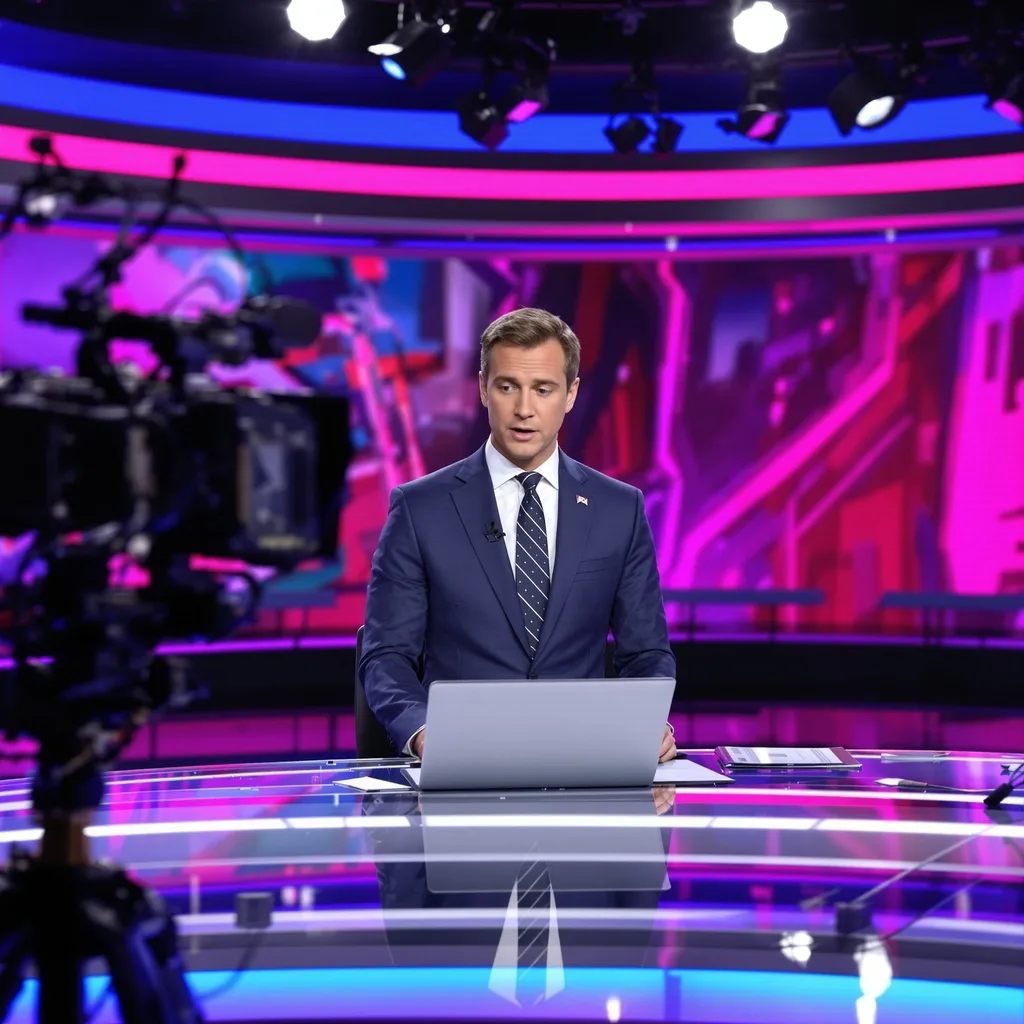
Television journalism is the craft of gathering, verifying, and presenting news through the combined language of moving images, sound, and the spoken word. It spans formats from the nightly network newscast and 24-hour cable news to local bulletins, long-form documentaries, and live field dispatches. Unlike print or radio, TV journalism operates on a dual-track logic: the script must serve the ear while the visuals drive the narrative, demanding a seamless marriage of editorial rigor and cinematic awareness. Its core concepts include visual evidence, narrative pacing, on-camera authority, and the ethical imperative to show as well as tell the truth.
Today, television journalism has expanded far beyond the living-room screen. Audiences encounter TV news on smartphones, streaming platforms, and social media feeds, often in real time and in vertical formats. This convergence has dissolved the old boundaries between broadcast and digital, requiring journalists to be equally adept at filing a live shot for the evening news and crafting a short, shareable video for Instagram or TikTok. At the same time, the proliferation of misinformation, deepfakes, and polarized media ecosystems has made the journalist’s role as a trusted verifier more critical than ever. Television journalism now stands as a frontline defense of factual storytelling in a visually saturated world.
Mastering television journalism builds a powerful, transferable skill stack that reaches well beyond the newsroom. It sharpens your ability to think critically under deadline pressure, translate complex issues into clear visual narratives, and connect with diverse audiences on an emotional level. These competencies are invaluable not only for on-air reporters and producers but also for documentary filmmakers, corporate communications strategists, and digital content leaders. Whether you aim to anchor a national newscast, produce investigative series, or lead a brand’s video storytelling team, a deep grounding in TV journalism gives you the storytelling authority, technical fluency, and ethical compass to make an immediate and lasting impact.
Common Questions About Television Journalism
Is the television journalism certificate valued by news employers?
What job roles does a TV journalism certificate prepare for?
How do you verify sources in television news gathering?
Why is writing for the ear different from print journalism?
What are common mistakes in on-camera presentation?
- Reading instead of speaking: Reciting a script without natural inflection makes you sound robotic.
- Ignoring the three-second battle: Your opening line must hook the audience immediately; a weak start loses viewers.
- Poor eye contact: Looking at the teleprompter instead of the lens breaks the connection with the audience.
- Over-gesturing or freezing: Unnatural body language distracts from the message.
- Neglecting preparation: Without rehearsing key phrases and transitions, you appear uncertain.
How does a producer balance story mix in a newscast?
Does the camera really never lie in TV journalism?
What Will This Course Bring You?
- Analyze the television news landscape to evaluate how ownership, technology, and audience behavior influence content and delivery across platforms.
- Develop and vet news sources using ethical interviewing and verification methods to produce accurate, original television reports.
- Write broadcast scripts that seamlessly integrate words with visuals, using conversational language and natural rhythm for on-air delivery.
- Capture professional-quality video footage by applying principles of composition, lighting, and camera movement to enhance visual storytelling in news packages.
- Record and edit field audio, including interviews and ambient sound, to create immersive soundscapes that support television news narratives.
- Perform on-camera with confidence and credibility, adapting vocal delivery and physical presence to different news formats and environments.
- Edit video news stories using industry-standard software, employing pacing, transitions, and graphics to clarify and strengthen journalistic storytelling.
Curriculum
12 Units1. The Television News Landscape
1 h
2. News Gathering and Source Development
1 h
3. Writing for the Ear and Eye
1 h
4. Visual Storytelling and Camera Techniques
1 h
5. Audio Recording and Sound Design
1 h
6. On-Camera Presentation and Delivery
1 h
7. Video Editing for News
1 h
8. Newscast Producing and Control Room Operations
1 h
9. Live Reporting and Breaking News Coverage
1 h
10. Digital and Social Media Integration
1 h
11. Media Law and Ethics in Television
1 h
12. Advanced Television Journalism Projects
1 h
Exam – Television Journalism
20 Questions • 70% Pass • 30 min
Unlock All Units for Free
Create an account, enroll in the course, and start with the first unit right away.
Exam – Television Journalism
20 Questions • Pass: 70% • 30 min
Course Duration
720
Total Minutes
12
Unit
1
Final Exam
~60
Min / Unit
Television Journalism Certificate Program
Document Your Skill
Those who pass the 20-question, 30-minute exam with 70% receive the Television Journalism Certificate.
Stand Out on Your CV
By adding your certificate to your CV, gain a professional reference in job applications and stand out from the crowd.
Career Advantage
Catch Wisdom certificates are recognized by HR departments and increase career opportunities.
CERTIFICATE FEE
At the end of the course, an online exam consisting of 20 questions with a 30-minute time limit is given. The exam appears automatically after you complete the topics. Anyone who scores at least 70 out of 100 on the certificate exam is awarded the Television Journalism Document (certificate of attendance). You can add the certificate you earn to your CV for job applications in the many sectors listed above, and use it as a reference proving that you took this interactive course.
The Certificate of Achievement you receive with the Television Journalism course program holds value that proves your personal and professional development in the business world. By adding it to your CV, it can serve as an important reference in your job applications. Moreover, compared with certificates from other private training institutions, Catch Wisdom certificates are offered to our participants at a much more affordable price.
Because HR departments recognize Catch Wisdom as a reputable institution in this field, they value these certificates and may evaluate your job applications favorably. For this reason, a Television Journalism course certificate from Catch Wisdom can make your applications more attractive and place you in an advantageous position in the business world.
For more information, we recommend visiting the Support page.
Certificate in 7 Languages
Earning success certificates from our courses is now more meaningful and global. With certificates available in Turkish, English, German, French, Spanish, Arabic, and Russian, we fully unlock the potential of students worldwide.
Why Certificate in 7 Languages?
-
01
Global Skill Development
Receiving your certificates in 7 different languages strengthens your communication skills as you engage with more people worldwide. It lets you operate more confidently and capably on the international stage.
-
02
International Job Opportunities
Employers may see your certificates in multiple languages as a sign of your ability to seize global opportunities. You can open more doors to new jobs and projects.
-
03
Cultural Richness
The chance to earn certificates in different languages helps you build closer ties with various cultures and broadens your worldview. It enriches your global perspective and deepens cultural understanding.
-
04
Ability to Participate in International Projects
Multilingual certificates give you an edge to work more effectively on international projects. They boost your chances of leadership and participation in diverse projects in the business world.
-
05
Prove Yourself on the Global Stage
Certificates in multiple languages let you showcase your skills and knowledge worldwide. You can become an internationally recognized professional.
Language diversity opens worldwide opportunities. If you want to prove yourself in the international arena, join our online Television Journalism course program and begin this journey with us.
Frequently Asked Questions (FAQ)
Is this course paid?
How do I join the course?
Can I take the course at my own pace?
How can I get my certificate?
What are the advantages of the Certified Certificate?
Boost Your Career
Take a new career step with the Television Journalism course. Add your certificate to your CV, stand out in job applications, and open the door to new opportunities in the industry.
StartStudent Reviews
No reviews yet
Enroll in this course and be the first to leave a review about your experience with Television Journalism.
Start