What is Acting for Camera?
Acting for Camera Certificate Program
Acting for Camera certificate program teaches actors how to adapt their craft to the specific demands of film, television, and digital sets, where the camera acts as both observer and scene partner. It is designed for aspiring screen actors, stage performers transitioning to on-camera work, and content creators who want to deliver truthful performances within technical constraints. The main practical outcome is the ability to walk onto a set, understand shot sizes, maintain continuity, and deliver emotionally grounded work that reads on camera without theatrical projection.
The program is structured as a beginner-friendly progression that starts with foundations of acting for camera and the camera as scene partner, then builds through shot sizes, performance scale, continuity, coverage, blocking, and spatial awareness. It balances theory—such as script analysis for camera and emotional preparation—with hands-on practice in playing the close-up, auditions, self-tapes, and advanced camera scene work. The four core skill areas it builds are technical literacy (shot sizes, continuity, blocking), collaborative professionalism (working with directors and scene partners, on-set protocol), emotional craft (inner life, close-up performance), and career strategy (auditions, self-tapes, advanced scene work). Someone would choose this program now because streaming platforms and short-form video have multiplied the demand for actors who can deliver authentic, camera-ready performances without extensive on-set training.
What is Acting for Camera?
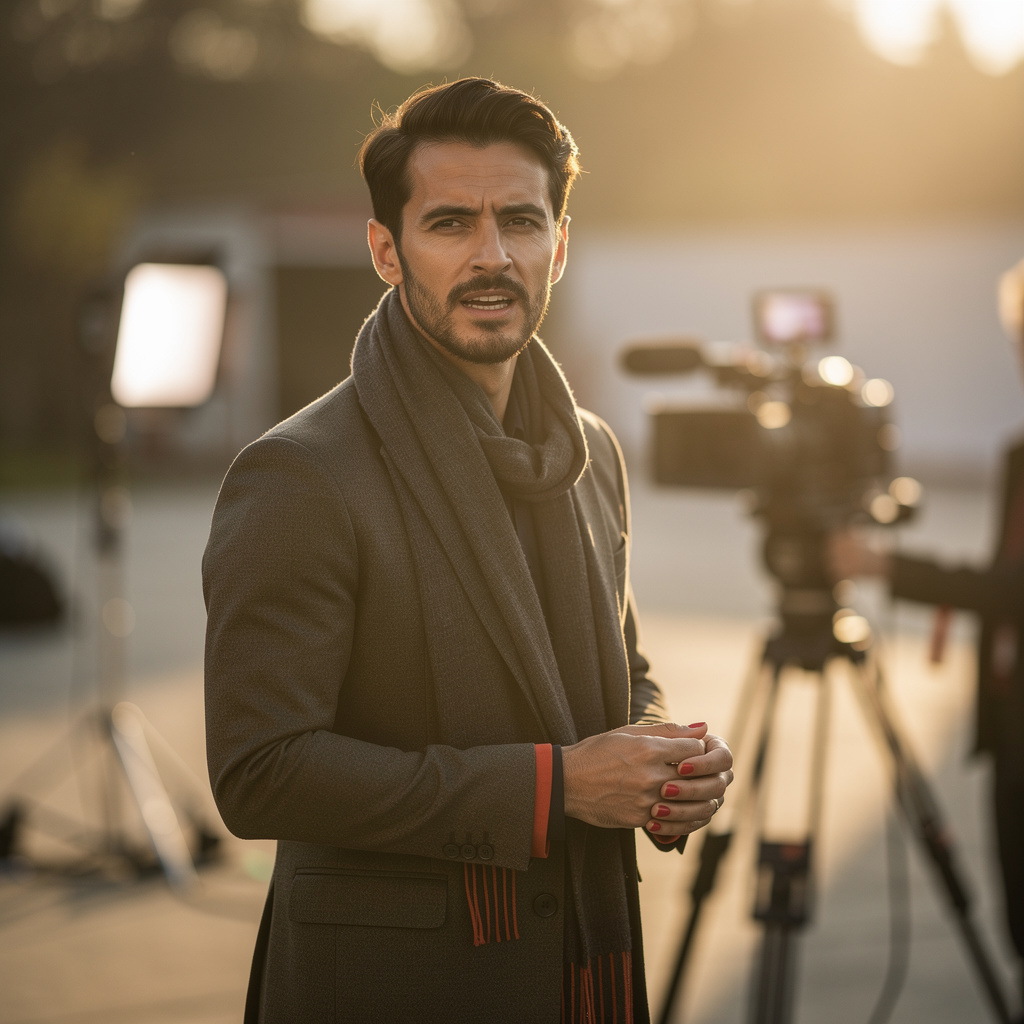
Acting for camera is the discipline of performing for film, television, and digital media, where the actor's work is mediated by lenses, framing, and editing rather than received live by an audience. Its scope covers the adjustment of performance scale to different shot sizes, the maintenance of emotional and physical continuity across multiple takes, and the navigation of blocking within a frame that may be tight or wide. Core concepts include the camera as an active scene partner, the distinction between theatrical projection and screen naturalism, and the technical awareness of eyelines, marks, and coverage.
In an era dominated by streaming series, social media video, and virtual production, acting for camera has become the primary mode of professional performance for most working actors. It is used in film, episodic television, commercials, corporate training videos, and user-generated content, while academia increasingly treats on-camera performance as a distinct area of study alongside stage acting. Recent shifts include the rise of self-tape auditions, the use of remote callbacks, and the integration of LED volumes and motion capture, all of which demand that performers understand camera technology as part of their craft.
Mastering this subject builds a skill stack that combines emotional truthfulness with technical precision: the ability to modulate performance for a close-up, to track continuity across fragmented shooting schedules, and to collaborate efficiently with directors and crew. These skills benefit professional actors seeking steady screen work, stage actors expanding their range, and content creators who must self-direct and self-shoot. Personal contexts also gain from this subject, as the confidence to perform authentically on camera translates into better presentations, interviews, and digital communication.
Common Questions About Acting for Camera
Can complete beginners join the Acting for Camera course?
Is this Acting for Camera training right for theatre actors?
Why do eyelines matter so much when acting for camera?
- The Lens-Partner Zone: the small area around the lens your focus should land on when the other character is off-camera beside the camera.
- Consistency across coverage: if you look slightly left in your close-up and slightly right in theirs, the two shots will never seem to belong to the same conversation.
- Height and distance: looking at the floor or over someone's head reads as disconnection, not as thought.
- Where the eyes go: small drifts become enormous in a close-up, so the eyeline is fixed before the take, not found during it.
How does the shot size ladder change your performance scale?
What is the most common continuity mistake actors make on set?
How do you apply the 'do less' note without going flat?
Isn't acting for camera just acting less than on stage?
What Will This Course Bring You?
- Apply foundational acting-for-camera principles by analyzing script beats and coverage to design objectives that sustain performance across non-chronological shot setups.
- Calibrate vocal and physical performance scale for wide, medium, and close-up shots while maintaining emotional truth and consistent character energy.
- Implement precise blocking and spatial awareness by hitting marks, respecting lens lines, and adjusting to camera movement without breaking character.
- Build a repeatable emotional preparation routine that accesses inner life safely and adapts it to the intimacy and stillness of close-up work.
- Evaluate self-tape auditions by framing, lighting, eyeline, and sound quality to deliver professional submissions that meet casting specifications.
- Apply on-set protocol by collaborating with directors, respecting crew roles, and adapting performance notes efficiently during active camera setups.
- Analyze the camera as an active scene partner by adjusting eyeline, listening, and reaction timing to lens position and shot composition.
- Design a career strategy that integrates advanced camera scene work, reel development, and ongoing training for sustained professional growth.
Curriculum
12 Units1. Foundations of Acting for Camera
1 hour
2. The Camera as Scene Partner
1 hour
3. Shot Sizes and Performance Scale
1 hour
4. Continuity and Coverage
1 hour
5. Blocking and Spatial Awareness for Camera
1 hour
6. Working with Directors and Scene Partners
1 hour
7. Script Analysis for Camera
1 hour
8. Emotional Preparation and Inner Life
1 hour
9. Playing the Close-Up
1 hour
10. Auditions and Self-Tapes
1 hour
11. On-Set Professionalism and Set Protocol
1 hour
12. Advanced Camera Scene Work and Career Strategy
1 hour
Exam – Acting for Camera
20 Questions • 70% Pass • 30 min
Unlock All Units for Free
Create an account, enroll in the course, and start with the first unit right away.
Exam – Acting for Camera
20 Questions • Pass: 70% • 30 min
Course Duration
720
Total Minutes
12
Unit
1
Final Exam
~60
Min / Unit
Acting for Camera Certificate Program
Document Your Skill
Those who pass the 20-question, 30-minute exam with 70% receive the Acting for Camera Certificate.
Stand Out on Your CV
By adding your certificate to your CV, gain a professional reference in job applications and stand out from the crowd.
Career Advantage
With the verification code, employers can check your certificate instantly — a concrete way to show your growth.
CERTIFICATE FEE
At the end of the course, an online exam consisting of 20 questions with a 30-minute time limit is given. The exam appears automatically after you complete the topics. Anyone who scores at least 70 out of 100 on the certificate exam is awarded the Acting for Camera Document (certificate of attendance). You can add the certificate you earn to your CV for job applications in the many sectors listed above, and use it as a reference proving that you took this interactive course.
The Certificate of Achievement you receive with the Acting for Camera course program holds value that proves your personal and professional development in the business world. By adding it to your CV, it can serve as an important reference in your job applications. Moreover, compared with certificates from other private training institutions, Catch Wisdom certificates are offered to our participants at a much more affordable price.
The Acting for Camera course certificate is a document that proves, with a unique verification code, that you completed the course. Employers can instantly check its authenticity with this code, which helps you show your development concretely in your job applications.
For more information, we recommend visiting the Support page.
Certificate in 7 Languages
Earning success certificates from our courses is now more meaningful and global. With certificates available in Turkish, English, German, French, Spanish, Arabic, and Russian, we fully unlock the potential of students worldwide.
Why Certificate in 7 Languages?
-
01
Global Skill Development
Receiving your certificates in 7 different languages strengthens your communication skills as you engage with more people worldwide. It lets you operate more confidently and capably on the international stage.
-
02
International Job Opportunities
Employers may see your certificates in multiple languages as a sign of your ability to seize global opportunities. You can open more doors to new jobs and projects.
-
03
Cultural Richness
The chance to earn certificates in different languages helps you build closer ties with various cultures and broadens your worldview. It enriches your global perspective and deepens cultural understanding.
-
04
Ability to Participate in International Projects
Multilingual certificates give you an edge to work more effectively on international projects. They boost your chances of leadership and participation in diverse projects in the business world.
-
05
Prove Yourself on the Global Stage
Certificates in multiple languages give you the opportunity to present your skills and knowledge worldwide.
Language diversity opens worldwide opportunities. If you want to prove yourself in the international arena, join our online Acting for Camera course program and begin this journey with us.
Frequently Asked Questions (FAQ)
Is this course paid?
How do I join the course?
Can I take the course at my own pace?
How can I get my certificate?
What are the advantages of the certificate?
Boost Your Career
Take a new career step with the Acting for Camera course. Add your certificate to your CV, stand out in job applications, and open the door to new opportunities in the industry.
StartStudent Reviews
No reviews yet
Enroll in this course and be the first to leave a review about your experience with Acting for Camera.
Start