What is Agricultural Pests and Applied Entomology?
Agricultural Pests and Applied Entomology Certificate Program
The Agricultural Pests and Applied Entomology certificate program prepares learners to recognize, monitor, and manage the arthropod pests that reduce crop yield, quality, and profitability. It is designed for agronomy students, crop protection professionals, farm advisors, extension staff, horticultural producers, scouts, and agricultural researchers who need a stronger foundation in applied entomology. The curriculum connects insect external anatomy and taxonomy with physiology, seasonal life cycles, population ecology, crop damage assessment, economic thresholds, sampling, and integrated pest management decision-making. The main practical outcome is the ability to diagnose pest problems in the field and choose defensible, integrated management actions rather than relying on reactive pesticide use.
The program is structured as a beginner-friendly progression from recognition and identification to biology, ecology, monitoring, and management tactics. Learners move from anatomy and major arthropod pest groups into development and outbreak dynamics, then into damage thresholds, surveillance, IPM frameworks, cultural and biological controls, chemical safety, resistance management, pest complexes, and invasive pest biosecurity. Theory is balanced with applied identification, sampling logic, threshold interpretation, and tactical decision-making across five core skill areas: pest recognition, ecological reasoning, monitoring and surveillance, integrated tactic selection, and safe, resistance-aware management. This program is timely because invasive pests, pesticide resistance, climate variability, and market pressure for sustainable production are making precise, ecology-based pest management more valuable than ever.
What is Agricultural Pests and Applied Entomology?
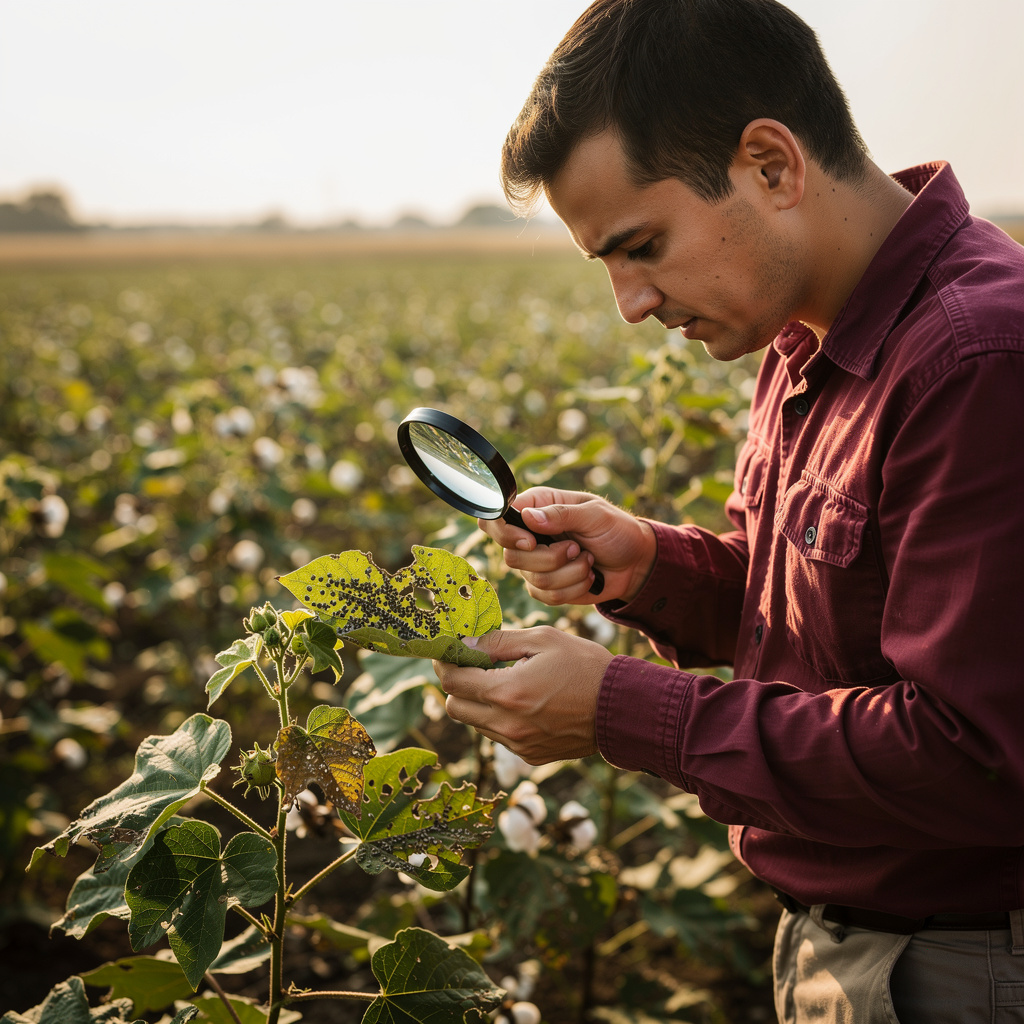
Agricultural Pests and Applied Entomology is the study of arthropods that affect crops and the practical science of reducing their damage through informed management. Its scope spans insect and mite recognition, taxonomy, anatomy, physiology, development, seasonal life cycles, population ecology, outbreak dynamics, crop injury, and economic thresholds. Core concepts include pest status, sampling and surveillance, integrated pest management, natural enemy conservation, chemical safety, resistance management, and biosecurity. The subject sits at the intersection of entomology, plant protection, ecology, economics, and farm decision-making.
The subject matters today because crop losses to pests threaten food security and farm profitability while pesticide resistance and invasive species complicate conventional control. Growers, advisors, regulators, and researchers need reliable identification, monitoring data, and threshold-based reasoning to respond to changing pest pressures and market expectations. Recent shifts toward precision surveillance, conservation biological control, resistance management, and invasive pest preparedness have made applied entomology more central to sustainable agriculture. It is used in field scouting, crop consulting, extension education, agribusiness support, research trials, horticultural production, and biosecurity planning.
Mastering this subject builds a skill stack that combines diagnostic confidence, ecological interpretation, field sampling discipline, threshold-based decision-making, and integrated tactic selection. It also strengthens the ability to communicate risk, justify interventions, and adapt management as pest populations, crop stages, and regulations change. These skills are valuable in farm management, crop protection advising, extension and outreach, agricultural research, agribusiness technical support, horticulture, and invasive species preparedness. The result is a more precise, economically grounded, and environmentally responsible approach to agricultural pest management.
What Will This Course Bring You?
- Identify major agricultural arthropod pest groups by analyzing external anatomy and taxonomic features using standard diagnostic keys.
- Interpret insect physiology, development, and seasonal life cycles to predict pest emergence timing and vulnerable management windows.
- Evaluate population ecology and outbreak dynamics to assess pest status, crop damage potential, and appropriate economic thresholds.
- Design and implement sampling, monitoring, and surveillance programs that generate reliable field data for pest management decisions.
- Apply integrated pest management principles and decision frameworks to select culturally, biologically, and chemically compatible control tactics.
- Evaluate biological control agents and conservation strategies that enhance natural enemy populations within agricultural cropping systems.
- Implement pesticide safety practices and resistance management strategies while selecting chemical controls appropriate to specific pest complexes.
- Analyze invasive pest biosecurity risks and emerging agricultural threats to recommend preventive and responsive management actions.
Curriculum
12 Units1. Insect External Anatomy and Recognition of Agricultural Pests
1 hour
2. Taxonomy and Identification of Major Arthropod Pest Groups
1 hour
3. Insect Physiology, Development, and Seasonal Life Cycles
1 hour
4. Population Ecology and Outbreak Dynamics of Agricultural Pests
1 hour
5. Pest Status, Crop Damage, and Economic Thresholds
1 hour
6. Sampling, Monitoring, and Surveillance of Agricultural Pests
1 hour
7. Integrated Pest Management Principles and Decision Frameworks
1 hour
8. Cultural, Physical, Mechanical, and Host-Resistance Tactics
1 hour
9. Biological Control and Conservation of Natural Enemies
1 hour
10. Chemical Control, Pesticide Safety, and Resistance Management
1 hour
11. Integrated Management of Major Agricultural Pest Complexes
1 hour
12. Invasive Pest Biosecurity and Emerging Agricultural Threats
1 hour
Exam – Agricultural Pests and Applied Entomology
20 Questions • 70% Pass • 30 min
Unlock All Units for Free
Create an account, enroll in the course, and start with the first unit right away.
Exam – Agricultural Pests and Applied Entomology
20 Questions • Pass: 70% • 30 min
Course Duration
720
Total Minutes
12
Unit
1
Final Exam
~60
Min / Unit
Agricultural Pests and Applied Entomology Certificate Program
Document Your Skill
Those who pass the 20-question, 30-minute exam with 70% receive the Agricultural Pests and Applied Entomology Certificate.
Stand Out on Your CV
By adding your certificate to your CV, gain a professional reference in job applications and stand out from the crowd.
Career Advantage
With the verification code, employers can check your certificate instantly — a concrete way to show your growth.
CERTIFICATE FEE
At the end of the course, an online exam consisting of 20 questions with a 30-minute time limit is given. The exam appears automatically after you complete the topics. Anyone who scores at least 70 out of 100 on the certificate exam is awarded the Agricultural Pests and Applied Entomology Document (certificate of attendance). You can add the certificate you earn to your CV for job applications in the many sectors listed above, and use it as a reference proving that you took this interactive course.
The Certificate of Achievement you receive with the Agricultural Pests and Applied Entomology course program holds value that proves your personal and professional development in the business world. By adding it to your CV, it can serve as an important reference in your job applications. Moreover, compared with certificates from other private training institutions, Catch Wisdom certificates are offered to our participants at a much more affordable price.
The Agricultural Pests and Applied Entomology course certificate is a document that proves, with a unique verification code, that you completed the course. Employers can instantly check its authenticity with this code, which helps you show your development concretely in your job applications.
For more information, we recommend visiting the Support page.
Certificate in 7 Languages
Earning success certificates from our courses is now more meaningful and global. With certificates available in Turkish, English, German, French, Spanish, Arabic, and Russian, we fully unlock the potential of students worldwide.
Why Certificate in 7 Languages?
-
01
Global Skill Development
Receiving your certificates in 7 different languages strengthens your communication skills as you engage with more people worldwide. It lets you operate more confidently and capably on the international stage.
-
02
International Job Opportunities
Employers may see your certificates in multiple languages as a sign of your ability to seize global opportunities. You can open more doors to new jobs and projects.
-
03
Cultural Richness
The chance to earn certificates in different languages helps you build closer ties with various cultures and broadens your worldview. It enriches your global perspective and deepens cultural understanding.
-
04
Ability to Participate in International Projects
Multilingual certificates give you an edge to work more effectively on international projects. They boost your chances of leadership and participation in diverse projects in the business world.
-
05
Prove Yourself on the Global Stage
Certificates in multiple languages give you the opportunity to present your skills and knowledge worldwide.
Language diversity opens worldwide opportunities. If you want to prove yourself in the international arena, join our online Agricultural Pests and Applied Entomology course program and begin this journey with us.
Frequently Asked Questions (FAQ)
Is this course paid?
How do I join the course?
Can I take the course at my own pace?
How can I get my certificate?
What are the advantages of the certificate?
Boost Your Career
Take a new career step with the Agricultural Pests and Applied Entomology course. Add your certificate to your CV, stand out in job applications, and open the door to new opportunities in the industry.
StartStudent Reviews
No reviews yet
Enroll in this course and be the first to leave a review about your experience with Agricultural Pests and Applied Entomology.
Start