What is Starting a Mushroom Farm?
Starting a Mushroom Farm Training
The Starting a Mushroom Farm certificate program is a comprehensive training pathway designed for aspiring growers, agricultural entrepreneurs, and food-system professionals who want to build a working mushroom farm from the ground up. The course walks you through the entire lifecycle of a mushroom enterprise, from understanding fungal biology and selecting the right species to constructing grow rooms, preparing substrate, and managing contamination risks. By the end of the program, you will have a complete, actionable farm plan and the technical confidence to produce your first commercial crop.
The program is structured as a beginner-friendly progression that moves from foundational science to hands-on operational skills, balancing theoretical knowledge with practical application across twelve focused lessons. You will build core competencies in four key areas: cultivation science, farm infrastructure and workflow, crop health management, and business development including marketing and scaling. This is the ideal moment to enroll, as the demand for locally grown specialty mushrooms continues to rise, and the barriers to entry—space, capital, and technical know-how—are now better understood than ever.
What is Starting a Mushroom Farm?
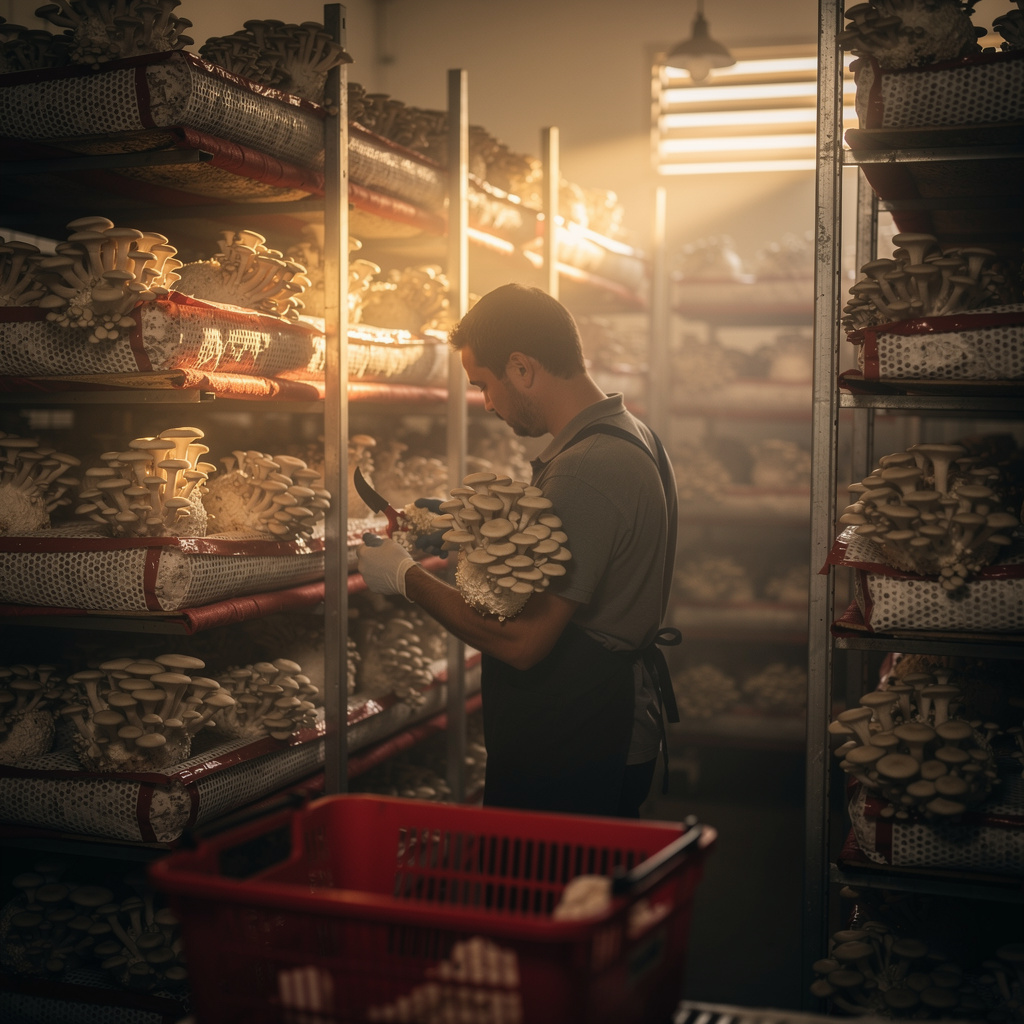
Mushroom farming is the controlled cultivation of edible and medicinal fungi for commercial or personal use, encompassing everything from species selection and substrate formulation to environmental regulation and harvest logistics. Unlike conventional crop farming, mushrooms are grown on organic matter such as sawdust, straw, or agricultural waste, and they require precise management of temperature, humidity, light, and air exchange. The discipline draws on microbiology, mycology, and horticultural engineering, making it a uniquely technical branch of agriculture.
Today, mushroom farming has gained significant relevance as consumers seek sustainable, protein-rich, and low-footprint food sources, and as chefs and health-conscious buyers drive demand for varieties like oyster, shiitake, and lion's mane. The industry has also seen a shift toward indoor vertical farming and upcycled agricultural byproducts, positioning mushroom cultivation as a model of circular agriculture. For entrepreneurs, it offers a relatively low-cost entry into specialty food production, while for researchers and policy makers, it represents a scalable solution to food security and waste reduction.
Mastering mushroom farming builds a skill stack that includes sterile technique, environmental control, biological problem-solving, and small-business operations—competencies that are transferable to roles in agritech, food production, and sustainable agriculture. Whether you are pursuing a commercial farm, a community food project, or a research path, the subject equips you with the ability to design, troubleshoot, and optimize a living production system. The knowledge gained here empowers growers to move from idea to harvest with confidence and resilience.
Common Questions About Starting a Mushroom Farm
Can a total beginner start this mushroom farm training without experience?
How long does the mushroom farming course take to complete?
How do I choose the right mushroom species for my farm?
What is the difference between colonization and fruiting conditions?
How does substrate moisture affect my mushroom harvest?
How can I prevent Trichoderma contamination in my mushroom farm?
- Sterilize substrate properly to eliminate competing organisms.
- Maintain strict hygiene in your grow room, including hand washing and footbaths.
- Control airflow to keep CO2 low and avoid stagnant pockets.
- Monitor humidity and temperature to avoid stress on mycelium.
- Isolate affected areas immediately to prevent spread.
- Design for compartmentalization so each production stage is physically separated.
Do mushrooms really need to be grown in a dark room?
What Will This Course Bring You?
- Evaluate the financial feasibility of a mushroom farm by analyzing startup costs, operating expenses, and projected revenue.
- Design a mushroom farm layout that optimizes space utilization and environmental control for chosen species.
- Apply proper substrate formulation and sterilization techniques to create a suitable growth medium for mushroom cultivation.
- Implement sterile inoculation procedures to produce high-quality spawn for consistent mushroom yields.
- Control temperature, humidity, and CO2 levels to trigger and sustain fruiting in different mushroom species.
- Execute proper harvesting and post-harvest handling techniques to maximize shelf life and product quality.
- Identify common pests, diseases, and contamination sources in mushroom farms and apply preventive and corrective measures.
- Develop a marketing plan that targets appropriate sales channels for fresh and processed mushroom products.
Curriculum
12 Units1. Mushroom Farming Overview
1 hour
2. Mushroom Biology and Growing Conditions
30 minutes
3. Selecting Mushroom Species for Your Farm
1 hour
4. Business Planning and Feasibility
1 hour
5. Farm Setup and Infrastructure
1 hour
6. Substrate Preparation
1 hour
7. Inoculation and Spawn Production
1 hour
8. Fruiting and Environmental Control
1 hour
9. Harvesting and Post-Harvest Handling
1 hour
10. Pest, Disease, and Contamination Management
1 hour
11. Marketing and Sales Channels
1 hour
12. Scaling and Long-Term Sustainability
1 hour
Exam – Starting a Mushroom Farm
20 Questions • 70% Pass • 30 min
Unlock All Units for Free
Create an account, enroll in the course, and start with the first unit right away.
Exam – Starting a Mushroom Farm
20 Questions • Pass: 70% • 30 min
Course Duration
690
Total Minutes
12
Unit
1
Final Exam
~58
Min / Unit
Starting a Mushroom Farm Certificate Program
Document Your Skill
Those who pass the 20-question, 30-minute exam with 70% receive the Starting a Mushroom Farm Certificate.
Stand Out on Your CV
By adding your certificate to your CV, gain a professional reference in job applications and stand out from the crowd.
Career Advantage
With the verification code, employers can check your certificate instantly — a concrete way to show your growth.
CERTIFICATE FEE
At the end of the course, an online exam consisting of 20 questions with a 30-minute time limit is given. The exam appears automatically after you complete the topics. Anyone who scores at least 70 out of 100 on the certificate exam is awarded the Starting a Mushroom Farm Document (certificate of attendance). You can add the certificate you earn to your CV for job applications in the many sectors listed above, and use it as a reference proving that you took this interactive course.
The Certificate of Achievement you receive with the Starting a Mushroom Farm course program holds value that proves your personal and professional development in the business world. By adding it to your CV, it can serve as an important reference in your job applications. Moreover, compared with certificates from other private training institutions, Catch Wisdom certificates are offered to our participants at a much more affordable price.
The Starting a Mushroom Farm course certificate is a document that proves, with a unique verification code, that you completed the course. Employers can instantly check its authenticity with this code, which helps you show your development concretely in your job applications.
For more information, we recommend visiting the Support page.
Certificate in 7 Languages
Earning success certificates from our courses is now more meaningful and global. With certificates available in Turkish, English, German, French, Spanish, Arabic, and Russian, we fully unlock the potential of students worldwide.
Why Certificate in 7 Languages?
-
01
Global Skill Development
Receiving your certificates in 7 different languages strengthens your communication skills as you engage with more people worldwide. It lets you operate more confidently and capably on the international stage.
-
02
International Job Opportunities
Employers may see your certificates in multiple languages as a sign of your ability to seize global opportunities. You can open more doors to new jobs and projects.
-
03
Cultural Richness
The chance to earn certificates in different languages helps you build closer ties with various cultures and broadens your worldview. It enriches your global perspective and deepens cultural understanding.
-
04
Ability to Participate in International Projects
Multilingual certificates give you an edge to work more effectively on international projects. They boost your chances of leadership and participation in diverse projects in the business world.
-
05
Prove Yourself on the Global Stage
Certificates in multiple languages give you the opportunity to present your skills and knowledge worldwide.
Language diversity opens worldwide opportunities. If you want to prove yourself in the international arena, join our online Starting a Mushroom Farm course program and begin this journey with us.
Frequently Asked Questions (FAQ)
Is this course paid?
How do I join the course?
Can I take the course at my own pace?
How can I get my certificate?
What are the advantages of the certificate?
Boost Your Career
Take a new career step with the Starting a Mushroom Farm course. Add your certificate to your CV, stand out in job applications, and open the door to new opportunities in the industry.
StartStudent Reviews
No reviews yet
Enroll in this course and be the first to leave a review about your experience with Starting a Mushroom Farm.
Start