What is Agricultural Robot Operations?
Agricultural Robot Operations Training
The Agricultural Robot Operations certificate program delivers a hands-on, comprehensive curriculum designed for agronomists, farm managers, agricultural engineers, and technicians who want to master the deployment and management of robotic systems in modern farming. You will learn to operate, program, and troubleshoot a wide range of agricultural robots—from autonomous tractors and weeding bots to precision planters and harvesting arms—while gaining the practical skills needed to integrate these machines into real-world crop production workflows. By the end of the program, you will be able to plan and execute robotic field operations, interpret sensor data for decision support, and maintain fleet performance under variable field conditions.
The program is structured as a beginner-friendly progression that starts with the core principles of agricultural robotics—mobility, perception, and manipulation—then builds into specialized applications such as precision seeding, targeted weeding, and robotic harvesting. Each lesson balances theoretical foundations with simulated or field-based exercises, covering four core skill areas: robot operation and navigation, sensor integration and data analysis, multi-robot fleet coordination, and safety/regulatory compliance. With the rapid adoption of automation in agriculture and the growing need for sustainable, labor-efficient practices, this training equips you with the exact competencies that employers and farm enterprises are seeking right now.
What is Agricultural Robot Operations?
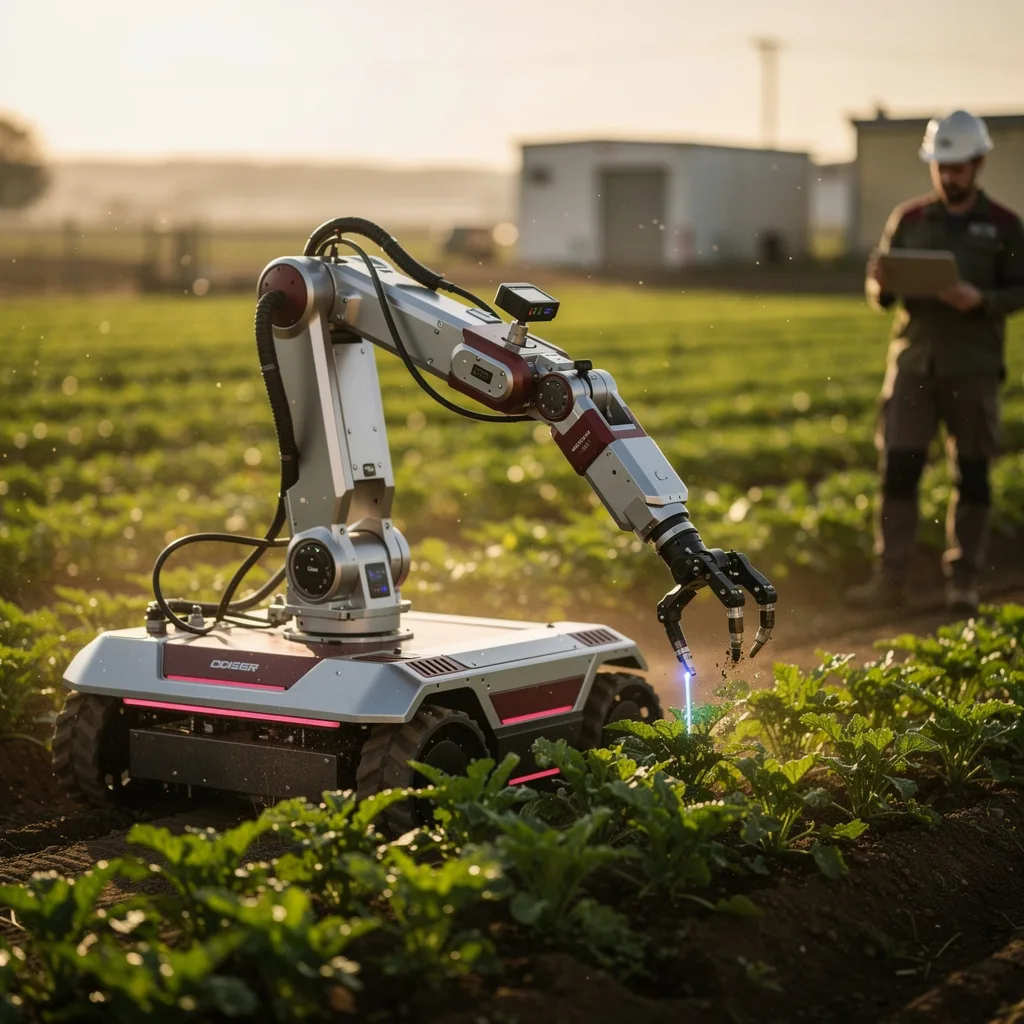
Agricultural Robot Operations is the discipline of designing, deploying, and managing autonomous or semi-autonomous machines that perform tasks in crop production, from soil preparation and planting through weeding, spraying, harvesting, and post-harvest handling. Core concepts include robot mobility (wheeled, tracked, or legged platforms), navigation using GPS and computer vision, perception through cameras and LiDAR, and manipulation via specialized end-effectors for gripping, cutting, or dispensing. The field integrates robotics, agronomy, and data science to create systems that can sense their environment, make decisions, and act with minimal human intervention.
Today, agricultural robotics is a critical response to labor shortages, rising input costs, and the demand for precision agriculture that reduces chemical use and environmental impact. Real-world applications range from autonomous weeding robots in vegetable fields and robotic fruit pickers in orchards to drone-based crop scouting and multi-robot fleets that coordinate planting and spraying across large acreages. Recent advances in AI, edge computing, and 5G connectivity have accelerated the shift from experimental prototypes to commercially viable systems used by major agribusinesses and progressive family farms alike.
Mastering Agricultural Robot Operations builds a versatile skill stack that combines mechanical and electrical engineering knowledge, software programming for navigation and control, data analytics for yield mapping and predictive maintenance, and an understanding of crop science and farm logistics. This expertise is directly applicable to roles such as robotics field engineer, precision agriculture specialist, farm automation manager, and ag-tech consultant. It also empowers entrepreneurs and researchers to innovate in the rapidly growing ag-robotics sector, where the ability to operate and optimize these systems is becoming a baseline requirement for modern agricultural professionals.
Common Questions About Agricultural Robot Operations
Can beginners with no robotics background join Agricultural Robot Operations training?
Is Agricultural Robot Operations training suitable for farm managers?
How does RTK GPS improve row following in precision planting?
What is the role of soft robotic end-effectors in harvesting?
How do agricultural robots detect weeds using AI?
- Detection: Cameras or sensors capture images of the field.
- Classification: AI models identify weed species and locations.
- Action: The robot applies targeted weeding (mechanical, chemical, or thermal).
Why is depth control critical for uniform germination?
Do agricultural robots completely replace human labor in farming?
What Will This Course Bring You?
- Apply principles of mobility and navigation to program a robot's path planning in a field environment.
- Evaluate sensor data from perception systems to identify crop health and weed presence.
- Design a precision planting operation using end-effector selection and seed placement algorithms.
- Implement a weeding strategy using robotic manipulation and real-time detection.
- Analyze post-harvest data to optimize harvesting efficiency and reduce crop damage.
- Configure a multi-robot fleet coordination system for simultaneous field operations.
- Evaluate safety protocols and regulatory compliance for autonomous agricultural robots.
- Troubleshoot common field issues in agricultural robot systems using diagnostic tools.
Curriculum
12 Units1. Fundamentals of Agricultural Robots
1 hour
2. Mobility and Navigation Systems
1 hour
3. Perception and Sensing Technologies
1 hour
4. Manipulation and End-Effectors
1 hour
5. Precision Planting and Seeding Operations
1 hour
6. Weeding and Crop Management Operations
1 hour
7. Harvesting and Post-Harvest Operations
1 hour
8. Data Collection and Analysis for Decision Support
1 hour
9. Fleet Management and Multi-Robot Coordination
1 hour
10. Safety, Regulations, and Ethical Considerations
1 hour
11. Maintenance, Troubleshooting, and Field Support
1 hour
12. Future Trends and Emerging Technologies
1 hour
Exam – Agricultural Robot Operations
20 Questions • 70% Pass • 30 min
Unlock All Units for Free
Create an account, enroll in the course, and start with the first unit right away.
Exam – Agricultural Robot Operations
20 Questions • Pass: 70% • 30 min
Course Duration
720
Total Minutes
12
Unit
1
Final Exam
~60
Min / Unit
Agricultural Robot Operations Certificate Program
Document Your Skill
Those who pass the 20-question, 30-minute exam with 70% receive the Agricultural Robot Operations Certificate.
Stand Out on Your CV
By adding your certificate to your CV, gain a professional reference in job applications and stand out from the crowd.
Career Advantage
With the verification code, employers can check your certificate instantly — a concrete way to show your growth.
CERTIFICATE FEE
At the end of the course, an online exam consisting of 20 questions with a 30-minute time limit is given. The exam appears automatically after you complete the topics. Anyone who scores at least 70 out of 100 on the certificate exam is awarded the Agricultural Robot Operations Document (certificate of attendance). You can add the certificate you earn to your CV for job applications in the many sectors listed above, and use it as a reference proving that you took this interactive course.
The Certificate of Achievement you receive with the Agricultural Robot Operations course program holds value that proves your personal and professional development in the business world. By adding it to your CV, it can serve as an important reference in your job applications. Moreover, compared with certificates from other private training institutions, Catch Wisdom certificates are offered to our participants at a much more affordable price.
The Agricultural Robot Operations course certificate is a document that proves, with a unique verification code, that you completed the course. Employers can instantly check its authenticity with this code, which helps you show your development concretely in your job applications.
For more information, we recommend visiting the Support page.
Certificate in 7 Languages
Earning success certificates from our courses is now more meaningful and global. With certificates available in Turkish, English, German, French, Spanish, Arabic, and Russian, we fully unlock the potential of students worldwide.
Why Certificate in 7 Languages?
-
01
Global Skill Development
Receiving your certificates in 7 different languages strengthens your communication skills as you engage with more people worldwide. It lets you operate more confidently and capably on the international stage.
-
02
International Job Opportunities
Employers may see your certificates in multiple languages as a sign of your ability to seize global opportunities. You can open more doors to new jobs and projects.
-
03
Cultural Richness
The chance to earn certificates in different languages helps you build closer ties with various cultures and broadens your worldview. It enriches your global perspective and deepens cultural understanding.
-
04
Ability to Participate in International Projects
Multilingual certificates give you an edge to work more effectively on international projects. They boost your chances of leadership and participation in diverse projects in the business world.
-
05
Prove Yourself on the Global Stage
Certificates in multiple languages give you the opportunity to present your skills and knowledge worldwide.
Language diversity opens worldwide opportunities. If you want to prove yourself in the international arena, join our online Agricultural Robot Operations course program and begin this journey with us.
Frequently Asked Questions (FAQ)
Is this course paid?
How do I join the course?
Can I take the course at my own pace?
How can I get my certificate?
What are the advantages of the certificate?
Boost Your Career
Take a new career step with the Agricultural Robot Operations course. Add your certificate to your CV, stand out in job applications, and open the door to new opportunities in the industry.
StartStudent Reviews
No reviews yet
Enroll in this course and be the first to leave a review about your experience with Agricultural Robot Operations.
Start