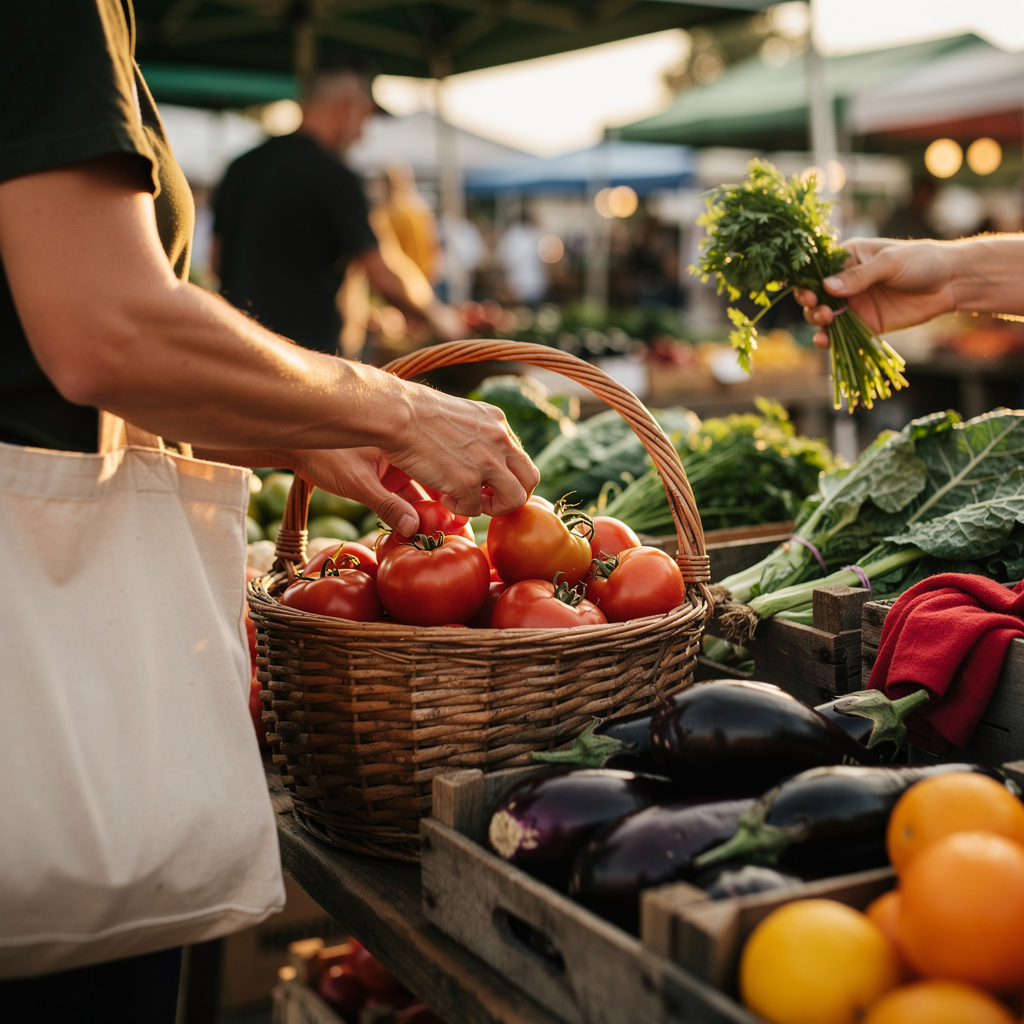
What is Farmers Market Shopping?
Farmers Market Shopping Training
The Farmers Market Shopping certificate program teaches you how to navigate local farmers markets with confidence, from locating your nearest market to understanding seasonal produce and selecting the freshest fruits and vegetables. This course is designed for home cooks, budget-conscious shoppers, food enthusiasts, and anyone seeking a direct connection with local food producers. By the end of the program, you will have a complete system for shopping at farmers markets efficiently, budgeting effectively, and transforming your market haul into well-planned, delicious meals.
The program is structured as a beginner-friendly progression that balances practical knowledge with actionable strategies across four core skill areas: market navigation, product selection, financial planning, and food preservation. You will explore topics such as asking farmers the right questions, comparing prices across vendors, storing and preserving your market finds, and meal planning around what is seasonally available. With the growing interest in local food systems and sustainable eating, this program equips you to make farmers markets a lasting habit that benefits your health, your wallet, and your community.
What is Farmers Market Shopping?
Farmers market shopping is the practice of purchasing fresh, locally grown produce and artisanal food products directly from the farmers and vendors who produce them. It encompasses a wide range of activities, from identifying which fruits and vegetables are in season to evaluating the quality of meats, dairy, eggs, and specialty items like honey, baked goods, and preserves. Core concepts include seasonal eating, direct producer-consumer relationships, and understanding the journey of food from farm to table.
In today's food landscape, farmers market shopping has gained renewed importance as consumers increasingly seek transparency about where their food comes from and how it is produced. Farmers markets serve as vital hubs in local economies, supporting small-scale agriculture and reducing the carbon footprint associated with long-distance food transportation. Recent shifts toward farm-to-table dining, community-supported agriculture, and a growing awareness of food waste have made farmers markets more relevant than ever in both urban and rural settings.
Mastering farmers market shopping builds a versatile skill stack that includes seasonal produce knowledge, sensory evaluation techniques for freshness, budgeting and price comparison, and creative meal planning around market finds. These skills are valuable not only for home cooks and food enthusiasts but also for culinary professionals, dietitians, nutrition educators, and anyone involved in local food advocacy. The ability to shop seasonally and preserve food effectively translates into tangible personal benefits such as lower grocery bills, healthier eating habits, and a deeper appreciation for the rhythms of local agriculture.
Common Questions About Farmers Market Shopping
How does the Farmers Market Shopping certificate boost my resume?
Can a complete beginner join the Farmers Market Shopping course?
Why is seasonal produce important at farmers markets?
How do I use sight, touch, and smell to pick fresh fruits?
What is the cold chain and why does it matter for dairy?
How can I ask farmers the right questions about their produce?
Is farmers market produce always organic?
What Will This Course Bring You?
- Evaluate the economic, environmental, and social benefits of shopping at farmers markets.
- Locate your local farmers market using online directories, community boards, and word-of-mouth.
- Apply practical strategies for a successful first visit, including what to bring and how to navigate the market layout.
- Analyze seasonal produce calendars to determine what fruits and vegetables are in peak season in your area.
- Implement sensory-based techniques (sight, touch, smell) to select the freshest fruits and vegetables.
- Assess the quality and sourcing of meat, dairy, eggs, and specialty items by asking farmers targeted questions about their practices.
- Create a budget and compare prices across vendors to maximize value while supporting local producers.
- Design a storage and preservation plan to extend the shelf life of your market haul and reduce food waste.
Curriculum
12 Units1. Why Shop at Farmers Markets?
1 hour
2. Finding Your Local Farmers Market
1 hour
3. What to Expect on Your First Visit
1 hour
4. Understanding Seasonal Produce
1 hour
5. Selecting the Freshest Fruits and Vegetables
1 hour
6. Meat, Dairy, Eggs, and Specialty Vendors
1 hour
7. Asking Farmers the Right Questions
1 hour
8. Budgeting and Price Comparison
1 hour
9. Storing and Preserving Your Market Haul
1 hour
10. Meal Planning Around Market Finds
1 hour
11. Navigating Crowds, Bags, and Logistics
1 hour
12. Making Farmers Markets a Habit
1 hour
Exam – Farmers Market Shopping
20 Questions • 70% Pass • 30 min
Unlock All Units for Free
Create an account, enroll in the course, and start with the first unit right away.
Exam – Farmers Market Shopping
20 Questions • Pass: 70% • 30 min
Course Duration
720
Total Minutes
12
Unit
1
Final Exam
~60
Min / Unit
Farmers Market Shopping Certificate Program
Document Your Skill
Those who pass the 20-question, 30-minute exam with 70% receive the Farmers Market Shopping Certificate.
Stand Out on Your CV
By adding your certificate to your CV, gain a professional reference in job applications and stand out from the crowd.
Career Advantage
Catch Wisdom certificates are recognized by HR departments and increase career opportunities.
CERTIFICATE FEE
At the end of the course, an online exam consisting of 20 questions with a 30-minute time limit is given. The exam appears automatically after you complete the topics. Anyone who scores at least 70 out of 100 on the certificate exam is awarded the Farmers Market Shopping Document (certificate of attendance). You can add the certificate you earn to your CV for job applications in the many sectors listed above, and use it as a reference proving that you took this interactive course.
The Certificate of Achievement you receive with the Farmers Market Shopping course program holds value that proves your personal and professional development in the business world. By adding it to your CV, it can serve as an important reference in your job applications. Moreover, compared with certificates from other private training institutions, Catch Wisdom certificates are offered to our participants at a much more affordable price.
Because HR departments recognize Catch Wisdom as a reputable institution in this field, they value these certificates and may evaluate your job applications favorably. For this reason, a Farmers Market Shopping course certificate from Catch Wisdom can make your applications more attractive and place you in an advantageous position in the business world.
For more information, we recommend visiting the Support page.
Certificate in 7 Languages
Earning success certificates from our courses is now more meaningful and global. With certificates available in Turkish, English, German, French, Spanish, Arabic, and Russian, we fully unlock the potential of students worldwide.
Why Certificate in 7 Languages?
-
01
Global Skill Development
Receiving your certificates in 7 different languages strengthens your communication skills as you engage with more people worldwide. It lets you operate more confidently and capably on the international stage.
-
02
International Job Opportunities
Employers may see your certificates in multiple languages as a sign of your ability to seize global opportunities. You can open more doors to new jobs and projects.
-
03
Cultural Richness
The chance to earn certificates in different languages helps you build closer ties with various cultures and broadens your worldview. It enriches your global perspective and deepens cultural understanding.
-
04
Ability to Participate in International Projects
Multilingual certificates give you an edge to work more effectively on international projects. They boost your chances of leadership and participation in diverse projects in the business world.
-
05
Prove Yourself on the Global Stage
Certificates in multiple languages let you showcase your skills and knowledge worldwide. You can become an internationally recognized professional.
Language diversity opens worldwide opportunities. If you want to prove yourself in the international arena, join our online Farmers Market Shopping course program and begin this journey with us.
Frequently Asked Questions (FAQ)
Is this course paid?
How do I join the course?
Can I take the course at my own pace?
How can I get my certificate?
What are the advantages of the Certified Certificate?
Boost Your Career
Take a new career step with the Farmers Market Shopping course. Add your certificate to your CV, stand out in job applications, and open the door to new opportunities in the industry.
StartStudent Reviews
No reviews yet
Enroll in this course and be the first to leave a review about your experience with Farmers Market Shopping.
Start