What is Agronomy Fundamentals?
Agronomy Fundamentals Certificate Program
The Agronomy Fundamentals certificate program teaches the scientific and practical foundations of managing field crops and soils, from soil formation and fertility through crop physiology, water management, weed and pest control, cropping systems, conservation, and precision agriculture. It is designed for aspiring agronomists, farm managers, agricultural technicians, extension advisers, sustainability coordinators, and students who need a structured entry point into field-crop production. Learners work through the relationships among soil chemistry, plant nutrition, water availability, crop development, and environmental adaptation rather than treating each topic as an isolated fact. The main practical outcome is the ability to interpret soil, water, crop, and pest information and use it to support sound field-level decisions.
The program is organized as a beginner-friendly progression: it begins with the scope of agronomy and soil fundamentals, moves into soil chemistry, water, crop growth, ecology, and establishment, then extends into weed, insect, and disease management, cropping systems, conservation, and precision agriculture. Theory is balanced with applied reasoning through soil and water assessment, crop monitoring, pest diagnosis, rotation planning, and data-informed field decisions. Across the lessons, participants build five core skill areas: soil and water management, crop biology and establishment, integrated pest and weed management, sustainable cropping-system design, and precision agriculture analysis. This structure suits learners who need both a broad conceptual map and practical decision frameworks, and it is timely because rising input costs, climate variability, soil degradation, and data-rich farming systems are increasing demand for agronomic literacy.
What is Agronomy Fundamentals?
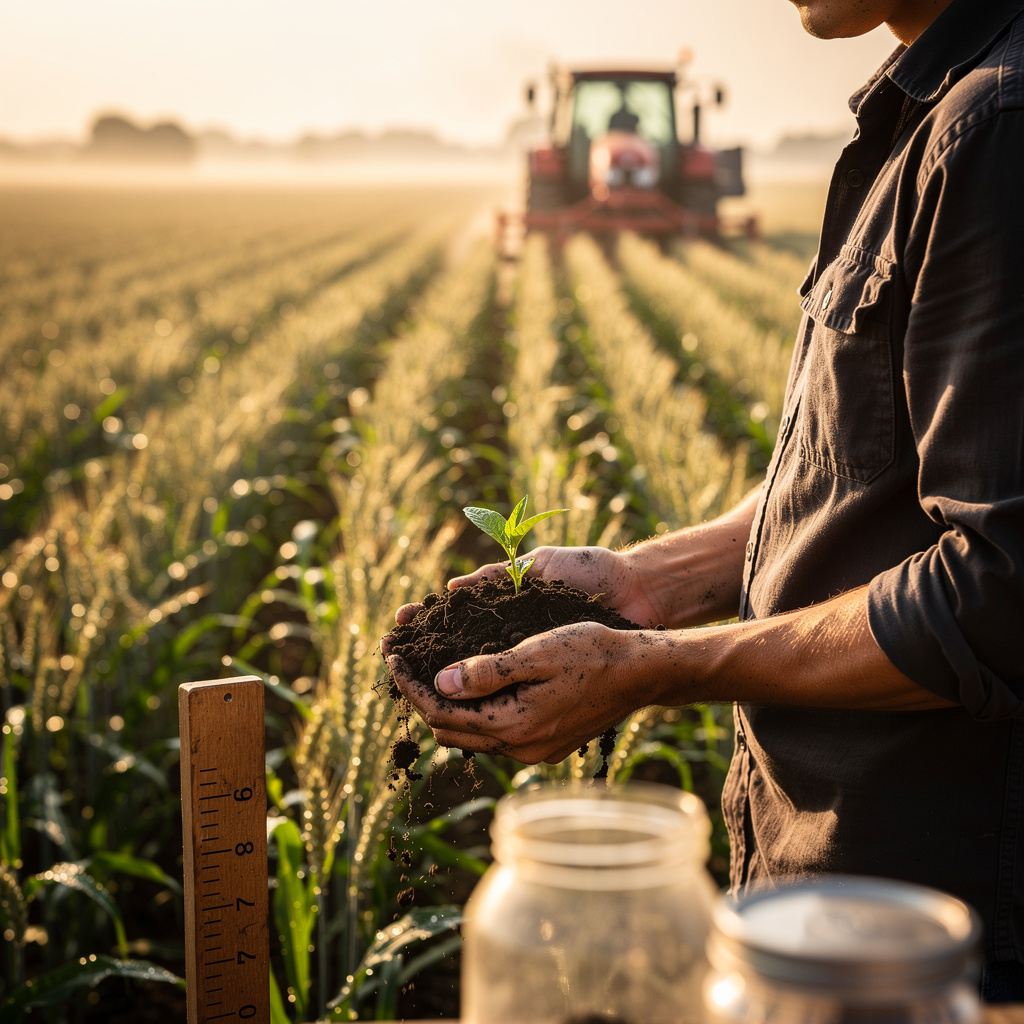
Agronomy is the science and management of field-crop production and the soil systems that support it, connecting plant biology, soil physics and chemistry, water relations, ecology, and pest dynamics into a single applied discipline. Its scope ranges from how soils form and behave to how nutrients become available, how water moves through the root zone, how crops grow and adapt, and how weeds, insects, and diseases interact with cropping systems. Core concepts include soil fertility and plant nutrition, water balance and irrigation principles, crop physiology and establishment, environmental adaptation, integrated pest management, rotation design, and conservation of soil resources. Precision agriculture adds a data-driven layer, using field observations, sensors, and spatial information to refine management decisions.
Agronomy matters today because food and fiber systems must produce more reliably under climate variability, water scarcity, rising input costs, and pressure to reduce soil degradation and environmental harm. In industry, agronomists support farm management, input selection, irrigation scheduling, crop protection, and sustainability reporting; in academia and extension, they translate soil and crop science into field recommendations and decision tools. Recent shifts toward precision agriculture, remote sensing, variable-rate inputs, cover cropping, and conservation-oriented practices are changing how agronomic information is collected and applied. These changes make agronomic literacy relevant not only on farms but also in agribusiness, policy, research, and environmental management.
Mastery of agronomy builds a skill stack that combines diagnostic reasoning with practical planning: interpreting soil tests and fertility constraints, estimating water needs, recognizing crop stress and pest pressure, designing rotations, and using spatial data to guide interventions. This skill stack is valuable in farm advisory roles, agribusiness and input management, conservation and sustainability programs, agricultural research, and extension services, where decisions must balance productivity, cost, and resource protection. It also benefits professionals in related fields, such as land management, environmental planning, and food supply chains, who need to understand how field-level agronomy shapes broader outcomes. The subject therefore provides a durable foundation for connecting scientific principles to real-world crop and soil management.
What Will This Course Bring You?
- Classify major soil orders and evaluate how parent material, climate, and topography shape physical properties used in agronomic land assessment.
- Interpret soil test results to formulate fertilizer and amendment recommendations that correct nutrient deficiencies and maintain plant-available fertility.
- Apply soil water balance principles to schedule irrigation that meets crop evapotranspiration demand while minimizing drainage and runoff losses.
- Analyze crop developmental stages and physiological responses to diagnose how heat, drought, and nutrient stress reduce field crop yield.
- Develop a weed management strategy that integrates scouting, cultural practices, mechanical control, and herbicide resistance considerations for field crops.
- Evaluate insect pest and disease populations using scouting thresholds to select integrated control tactics that protect crop health and beneficial organisms.
- Design diversified crop rotations and conservation practices that reduce soil erosion, improve soil health, and sustain agronomic productivity.
- Use precision agriculture data and site-specific management tools to evaluate field variability and recommend data-driven crop input decisions.
Curriculum
12 Units1. Foundations of Agronomy: Scope and Global Context
1 hour
2. Soil Formation, Classification, and Physical Properties
1 hour
3. Soil Chemistry, Fertility, and Plant Nutrition
1 hour
4. Soil Water Management and Irrigation Principles
1 hour
5. Crop Growth, Development, and Physiology
1 hour
6. Crop Ecology and Environmental Adaptation
1 hour
7. Seeds, Propagation, and Crop Establishment
1 hour
8. Weed Biology and Management
1 hour
9. Insect Pest and Disease Management
1 hour
10. Cropping Systems, Rotation, and Diversification
1 hour
11. Soil Conservation and Sustainable Agronomy
1 hour
12. Precision Agriculture and Data-Driven Decisions
1 hour
Exam – Agronomy Fundamentals
20 Questions • 70% Pass • 30 min
Unlock All Units for Free
Create an account, enroll in the course, and start with the first unit right away.
Exam – Agronomy Fundamentals
20 Questions • Pass: 70% • 30 min
Course Duration
720
Total Minutes
12
Unit
1
Final Exam
~60
Min / Unit
Agronomy Fundamentals Certificate Program
Document Your Skill
Those who pass the 20-question, 30-minute exam with 70% receive the Agronomy Fundamentals Certificate.
Stand Out on Your CV
By adding your certificate to your CV, gain a professional reference in job applications and stand out from the crowd.
Career Advantage
With the verification code, employers can check your certificate instantly — a concrete way to show your growth.
CERTIFICATE FEE
At the end of the course, an online exam consisting of 20 questions with a 30-minute time limit is given. The exam appears automatically after you complete the topics. Anyone who scores at least 70 out of 100 on the certificate exam is awarded the Agronomy Fundamentals Document (certificate of attendance). You can add the certificate you earn to your CV for job applications in the many sectors listed above, and use it as a reference proving that you took this interactive course.
The Certificate of Achievement you receive with the Agronomy Fundamentals course program holds value that proves your personal and professional development in the business world. By adding it to your CV, it can serve as an important reference in your job applications. Moreover, compared with certificates from other private training institutions, Catch Wisdom certificates are offered to our participants at a much more affordable price.
The Agronomy Fundamentals course certificate is a document that proves, with a unique verification code, that you completed the course. Employers can instantly check its authenticity with this code, which helps you show your development concretely in your job applications.
For more information, we recommend visiting the Support page.
Certificate in 7 Languages
Earning success certificates from our courses is now more meaningful and global. With certificates available in Turkish, English, German, French, Spanish, Arabic, and Russian, we fully unlock the potential of students worldwide.
Why Certificate in 7 Languages?
-
01
Global Skill Development
Receiving your certificates in 7 different languages strengthens your communication skills as you engage with more people worldwide. It lets you operate more confidently and capably on the international stage.
-
02
International Job Opportunities
Employers may see your certificates in multiple languages as a sign of your ability to seize global opportunities. You can open more doors to new jobs and projects.
-
03
Cultural Richness
The chance to earn certificates in different languages helps you build closer ties with various cultures and broadens your worldview. It enriches your global perspective and deepens cultural understanding.
-
04
Ability to Participate in International Projects
Multilingual certificates give you an edge to work more effectively on international projects. They boost your chances of leadership and participation in diverse projects in the business world.
-
05
Prove Yourself on the Global Stage
Certificates in multiple languages give you the opportunity to present your skills and knowledge worldwide.
Language diversity opens worldwide opportunities. If you want to prove yourself in the international arena, join our online Agronomy Fundamentals course program and begin this journey with us.
Frequently Asked Questions (FAQ)
Is this course paid?
How do I join the course?
Can I take the course at my own pace?
How can I get my certificate?
What are the advantages of the certificate?
Boost Your Career
Take a new career step with the Agronomy Fundamentals course. Add your certificate to your CV, stand out in job applications, and open the door to new opportunities in the industry.
StartStudent Reviews
No reviews yet
Enroll in this course and be the first to leave a review about your experience with Agronomy Fundamentals.
Start