What is Aquarium Keeping?
Aquarium Keeping Certificate Program
The Aquarium Keeping certificate program is a practical training path for anyone who wants to design, run, and maintain a healthy home aquarium with confidence. Across the lessons, it covers essential equipment and setup, water chemistry fundamentals, the nitrogen cycle and tank cycling, healthy fish selection and acclimation, feeding schedules and portions, routine maintenance and water changes, planted decor choices, common disease identification and treatment, troubleshooting, safety, and sustainable hobby practices. It is designed for new aquarium owners, returning hobbyists, classroom or household caregivers, and anyone who wants a structured alternative to trial-and-error fish keeping. The main practical outcome is the ability to set up and sustain a stable aquarium, spot early warning signs, and make calm, informed decisions when water quality, fish health, or equipment issues arise.
The program is organized as a beginner-friendly progression: it starts with the purpose and types of aquariums, then moves through equipment, water chemistry, and cycling before introducing livestock, feeding, maintenance, aquascaping, disease care, troubleshooting, safety, and long-term sustainability. Each stage balances explanatory theory with practical routines, so learners connect concepts such as ammonia, nitrite, nitrate, pH, and filtration to real tasks like testing water, changing water, quarantining fish, and adjusting feeding. It builds four core skill areas: system planning and setup, water quality and biological filtration management, livestock care and health observation, and maintenance plus emergency response. People choose this program now because aquarium information is abundant but often fragmented, and a structured path helps hobbyists avoid costly mistakes, improve animal welfare, and enjoy a more sustainable tank long term.
What is Aquarium Keeping?
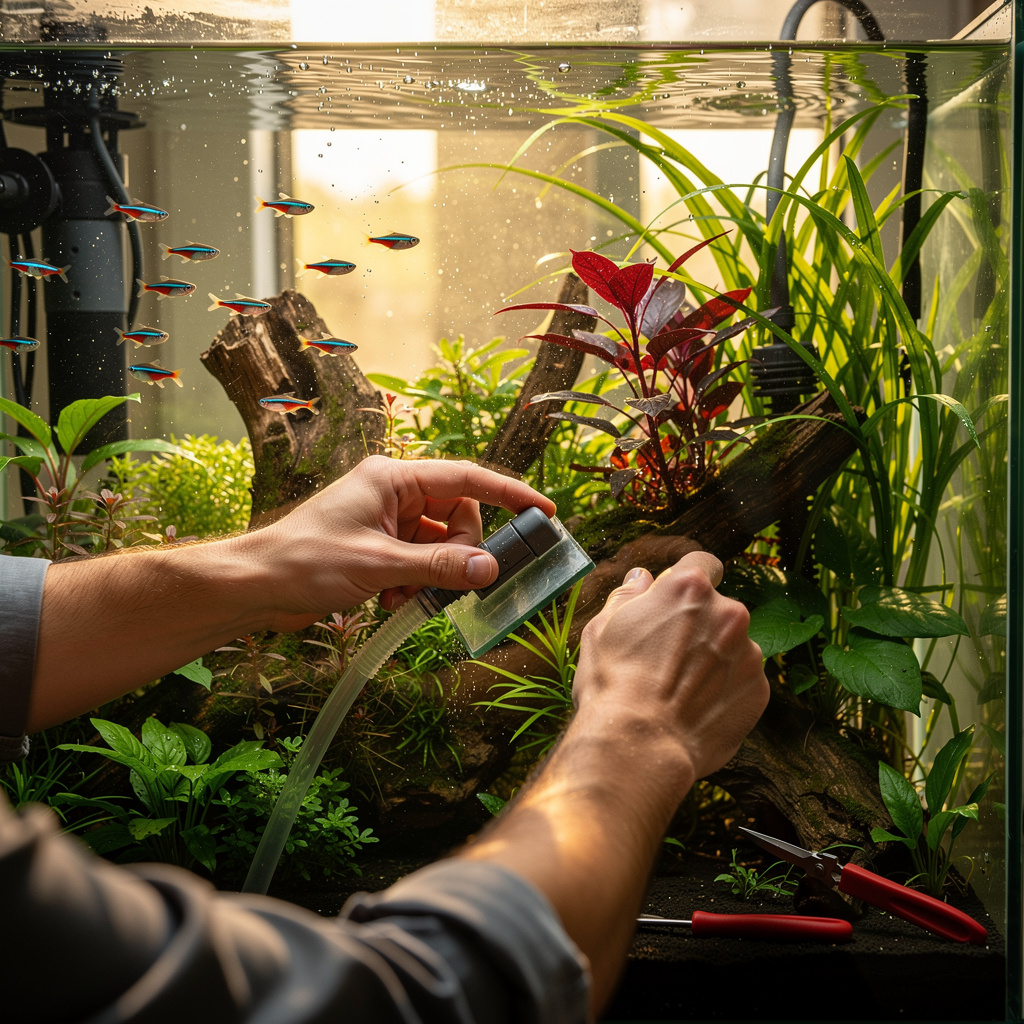
Aquarium keeping is the practice of maintaining aquatic organisms—fish, plants, and sometimes invertebrates—in a controlled indoor water system. Its scope spans tank design and equipment selection, water chemistry, biological filtration, species compatibility, nutrition, disease management, aquascaping, and routine maintenance. Core concepts include the nitrogen cycle, beneficial bacteria, pH and hardness, temperature stability, dissolved oxygen, stocking density, quarantine, and the relationship between water quality and animal health. It is both a technical discipline and a caregiving hobby, because success depends on understanding biological processes and consistently observing and responding to the aquarium's condition.
Aquarium keeping matters today because it brings ecology, chemistry, and animal husbandry into everyday life, giving people a direct view of how closed biological systems behave. It is used in homes, schools, public aquariums, veterinary and aquatic health contexts, retail aquarium businesses, and conservation education, while academic and hobbyist communities continue to study fish welfare, breeding, aquascaping, and sustainable livestock sourcing. Recent shifts include greater emphasis on animal welfare, quarantine and biosecurity, energy-efficient equipment, live plant systems, and responsible sourcing rather than purely decorative displays. At the same time, digital water testing, online communities, and accessible equipment have made the hobby more approachable, but also more dependent on reliable guidance and evidence-based practices.
Mastering aquarium keeping builds a skill stack that combines system planning, water testing and interpretation, biological filtration management, livestock observation, feeding discipline, maintenance scheduling, disease recognition, and emergency decision-making. These skills benefit personal hobbyists who want healthier tanks, educators who use aquariums for science learning, pet-care and aquarium retail staff who advise customers, and anyone moving toward aquatic animal care, aquascaping, or conservation communication. The subject also develops transferable habits: patient observation, record keeping, cause-and-effect reasoning, and responsible resource use. Because aquariums are small managed ecosystems, the knowledge gained applies directly to real-world problem solving where water quality, living organisms, and equipment interact.
What Will This Course Bring You?
- Compare freshwater, saltwater, and planted aquarium types to select an appropriate setup for specific species and household constraints.
- Design a complete aquarium equipment plan that matches filter, heater, lighting, and tank size to the needs of selected fish.
- Interpret key water chemistry parameters, including pH, ammonia, nitrite, nitrate, and hardness, to determine whether aquarium conditions are safe.
- Explain the nitrogen cycle and implement a fishless or fish-in cycling procedure that establishes beneficial bacteria before adding sensitive species.
- Evaluate fish health indicators and apply a step-by-step acclimation method that reduces stress when introducing new fish to a tank.
- Calculate appropriate feeding portions and schedules for different fish species while avoiding overfeeding and maintaining water quality.
- Design and maintain a sustainable planted aquarium by selecting appropriate plants and decor, performing scheduled water changes, and minimizing resource waste.
- Diagnose common fish diseases and troubleshoot aquarium problems by matching symptoms to causes and selecting safe treatment or emergency actions.
Curriculum
12 Units1. Why Keep an Aquarium? Types and Basic Concepts
1 hour
2. Essential Aquarium Equipment and Setup
1 hour
3. Water Chemistry Fundamentals for Aquariums
1 hour
4. The Nitrogen Cycle and Cycling Your New Tank
1 hour
5. Choosing Healthy Fish and Acclimating Them
1 hour
6. Feeding Your Fish: Types, Schedules, and Portions
1 hour
7. Routine Aquarium Maintenance and Water Changes
1 hour
8. Aquarium Plants and Decor: Creating a Healthy Environment
1 hour
9. Common Fish Diseases: Identification and Treatment
1 hour
10. Troubleshooting Common Aquarium Problems
1 hour
11. Aquarium Safety and Emergency Preparedness
1 hour
12. Building a Sustainable Aquarium Hobby
1 hour
Exam – Aquarium Keeping
20 Questions • 70% Pass • 30 min
Unlock All Units for Free
Create an account, enroll in the course, and start with the first unit right away.
Exam – Aquarium Keeping
20 Questions • Pass: 70% • 30 min
Course Duration
720
Total Minutes
12
Unit
1
Final Exam
~60
Min / Unit
Aquarium Keeping Certificate Program
Document Your Skill
Those who pass the 20-question, 30-minute exam with 70% receive the Aquarium Keeping Certificate.
Stand Out on Your CV
By adding your certificate to your CV, gain a professional reference in job applications and stand out from the crowd.
Career Advantage
With the verification code, employers can check your certificate instantly — a concrete way to show your growth.
CERTIFICATE FEE
At the end of the course, an online exam consisting of 20 questions with a 30-minute time limit is given. The exam appears automatically after you complete the topics. Anyone who scores at least 70 out of 100 on the certificate exam is awarded the Aquarium Keeping Document (certificate of attendance). You can add the certificate you earn to your CV for job applications in the many sectors listed above, and use it as a reference proving that you took this interactive course.
The Certificate of Achievement you receive with the Aquarium Keeping course program holds value that proves your personal and professional development in the business world. By adding it to your CV, it can serve as an important reference in your job applications. Moreover, compared with certificates from other private training institutions, Catch Wisdom certificates are offered to our participants at a much more affordable price.
The Aquarium Keeping course certificate is a document that proves, with a unique verification code, that you completed the course. Employers can instantly check its authenticity with this code, which helps you show your development concretely in your job applications.
For more information, we recommend visiting the Support page.
Certificate in 7 Languages
Earning success certificates from our courses is now more meaningful and global. With certificates available in Turkish, English, German, French, Spanish, Arabic, and Russian, we fully unlock the potential of students worldwide.
Why Certificate in 7 Languages?
-
01
Global Skill Development
Receiving your certificates in 7 different languages strengthens your communication skills as you engage with more people worldwide. It lets you operate more confidently and capably on the international stage.
-
02
International Job Opportunities
Employers may see your certificates in multiple languages as a sign of your ability to seize global opportunities. You can open more doors to new jobs and projects.
-
03
Cultural Richness
The chance to earn certificates in different languages helps you build closer ties with various cultures and broadens your worldview. It enriches your global perspective and deepens cultural understanding.
-
04
Ability to Participate in International Projects
Multilingual certificates give you an edge to work more effectively on international projects. They boost your chances of leadership and participation in diverse projects in the business world.
-
05
Prove Yourself on the Global Stage
Certificates in multiple languages give you the opportunity to present your skills and knowledge worldwide.
Language diversity opens worldwide opportunities. If you want to prove yourself in the international arena, join our online Aquarium Keeping course program and begin this journey with us.
Frequently Asked Questions (FAQ)
Is this course paid?
How do I join the course?
Can I take the course at my own pace?
How can I get my certificate?
What are the advantages of the certificate?
Boost Your Career
Take a new career step with the Aquarium Keeping course. Add your certificate to your CV, stand out in job applications, and open the door to new opportunities in the industry.
StartStudent Reviews
No reviews yet
Enroll in this course and be the first to leave a review about your experience with Aquarium Keeping.
Start