What is Circular Textile Material Flows?
Circular Textile Material Flows Training
The Circular Textile Material Flows certificate program equips professionals with the knowledge and tools to transform the textile industry from a wasteful linear model to a regenerative circular system. This course covers the entire lifecycle of textiles—from design for circularity and reverse logistics to mechanical and chemical recycling, reuse, repair, and remanufacturing. It is designed for sustainability managers, product designers, supply chain specialists, and policy makers who want to operationalize circular principles in their organizations. By the end, participants will be able to map material flows, evaluate recycling technologies, and implement circular business models that reduce waste and create value.
The program is structured as a beginner-friendly progression that balances theoretical frameworks with hands-on case studies and economic analysis. It builds four core skill areas: lifecycle assessment, reverse logistics design, recycling technology evaluation, and circular business model innovation. With the EU's new textile regulations and the industry's urgent need to meet net-zero targets, this training provides the strategic edge needed to lead the transition to a circular textile economy.
What is Circular Textile Material Flows?
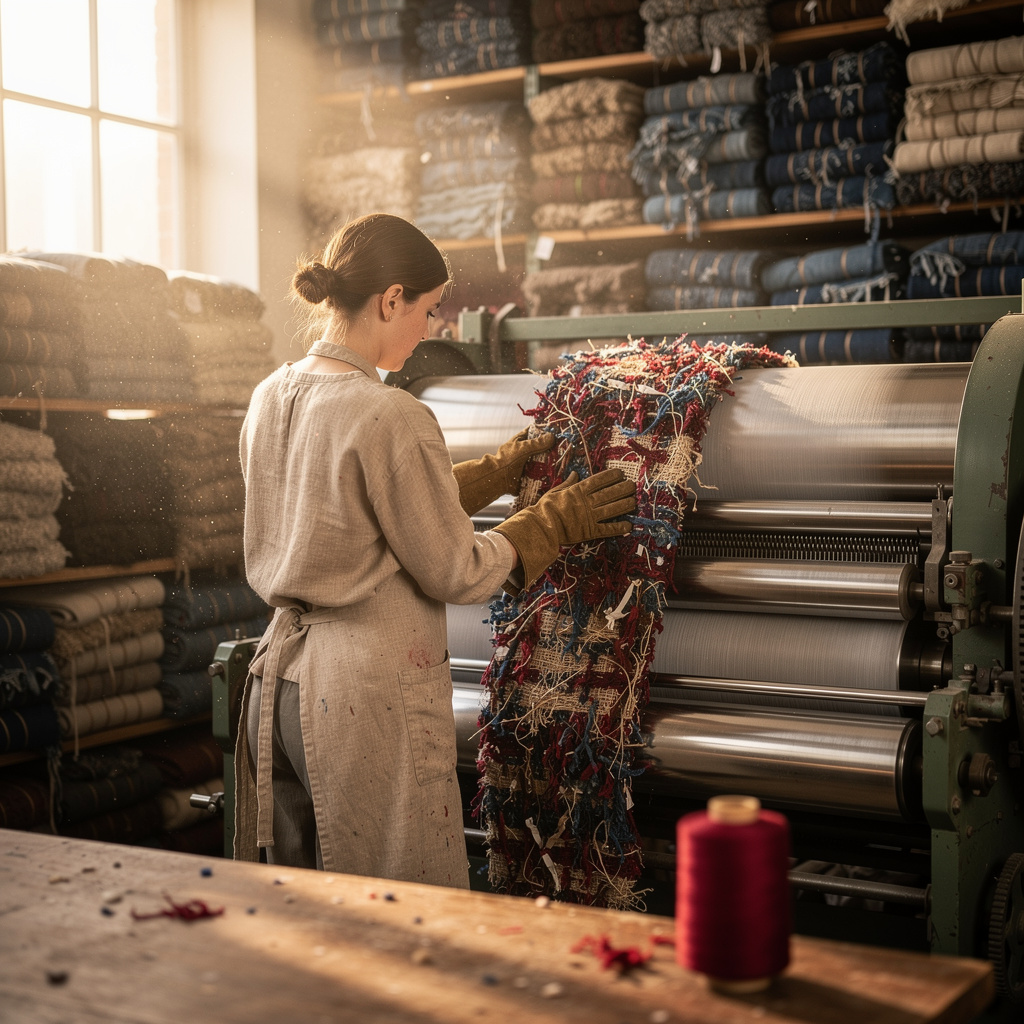
Circular textile material flows refer to the systematic management of textiles through a closed-loop system, where materials are kept in use at their highest value for as long as possible. It encompasses the entire value chain—from fiber production and design to collection, sorting, recycling, and remanufacturing. Core concepts include design for disassembly, reverse logistics, material grading, and the distinction between mechanical and chemical recycling processes.
The textile industry is one of the most polluting sectors globally, generating over 92 million tons of waste annually, with less than 1% of clothing recycled into new garments. Regulatory pressure, such as the EU's Strategy for Sustainable and Circular Textiles, and consumer demand for transparency are driving rapid adoption of circular practices. Real-world applications include take-back programs by brands like Patagonia, automated sorting facilities using near-infrared spectroscopy, and innovative chemical recycling plants that break down polyester to its monomers.
Mastering circular textile material flows builds a multidisciplinary skill stack that combines environmental science, supply chain management, and business strategy. Professionals who understand these flows can assess the environmental impact of products, design for recyclability, and develop profitable circular business models. This expertise is valuable in corporate sustainability roles, consultancy, policy development, and entrepreneurship, enabling individuals to drive systemic change in the fashion and textile industries.
Common Questions About Circular Textile Material Flows
Does the circular textile material flows certificate boost my CV for sustainability jobs?
Can beginners with no textile background start this circular textile course?
Why is NIR spectroscopy key for sorting textile waste in circular flows?
- Cotton and natural fibers can be separated from synthetics with high accuracy.
- Polyester and blends are identified even when dyes and finishes mask their appearance.
- Contaminated or multi-layer materials are flagged before they enter the wrong recycling stream.
How does mechanical recycling degrade fiber length in textile loops?
What's the difference between chemical recycling and dissolution for polyester?
How do EPR schemes fund collection of used textiles in the EU?
Is mechanical recycling always the best option for textile waste?
What Will This Course Bring You?
- Design circular textile products by applying strategies that prioritize durability, repairability, and recyclability.
- Evaluate the economic and operational feasibility of collection and reverse logistics systems for used textiles.
- Implement sorting and grading technologies to optimize material recovery and value retention in textile flows.
- Analyze mechanical recycling processes to determine their effectiveness in converting textile waste into reusable fibers.
- Assess chemical recycling and dissolution technologies for their potential to recover high-quality polymers from blended textiles.
- Develop value-retention models for reuse, repair, and remanufacturing to extend the lifecycle of textile products.
- Apply circular business models such as product-as-a-service and take-back schemes to textile supply chains.
- Measure circularity performance using life cycle assessment and key metrics to inform sustainability decisions.
Curriculum
12 Units1. From Linear to Circular: Textile Value Chains
1 hour
2. Textile Materials and Their Lifecycle Impacts
1 hour
3. Design for Circularity: Strategies and Principles
1 hour
4. Collection and Reverse Logistics for Used Textiles
1 hour
5. Sorting and Grading: Technologies and Economics
1 hour
6. Mechanical Recycling of Textiles
1 hour
7. Chemical Recycling and Dissolution Technologies
1 hour
8. Reuse, Repair, and Remanufacturing: Value Retention
1 hour
9. Circular Business Models for Textiles
1 hour
10. Policy, Standards, and Certifications
1 hour
11. Measuring Circularity: Metrics and Life Cycle Assessment
1 hour
12. Future Trends and Systemic Innovation
1 hour
Exam – Circular Textile Material Flows
20 Questions • 70% Pass • 30 min
Unlock All Units for Free
Create an account, enroll in the course, and start with the first unit right away.
Exam – Circular Textile Material Flows
20 Questions • Pass: 70% • 30 min
Course Duration
720
Total Minutes
12
Unit
1
Final Exam
~60
Min / Unit
Circular Textile Material Flows Certificate Program
Document Your Skill
Those who pass the 20-question, 30-minute exam with 70% receive the Circular Textile Material Flows Certificate.
Stand Out on Your CV
By adding your certificate to your CV, gain a professional reference in job applications and stand out from the crowd.
Career Advantage
Catch Wisdom certificates are recognized by HR departments and increase career opportunities.
CERTIFICATE FEE
At the end of the course, an online exam consisting of 20 questions with a 30-minute time limit is given. The exam appears automatically after you complete the topics. Anyone who scores at least 70 out of 100 on the certificate exam is awarded the Circular Textile Material Flows Document (certificate of attendance). You can add the certificate you earn to your CV for job applications in the many sectors listed above, and use it as a reference proving that you took this interactive course.
The Certificate of Achievement you receive with the Circular Textile Material Flows course program holds value that proves your personal and professional development in the business world. By adding it to your CV, it can serve as an important reference in your job applications. Moreover, compared with certificates from other private training institutions, Catch Wisdom certificates are offered to our participants at a much more affordable price.
Because HR departments recognize Catch Wisdom as a reputable institution in this field, they value these certificates and may evaluate your job applications favorably. For this reason, a Circular Textile Material Flows course certificate from Catch Wisdom can make your applications more attractive and place you in an advantageous position in the business world.
For more information, we recommend visiting the Support page.
Certificate in 7 Languages
Earning success certificates from our courses is now more meaningful and global. With certificates available in Turkish, English, German, French, Spanish, Arabic, and Russian, we fully unlock the potential of students worldwide.
Why Certificate in 7 Languages?
-
01
Global Skill Development
Receiving your certificates in 7 different languages strengthens your communication skills as you engage with more people worldwide. It lets you operate more confidently and capably on the international stage.
-
02
International Job Opportunities
Employers may see your certificates in multiple languages as a sign of your ability to seize global opportunities. You can open more doors to new jobs and projects.
-
03
Cultural Richness
The chance to earn certificates in different languages helps you build closer ties with various cultures and broadens your worldview. It enriches your global perspective and deepens cultural understanding.
-
04
Ability to Participate in International Projects
Multilingual certificates give you an edge to work more effectively on international projects. They boost your chances of leadership and participation in diverse projects in the business world.
-
05
Prove Yourself on the Global Stage
Certificates in multiple languages let you showcase your skills and knowledge worldwide. You can become an internationally recognized professional.
Language diversity opens worldwide opportunities. If you want to prove yourself in the international arena, join our online Circular Textile Material Flows course program and begin this journey with us.
Frequently Asked Questions (FAQ)
Is this course paid?
How do I join the course?
Can I take the course at my own pace?
How can I get my certificate?
What are the advantages of the Certified Certificate?
Boost Your Career
Take a new career step with the Circular Textile Material Flows course. Add your certificate to your CV, stand out in job applications, and open the door to new opportunities in the industry.
StartStudent Reviews
No reviews yet
Enroll in this course and be the first to leave a review about your experience with Circular Textile Material Flows.
Start