What is Ballet Pointe Technique?
Ballet Pointe Technique Certificate Program
The Ballet Pointe Technique certificate program is a comprehensive training pathway designed for intermediate to advanced ballet dancers who are ready to transition from flat shoes to dancing on pointe. This course systematically builds the anatomical awareness, muscular strength, and technical precision required to execute foundational pointe work safely and artistically. The main practical outcome is that you will develop the confidence and control to perform barre exercises, center combinations, turns, and jumps on pointe while minimizing injury risk.
The program follows a beginner-friendly progression that starts with pre-pointe conditioning and shoe fitting, then moves through barre work, center practice, and finally repertoire and performance preparation. It balances theoretical knowledge of anatomy and pointe shoe mechanics with hands-on practice across four core skill areas: strength and alignment, classical technique, musicality and artistry, and injury prevention. You would choose this program now because it offers a structured, expert-guided approach to pointe work that addresses the most common challenges dancers face—such as proper shoe selection, safe strengthening, and transitioning to center—while preparing you for long-term pointe health and stage readiness.
What is Ballet Pointe Technique?
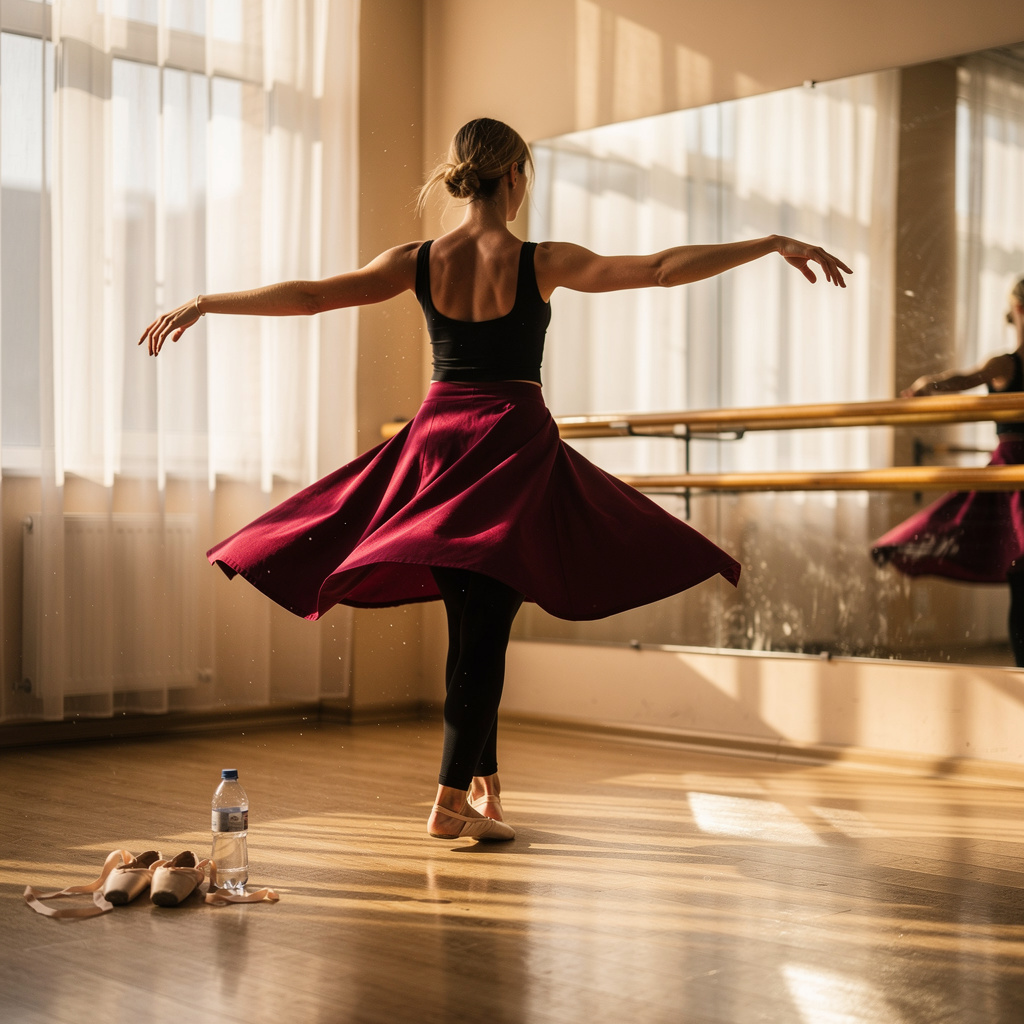
Ballet pointe technique is the specialized method of dancing on the tips of fully extended feet using reinforced pointe shoes. It encompasses a range of movements—from simple relevés and échappés to complex pirouettes, allegro jumps, and partnered work—all executed while maintaining turnout, alignment, and balance. Core concepts include proper weight distribution over the box of the shoe, controlled demi-pointe to full pointe transitions, and the use of the foot’s intrinsic muscles to articulate through the shoe.
Today, pointe technique remains a defining element of classical ballet repertoire, but it has also expanded into contemporary and neoclassical works, making it relevant for professional dancers, pre-professional students, and even adult hobbyists seeking new challenges. Recent shifts in dance medicine and pedagogy emphasize injury prevention through gradual strengthening, cross-training, and individualized shoe fitting, moving away from outdated “just push through the pain” approaches. This evolution makes structured pointe training more accessible and safer than ever before.
Mastering pointe technique builds a comprehensive skill stack that includes refined body awareness, muscular endurance, precise coordination, and artistic expression under physical demand. These competencies are essential for dancers pursuing careers in ballet companies, musical theater, or commercial dance, as well as for teachers who need to guide students safely onto pointe. Beyond the studio, the discipline and body intelligence developed through pointe work benefit anyone seeking to deepen their understanding of movement, alignment, and performance presence.
Common Questions About Ballet Pointe Technique
What is the difference between ballet and pointe?
What is pre-pointe in ballet?
How do I start learning pointe technique?
Can I learn pointe technique online?
How long does it take to complete a pointe technique course?
What are the key exercises in pointe work?
- Relevé: Rising from a demi-plié to full pointe using a controlled peeling motion of the foot.
- Échappé: A springing movement from a closed to an open position on pointe.
- Plié: The demi-plié acts as the engine for every rise and landing.
- Frappé and Fondu: Sharp and melting leg extensions at the barre to develop precision.
- Rond de jambe: Circular leg movements that strengthen the supporting leg on pointe.
- Pirouette preparation: Spotting, retiré position, and vertical alignment for turns.
- Sauté and Changement: Basic jumps on pointe using the stretch-shortening cycle.
Is pointe work dangerous?
What Will This Course Bring You?
- Analyze the anatomical alignment and strength prerequisites for safe pointe work.
- Apply proper fitting techniques to select and prepare pointe shoes for individual foot structure.
- Execute controlled relevés, échappés, and pliés at the barre with correct placement.
- Demonstrate dynamic control in frappés, fondues, and ronds de jambe on pointe.
- Implement spotting technique to execute single and double pirouettes in center work.
- Build strength and precision in petit allegro jumps such as sauté and changement.
- Evaluate classical and contemporary pointe variations for stylistic and technical demands.
- Design a personal injury prevention and recovery plan for long-term pointe health.
Curriculum
12 Units1. Foundations of Pointe Work: Anatomy and Pre-Pointe Strength
1 hour
2. Pointe Shoe Selection, Fitting, and Preparation
1 hour
3. Basic Barre Exercises on Pointe: Relevés, Échappés, and Pliés
1 hour
4. Developing Strength and Control at the Barre: Frappés, Fondues, and Ronds de Jambe
1 hour
5. Transitioning to Center Work: Basic Positions and Simple Combinations
1 hour
6. Pointe Turns and Pirouettes: Preparation, Spotting, and Execution
1 hour
7. Pointe Jumps and Allegro: Sauté, Changement, and Petit Allegro
1 hour
8. Grand Allegro and Traveling Steps on Pointe
1 hour
9. Pointe Variations and Repertoire: Classical and Contemporary
1 hour
10. Partnering and Supported Work on Pointe
1 hour
11. Performance Preparation and Stage Presence on Pointe
1 hour
12. Injury Prevention, Recovery, and Long-Term Pointe Health
1 hour
Exam – Ballet Pointe Technique
20 Questions • 70% Pass • 30 min
Unlock All Units for Free
Create an account, enroll in the course, and start with the first unit right away.
Exam – Ballet Pointe Technique
20 Questions • Pass: 70% • 30 min
Course Duration
720
Total Minutes
12
Unit
1
Final Exam
~60
Min / Unit
Ballet Pointe Technique Certificate Program
Document Your Skill
Those who pass the 20-question, 30-minute exam with 70% receive the Ballet Pointe Technique Certificate.
Stand Out on Your CV
By adding your certificate to your CV, gain a professional reference in job applications and stand out from the crowd.
Career Advantage
With the verification code, employers can check your certificate instantly — a concrete way to show your growth.
CERTIFICATE FEE
At the end of the course, an online exam consisting of 20 questions with a 30-minute time limit is given. The exam appears automatically after you complete the topics. Anyone who scores at least 70 out of 100 on the certificate exam is awarded the Ballet Pointe Technique Document (certificate of attendance). You can add the certificate you earn to your CV for job applications in the many sectors listed above, and use it as a reference proving that you took this interactive course.
The Certificate of Achievement you receive with the Ballet Pointe Technique course program holds value that proves your personal and professional development in the business world. By adding it to your CV, it can serve as an important reference in your job applications. Moreover, compared with certificates from other private training institutions, Catch Wisdom certificates are offered to our participants at a much more affordable price.
The Ballet Pointe Technique course certificate is a document that proves, with a unique verification code, that you completed the course. Employers can instantly check its authenticity with this code, which helps you show your development concretely in your job applications.
For more information, we recommend visiting the Support page.
Certificate in 7 Languages
Earning success certificates from our courses is now more meaningful and global. With certificates available in Turkish, English, German, French, Spanish, Arabic, and Russian, we fully unlock the potential of students worldwide.
Why Certificate in 7 Languages?
-
01
Global Skill Development
Receiving your certificates in 7 different languages strengthens your communication skills as you engage with more people worldwide. It lets you operate more confidently and capably on the international stage.
-
02
International Job Opportunities
Employers may see your certificates in multiple languages as a sign of your ability to seize global opportunities. You can open more doors to new jobs and projects.
-
03
Cultural Richness
The chance to earn certificates in different languages helps you build closer ties with various cultures and broadens your worldview. It enriches your global perspective and deepens cultural understanding.
-
04
Ability to Participate in International Projects
Multilingual certificates give you an edge to work more effectively on international projects. They boost your chances of leadership and participation in diverse projects in the business world.
-
05
Prove Yourself on the Global Stage
Certificates in multiple languages give you the opportunity to present your skills and knowledge worldwide.
Language diversity opens worldwide opportunities. If you want to prove yourself in the international arena, join our online Ballet Pointe Technique course program and begin this journey with us.
Frequently Asked Questions (FAQ)
Is this course paid?
How do I join the course?
Can I take the course at my own pace?
How can I get my certificate?
What are the advantages of the certificate?
Boost Your Career
Take a new career step with the Ballet Pointe Technique course. Add your certificate to your CV, stand out in job applications, and open the door to new opportunities in the industry.
StartStudent Reviews
No reviews yet
Enroll in this course and be the first to leave a review about your experience with Ballet Pointe Technique.
Start