What is Beat Making Fundamentals?
Beat Making Fundamentals Certificate Program
Beat Making Fundamentals certificate program is a comprehensive training designed for aspiring producers, songwriters, and electronic musicians who want to craft professional-quality beats from scratch. The course covers the entire beat-making pipeline, from setting up your digital audio workstation and mastering rhythm foundations like tempo, meter, and groove, to selecting drum sounds, programming patterns, and finger drumming. You will also explore sampling essentials such as chopping, pitching, and time-stretching, then build melodic and harmonic elements, basslines, and full arrangements. The main practical outcome is a finished, polished beat project that you can export and share, backed by a reliable workflow that overcomes beat block and builds finishing habits.
The program is structured for beginners and intermediate learners alike, progressing logically from DAW navigation and rhythm fundamentals through drum sound selection, programming, sampling, melody, bass, arrangement, sound design, and mixing. Each lesson balances concise theory with hands-on practice, ensuring you apply concepts immediately in your own projects. The curriculum builds four core skill areas: rhythmic programming and groove, sampling and sound manipulation, musical composition for beats, and technical mixing and arrangement. By the end, you will have a complete beat and a repeatable creative process. Choosing this program now makes sense because beat making has become a central skill in modern music production, and a structured certificate offers a faster, more reliable path than scattered online tutorials.
What is Beat Making Fundamentals?
Beat making fundamentals is the study and practice of constructing instrumental hip-hop, electronic, and pop beats using digital tools. It encompasses core concepts like rhythmic timing, meter, groove, drum kit construction, pattern programming, sampling techniques, melodic and harmonic layering, bassline design, arrangement, sound design, and basic mixing. The scope ranges from simple loop-based creation to full song structures, with emphasis on both technical proficiency and creative expression. It is not just about making drum patterns; it's about understanding how all elements interact to produce a compelling groove and emotional impact.
In the current music landscape, beat making fundamentals are more relevant than ever because affordable DAWs and mobile production tools have democratized music creation. Beat makers are in high demand across hip-hop, pop, R&B, electronic dance music, and even film and game soundtracks. Recent shifts toward online collaboration, sample packs, and AI-assisted tools have changed workflows, but the foundational skills of rhythm, sampling, and arrangement remain essential for standing out. Streaming platforms and social media also reward producers who can quickly create, finish, and share original beats, making these fundamentals a direct pathway to creative and commercial opportunities.
Mastering beat making fundamentals builds a versatile skill stack that includes rhythmic precision, ear training, sound selection, digital audio editing, creative problem-solving, and project management. These skills translate directly into contexts such as producing for independent artists, scoring for media, live performance with drum machines or controllers, or simply expressing musical ideas with confidence. Whether for professional aspirations in the music industry or personal fulfillment as a hobbyist, the subject provides a durable foundation that adapts to evolving genres and technologies. The ability to finish and share beats also fosters discipline and community engagement, turning abstract musical concepts into tangible, shareable art.
Common Questions About Beat Making Fundamentals
Is this beat making course suitable for someone with no music background?
How much time does the Beat Making Fundamentals course take per week?
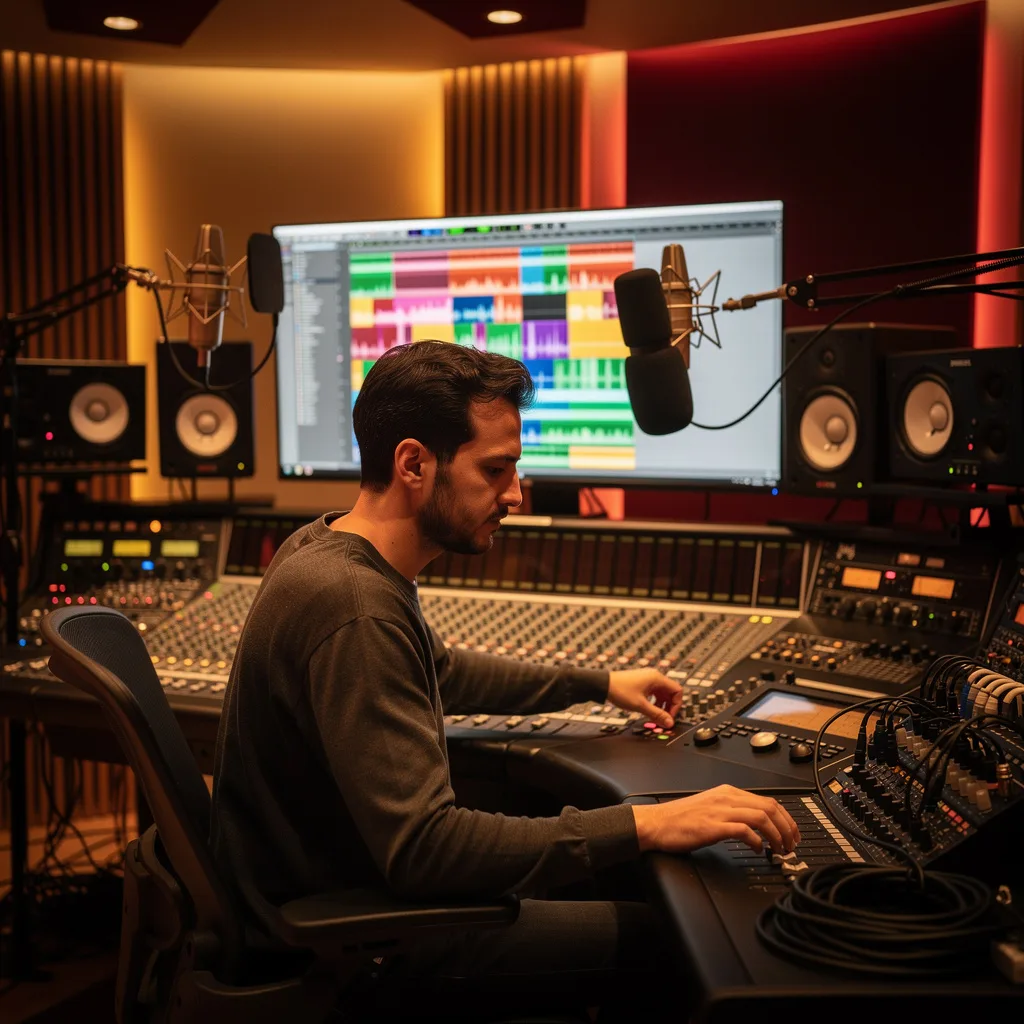
How do I set up a DAW workspace for beat making without clutter?
- Transport and timeline: stays at the top and never moves; it tells you where you are in the bar.
- Track list: fixed on the left, ordered drums first, then bass, then melodic parts, so your eye learns the vertical map.
- Arrangement area: the largest zone, kept free of plugins and floating windows.
- Mixer or channel strip: hidden until mixing, then opened as one panel instead of a dozen separate ones.
- Browser and device panel: pinned to one side for samples and instruments, closable in one keystroke.
How do I build a drum kit that fits a beat instead of random samples?
Why does velocity make a sixteen-step drum pattern groove?
Do I really need expensive gear to make professional-sounding beats?
What Will This Course Bring You?
- Configure a digital audio workstation by creating tracks, setting tempo and meter, and routing audio for beat-making sessions.
- Program and perform drum patterns using step sequencing and finger drumming to maintain consistent tempo, meter, and groove.
- Evaluate and select drum samples, then build a balanced custom kit that fits the beat's genre and frequency range.
- Apply chopping, pitching, and time-stretching techniques to transform sampled audio into original rhythmic and melodic beat elements.
- Design simple chord progressions and melodic motifs that complement drum patterns and establish a clear tonal center.
- Implement basslines and low-end processing that lock with the kick drum and produce a controlled, grooving low-end foundation.
- Arrange beat sections using intro, verse, chorus, and bridge structures to create tension, release, and dynamic contrast.
- Evaluate and refine a final beat through sound design, textural layering, mixing, polishing, exporting, and sharing while applying strategies to overcome beat block.
Curriculum
12 Units1. Digital Audio Workstation Setup and Navigation
1 hour
2. Rhythm Foundations: Tempo, Meter, and Groove
1 hour
3. Drum Sound Selection and Kit Building
1 hour
4. Drum Programming and Finger Drumming
1 hour
5. Sampling Essentials: Chopping, Pitching, and Time-Stretching
1 hour
6. Melody and Harmony for Beat Makers
1 hour
7. Basslines and Low-End Groove
1 hour
8. Arrangement and Song Structure
1 hour
9. Sound Design and Texture
1 hour
10. Mixing Fundamentals for Beats
1 hour
11. Workflow, Beat Block, and Finishing Habits
1 hour
12. Final Beat Project: Polish, Export, and Share
1 hour
Exam – Beat Making Fundamentals
20 Questions • 70% Pass • 30 min
Unlock All Units for Free
Create an account, enroll in the course, and start with the first unit right away.
Exam – Beat Making Fundamentals
20 Questions • Pass: 70% • 30 min
Course Duration
720
Total Minutes
12
Unit
1
Final Exam
~60
Min / Unit
Beat Making Fundamentals Certificate Program
Document Your Skill
Those who pass the 20-question, 30-minute exam with 70% receive the Beat Making Fundamentals Certificate.
Stand Out on Your CV
By adding your certificate to your CV, gain a professional reference in job applications and stand out from the crowd.
Career Advantage
With the verification code, employers can check your certificate instantly — a concrete way to show your growth.
CERTIFICATE FEE
At the end of the course, an online exam consisting of 20 questions with a 30-minute time limit is given. The exam appears automatically after you complete the topics. Anyone who scores at least 70 out of 100 on the certificate exam is awarded the Beat Making Fundamentals Document (certificate of attendance). You can add the certificate you earn to your CV for job applications in the many sectors listed above, and use it as a reference proving that you took this interactive course.
The Certificate of Achievement you receive with the Beat Making Fundamentals course program holds value that proves your personal and professional development in the business world. By adding it to your CV, it can serve as an important reference in your job applications. Moreover, compared with certificates from other private training institutions, Catch Wisdom certificates are offered to our participants at a much more affordable price.
The Beat Making Fundamentals course certificate is a document that proves, with a unique verification code, that you completed the course. Employers can instantly check its authenticity with this code, which helps you show your development concretely in your job applications.
For more information, we recommend visiting the Support page.
Certificate in 7 Languages
Earning success certificates from our courses is now more meaningful and global. With certificates available in Turkish, English, German, French, Spanish, Arabic, and Russian, we fully unlock the potential of students worldwide.
Why Certificate in 7 Languages?
-
01
Global Skill Development
Receiving your certificates in 7 different languages strengthens your communication skills as you engage with more people worldwide. It lets you operate more confidently and capably on the international stage.
-
02
International Job Opportunities
Employers may see your certificates in multiple languages as a sign of your ability to seize global opportunities. You can open more doors to new jobs and projects.
-
03
Cultural Richness
The chance to earn certificates in different languages helps you build closer ties with various cultures and broadens your worldview. It enriches your global perspective and deepens cultural understanding.
-
04
Ability to Participate in International Projects
Multilingual certificates give you an edge to work more effectively on international projects. They boost your chances of leadership and participation in diverse projects in the business world.
-
05
Prove Yourself on the Global Stage
Certificates in multiple languages give you the opportunity to present your skills and knowledge worldwide.
Language diversity opens worldwide opportunities. If you want to prove yourself in the international arena, join our online Beat Making Fundamentals course program and begin this journey with us.
Frequently Asked Questions (FAQ)
Is this course paid?
How do I join the course?
Can I take the course at my own pace?
How can I get my certificate?
What are the advantages of the certificate?
Boost Your Career
Take a new career step with the Beat Making Fundamentals course. Add your certificate to your CV, stand out in job applications, and open the door to new opportunities in the industry.
StartStudent Reviews
No reviews yet
Enroll in this course and be the first to leave a review about your experience with Beat Making Fundamentals.
Start